FW

Western European garment industry workers in BRIC (Brazil, Russia, India and China) countries earn only half of the living wage. While globalisation has made Western European clothing supply chain fairer by increasing employment opportunities and income for workers in BRIC countries, their income is still insufficient to support a decent standard of living.
Garment factory workers are only paid around half the living wage, and agricultural workers are paid even less. Taking into account financial demands on workers - income tax and social security contributions - in addition to wages, workers would need to be paid, on average, an additional 35 per cent to offset these factors.
Despite some improvements in workers’ income, and employment opportunities through globalisation over the last 20 years, they are still not paid living wages, so the supply chain cannot be described as fair. There can be potential impacts on companies and consumers if BRIC workers are paid a living wage. For example, a company may choose to absorb the additional cost or pass the cost on to consumers. Faced with a higher priced product, consumers might choose to buy less, which could in turn have a positive impact on the environment (by reducing carbon emissions) but possibly a negative social impact (by reducing employment).
Eight Armenian companies have come together to launch a line of jeans clothing called 5900 BC. The name derives from the fact that Armenian history predates the birth of Christ by 5900 years.
On January 2, 2015 Armenia became a member of the Eurasian Customs Union (EACU) within the Russian established Eurasian Economic Union (EEU). From that moment on, Armenia has started the distribution of its textile products to the markets of the EEU member states. Some 94 businesses are operating in the textile and garment industry of Armenia. The country exported 50 million dollars and imported 170 million dollars of textile and garment products in 2014.
Armenian companies specialize clothing, knitting and textile processing co-operate with European and American partners, while their main export markets remain the CIS states. They have substantial experience in cut, make and trim and full package contracting. Textiles are one of the oldest branches of Armenian economy, and accounted for over one quarter of the total workforce during the Soviet era.
Meanwhile Vietnam is seeking partners in Armenia to develop production projects. Armenia has expressed its desire to cooperate with major firms with much experience in production management so as to revive the local garment industry and boost export.
"After witnessing the quick success gained by two fast fashion giants, H&M and Zara, retailers have come to believe if you give customers latest trends in a short period of time, they will be lured to purchase. While this trend stayed far longer than anticipated, winds of change seem to be turning towards a more sustainable paradigm where consumers no longer plan to discard their outfit for new and is giving retailers a run for their money. Robert Wallstrom, CEO, Vera Bradley, believes many of brand's patterns have a longer shelf life than they expected."

After witnessing the quick success gained by two fast fashion giants, H&M and Zara, retailers have come to believe if you give customers latest trends in a short period of time, they will be lured to purchase. While this trend stayed far longer than anticipated, winds of change seem to be turning towards a more sustainable paradigm where consumers no longer plan to discard their outfit for new and is giving retailers a run for their money. Robert Wallstrom, CEO, Vera Bradley, believes many of brand's patterns have a longer shelf life than they expected. The company has been sending patterns to the clearance bin, thereby hurting gross margin. Now Vera Bradley is working on the frequency at which it introduces new styles. It turns out customers didn’t need a hot new thing quite as often as the company expected. At the Chico's brand, executives are doing a major reset of the merchandise every six weeks instead of every four weeks.
Social media influence
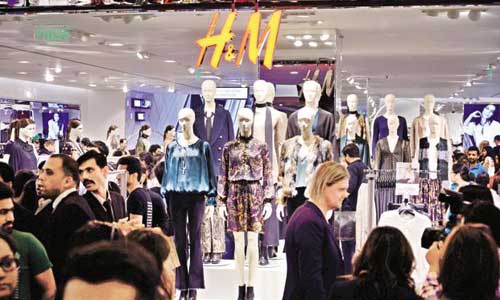
Instagram, Snapchat and other digital platforms are accelerants that carry new looks across the globe in an instant. That dynamic is here to stay. But retailers should just keep one thing in mind: Not every customer is a fast-fashion customer. Lots of women aren't as budget-conscious as they were in darker economic times. They don't care about micro-trends. If a garment is flattering and durable, they would buy it. For instance, for Lululemon Athletica its best-selling sports bra is a new design called the Enlite, which costs $98. Women are paying that much for something that will end up sweat-soaked at the bottom of their gym bag – even when Lululemon offers many other sports bra styles at about half the price. But this one is made from a lighter-weight fabric and designed differently to offer more shape than a typical sports bra. Women are willing to pay because it seems innovative and functional.
The simple thread here is mid-priced retailers shouldn't broadly adopt the fast-fashion playbook. Each store should interpret it and apply it surgically – only in ways that makes sense for its specific customer base. That might mean a retailer uses its speedier supply chain not to go after some style the Instagram-influencer set is pushing, but to buy more of a classically styled sweater that’s been quickly embraced by consumers. It’s a test-and-learn approach to figure out which colours of a certain sheath dress get traction in which geographic markets before you place a massive order. In the end, the bottom line stays – you should work on your core strengths rather than blindly following the strategy of big retailers.
IKA (pronounced ee-ka) means “a thousand islands with one unity”. Like her name, the talented designer creates multi-faceted and multi-dimensional designs like no other – a thousand creative ideas with one unity.
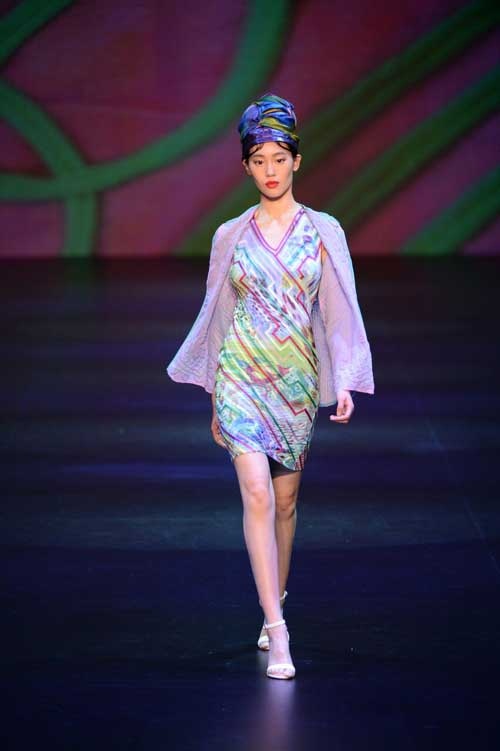
Fashion designer, Ika, treats designing as a serious issue. “For me, fashion design is not persay a career but a way to express myself day to day. My roots contribute to the major strength in embroidery which I use a lot in my collections.”
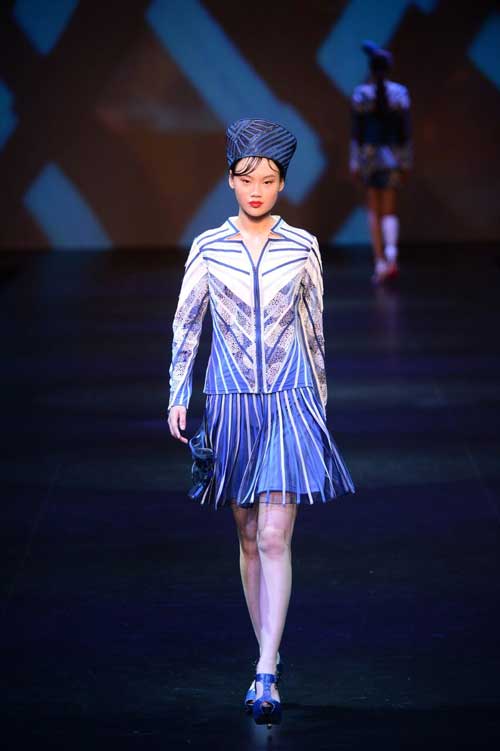
Born in Indonesia, Ika was raised and educated in Bali. Driven by her interest in fashion, she spent several years in Europe to be trained in apparel design. The calling of Asia drew her back to the Far East where she made Hong Kong her second home, founded Butoni Limited in the early 1980s, while Bali becomes her source of inspiration.
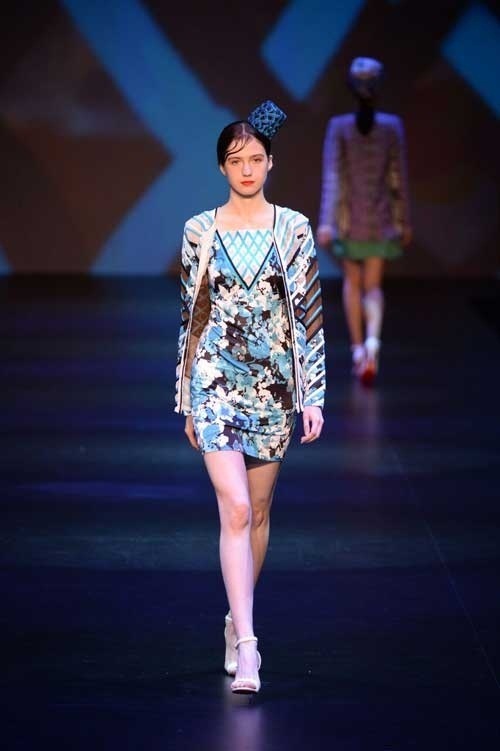
Ika known as a legendary designer plays a lot with rich and heavy embroidered fabrics, in colours and designs having a strong Asian and Indonesian influence. Her fashion show at CENTRESTAGE also featured turquoise as one of the interesting colours.
A year back garment exporters in Tirupur opted for Rebate on State Levies (ROSL) over value added tax refunds. They are still waiting for disbursals under ROSL and are now facing a deep liquidity crisis.
ROSL was expected to incentivise exports with many levies which otherwise were not covered by the VAT refund. Exporters moved over to ROSL on being informed that three per cent to 3.9 per cent of freight on board value of exports would be reimbursed within a fortnight. At that time, the VAT refund was a cumbersome process.
As of now, disbursals pending for exporters spread over the Tirupur knitwear cluster have gone up to nearly Rs 730 crores. Owners of the medium and small scale segment exporting units in the cluster are feeling the heat as they have to find the liquidity to disburse salaries and meet working capital requirements. With the festival bonus to be distributed shortly, the crisis could worsen if the pendency were not addressed. One small scale exporter’s ROSL arrears stand at Rs 60 lakh.
Rebate on State Levies was announced with much fanfare and promises last year to incentivise exports with many levies which otherwise were not covered by VAT.
The global denim industry is expected to grow at a CAGR of over 6.5 per cent from 2015 to 2020. Jeans is growing in the US, China and Mexico. In the United States, jeans showed slight growth both in volume and current value terms in 2016, after declining over the previous two years. In China, jeans registered value growth of five per cent. In Mexico, standard and premium denim saw the fastest growth in 2016, increasing eight per cent in current value terms.
Denim has continued to adapt to changing trends with new innovations in fabrics and adoption of new silhouettes not typically designed for denim. Fabric mills keep up with the demand for more performance, functionality and comfort with the development of innovative fabric blends and weaves.
Denim makers are increasing denim’s comfort as it helps them compete better against the athleisure influx. Stretch denim fabrics are relied upon from all three regions. The latest advancements in stretch technology allow greater recovery than previously experienced. This is important for consumers looking to achieve control and comfort without losing shape. Meanwhile men’s skinny jean purchases have increased year-over-year in the US, following their success in the EU. Consumers are no longer as interested in over-washed and processed jeans. The desire for real vintage jeans has begun to overshadow the factory-washed looks.
World cotton production in 2017-18 is expected to rise 11.6 per cent from the previous season. International cotton prices fluctuated within a fairly narrow range during August. Market activity remained sluggish during most of August.
Basis levels remained firm, and the strong premiums applied to nearby lots engendered caution in some mills, which was exacerbated by the bearish statistical position and approaching availability of new crops. Import demand emanated from several markets, mainly for Brazilian and US cotton, among others. Several Far Eastern markets registered sales for the first quarter of 2018.
Hurricane Harvey in the US arrived over the worst affected areas as picking was in full swing. As cotton in the affected region constitutes the earliest of the US crop to be picked and transported, a further tightening of the already restricted supply seems unavoidable.
Planting data shows a considerable increase in planted area in India, to almost 12 million hectares, a figure likely to be surpassed as planting continues in several major producing states. Generally good weather conditions have contributed to optimism regarding yields. A sizeable crop is expected to weigh on prices and stimulate consumption. In China, helpful weather conditions and an expectation of good yields have bolstered production prospects.
The Chinese nonwoven fabric market has seen rapid growth in recent years. Spun-laid nonwoven fabrics, mainly used for disposable and consumable medicare and health products, have seen high capacity expansion.
By end-2016, domestic production of nonwoven fabrics was 45 per cent of the world’s total, making China the biggest producer of this fabric. Currently, around 84 per cent of spun-laid nonwoven fabric is applied for producing medical materials, dry and wet cleaning cloth and beauty products and other medicare and health products, 12 per cent for leather base cloth and four per cent for filtration materials, linings of clothes and automobile ornaments and other materials.
PSF and VSF remain the two major feedstock of spun-laid nonwoven fabric, taking up 90 per cent of the total. In recent years, as environmental awareness strengthens and cotton price approaches that of VSF, more cotton has been used to produce such fabric. Zhengzhou Textile Machinery, Qingdao Textile Machinery and Changshu Feilong Nonwoven Machinery are three major spun-laid equipment suppliers in China. Zhengzhou Textile has the largest market share.
Large expansion of spun-laid nonwoven fabric capacity obviously drives the demand of its feedstock. Yet as the fabric produced is homogenized, overcapacity and correspondingly fierce competition take place.

Mug, the designer of her Japanese born-and-bred brand G.V.G.V., launched the brand in 1991 after graduating from Kuwasawa Design School, G.V.G.V. has now become one of the most attractive Tokyo fashion label. G.V.G.V. has also injected its creativity into other fashion brands through design collaborations, like with UNIQLO's designer's invitation for their 2007 S/S collection and also producing for UT, the T-shirt for concept of UNIQLO t-shirts for spring and summer 2008. And for Spring/Summer 2010, she has participated as a buyer at grapevine by k3 Daikanyama, selecting wonderful creations from around the world.
G.V.G.V stands for flavor of grape wine, and is an established designer label that is sold in Japan, USA, China, Hong Kong and Italy.
Mug's world is represented by a mix of femininity and masculinity, with free sensitivity that is present in every season's collection. She thinks that in women in Japan and also globally want to feel and sense masculinity through some elements of menswear. “I add in my womenswear range a touch of masculinity through the kinds of fabrics like wool and designs like military styles of designing etc” she adds, “the trend globally is also a sense of genderlessness and blurring of lines between the two sexes” .
Her collections consist of colour palate of pink, green, blue , purple and some glitters usually in stretch , soft chiffons and muscular fabrics made in wool. For her latest collection for disco she has organza, satins, lame and fake fur fabrics. “ I love fake furs, as these give a very good and fluffy feel and look gorgeous on women” Says Mug. “ I am excited to be here first time as a VIP Judge tonight for Young Designers’ Contest at CENTRESTAGE

Tasha Liu, Founder of multi brand Chinese designer store C. Dong Liang is unconventional and unreasonable as she believes, “Being unreasonable means believing in things that most people think hard to realise. But if you believe and are convinced of those things then you should try to accomplish them.” A pioneer in seeking potential Chinese designers, Tasha established C. Dong Liang, in 2009 in Beijing. And the concept has strengthened over the time. Today, she manages two large format C. Dong Liang, villa stores in Shanghai, where 40 Chinese ready to wear designers and 20 fashion accessories designers are retailed. Soon, C. Dong Liang stores would be showcased on T-Mall.
The target audience are: well traveled Chinese buyers who shop for brands and designer wear globally and value Chinese designs. The stores also have a showcasing program called ‘Lablehood’, where emerging designers who participate in Shanghai Fashion Week, showcase their creations. Earlier, the store took Chinese designers to London Fashion Week and also Los Angles to showcase their products. The team also visits Paris Fashion Week and other international events to spot Chinese designers, who participate internationally.
Tasha, a recipient of the British Council's 2014 Young Creative Entrepreneur in China award, is a marketer entrepreneur, having worked with Pepsico earlier. She has believes Chinese designers for Chinese buyers is a good and unique proposition as they understand the same cultural values better compared to global designers and brands selling in China. “C. Dong Liang is a bridge between Chinese designers and Chinese buyers” she opines.
“I am looking forward to meet young Hong Kong designers tonight at Young Designers’ Contest at CENTRESTAGE, these designers would surely find a much bigger market in Mainland China” she sums up.