FW

World cotton stocks are projected to remain stable by the end of 2017-18 and stock-to-use ratio is expected to be essentially unchanged at about 75 per cent or nine months of mill use. China’s cotton stocks are forecast to decrease another 16 per cent, which would account for 48 per cent of world stocks. Ending stocks held outside of China are expected to increase by 22 per cent.
World cotton area is projected to expand by nine per cent. With output projected to increase by four per cent, India will remain the world’s largest cotton producer. After four seasons of decline, China’s cotton production is expected to rise by seven per cent. Cotton production in the United States is forecast to increase by 20 per cent. Pakistan’s cotton production is projected to increase by 17 per cent.
After falling two per cent in 2015-16, global cotton consumption rose by one per cent in 2016-17 as world economic growth strengthened. In 2017-18, world cotton mill use is projected to increase by two per cent. Mill use in China is expected to grow by one per cent while India’s cotton consumption is projected to recover by three per cent. Mill use in Bangladesh is projected to remain stable.
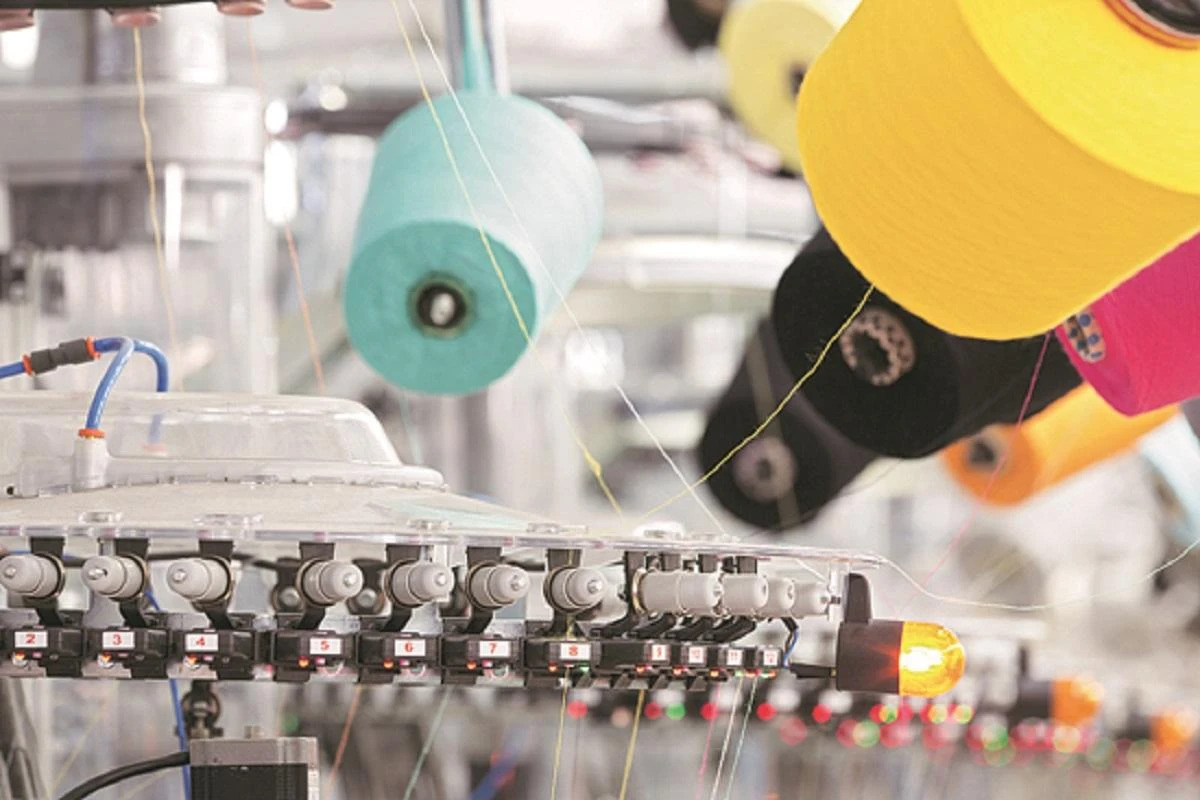
Shima Seiki has released a new i-Plating option on two models of its computerised knitting machines. Both machines feature special loop pressers for producing inlay patterns that yield novel knit-weave hybrid fabrics. By combining i-Plating with inlay capability on these machines, new possibilities of patterning are now available for a diverse knit design.
Unlike conventional plating techniques, i-Plating offers inverse-plating capability, in which alternate yarns are shown on the fabric surface in any specific pattern or design, producing jacquard-like patterns in plain jersey stitch. i-Plating goes a step further, overcoming current limitations in inverse-plating by offering this capability within the same course and for individual needles for greater efficiency and expanded patterning capability.
Shima Seiki, founded in 1962, is a computerised flat knitting machine manufacturer of Japan. It’s known for the fully automated glove knitting machine and the fully automated seamless glove knitting machine. The seamless glove became the inspiration for the eventual development of the seam-free Wholegarment knitting technology for which the company is now best known.
Wholegarment knitting is capable of producing knitted items in their entirety on the machine, and allows complex 3D forms for fitting the human body or even car seats without the need for sewing.
During the second quarter Lululemon Athletica’s net revenue increased 13 per cent. Direct-to-consumer net revenue grew by 29 per cent. Total comparable sales zoomed seven per cent while comparable store sales noted a two per cent increase during the second quarter. Additionally, gross profit jumped 17 per cent.
Lululemon Athletica, based in the US, is a yoga-inspired apparel athletic company. The company expects its third quarter revenue to be in the range of $605 to $615. The estimated rise in total comparable sales (in the mid-single digits) during the upcoming quarter will boost Lululemon’s revenue. Lululemon Athletica has acquired a stake in 7mesh.
Lululemon is aiming to have an initial line of product from the collaboration with 7mesh in stores by the middle of 2018, aiming to take advantage of the key cycling season. Lululemon wants to dispel the impression that it does only yoga gear and is a yoga-inspired apparel maker. In recent years, it has sought to sell more clothes meant for running, swimming, and even outer wear.
New ventures like 7mesh are part of Lululemon’s 10-year plan to generate 50 per cent net new profitability from businesses and product categories where it doesn't currently compete.
Jeanologia has launched a revolutionary generation of laser that reduces marking times by up to 30 per cent. The High Dynamic Range (HDR) is a new hyperbolic system that simplifies the way of designing, initiating a new era in laser production in the textile industry. The system increases the contrast of the dynamic tones of the image, obtaining a level of depth closer to reality and thereby achieving a more natural and 3D design.
HDR simplifies the way of designing, creating a common language in the industry, saving the designer’s time, boosting creativity and avoiding second-qualities. Jeanologia’s technology creates the opportunity to change the industry model, traditionally based on cheap labor, and moves towards a model supported by technology that increases productivity and lowers costs.
Since 1993 the company’s mission has been to create an ethical, sustainable and eco-efficient textile and apparel industry through r disruptive technology and know-how. Its laser, G2 ozone and e-flow system have revolutionized the textile industry. Jeanologia offers infinite design possibilities and garment finishes while saving water, energy and chemicals, eliminating waste and toxic emissions.
Currently the Spanish company has clients on five continents. Among its customers are Levi’s, Polo Jeans, Abercrombie & Fitch, Edwin Japan, Pepe Jeans, Diesel, Tommy Hilfiger, CK, Jack & Jones, Replay and retailers such as GAP, Uniqlo, M&S and H&M.
Most of German textile retail industry is committed to improving working conditions and furthering environmental protection. Textiles Partnership works for better working conditions, increased environmental protection and fairer living wages. Progress is checked by external experts on a yearly basis. For 2017, they have resolved to implement more than 1500 measures which will lead to concrete improvements. The measures relate to topics such as living wages, the fight against child labor, avoidance of harmful chemicals or sustainable water use in cotton cultivation.
At the moment, the Textiles Partnership has 148 members. The figure includes advisory members, who do not have to provide measure plans, as well as new members, who are obliged to generate action plans only in the coming year. Individual measures are oriented alongside key questions in the areas of chemicals and environmental management, social standards and living wages as well as sustainable natural fibers.
The key questions have been jointly devised by the different actor groups throughout the last year. The verbalization and implementation of measures in all three areas is mandatory for members. The Partnership is subject to the principle of procedural liability: joining the Partnership is voluntary – handing in action plans is mandatory.
Accessories Trilogy will be held in France, September 20 to 26, 2017. This is an exhibition of French knowhow in fashion accessories like shoes, gloves and leather goods.
The purpose is to emphasize manufacturing expertise as well as brands’ capacity for imagination. The exhibition will be enriched by a dialogue with avant-garde influencers. The exhibition-conversation is designed to let the public discover a selection of 40 fashion accessories from every angle and a variety of facets. It is a unique, in-depth opportunity to explore the objects that adorn our everyday lives.
The week-long exhibition unveils both the tangible and intangible contributions of craftsmen and manufacturers, revealing the quintessential aspects of each accessory category for visitors. France’s leather goods industry represents 459 companies, 1374 craftsmen and over 20,000 employees.
France is known as the birthplace of the glove-making industry. Saint-Junien, Millau and Grenoble are still the historic sites where traditional companies perpetuate unique, high-quality skills. The French glove industry employs almost 300 workers for a total annual production of approximately 3,50,000 pairs of mid-range and high-end gloves.
The GST levy on job work means a higher tax incidence on the carpet and apparel sectors. There is a five per cent GST on job work in textiles sector such as cutting, embroidery, finishing, washing or pressing, packing, bleaching, dyeing, printing, knitting, and coloring.
Exporters have asked for an e-wallet, which they can use like a running account where money will be debited from the e-wallet when duty has to be paid to supplies and the amount is credited when the proof of exports is made available. The drawback committee has been asked to look into cases of embedded tax on supplies and provide a refund of duties through the duty drawback mechanism. Exporters have been advised to do their own calculations before opting for higher drawback rates as in certain cases the lower drawback rates with refund of IGST benefits or ITC refund or CGST/IGST may be higher than the drawback rates.
A request has been made either to put zero GST rate on sale/ transfer of scrips or put it at five per cent.
So far the GST regime has led to a problem of liquidity but on the logistics part a lot of improvements are expected.
The global conductive textiles market is expected to grow at a CAGR of 15.6 per cent from 2016 to 2021. Growth of smart fabrics market, increasing awareness of the advantages of conductive textiles across varied end-use industries, and the high demand for conductive textiles from the military and defense are the key factors driving the growth of this market.
The woven textiles segment accounts for the largest share of the global conductive textiles market. This large share is mainly attributed to the properties of woven textiles that make it a preferred material for various end use industries, such as military and defense, healthcare, and sports and fitness.
The military and defense segment is the largest end user segment of the global conductive textiles market. Textile-based materials equipped with nanotechnology and electronics play a key role in the development of technologically advanced military uniforms. There is a high demand for conductive textiles from the military and defense end user segment as soldiers require protection against extreme weather conditions, such as heat, cold, wind, and rain; ballistic impact; and nuclear, biological, and chemical threats. Additionally, these textiles also find applications in parachutes, safety harnesses, ropes, and tenting. Among all regions, Europe is anticipated to lead the global conductive textiles market.
Den/IM is an innovation in athleisure made with stretch indigo denim on seamless circular knitting machines. It debuted last year and has been embraced by consumers. Lenzing, Tonello, Santoni and Unitin partnered to create DEN/IM, a studio-to-street collection designed to show knit denim’s potential as a viable alternative and competitor to traditional active wear bottoms and to classic woven denim.
The new collection employs body mapping for superior fit and performance, the efficiency of seamless knitting from Santoni and new sustainable wash treatments from Tonello, innovations in garment processing from Unitin and the addition of Tencel branded lyocell fibers.
The collaboration started with the idea of traditional sportswear— made with the cut and sew concept—which couldn’t provide the comfort expected by a certain kind of active fashionista. The range associates terms such as compression, ventilation, moisture control, thermal conductivity and body mapping with traditional denim terms such as indigo shade, fade-down and laser marking.
Each knitted garment in the Den/IM collection incorporates different combinations of fibers and knitted structures to create a unique cross-over concept. It’s all about integrating several sportswear benefits into the authentic denim world. The seamless functional features of Den/IM provide superior moisture wicking by incorporating Tencel in a unique two-layer construction. These high performance yarns provide superior temperature regulation and a perfect microclimate for the skin.
"After scouting for the most promising location for her swimwear line, Sama Danesh set up a factory in Istanbul in 2015. Being in the business, she knew Turkey is home to many fashion houses but she was apprehensive about the fate of a small start-up. Admiring Turkish workers’ craftsmanship, as they focus a lot on detailing in pattern-cutting and construction using sculptured fabric, wiring and boning, which is needed to create the silhouettes for her swimsuits. Her swimsuits cost about $385."

After scouting for the most promising location for her swimwear line, Sama Danesh set up a factory in Istanbul in 2015. Being in the business, she knew Turkey is home to many fashion houses but she was apprehensive about the fate of a small start-up. Admiring Turkish workers’ craftsmanship, as they focus a lot on detailing in pattern-cutting and construction using sculptured fabric, wiring and boning, which is needed to create the silhouettes for her swimsuits. Her swimsuits cost about $385.
Dealing with uncertainties

Major political upheavals and volatile economic climate always overshadows Istanbul’s potential and that’s what is marring industrial growth in the region. Due to political uncertainties, Danesh reminisced it used to be a nightmare to do business in the city. There were delivery delays. Many pieces in Danesh’s initial 2017 summer collection were so delayed they had to be released as part of her subsequent cruise collection. Owing to this, she has moved shipping to Britain, which eats into margins but has also reduced the risk of delivery delays.
Amid this chaos, Istanbul is finding its feat in establishing itself as the upcoming fashion hub. A manufacturing center for mass-market retailers like Marks & Spencer and Inditex, as well as luxury labels like Burberry and Hugo Boss, today the city has become a hub for the fast-growing Modest Fashion Movement geared to style-conscious Islamic women. It is also home to a slew of designers with a Western aesthetic who have expanded their businesses internationally.
Starting small
There are other small design studios that still upbeat about the fortunes of the city. Manu Atelier is a small, family-run accessories label housed in an 18th-century building on a paved street in the Beyoglu district, an ancient quarter known for its leatherwork trade. Founded in 2014 by Merve and Beste Manastir, daughters of a leather craftsman who personally signs off on every piece, the company has grown rapidly in the last three years, thanks to savvy use of social media. Manastir says locally, people have been less keen to go out and spend money, and visitor numbers are down. While they are proud of Turkish manufacturing roots, in terms of their identity, they consider themselves a global luxury lifestyle brand.
Ece and Ayse Ege too feels the same, they set up their couture and ready-to-wear label Dice Kayek in 1992, and celebrated. Although they split their time between Paris and Istanbul, their atelier has always been in the heart of their home city. For them, it has become cheaper to make garments, which they can sell in Euros. They supply all of the raw materials and produce everything in Turkey. She also added that the company was more vulnerable to the volatility within the broader fashion industry than that of the Turkish political situation.
Many homegrown designers are upbeat about the evolutionary landscape that the city is witnessing and are ready to take the much needed risk to offer locals most stylish & trendy clothes. It’s just a matter of time when the political instabilities settle down and they can establish their market in this upcoming fashion hub where fashion & tradition go hand in hand.