FW

"Estimated over 760 kilo tons in 2015, global spandex market is likely to exceed 1,550 kilo tons by 2023, growing at a CAGR of more than 8 per cent from 2016 to 2023. It is also commonly known as elastane. Asia Pacific, especially China spandex market size was the dominant region and accounted for more than 60 per cent of the total volume in 2015. China accounted for a major chunk of the market in Asia Pacific region in 2015."
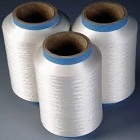
Estimated over 760 kilo tons in 2015, global spandex market is likely to exceed 1,550 kilo tons by 2023, growing at a CAGR of more than 8 per cent from 2016 to 2023. It is also commonly known as elastane. Asia Pacific, especially China spandex market size was the dominant region and accounted for more than 60 per cent of the total volume in 2015. China accounted for a major chunk of the market in Asia Pacific region in 2015.
Dry spinning technology was majorly preferred among manufacturers over the past few years. Other process includes wet spinning, melt extrusion and reaction spinning.
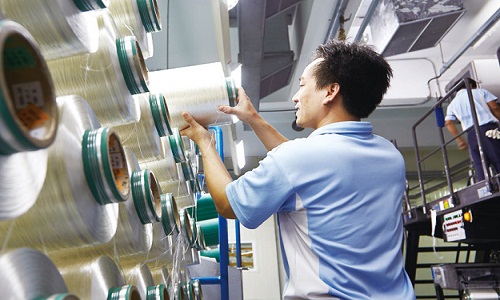
Application scope in apparel and textile industry is likely to drive spandex market over the forecast period. They are used in textile manufacturing applications such as leggings, gloves, cycling jerseys and competitive swimwear. Spandex market price has been weak in mid 2014 owing to tight supply and low demand from downstream applications. The market is expected to grow with recovery in US economy post recession.
Market demand
In active sports, strenuous movements are involved that may require garment stretch. This stretch can result in movement restriction for the wearer. This can be overcome by using spandex material. Factors such as superior elasticity, regaining to original shape, durability, lightweight, resistance to UV light is likely to favor spandex market demand.
Automobile production increase, particularly in Asia Pacific is likely to drive market growth. Major automobile manufacturers are shifting bases to countries such as Indonesia, Thailand, India and China owing to cheap labor wages and favorable government incentive schemes. It is preferred for manufacturing door panel fabrics required to stretch and adhere to floor. Global automobile sales were estimated at 75 million units in 2011 and are likely to cross 90 million units by 2017.
Over the forecast period, sportswear application is likely to witness highest gains. Technology advancement with moisture management properties coupled with performance efficiency is likely to benefit elastane market growth. Up to 3 per cent of spandex fiber in fabric is enough for fabric improvement & shape retention whereas high performance garments such as swimwear is may contain 30 per cent. Global sportswear market size was estimated at over $260 billion in 2013 and is likely to grow at a CAGR of over 7 per cent up to 2023. Sportswear accounted for over 15 per cent of the clothing industry.
Derived from petrochemical feedstock, Polytetramethylene ether glycol (PTEG) and MDI are raw materials required for spandex production. PTEG accounted for more than 70 per cent in 2012 for spandex manufacturing application. It is widely used in Asia Pacific as the region is major manufacturer.
Growth opportunity
Stringent government norms to curb carbon footprints into the atmosphere are likely to hinder industry participant’s growth. Investments to develop products from renewable sources are likely to provide growth opportunity with stable raw material supply.
Meanwhile, Invista, under the brand name Lycra, has recently introduced bio based spandex for apparel and garment applications. Bio spandex contains approximately 70 per cent of the sustainable feedstock made out of renewable butanediol from dextrose which is derived from corn. The company markets the product as a specialty product and sells at a premium rate than conventional Lycra.
Invista uses bio-based 1,4-butanediol as raw material from Genometica’s developed technology which has successfully developed fermentation route for the chemical using E. coli to metabolize sugar.1,4-butanediol is then synthesized to THF which is further used for PTEF production.
Asia Pacific market was the dominant and is likely to witness highest gains over the forecast period. China accounted for more than 50 per cent of the global share in 2014 and is the major manufacturer for this market. In 2012, China had around 30 manufacturing units with a total capacity of 520 kilo tons and domestic production exceeding 320 kilo tons in the same year. 40D and 20D are major products manufactured in China.
North America spandex market share is likely to witness moderate growth rates owing to increasing sportswear demand in the US Europe is likely to witness below average growth rates over the forecast period. Latin America is likely to grow at significant rates owing to growth in sportswear and apparel industry.
As per a worker’s rights group, workers at Asia factories that supply Walmart, H&M and Gap are still being exploited in sweatshop conditions, three years after the deadly collapse of a Bangladeshi factory. Workers in Bangladesh, Cambodia, India and Indonesia who make clothes for Walmart face intensive labour exploitation and abuse, said a report released recently by the Asia Floor Wage Alliance, an international coalition of trade unions and human rights organisations.
The Rana Plaza collapse in Bangladesh killed 1,127 garment workers in 2013, creating an international outcry about the human toll of making cheap, fast fashion clothes for wealthier nations like the US. But a series of reports from the Asia Floor Wage Alliance suggests that little has been done to improve conditions for garment workers in developing Asian nations.
In its report, Asia Floor Wage Alliance ‘identifies persistent rights violations’ against Walmart supply chain workers in Bangladesh, Cambodia, India and Indonesia. The report is based on interviews with 344 workers, many of them women, at 80 Walmart supplier factories. It says that many of the workers, particularly in Cambodia and India, complained of sexual harassment.
The report identifies specific problems in each country. For example, it says that most Cambodians in Walmart supplier factories work under ‘highly exploitative’ contracts that leave them susceptible to unsafe working conditions, low wages, denial of benefits and harsh penalties for engaging in union activity — including termination of employment. This includes ‘forced overtime’ during Cambodia’s hottest season, leading to ‘mass fainting episodes resulting from over exertion, exacerbated by inadequate nutrition.’
Qatar Airways Cargo has commenced direct freighter service to Yangon, Myanmar and has been providing over 60 tonnes of cargo capacity on the Doha-Yangon- Doha route. The airways acting chief officer, cargo, Guillaume Halleux, since the country’s liberalisation, Myanmar has had the fastest- growing economy in the ASEAN region and foreign investment in local trade has seen tremendous growth. Qatar Airways is the first international airline to serve this emerging market with scheduled freighter service.
Ready-made garments are the country’s main exports destined largely for Europe and the US through a seamless stopover at the cargo carrier’s state-of- the-art Doha hub. This new service will also facilitate the transit of pharmaceutical imports from Europe to Myanmar through its established QR Pharma solution. Asia Pacific is a prime air cargo market for Qatar Airways Cargo and post the launch of its new freighter service to Yangon, the air cargo carrier has grown its network in the region to eight destinations.
Qatar Airways Cargo also offers significant belly capacity to 29 cities in the region providing a combined weekly capacity of over 8,000 tonnes out of Asia Pacific.
This summer, small businesses, retailers, manufacturers and designers across Canada will get a boost when the Apparel Textile Sourcing Show (ATSC), a first-of-its-kind event that debuts in Toronto. ATSC is a comprehensive trade show and conference will take place from August 22-24, 2016, at the International Centre in Toronto. The event will bring to Canada hundreds of apparel and textile manufacturers from around the world, including China, India, Bangladesh, Mexico, the US, Honduras, Peru and other countries. Delivering an unprecedented platform for making global industry connections, ATSC will provide attendees with new insights and up-to-date information needed to more easily and effectively navigate through the sourcing process.
According to Jason Prescott, CEO of JP Communications, parent-company to TopTenWholesale.com and Manufacturer.com and organizer of the event, the introduction of ATSC is a direct response to market demand and fills a significant gap in the Canadian market.
Presented in coordination with the China Chamber of Commerce for Import and Export of Textile and Apparel (CCCT), the event is supported by the Ottawa-based Canadian Apparel Federation (CAF), the Consulate General of the P. R. China in Toronto, the Trade Office of Peru, and exporting agencies ProMexico and ProColombia.
Garment manufacturers in the Tirupur knitwear cluster want to reduce their reliance on cotton and use a lot more wool. This will help them sustain business all through the year and avoid slumps. Presently manufacturers in the cluster are struggling to maintain the momentum round the year due to lack of adequate diversification into value-added winter garments.
Tirupur exporters are planning to collectively focus on research to develop knitwear with wool or wool-blended fibers and reduce the dependence on cotton. This move will help avoid slowdowns presently encountered by many factories in the cluster, due to lack of adequate orders for winter garments.
Wool helps retain heat better than cotton in garments. Right now less than one per cent of the knitwear produced from the cluster uses wool as raw material. Around 85 per cent of the apparels made from the cluster still use cotton as the main raw material.
By making value-added winter garments, Tirupur exporters hope to be able to challenge the dominance of Chinese made garments in the winter apparel segment.
They are looking at forging relationships with Woolmark and undertaking research activities with wool and wool-blended fibers in the Tirupur cluster.
A team of scientists and students at Imperial College London have engineered bacteria found in green tea to produce cellulose that can find applications in the filtration and textile industry. The team has developed DNA tools to engineer a specific strain of bacteria found in fermented green tea to produce modified bacterial cellulose. This technique also enables to incorporate proteins and other bio molecules to the bacteria.
Among many different potential applications, protein incorporated bacterial cellulose filter can be used to target contaminants in water supplies. An interesting application is developing sensors using cellulose material that can detect bio toxins, based on color change.
The study shows bacterial cellulose production can be genetically engineered and proteins can be woven into cellulose, which has not been possible before. The next step is to collaborate with NASA scientists to manufacture new materials on Mars using these engineered microbes. Other applications are envisioned in the fashion and textile industry.
Undergraduate students specialising in synthetic biology led this research effort. This study is one of the first to use synthetic biology to engineer ways in which materials are produced. The research work has been published in the recent issue of Proceedings of the National Academy of Sciences, USA.
Santoni, the leading supplier of seamless circular knitting technology will transfer its SWD technology to Nippon Mayer. Nippon Mayer will take over the complete range of products including patents, the relevant manufacturing equipment as well as the entire stock of machines and spare parts.
The after sales service for the installed base of machines will be taken over by Nippon Mayer effective June 1, 2016. Santoni, has been active in seamless warp knitting since 2004. The company developed its own range of compact machines for the application of seamless garments, medical- and lately shoe-fabrics. It holds a number of patents for machine as well as textile technology. Santoni will now concentrate on and further develop its core business circular knitting.
Karl Mayer, the leader in warp knitting, will integrate the SWD technology into its double needle bar competence center at Nippon Mayer and extend the relevant product range.
Karl Mayer’s different business units offer various machine concepts and tailor-made solutions for warp knitting machines, technical textiles as well as warp preparation units for weaving and warp knitting. It has multiaxial and biaxial machines. Roughly 80 per cent of all installed tricot and raschel machines in India derive from Karl Mayer.
Pakistan and Thailand hope to sign a free trade agreement by the end of 2016. This would boost trade and help in strengthening ties between the two countries. The current volume of bilateral trade between Pakistan and Thailand is around $1 billion and there exists good scope to increase it to $2 billion by improving connectivity between their private sectors.
Thailand considers Pakistan a promising country for business relations. Pakistani textiles, readymade garments, leather products and many others are very popular with Thai consumers, who want more of such products. Both countries would work together to provide a leading role to the private sector for improving bilateral trade and economic relations.
Pakistan could facilitate Thailand in establishing trade with south and central Asian countries whereas Thailand could help Pakistan in accessing the Asean region. The close cooperation between Pakistan and Thailand would be a win-win situation for both countries as they could facilitate each other in getting better market access in their respective regions.
Both Pakistan and Thailand have age-old histories of ancient civilisation and have been connected by a common cultural linkage through Buddhism and the Gandhara civilization that flourished in the city of Taxila.
Sri Lanka is looking at developing into a global fashion giant. The apparel industry is focusing on promoting value against volume in a highly competitive global market to boost export revenue. Apparel manufacturers are also seeking to infuse local designs, materials and fabrics into the production of value added functional or fashion apparels for the global market.
There is a large segment of Indians who prefer to purchase Sri Lankan garments due to their high quality and price competiveness. So Sri Lanka needs to manufacture high-end garments particularly targeting the growing Indian upper-class segment. This is in addition to supplying products to conventional markets such as the EU and the US.
Lanka should also look at developing its domestic apparel manufacturing sector, which is growing at a fast pace. While the country’s domestic apparel manufacturing market itself is close to about $2.5 billion, exports account for around $5 billion.
In the post quota era the Sri Lankan garment industry progressively lost market share to cheaper sourcing destinations. The country’s garment manufacturing industry went in for a re-positioning to become internationally more competitive. The country established itself as a sourcing destination of quality garments produced under high ethical and manufacturing standards. In order to attract international buyers, the industry in Sri Lanka has built its reputation over the years on factors other than price. These are quality, on-time delivery and great customer service, ethical and environmentally friendly employment practices, good working conditions and payment of decent wage rates.
Textile units of Ichalkaranji, the textile city of Kolhapur district, have an extended opportunity to submit applications for claiming subsidy under TUFs in their industrial units. The earlier date for submitting applications online was before May 3. Textile operators, however, objected to the announcement being made at such short notice and demanded an extension of the deadline. Many textile unit operators could not upload their claims on time. Thus the deadline has been extended to the end of June.
Under the technology upgradation fund scheme, textile operators will get a five per cent subsidy. Ichalkaranji is the second largest textile hub in Maharashtra, with more than 50 international apparel brands sourcing their products from there. The industry is growing with more units coming up. A power loom was installed here in 1904 and this is possibly the first power loom started in the decentralized textile industry of the country.
Textiles are the backbone of the economy in Ichalkaranji. It is the fastest growing industrial area in western Maharashtra. Earlier, Ichalkaranji was famous for cotton cloths, dhotis and saris. With the changing market situation, it produces not only cotton but also suitings, shirtings, denim cloth, canvas, cambric etc.