FW

Cotton prices have remained high in 2017-18 at an average of 84.63 cents per pound thus far over the course of the season.
Higher prices are expected to impact planting decisions to expand the area under cotton for the 2018-19 season. World area under cotton has averaged 32.4 million hectares over the last ten years and is projected to grow moderately during the next season.
World cotton consumption is expected to continue to grow steadily through 2018-19 to a projected 26.7 million tons from 25.5 million tons estimated in 2017-18. Global imports are expected to increase to leading importers. Imports by China are projected to continue to increase for the fourth consecutive year to 1.5 million tons. While Chinese import figures continue to increase, Bangladesh remains the leading global importer.
Planted cotton area is expected to increase in 2018-19 by eleven per cent in the United States. However drought conditions remain a concern for the cotton area in West Texas which represents approximately 25 per cent of the US production. Planted area in India is expected to decrease to 11.9 million hectares in 2018-19. Chinese planted area is expected to remain stable based on the continuation of Chinese support policies.
The world’s biggest retailer has concluded it can’t take on the whole world by itself. Walmart is in discussions to give up control over hundreds of stores in the U.K. and Brazil, two big markets where it has struggled for years, according to people familiar with the talks. At the same time, it is preparing to pour billions of dollars into an Indian e-commerce startup to crack a promising market that has long eluded the U.S. giant. The moves underscore Walmart's renewed focus on catching up with competitors, ranging from grocer Aldi to Amazon, in key international markets. The retailer's underperforming international business contributed less than a quarter to its total revenue of $500.3 billion in fiscal 2018.
Walmart's international woes have been exacerbated by slow decision-making over the years and even initial talks with India's Flipkart began as far back as 2016.
Walmart initially entered the Indian market in 2007 through a joint venture with India's Bharti Enterprises, years before Amazon debuted there. That joint venture was called off in 2013 and its presence in India has remained largely static since then, at least in part due to restrictions around foreign investment in physical retail in India.
Meanwhile, Amazon jumped in with a less regulated online marketplace offering, retail consultants and investors. Amazon now holds about 27 per cent of India's burgeoning e-commerce market, according to Euromonitor, where Walmart remains a footnote and only operates 21 cash-and-carry wholesale stores in the country that sell to businesses.
The Global Sources fashion show, which ended on April 30, featured over 30 leading Vietnamese manufacturers of garments, textiles and fashion accessories as well as garment-related industries.
The show hosted the largest collections of bags and luggage, footwear and sports fashion in Hong Kong as well as Asia’s largest scarf pavilion. The major products on display included apparel, fashion jewelry, underwear, swimwear, bags, luggage, scarves, footwear and fabrics.
The four-day show featured 400 new exhibitors and over 500 exhibitors. Top buyers who attended the show included Adidas, Avery Dennison, AYE AYE, Colette, eBay, Fossil, GAP, Marubeni, Mothercare, Potpourri, Ralph Lauren, S Oliver, Scarf Home, Sears, Target Australia, Tiffany, The United Colors of Benetton and Vivarte.
The major highlights of the show included conference programmes, fashion parades and the Trends Forum, presented by Fashion Snoops and Pantone. Chris Walker, author of the book Guide to Producing Garments in Vietnam, also delivered a seminar on how buyers can buy more profitably from Vietnam.
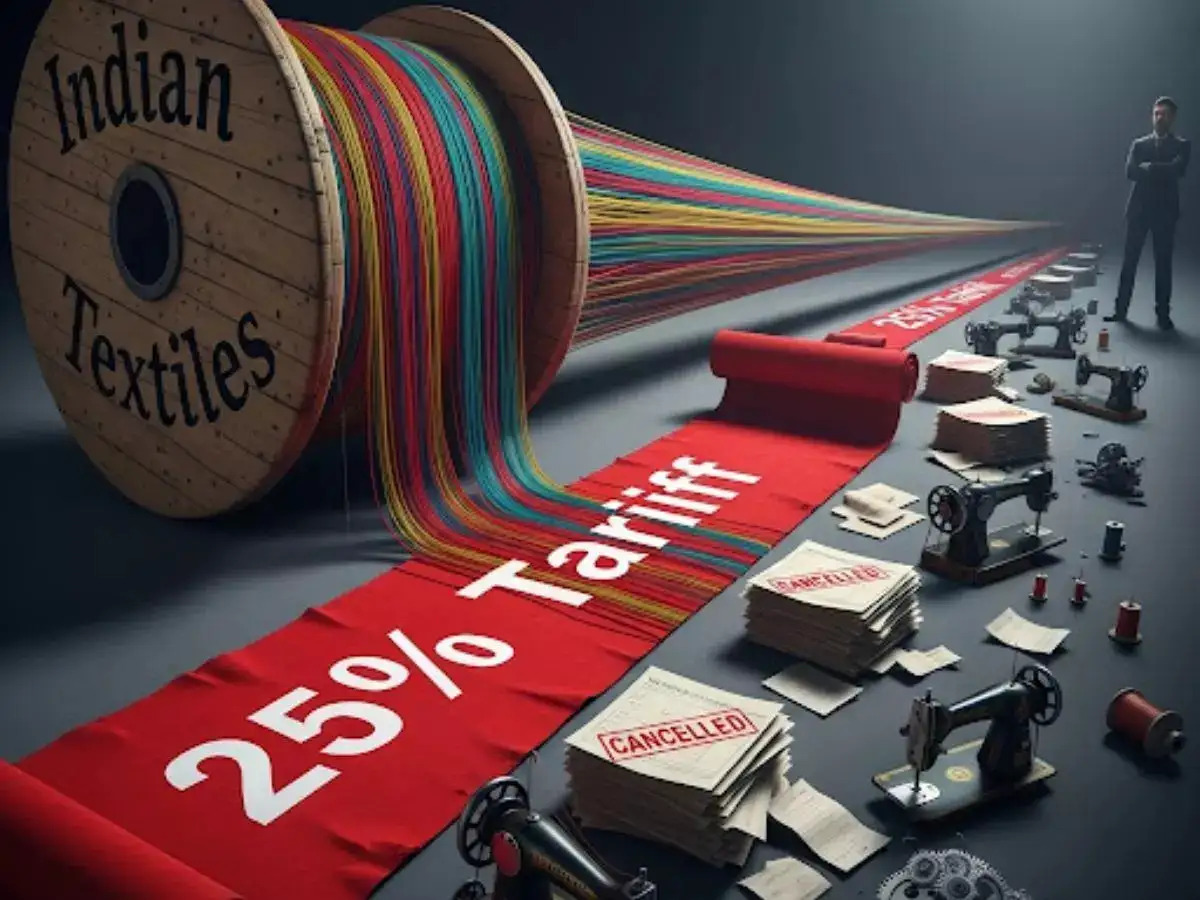
India may scrap the anti-dumping duties imposed on the imports of viscose filament yarn (VFY) from China.
There is a feeling products subject to the anti-dumping measures do not substantially damage the domestic industry of India.
This is good news for the viscose filament yarn industry and the downstream sector considering the current exchange rates and the delicate international trade mood.
The anti-dumping duty was levied by India starting from 2005.
May is traditionally a slack season in the Chinese market and coupled with new capacities coming on stream the VFY market is expected to face bigger pressure in the middle of year. But the demand from India will grow with the cancellation of the anti-dumping duty, so the impact on the market will be alleviated.
In India, traditional religious costumes and embroidery thread consume more than 60 kilo tons of VFY a year. But the capacity in the country is only 40 kilo tons. Indian VFY companies lack the production technology for high-end fine-denier filament, so domestic downstream producers will have more options by the cancellation of the tariff. Costs will obviously decrease, and the competitiveness of their own products will improve, which is likely to bring more demand and create a virtuous circle.
The US is thinking of rejoining TPP.
The reason is that eight member countries of TPP out of 12 members are largely dependent on imports from China. The US hopes they will clamor for American support to dampen Chinese exports.
China is an export based economy. Trade accounts for 37 per cent of its GDP. China depends substantially on TPP for its exports. TPP accounts for 49 per cent of China’s global trade.
The eight member countries of TPP, which are the concentration of China’s exports, are USA, Japan, Vietnam, Singapore, Malaysia, Australia, Mexico and Canada. They accounted for 97 per cent of China’s exports to TPP in 2015. China’s substantial exports to these countries created the big trade deficits of these countries.
The major components of China’s basket of exports to these eight member countries were electric and mechanical machinery and equipment. Nearly one-fourth of Chinese exports to Japan relate to electrical machinery and equipment. In the case of Vietnam, the share was 35 per cent in 2015.
This means that to wean away Chinese predominance in these countries, the US has to supplant Chinese exports of electrical and mechanical machinery by offering competitive pricing after reaping the benefits of low or no tariffs in the region.
Prominent UK retailers are supporting Cotton Egypt Association’s accreditation process. The process, launched by the Cotton Egypt Association (CEA), to help eliminate falsely labeled Egyptian Cotton goods from the supply chain, uses DNA testing to verify fiber content.
Manufacturers who do not meet the new criteria are no longer licensed to produce Egyptian Cotton products or use the trademarked logo.
The CEA’s initial focus will be on products in the US, Canada, Egypt, Europe, Australia and India. Developed by Bureau Veritas, the testing method has also been recently endorsed by The UK home furnishings chain Dunelm Group.
Cordura, Tencel and Artistic Milliners have partnered on SuperCharged Noir, a bold, black performance denim portfolio.
The collection not only addresses the need for a long-lasting black color, but also touches on the other trends consumers are looking for today, including softness and sustainability.
SuperCharged Noir has been inspired by five components: stay-true color, enhanced strength, engineered soft comfort, sustainable innovation and performance stretch. The fabrics are designed to stand up to the challenges of an active lifestyle to combine durability and flexible comfort.
Invista’s nylon 6,6 Black SDN fiber technology brings a new dimension in stay true color and enhanced strength and abrasion resistance to the collection, while Tencel fibers and Artistic Milliners complement those attributes with added color fastness, softness, sustainability and stretch.
This collection introduces a different angle that the marketplace has been aiming for: a durable fabric with added color-fastness to help clothes look and stay newer longer. The collection is infused with color-fastness locked in at the fiber level for excellent shade consistency and long-lasting vibrancy.
Cordura is a brand belonging to Invista. Tencel is a Lenzing brand.
The SuperCharged Noir collection aims to reach both fashion and workwear brands as well as kids’ wear designers who are looking for a durable, comfortable and responsible denim product for their customers.
Spanish-based global brand ZARA was recently accused by Southern African Clothing and Textile Workers Union (SACTWU), an affiliate of the IndustriALL Global Union, of producing designs with a strong similarity to a local designer’s collection.
Zara conceded to its guilt by withdrawing some of the merchandise that had appeared in stores in South Africa, the US and UK.
SACTWU is now urging Zara to work with local designers and clothing factories to create more jobs in the garment sector.
According to the union, the “cut-and-paste” of designs by big multinational companies ignores the “little folk” whose businesses are vulnerable to such practices and can collapse as a result. The union argues that the niche market is the lifeblood of small boutique brands and can be easily killed off by mass production by big retailers like Zara.
Champion Thread Company, based in the US, is known for innovative sewing threads. The Champion Soft Stitch ultra-soft thread is a specialty purpose thread designed to meet the requirements of stretch garments that are worn close to the skin and require extreme seam elasticity. Champion Poly Champ Core is a very popular staple polyester-wrapped thread that is ideal where high seam strength and high sewing productivity is required.
The company is also known for engineered yarns, narrow fabrics, product packaging and identification solutions, trim components, and unmatched industry expertise to help global textile, protective apparel, home furnishings, automotive, agricultural, industrial and other manufacturers solve their product, production, and supply chain challenges.
The family-owned and operated business is dedicated to providing high-quality products at competitive prices. It will exhibit its latest innovations at Texprocess Americas, May 22 to 24.
Located within the largest-ever Supply Chain USA Pavilion, the company will feature several new and most popular products, sponsor a special evening industry event, and hold an in-booth promotion to welcome its customers and visitors.
Based on its record setting results at the last show, it’s anticipating another robust event this year. It is ready to welcome a broad range of domestic brands and manufacturers as well as those from across Latin America and other textile-producing regions. It aims at helping its clients solve their toughest thread, production, and supply chain challenges.
Kraig Biocraft Laboratories has opened a subsidiary in Vietnam called Prodigy Textiles.
This will be Kraig’s spider silk production arm.
Vietnam has been the focus of the company’s efforts to launch commercial scale production of recombinant spider silk, due to the country’s existing silk production infrastructure. Kraig estimates that it can produce its recombinant spider silk at prices similar to ordinary silk, giving the company a tremendous competitive advantage.
Kraig Biocraft, based in the US, is a developer of spider silk based fibers and focused on the commercialization of new textiles and high performance fibers including spider silk. As the leading developer of genetically engineered spider silk based fiber technologies, Kraig has been able to achieve a series of scientific breakthroughs in the area of spider silk technology.
The company has produced the first recombinant spider silk cocoons from the new line of hybrid transgenic silkworms recently created at its production and research facility. This new hybrid line was created by combining one of the company’s best performing recombinant spider silk lines with a commercial strain, resulting in the largest cocoons in the company’s history.
The first generation cocoons from this hybrid cross have exceeded the company’s expectations, with some cocoons nearly twice as large as the original spider silk line cocoons.