FW

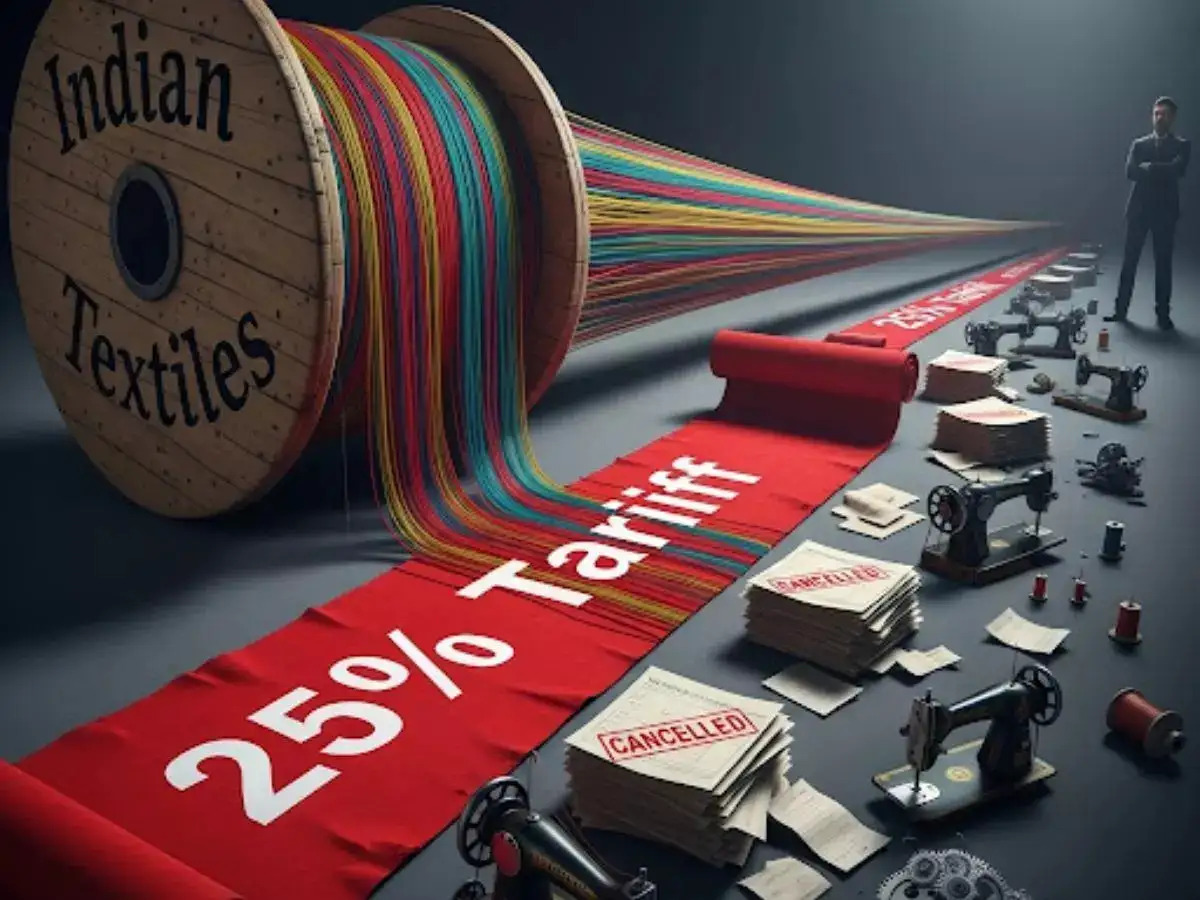
India’s apparel/readymade garment exports declined nearly four per cent in fiscal ’18. From fiscal ’17 to fiscal ’18, there was a 3.8 per cent decline. The dip happened due to continual month-on-month decline, beginning from a 39.30 per cent fall in October 2017 and ending at 17.8 per cent in March 2018.
Not only is apparel stagnating, it is also heading towards a recession. This clearly indicates an ongoing shrinkage in the industry. Global factors such as free trade agreements of competing nations with key markets like Europe, the UK and the US had already been posting a challenge to readymade garment exporters. GST in July 2017 resulted in blockage of funds for the export community. Further, export incentives such as duty drawback and rebate on state levies were reduced.
Global factors have been rendering Indian exporters uncompetitive. While China vacated the apparel export space, India is unable to encash on the opportunity, unlike Vietnam, Bangladesh or Cambodia, who have FTAs. India is emerging as an expensive affair in the global apparel market. Backed by its duty-free access to the EU market, Bangladesh retains its position as the second-largest apparel exporter after China. Vietnam remains the fastest-growing among large apparel-exporting nations, maintaining its growth in the US despite the latter backing out of a proposed trade agreement.
Huntsman is continuing to invest in R&D to bring cutting-edge innovation to the textile industry. Huntsman’s patented technology, which is used in Huntsman’s Novacron Super Black G and Novacron Super Black R dyes, is a valuable innovation for producing deep black shades.
Huntsman is a publicly traded manufacturer and marketer of differentiated chemicals. The company’s chemical products are sold worldwide to manufacturers serving a broad and diverse range of consumer and industrial end markets. Huntsman operates more than 75 manufacturing and R&D facilities in approximately 30 countries and employs approximately 10,000 associates within its four distinct business divisions.
Huntsman Textile Effects is a leading provider of high quality dyes and chemicals to the textile and related industries. The company has operations in more than 90 countries and six primary manufacturing facilities in six countries (China, Germany, India, Indonesia, Mexico and Thailand). It develops solutions and innovative products with intelligent effects, such as durable water repellents, color fastness, sun protection or state-of-the-art dyes which reduce water and energy consumption.
The per capita use of the company’s products in India is very low, but the company sees significant headroom to grow. Huntsman is looking at manufacturing and exporting out of India to the Middle East, Africa and neighboring countries. Apart from India, it has a significant presence in Bangladesh as its textile effect products are exported in large volumes.
Bangladesh has the potential to become the main supplier of jute to the global car industry. The industry needs about 1,00,000 tons of jute a year, of which 12,000 tons come from Bangladesh. Jute is one of the cheapest and the strongest of all natural fibers and considered as the fiber of the future.
The car industry uses the natural fiber to manufacture the interiors of vehicles. Previously, the car industry used glass fiber to manufacture the interiors. But glass fiber is not recyclable or biodegradable, so in 1994 the search for a green alternative began. Jute emerged as the frontrunner. Bangladesh started supplying jute to high-end car brands like BMW, Mercedes-Benz, Volvo and Audi in the early 2000s. The country’s jute is much admired for its high fiber quality.
The use of the natural jute fiber from Bangladesh by global car brands has helped in diversification of jute products. As a result, Bangladesh has the potential to export jute and jute goods worth almost seven billion dollars annually in the next seven years.
But in reality growth in supply has remained stagnant at five per cent over the last many years. And the unpredictable jute export policy is to blame. For instance, a few years ago, Bangladesh imposed a ban on the export of raw jute from Bangladesh, which left BMW facing a shortage of the natural fiber. Small traders cannot supply jute to car brands directly.
Bangladesh is exploring the market for readymade garments in Tunisia. In the last fiscal, products and services totaling $5.4 million were exported from Bangladesh to the North African country, almost two-thirds of which comprised apparel items. However, much of Bangladesh readymade garments are shipped to Tunisia from neighboring countries like Turkey and Italy, resulting in an increase in the price of Bangladesh made garments. So, Bangladesh is keen to establish direct trade links with Tunisia so that garment exporters would be able to sell their products at a lower price.
Besides RMG, there is a big potential for Bangladesh medicines, leather goods and handicrafts in Tunisia. At the same time, Tunisian olive, olive oil and dates have a potential market in Bangladesh. Due to the geographical distance, Tunisia has never received much attention from Bangladesh's exporters. The country’s close proximity to Southern Europe means the European Union, especially France and Italy, is the closest business partner -- both in terms of import and export. Groups of Bangladesh readymade garment manufacturers are scheduled to visit Tunisia to explore the Tunisian market.
"The recently concluded Fashion Access and Cashmere World attracted over 10,000 international visitors from 85 countries during the three-days. Around 227 exhibitors from 20 countries and regions including well-known international brands such as Otto Kessler, LSR International, Cerutti – Massimo Cerutti, Simpson London, Regal, Impression Imtopia, as well as young enterprises and start-ups participated at Fashion Access. They were really impressed by the kind of products and services on display. This exhibition special as the Cashmere World returned after 18 months. It was inaugurated among others by William Fung Kwok-Lun, Group Chairman, Li & Fung, who delivered an insightful speech on the importance of cashmere industry."

The recently concluded Fashion Access and Cashmere World attracted over 10,000 international visitors from 85 countries during the three-days. Around 227 exhibitors from 20 countries and regions including well-known international brands such as Otto Kessler, LSR International, Cerutti – Massimo Cerutti, Simpson London, Regal, Impression Imtopia, as well as young enterprises and start-ups participated at Fashion Access. They were really impressed by the kind of products and services on display. This exhibition special as the Cashmere World returned after 18 months. It was inaugurated among others by William Fung Kwok-Lun, Group Chairman, Li & Fung, who delivered an insightful speech on the importance of cashmere industry.
Buyers give positive feedback

At Fashion Access buyers seek finished while simultaneously visiting APLF for leather, materials and trend inspiration. More than 50 buyers from 21 countries were introduced to a large number of suppliers matching their needs. As STL, Spain said, “I have been visiting the show since 2011 and almost half of my suppliers were found here at Fashion Access. This edition is better than before in terms of quality of suppliers. Also, it is nice to see a variety of fashion hardware and components suppliers in APLF – Materials+.” Similarly, Nicoli Shoes, Dubai, averred, “I own 16 shops in Dubai, focussing on high-end and luxury women’s shoes and bags. Fashion Access is a focused trade show, which makes it a serious trading platform. I am able to meet China and Hong Kong footwear suppliers with competitive prices. I can also visit APLF for leather.”
Exhibitor Wannasu from Thailand explained, “We chose Fashion Access as our first trade exhibition since we launched our brand to be known outside Thailand. We have been approached by several buyers. We took advantage of APLF Leather & Materials+ to source new, better quality leather, material and metallic components.”
At Fashion Access, buyers can find OEM suppliers in the specially designed Sourcing Zone and brands in both Brand Avenue and Design Street. The trade fair is increasingly becoming an incubator for young brands such as Federico Vignato, a company founded one year ago by a young couple who use it as a test bed for their products & services. They are also one of the ‘Best of APLF’ awards winners for their creative ladies' bag designs. Alma Law, Co-founder, Frederico Vignato, says, “We have been approached by several brands and bag manufacturers who have complimented us and given us valuable advice. For a newly founded company, these encouragements coming from professionals are priceless.”
Knowledge sessions
Is the digitisation of footwear production and retail inevitable? Question like this and many others were discussed in depth by experts from across the footwear industry at the fourth Global Footwear Retail Conference (GFRC) sponsored by Tencel and ISA Tantec and co-organised by APLF and the Footwear Distributors & Retailers of America (FDRA). Like other industries, footwear too is facing retail challenges including how to adapt to rapid consumer demand shifts and how to develop and implement speed to market strategies. From 3D printing micro-factories installed in stores to big data analysis and face recognition, new technologies are being introduced at all levels of the industry.
The second day of Fashion Access was for recogning and rewarding the creativity and craftsmanship of young designers and companies. Three winners were selected for the Design-A-Bag Online Competition while 11 companies were given the Best of APLF Awards (BOAA) for their innovative products or applications. Winners of the Design a Bag competition included Hong Kong-based designer Chan Tak Kei, for her playful, imaginative jellyfish bag and Singaporean Ho Kuan Teck for its triangle, 8 shaped, smart ladies handbag.
Among the winners of the BOAA, Simpson London’s hand-stitched, traditional bridle-finish vegetable-tanned leather collection was awarded the Best Bag & Small Leathergoods Collection for its classic and simplicity while in the Best Men’s Footwear Collection Numero Uno was awarded for its hybrid, innovative athleisure collection. The next edition of Fashion Access and Cashmere World will take place in Hong Kong from March 13-15, 2019.
Lenzing and Jeanologia have collaborated to produce a capsule collection called Blues & Hues. The collection has been conceived to showcase the potential of collaboration between environmentally-minded companies which seek to meet the escalating appetite for sustainable denim products.
The collection will showcase new, fresh colors in conjunction with latest laundry application techniques whilst also staying true to denim’s indigo roots. Lenzing is a fiber producer. Always environmentally conscious, Lenzing is featuring new sustainable methods and products. Jeanologia is a textile technology firm, an innovation leader in sustainable fabric finishing techniques.
From fiber to finish, this Blues & Hues capsule collection demonstrates the exciting designs that result when fashion, comfort, and sustainability combine together. Because of their natural origins, Lenzing’s fibers enhance denim with a sustainability element as well as with the aesthetics and performance that are critical for denim today.
Color is key and powerful in this collection. A complete range of pastel colors and vibrant hues have been applied using Jeanologia’s eFlow technology. The denim becomes a reinterpreted basic, thanks to the reactive flow overdyeing that yields a retro aesthetic made in a modern way. Two environmentally-minded companies have worked together to address the market’s escalating calls for sustainable denim.
Sustainable farming is helping drive a more sustainable supply chain for Wrangle’s denim. The brand found that conservation tillage, cover crops and long-term crop rotation can remove three times the amount of greenhouse gas emissions from the atmosphere as conventional farming methods. They also improve crop yields and cuts costs.
Long-term conservation crop rotations can yield more cotton, lower production costs and increase environmental benefits. The diverse crops nourish the ground, and help manage pests and diseases, resulting in better quality soil. Wrangler believes its supply chain does not begin with fabric or cotton but with soil and the land itself.
The VF Corp. owned brand has become leader in sustainability in the denim industry. Besides recent investments in indigo foam dyeing technology, Wrangler launched a soil health program in 2017 to help increase the supply of sustainable cotton and encourage wider adoption of responsible farming practices.
Wrangler purchases roughly half of the cotton for its products from US growers. The pilot program builds on the company’s long-standing commitment to supporting US farming communities and other programs including a commitment to 100 per cent renewable electricity by 2025, zero waste facilities and manufacturing and technology improvements that have saved three billion liters of water over the last decade.
Better Buying and Ethical Trading Initiative (ETI) will collaborate in Bangladesh to support and promote responsible buying practices within garment industry supply chains. The Better Buying platform gives buyers anonymous ratings from suppliers on seven key aspects of purchasing practices – planning and forecasting, design and development, cost and cost negotiation, sourcing and order placement, payment and terms, management of the purchasing process, and CSR harmonization.
Purchasing practices can negatively impact wages and working conditions in global supply chains. ETI believes Better Buying scores and analysis will serve as an independent method of determining strengths and weaknesses within brands’ procurement cycles. There has been a debate about the impact of buying practices on the ability of suppliers to maintain good labor standards. International retailers and brands can therefore, only gain from this initiative, in terms of underpinning sustainable business for all, building their reputation and improving conditions for workers.
Better Buying and ETI expect the information and analysis that will result from the supplier ratings to help companies understand which purchasing practices are working well and which may benefit from focused efforts to improve. By using Better Buying, brands can identify how their buyers, product developers, and others responsible for bringing product to market can improve their day-to-day business activities, thus helping their suppliers uphold better labor standards.
Kutch-based NGO, Khamir is working with the National Institute of Design to experiment with Kala cotton. Kala is a coarse and short-staple strand of cotton grown in large parts of Gujarat.
It is tenacious and more responsive to dyes. However, it’s not easy to work with. From cultivation to creating yarns, it requires more effort compared to mainstream crops. While two groups — consisting of artisan and three students each — worked on cotton, two opted for sheep wool acquired from Kutch. The project was part of the coursework of the design program.
All the clothes were made completely on loom, without any waste, with natural dyes. Young artisans are being encouraged to get exposed to global trends and new ways of designing to reach out to a newer audience. The initiative at NID was thus strategic to providing them a new perspective.
Stakeholders have shown interest in taking the idea further. The indigenous cotton and wool, apart from being sustainable and providing livelihood to the traditional practitioners, are also better suited to the local climate. Indian textiles have thrived on indigenous varieties of cotton used by people in different parts of the country to suit their needs.
Although Vietnam is one of the five biggest apparel exporters in the world, there aren’t any known Vietnamese brands. The textile and garment sectors spearheads the country’s export and generates the biggest number of jobs -- about 2.5 million. However, most employees in the sector are manual workers in charge of simple steps while the steps requiring technical skills like dyeing or designing are facing a shortage.
Shortage of high-quality manpower is also one of the reasons why local production of apparel remains undeveloped and Vietnam has to depend on imported materials. Meanwhile, not much is being done about generating high value additions like designing products or on brand building.
Only about 30 per cent of the 6000 textile-garment businesses in Vietnam operate in textiles, including weaving, dyeing, printing and finishing fabrics. Most of the remaining firms make products ordered by foreign fashion brands. Only a few are able to create their own products, from manufacturing fabrics, designing, to making apparel.
Many companies still have to hire foreign experts and technicians at high costs to be responsible for dyeing, completing fabric and designing products, thus augmenting production costs and reducing their products’ competitiveness compared to foreign rivals.