FW

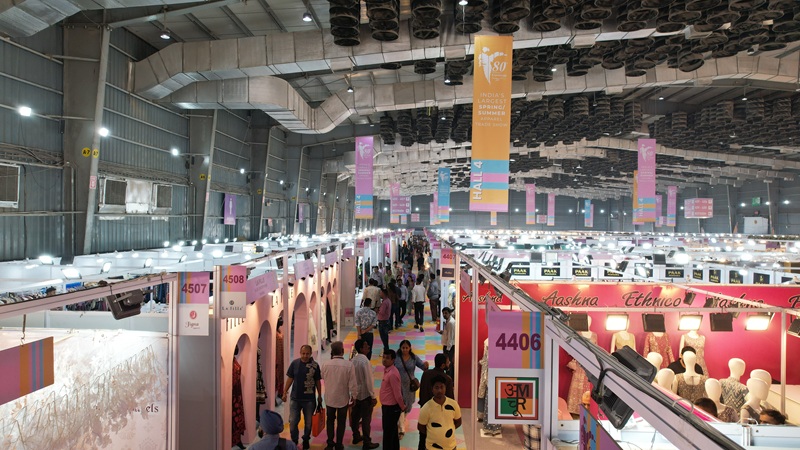
Textile mills and weaving units from different parts of Tamilnadu have displayed their products at a three-day event organised there by the Powerloom Development and Export Promotion Council along with the Regional Office of the Textile Commissioner.
With as many as 18 stalls, the business-to-business (b to b) meeting has companies from Palladam, Karumathampatti, Dindigul, Coimbatore and Erode displaying bed spreads, dress materials for men and women, aprons, shirts, towels, etc.
According to G. Kummaravel, assistant director at the Regional Office of the Textile Commissioner, this is an opportunity for hospitals, hotels, and educational institutions to select products and suppliers for bulk purchase. All the participants are direct manufacturers with 10 to 40 looms. They already supply products across the country and this is a platform for them to get new customers.
The Central Government has provided Rs. 10 lakh for the event and only a nominal amount is collected from the participants for the stall charges, according to Kummaravel.
Similar events were held in Coimbatore in 2011 and 2014. But, these were business-to-customer (b to c) exhibitions. This year, it was decided to have a business-to-business so that the participants get long-term customers rather than just the counter sales.
Textile dealers, garment manufacturers, merchant exporters, and institutions are likely expected visitors to the exhibition. The event was inaugurated today by G. Bakthavathsalam, chairman of KG Hospital.
Union Textiles Minister Santosh Kumar Gangwar inaugurated a 45-day-long skill upgradation training programme for Scheduled Caste handloom weavers in Bargarh district. Bargarh area of Odisha has a large cluster of handloom weavers and is famous for tie and dye Ikat weaves. It has produced a large number of national award winners.
The Minister also gave away certificates to students of the first handloom entrepreneur training course. Sixty handloom entrepreneurs have completed training in Indian Institutes of Handloom Technology at Bargarh, Varanasi and Salem.
Gangwar said that the central government is implementing several new initiatives which are aimed at raising earnings of handloom weavers to Rs 500 per day. The minister added that the Ministry of Textiles has asked state governments to send projects of blocks that have concentration of SC weavers on priority. A block-level cluster project is the new approach adopted by the government for comprehensive development of handloom weavers.
Under this, a project can avail assistance of up to Rs 2 crore for activities such as skill upgradation, loom upgradation, work sheds, professional assistance from a designer, common facility centre, dye house and a raw material depot, read a press release. In the last year itself, the government did sanction 228 such projects, 19 of which were in Odisha. Handloom weavers receive a wage of Rs 210 per day from the government during the training period, it added.
Italian company Lonati that happens to be the world’s leading manufacturer of socks machinery has signed a EUR 40 million contract with Uztex, a leader in the production of socks and a company that claims to have an output of 30% of Uzbekistan’s textile production for the supply of 1,024 machines.
The contract, signed in Zurich last month, is one of the largest orders in the history of the Brescia based textile machinery manufacturer. The delivery of the equipment is scheduled to take place at the end of this year and in the beginning of 2017. The deal also involves sock finishing lines manufactured by Tecnopea, the Lonati Group’s company specializing in automated machines for ironing and packaging of socks.
Latest in series of orders This order is the latest in a series of large orders received by the Italian company from Uzbek, which since 2015, has entered into a number of agreements for the supply of more than 1,000 of the latest generation automatic closed toe socks knitting machines bringing to 2,064 the overall share of total equipment purchased.
The negotiations with Uztex, which was founded in 2007 and can spin 11,000 tons of cotton a year at its two plants in Tashkent and Shovot, began four years ago, with first meetings held in Uzbekistan, Italy and Turkey. They were followed by the closer assessment of the product to meet the real needs of the customer, the company reports. Growth and expansion Uztex has grown considerably over the years. Two years since its foundation, the company expanded with Uztex Chirchik for the production capacity of 11,000 tons of dyed yarns and fabrics per year. Since 2010, a new department was formed for packaging 12 million items of clothing and in 2016 a new plant in Namangan was installed for the production of 7,000 tons of towelling material per year. In 2015 the company also doubled the Shovot site, which can now produce 8,000 tons of combed yarn per year.
Lonati Lonati, founded in 1946, is today the world's leading manufacturer of men's and women's hosiery machines, with about 8,000 machines produced each year, exported to over 60 countries. Some of the most important markets for Lonati are China, Turkey, Pakistan, Central America and USA.
Textile exporters of Pakistan have urged the Federal government for a comprehensive textile package to facilitate the domestic industry and attract more investment in the sector.
According to Shabir Ahmed, Patron-in-chief Pakistan Bedwear Exporters Association, Detailing the recent moves on the part of the Indian government, he said that recently Indian government approved Rs 60 billion special package for textiles & apparel sector to create 10 million new jobs in three years. As per estimates, Indian textile package will attract investments of $11 billion, besides generating $30 billion in exports. In addition, these measures also include additional incentives for duty drawback scheme for garments, flexibility in labour laws to increase productivity as well as tax and production incentives for job creation in garment manufacturing, he informed.
Ahmed was of the view that India had taken this step to facilitate the domestic industry and attract more investment in the textile sector, as over the last few years, the Indian apparel manufacturing had shifted to countries like China which had cost advantages. He said that India had already advantages of economies of scale and Pakistan was facing a tough competition in the world market.
Indian officials are confident that they will overtake Vietnam and Bangladesh in garment exports within next three years if the package is properly implemented.
Pakistan's exports to China and United Arab Emirates (UAE) have taken a downward trend, declining by 13.71 per cent and 24.5 per cent respectively in the financial year-2015-16. According to sources, China has done away with its policy to store raw cotton and yarn that comprises major portion of Pakistan export basket. The policy shift of the Chinese has also affected international price of yarn.
Pakistan's exports to UAE have declined due to decrease in the exports of petroleum products, chemicals, jewellery and rice. On the other hand, since Generalised Scheme of Preferences (GSP)-plus Pakistani products have duty free access in 28 member states of European Union (EU) since 1st January, 2014, exports to EU grew by 22 per cent in 2014. In 2015 also, Pakistani export to EU grew by 11 per cent in Euro terms. However, exports to Britain after Brexit may dampen exports.
It has been noticed that Pakistan's export market lacked diversification and was concentrated only in a few regions and countries with 51 per cent of exports confined to six countries/ regions like EU, US, UK, China, Afghanistan and Middle East. Pakistan has not been able to tap its export potential in the regional market and was facing tariff and non-tariff barriers in markets like Iran and India, they said.
Investment in exporting sectors has remained disturbingly low, as a cut-throat competition with emerging players like Bangladesh and Vietnam have made margins in the exporting business fairly unattractive. Sources said that rice being the second largest export item of Pakistan was given priority in the Strategic Trade Policy Framework 2015-18. To promote and develop rice exports, a Rice Development Council is being established. Basmati rice has been selected as one of the focus products for short term turn around in exports.
Significantly the Ministry of Commerce had recently signed Memorandum of Understanding with Indonesia for export of one million tons of rice over the next four years. Trade Development Authority of Pakistan (TDAP) organises participation of Pakistani rice exporters in all the leading international food fairs and organises trade delegations to the export markets.
When it comes to fashion and the demands of today’s consumer, apparel manufacturers and retailers need to be more flexible and responsive to cater to shoppers’ “see it now, want to wear it now” mindset in order to survive in the market.
That’s the message of leading global industry expert Jeff Streader, who will be giving a keynote speech at Canada’s first apparel and textile sourcing show – Apparel Textile Sourcing Canada (ATSC) – to be held from August 22-24 at the International Centre in Toronto.
A comprehensive trade show and conference, ATSC will bring to Canada more than 200 apparel and textile manufacturers from around the world including China, India, Bangladesh, Mexico, the U.S., Honduras, Peru and other countries. Delivering an unprecedented platform for making global industry connections, ATSC will provide attendees including small businesses, retailers, manufacturers and designers across Canada with new insights and up-to-date information needed to easily and effectively steer through the sourcing process.
According to an expert, consumers want instant gratification and access to the same outfits that celebrities are wearing now – they want to make purchasing decisions based on their lives then and there. For retailers and manufacturers, this means the days of long lead time orders are over. “Importers must now buy smaller quantities and fewer types of best-selling fabrics that can serve as the base of a line and be adapted for different designs.
ATSC is being organized by JP Communications, parent-company to TopTenWholesale.com and Manufacturer.com. JP Communications runs the most expansive network of business-to-business sourcing platforms in the U.S. Anchored by TopTenWholesale.com and Manufacturer.com, millions of members from around the world use the brands to locate wholesalers and manufacturers. Presented in coordination with the China Chamber of Commerce for Import and Export of Textile and Apparel (CCCT), the event is being supported by the Ottawa-based Canadian Apparel Federation (CAF), the Consulate General of the P. R. China in Toronto, the Trade Office of Peru and exporting agencies ProMexico and ProColombia.
The Woolmark Company, the Australian Wool Innovation (AWI)’s marketing subsidiary, has set an ambitious target to absorb three per cent of Vietnam’s $27 billion textile export market in a matter of four years. While the fibre only made inroads in the emerging market in 2012, the 2014-15 financial year saw the Vietnamese textile market acquire 800,000 kilograms of Australian wool, predominantly via early stage processing mills in China.
After an unsuccessful dabble in the market, more than a decade earlier, the research and development organisation has spent nearly $1 million annually on supply chain diversification in Bangladesh, Russia, Belorussia, Ukraine with a major focus on Vietnam. It is said that more than 30 Australian woolgrowers toured Vietnam and Hong Kong this month to witness the growth in the use of wool and to hear about the effectiveness of their levy-funded marketing. After a visit of one of 40 Vietnam-based factories using wool for the first time this year, AWI Vietnam consultant Tran Van Quyen felt that it was a realistic goal for Australian wool to penetrate 3 per cent or $810 million of the Vietnamese textiles and garment exports market by 2020.
Biting-off a larger slice of the textile market will be achieved through education, according to Dr Quyen, who is currently teaching 12 traditionally acrylic spinners how to manufacture wool and wool blended yarns. He said several of the 12 companies now trained in the dyeing, knitting and finishing processes had already started with commercial orders.
Dr Quyen divulged that his next goal would be to encourage early stage processing of top making and scouring in Vietnam’s garment-focused industry. According to him, this would act as an alternative to Australia’s heavy reliance on China as the major buyer of greasy wool.
This was behind AWI’s entrance into the Vietnamese market in the early 2000s following their Free Trade Agreement with the United States. However, political challenges stymied this attempt.
According to Consultant Gary Robinson, in 2014, in an effort to increase competition with China for Australian wool, AWI reignited the market with Russia and had another bid at generating a new market in Vietnam. Last year, Dr Robinson facilitated a trial with Nasilkmex near Hanoi, to use wool/acrylic blends in sweaters.
Despite only “fair success”, Nasilkmex adopted 90pc of AWI’s recommendations and last week began the commercial processing of wool which was witness by Australian woolgrowers.
“There are a range of things you encounter when you do these trials which aren’t just wool or market related - they’re politically related, culturally related and quality related,” Dr Robinson is said to have remarked.
"Some saw Brexit as an opportunity to rethink the EU style laws that are taking hold in South Africa, especially around health and safety. Some of South Africa’s largest companies that are dual listed in Johannesburg and London are feeling the pain of Brexit. Over the years firms with Johannesburg listings have also signed up for greater exposure to the London capital market."

Some saw Brexit as an opportunity to rethink the EU style laws that are taking hold in South Africa, especially around health and safety.
Some of South Africa’s largest companies that are dual listed in Johannesburg and London are feeling the pain of Brexit. Over the years firms with Johannesburg listings have also signed up for greater exposure to the London capital market.
African central banks are bracing for Brexit fallout that could further damage already shaky economies hurt by a collapse in commodity prices.
South Africa, the worst affected
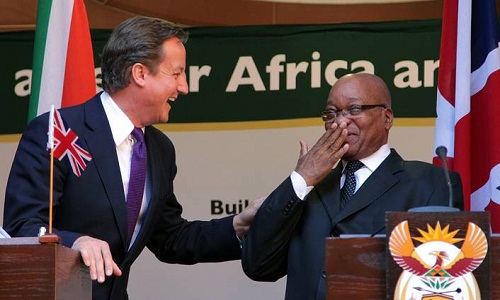
South Africa’s already battered economy may be the worst affected by Britain’s exit. As it became clear that the UK vote had swung toward leaving, the rand plunged during early morning trading, becoming the worst performing currency after the British pound. As of mid-morning the rand had fallen more than 7 per cent, its steepest single-day decline since the 2008 financial crisis.
Along with their peers on the London Stock Exchange, major South African companies dual-listed in London and Johannesburg are being hammered. South Africa’s close financial ties to the UK could be a problem - British banks’ claims on South African entities account for178 per cent of South Africa’s foreign currency reserves, according to analysts from UniCredit.
Economists also worry that trade between Africa’s most industrialised economy and the UK will suffer. Economists at the South African university, North-West, have said Brexit could take 0.1 percentage points off of the country’s annual economic growth, which already contracted 1.2 per cent in the first quarter of this year.
Bad timing for Nigeria
Brexit have come at a worse time for Nigeria, Africa’s largest economy. At a time when the government is trying to fix an economy on the brink of a recession by removing strict currency controls and also liberalising oil prices, the immediate effect of Brexit will test the nerves of Nigeria’s economic managers as global markets plummet.
Bilateral trade between Nigeria and the UK, currently valued at £6 billion (about $8.3 billion) and projected to reach £20 billion by 2020, will be disrupted as trade agreements made under the auspices of the EU have to be renegotiated.
Data from the National Bureau of Statistics shows that the UK was Nigeria’s largest source of foreign investment in 2015. A slowing British economy and its reverberating effects could signal a drop in investment, trade, and also remittances from the Nigerian diaspora who sent home $21 billion in 2015.
Reduced trade and investment from Britain will not necessarily be plugged by the rest of the EU, say Lagos-based economist Tunji Andrews. The EU will be looking to strengthen its internal ties, plus there’s cheaper oil from Iran, cheaper labor from China and the eastern block. There’s really nothing we have as a competitive advantage to them right now.
Brexit is already fueling other independence campaigns. Within hours of the vote, leaders in France and Holland, Italy and Denmark called for their own referendums on leaving the EU. This sentiment is shared in southeast Nigeria as well, where government forces have spent much of the past year quelling violent protests by activists advocating for the secession and establishment of an independent country called Biafra. Having already called for a referendum earlier in the year, pro-Biafra activists may now be further emboldened.
The end of ‘British Outwardness’
Other countries on the African continent are bound to be affected as well. In Egypt, the main stock index fell 1.3 per cent, with investors worrying about a loss of British investment and demand for Egyptian exports. The central bank of Mauritius issued a statement that it had raised its reserves of gold and US dollars to reduce exposure to the pound. Should the need arise, the bank stands ready to take measures as appropriate to protect the best economic interests of Mauritius in the circumstance, the regulator said.
More broadly, analysts from Brookings Institution worry about how Brexit will affect the UK’s overall engagement with Africa. As head of the G8 last year, the UK pledged to double aid to Africa. The UK has been the largest funder to IDA17, the World Bank’s concessional borrowing programme.
The think tank concluded in a blog post, Perhaps the biggest impact of the Brexit on Africa would be the end of British ‘outwardness’- the country’s concern with and responsiveness to global development issues.
Vietnam’s stock market reacted immediately to Britain's vote to leave the European Union, but industry insiders believe immediate Brexit impacts on the market as well as the bilateral trade ties between the two countries are unlikely.
However, in terms of bilateral trade ties between Vietnam and the UK, industry insiders said the situation will become a little rougher in the immediate term, but there will be no significant impacts from the Brexit.
According to Vu Duc Giang, chairman of the Vietnam Textile and Apparel Association (Vitas), Britain’s vote to leave the EU will have certain impacts on the roadmap to realise the free trade agreement between Vietnam and the EU in the coming time. The affect will not be significant as the UK currently accounts for only 3 per cent of Vietnam’s textile export to the EU, he explained.
Similarly, it is not likely for the Vietnamese footwear sector to be affected by the Brexit, said Nguyen Duc Thanh, chairman of the Vietnam Leather, Footwear and Handbag Association (Lefaso). Compared with other EU countries, the UK also accounts for a modest share of Vietnam’s footwear export, so the impacts, if any, will not be significant, he elaborated.
A weaker ringgit will be the immediate impact to Malaysia from Brexit, which fell steadily against the US dollar at a pace last seen in the Asian financial crisis of 1997/1998 by midday yesterday as investors dumped riskier assets in emerging markets for so-called safe-haven assets such as US treasuries, Japanese government bonds, German bunds and gold.
Malaysian Rating Corp Bhd chief economist Nor Zahidi Alias says the whole issue boils down to uncertainties that will have impact on business decisions and the real economy especially in Europe. Brexit will cause a knee jerk reaction to the financial markets - currencies being the most vulnerable. The volatility in equities and bonds cannot be underestimated in the short term but will eventually subside when a clearer picture emerges.
For now, the pound sterling has weakened against the ringgit but the cross-rate will be up for a lot of volatile trading. Analysts have pointed out before the referendum that the ringgit and the rupiah were the most vulnerable Asean currencies to swings associated to the uncertainties surrounding the aftermath of Brexit.
The direction of commodity prices and crude oil in particular, will be key to the ringgit’s performance. The global crude oil benchmark, Brent, declined by more than 4 per cent in the late morning as British media confirmed that Brexit was imminent. There is every indication that crude oil prices will continue to be volatile because demand may be crimped by Brexit uncertainties stemming from recessions in Britain and the EU, potentially slower US economic growth and the unresolved Chinese debt crisis.