
The real momentum was not about trading one fibre for another at a sluggish pace. It was about raw speed and removing the compromise entirely. The next wave of sustainable fabrics is being asked to do two tough jobs at once: cut down environmental damage while hitting the exact durability, feel, and factory speeds that mills and shoppers refuse to live without.
For years, the apparel world treated sustainability like a series of frustrating trade-offs. You picked recycled over virgin, natural over synthetic, and lighter footprints over heavy-duty performance. That hesitant mindset is falling apart. At Intertextile Shanghai Apparel Fabrics Autumn 2026, the real momentum was not about trading one fibre for another at a sluggish pace. It was about raw speed and removing the compromise entirely. The next wave of sustainable fabrics is being asked to do two tough jobs at once: cut down environmental damage while hitting the exact durability, feel, and factory speeds that mills and shoppers refuse to live without.
The commercial engine in Shanghai

Intertextile Shanghai Apparel Fabrics has long served as the industry’s working engine room, drawing tens of thousands of global buyers, mills, and innovators across sprawling exhibition halls. Running alongside events like Yarn Expo, the fair acts as an immediate reality check for textile concepts. If an idea cannot survive the scrutiny of sourcing directors and commercial fabricators walking these aisles, it simply does not make it to retail racks.
That upstream-to-downstream connection was particularly visible at Yarn Expo, where more than 260 exhibitors in the Chemical Fibre Zone were positioned alongside cotton, regenerated, silk, linen, cashmere and wool suppliers. The Taiwan Zone, for instance, was bringing functional blends, high-tenacity yarns and sustainable cellulosic fibres into the same sourcing conversation; a sign that the raw-material debate is becoming increasingly about “what a fibre can do”, not simply what it is made from.
No room for pricey compromises
The market reality is blunt. Shoppers might cheer for green initiatives, but they rarely accept stiff trousers, sagging gym leggings, or clothes that fall apart in the wash just to feel virtuous. Brands run into the exact same wall. A lower-impact fabric that costs a small fortune, behaves badly in cutting rooms, or cannot be delivered on tight seasonal deadlines will never leave the boutique corner.
Wilmet Shea, General Manager of Messe Frankfurt (HK) Ltd, pointed directly to this shift on the show floor, noting that apparel makers now demand solutions that bring creativity, function, sustainability, and day-to-day efficiency together under one roof. The heart of the matter is that word “efficiency.” Unless a cleaner yarn runs smoothly through high-speed looms without breaking and costs roughly what the market expects, it never reaches everyday wardrobes.
One interesting signal came from Italy’s Trabaldo Togna, which was presenting stretch fabrics made entirely from wool, cashmere and mohair, without synthetic elastane. The proposition was not simply “natural” — it was natural material attempting to deliver stretch, crease resistance and breathability normally associated with performance fabrics. It is a useful illustration of where the market is heading:” remove the compromise rather than merely change the label.”
Moving beyond simple bottle recycling
The conversation around raw materials has matured quickly. Chopping up plastic drink bottles into polyester yarn used to be enough to earn a green tag, but buyers have moved on. Sourcing teams in Shanghai spent their time grilling suppliers on where their raw trash actually originates, how much water and heat it takes to process, and whether the fabric can be broken down again down the line.
Intertextile’s Econogy Hub grounded these ideas in business terms, tying recycled and bio-based fibres directly to verifiable chain-of-custody paperwork and mill readiness. UNIFI showed off this exact shift with its REPREVE platform, pushing hard toward turning discarded textiles back into fresh thread rather than leaning on bottle flakes. The shared consensus across the booths was hard to miss: if a cleaner fibre cannot scale up smoothly across industrial machinery, it does not count as a fix.
Another signal was coming from the technology side of recycling. Nigeria-based Starich Recycling Technology was listed among the fair’s first-time international exhibitors with a focus on advanced plastic recycling. The significance was less about one new entrant and more about the widening geography of recycling technology, the circular-material conversation is no longer confined to the traditional textile manufacturing centres.
Performance as a ‘Quiet Climate Ally’
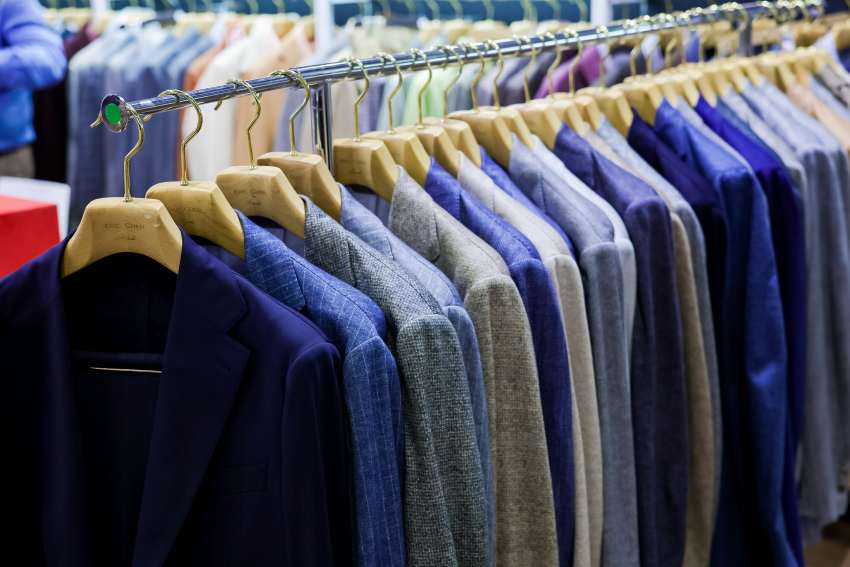
Instead of working against nature, tough technical performance is turning out to be one of the best ways to protect it. Fabric that stays strong through years of wearing and machine washing simply keeps people from having to buy replacements so often. Lighter, fine-gauge knits require less raw stuff to weave and take less energy to ship around the world. At the show's Functional Lab, mills proved that quick-drying, climate-ready, and stretchy materials can be built from low-impact polymers without giving up their strength, showing that durability itself is a form of waste reduction.
The same logic was visible beyond sports and outdoor fabrics. Intertextile’s Functional Lab was explicitly built around thermal regulation, comfort and sustainability, moisture management and other performance functions, while The CUBE brought advanced fabrics and accessories together for sportswear, athleisure and protective applications. The message was increasingly straightforward: performance is not a niche feature; it is becoming part of the sustainability equation itself.
Facing the synthetic reality
Man-made fibres make up around sixty percent of all the textiles used on earth. Dreaming about replacing them overnight with natural cotton and linen is simply out of touch with reality. The more sensible path on display across Shanghai was to keep the working muscle of synthetic fabrics while quietly rebuilding the chemistry underneath.
Toray walked this line by showing off plant-derived polyesters alongside heavy-duty membranes, while Huafeng rolled out bio-based and recycled spandex built to stretch reliably without ruining future recycling efforts. The tactic is straightforward: preserve the resilience and stretch that people love wearing, but swap out the petroleum roots powering the yarn.
Kaneka offered another variation on the same theme, showcasing Kanecaron® modacrylic fibre as a softer, durable alternative to conventional eco-fur materials, alongside Protex® fibres engineered for flame-resistant applications. It demonstrated how the sustainability conversation is also moving into “material substitution without sacrificing technical specifications”, replacing one material only when the replacement can perform the required job.
The bottleneck behind the loop
While chemical and mechanical recycling tricks are getting sharper by the month, collecting old clothes remains a tangled mess. Mills like Everest demonstrated systems aimed at taking discarded clothing and turning it back into usable raw materials, matching the process with single-material stretch fabrics that are easy to break down later.
Yet the biggest headache is not the factory chemistry; it is the physical legwork of gathering, sorting, and hauling discarded garments out of household closets. Until cities and collection programs figure out how to feed these recycling lines with dependable heaps of raw scrap, most circular dreams will stay stuck inside factory floors.
There was, however, another practical lesson in Shanghai: circularity can also start by reducing resource use before recycling is even required. In the Beyond Denim zone, Türkiye’s Kipaş Denim was preparing waterless finishing and low-impact indigo dyeing, while Pakistan’s Azgard Nine was highlighting eco-efficient yarn blends and low-resource washing. Such approaches attack the environmental burden during production itself rather than waiting for the garment to become waste.
China’s practical proving ground
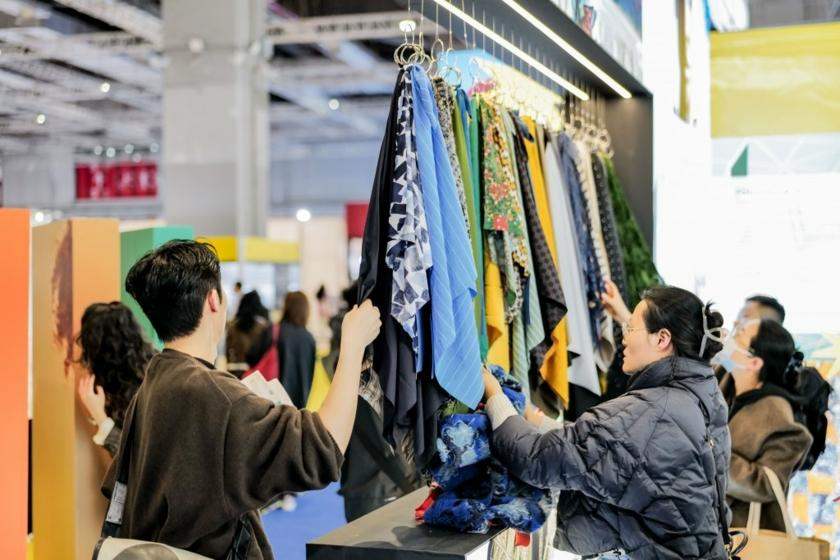
China’s influence in this shift comes down to industrial proximity and speed. Yarn spinners, dyehouses, knitters, and garment makers sit within driving distance of each other, making it easy to test a new raw fibre in real production runs over a couple of weeks instead of several months. An experimental thread has to drop environmental impact, match standard performance, hit normal price points, run fast through weaving machines, and ship in massive volume. If it fails on any one of those points, it stays an exhibition curiosity.
That ecosystem was reinforced by the sheer breadth of Yarn Expo: synthetic and regenerated fibres sat alongside natural fibres, functional yarns, high-tenacity products and sustainable cellulosics, while the concurrent Intertextile platform took those materials further into fabrics and applications. The proximity of these stages makes Shanghai less a showroom and more a live comparison point for competing material propositions.
Winning without the green label
The lasting impression from Shanghai is that the future of textiles will not be won by the company with the slickest environmental brochure. It will be decided by whether an engineered yarn can survive harsh dye baths, cut cleanly on the factory floor, and hold its shape through dozens of laundry cycles.
The ultimate victory will likely be the day the word “sustainable” disappears from hangtags altogether. When a circular shirt feels softer, wears harder, dries faster, and costs the same as the regular option, nobody needs to be convinced to buy it. The fabric does the talking, and the problem solves itself.