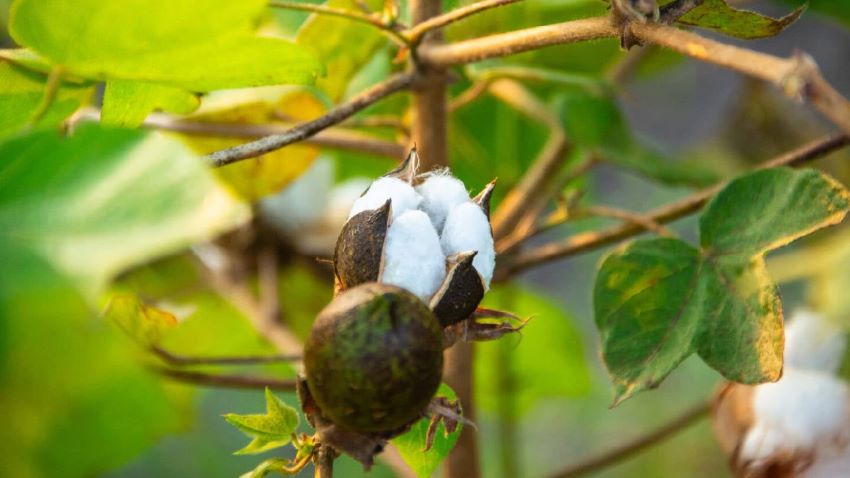
Better Cotton Initiative (BCI) has announced a new partnership with the Israel Cotton Production & Marketing Board (ICB). As per the partnership, 100 per cent of Israeli farmers have signed-up to BCI, and Better Cotton from their first harvest is already available. With the addition of Israel, BCI now operates in 21 countries worldwide.
While Israel is a relatively small cotton producer, it demonstrates highly advanced practices at field level. Examples include country-wide implementation of integrated pest management (IPM) methodology based on plot specific scouting of pests and beneficial organisms, regular area-wide infestation assessment, cultural control methods, a pest resistance monitoring routine and regulated usage of pesticides. In the realm of water and nutrition management, highly controlled and cost beneficial application of these inputs are based on direct plant and soil monitoring. The hallmark of the Israeli cotton sector and its proven success in producing high yields of excellent quality cotton is the result of ongoing collaboration between growers and their cooperatives, ginners, extension services and research and development activities and institutions. This cooperation is coordinated under the leadership of ICB.
Israel produces predominantly extra long staple, feeding the Better Cotton supply chain with the highest quality cotton fibre. Many BCI members use Extra Long Staple to produce high-quality textiles.
- 1
- 2
- 3
- 4
- 5
- 6
- 7
- 8
- 9
- 10
PM MITRA parks face execution test as India’s textile exports recalibrate
India’s textile and apparel sector closed FY 2025-26 with exports worth Rs 3,16,334.9 crore, a 2.1 per cent increase that,... Read more
Dominance of Pure Play: Apparel is rewiring growth around precision, AI and trac…
The global fashion industry is entering a structural reset, and it’s not just because of cyclical demand decline or tariff... Read more
New Australian Wardrobe Economy: Where AI, sustainability, e-commerce converge
Australia’s fashion and apparel industry is no longer defined by post-pandemic recovery; it has entered a transformative phase. According to... Read more
Intertextile Shenzhen 2026- Pioneering the AI-driven future of fashion technolog…
The global textile industry is descending upon the Shenzhen Convention & Exhibition Center from June 9–11, 2026, for the highly... Read more
Yarn Expo Shenzhen 2026: GBA connectivity and AI innovation drive mid-year sourc…
The global textile industry is preparing for a strategic return to the South China manufacturing heartland as Yarn Expo Shenzhen... Read more
Indo-Dutch alliance targets textile circularity as global green jobs hit 142 mn
Netherlands and India formalized a roadmap to scale circular design and textile recycling. At the FICCI RECEIC Global Symposium 2026... Read more
Redefining what responsible production looks like
India's textile and apparel sector has set the global benchmark for sustainability at scale, and two clusters are leading the... Read more
China’s duty-free revival meets a reality check as Hainan shifts from VICs to va…
Hainan’s retail recovery is beginning to look less like a cyclical rebound and more like a rewiring of China’s domestic... Read more
Zombie inventory and shrinking margins inside China’s fashion returns meltdown
China’s digital fashion market, long celebrated as the world’s most sophisticated test bed for e-commerce innovation, is facing a destabilising... Read more
Circularity by Design: How EU rules are turning data into fashion’s new currency
The European fashion sector has entered a compressed transition window. Two regulatory confirmations: the revised EU Textile Labelling Regulation (effective... Read more