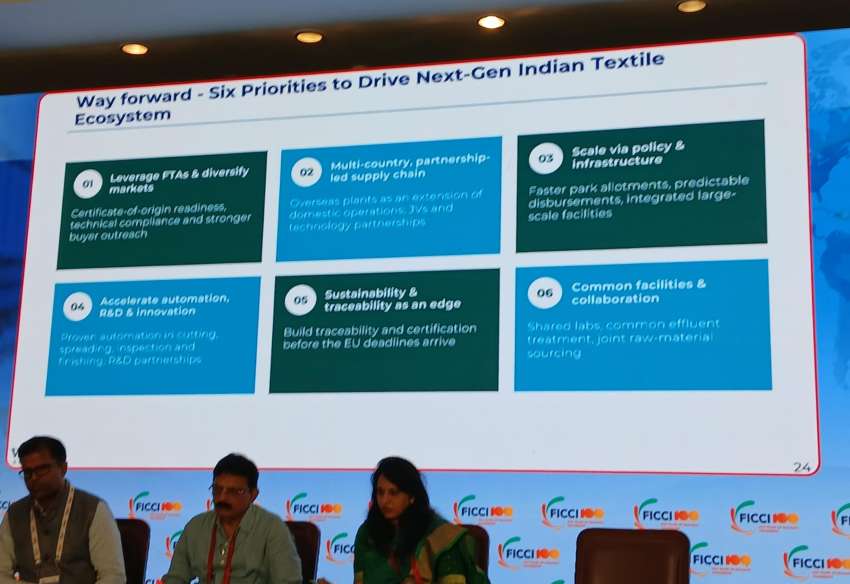

Global apparel and textile exporters servicing European markets have redirected capital budgets toward core material efficiency and automated machinery following a decision by European regulators to postpone mandatory packaging directives. The European Commission’s deferral of the harmonized packaging labeling rules under the Packaging and Packaging Waste Regulation (PPWR) to Q2, FY27 offers temporary relief to international garment suppliers. Apparel manufacturers are leveraging the extended compliance timeline to prioritize investments in low-water dyeing, automated spinning, and recycled fiber technology rather than immediate secondary packaging redesigns.
Operational focus moves from off-loom packaging to garment gootprint
With the mandatory two-year implementation window effectively shifted to mid-2029, global mills are addressing foundational environmental impacts across primary garment production. Industry assessments show, processing raw textiles accounts for over 70 per cent of an apparel product’s total lifecycle carbon footprint, compared to less than 8 per cent for transport packaging. Consequently, apparel exporters are channeling resources toward compliance with upcoming digital product passport standards and circular fabric construction.
The regulatory extension gives apparel producers crucial breathing room to sequence their capital investments logically. Modernizing spinning and finishing technology now builds long-term operational resilience, ensuring factories can seamlessly absorb future packaging compliance costs without eroding gross margins, says Jude Allan, Managing Director, OPRL
Dual compliance pressures across European trade corridors
Despite the delay, textile producers managing large product lines face ongoing friction. Exporting hubs must synchronize compliance across primary, secondary, and tertiary packaging layers to satisfy both future EU standards and the UK’s evolving packaging extended producer responsibility (pEPR) framework. By embedding resource-efficient technology directly into weaving and garment assembly today, textile enterprises aim to stabilize operational costs before mandatory compliance deadlines resume across European retail channels.
Guiding consumer goods through evolving circular economy regulations
OPRL is a UK-based non-profit organization providing standardized recycling guidance across 800 member companies reaching 95 per cent of the UK retail market. The organization develops digital assessment tools and packaging recyclability metrics to guide consumer goods and apparel manufacturers through evolving EU and UK circular economy regulations.