
Crushed between the disposable deluge of hyper-fast fashion and the reputational fallout of luxury supply-chain scandals, Europe’s textile upstream is preparing to break its historic silence. At the Filo yarn and fiber exhibition in Milan, spinners, fiber producers, and dyers issued an ultimatum to the retail establishment: either commercial brands learn to communicate the unseen industrial integrity of their suppliers, or the upstream will bypass them to educate consumers directly.
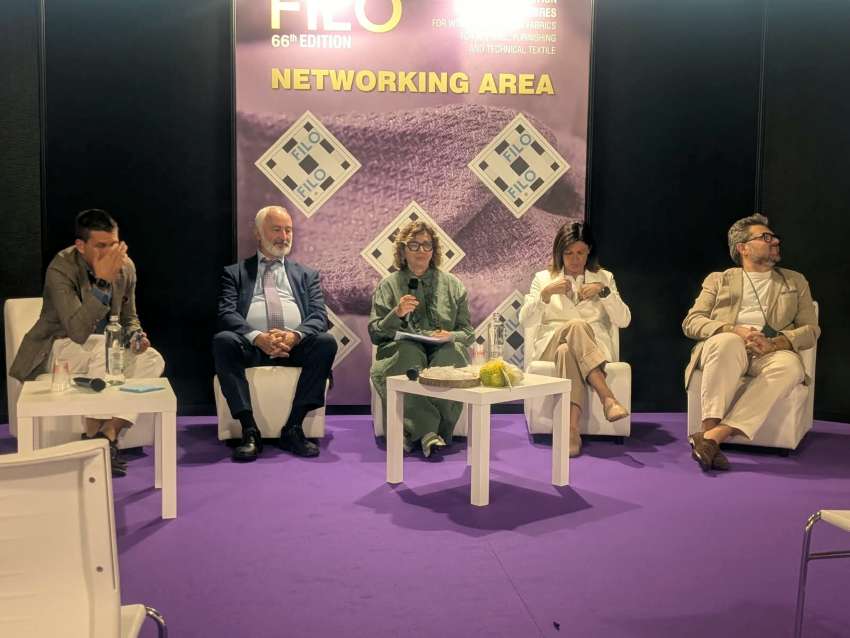
Convening under the banner of transforming an unprincipled, volume-obsessed "supply chain" into an uncompromising "value chain," industry leaders argued that the traditional retail filter has collapsed. While global apparel labels continue to hide behind opaque care tags disclosing nothing beyond mandatory fiber percentages, consumers are left adrift; frequently opting for ultra-cheap, throwaway garments out of sheer disillusionment with empty premium claims.
The InsideOut Antidote: A decalogue for the modern wardrobe
To pierce this information blackout, session moderator Giusy Bettoni, Founder and CEO of Milan-based eco-hub C.L.A.S.S. (Creativity Lifestyle And Sustainable Synergy), unveiled a direct-to-consumer cultural offensive debuting this November: “InsideOut by C.L.A.S.S. — Trust is the new luxury”. Built around the pointed question "Does what you wear show what you believe in?" The campaign translates industrial complexities into an instinctive, illustrated visual language created by Turin artist Gianluca Cannizzo.
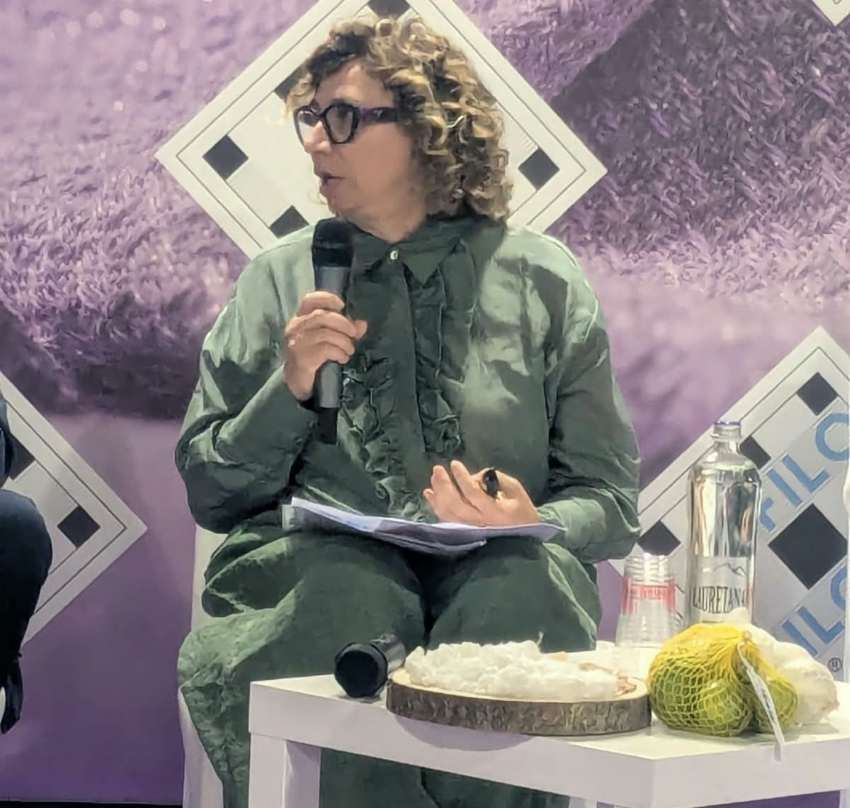
"Trust is the new luxury," Giusy declared, framing the imperative for upstream visibility. "Inside out, simply because from the inside we bring to the outside the values that we don't see and we can't touch, but that exist. If the brand can no longer be a communicator of value compared to the value chain that is demotivating and extinguishing enough, taking our values directly to the consumer is the only path to follow."
At its core sits the InsideOut Decalogue, a 10-point benchmark equipping citizens to audit their wardrobes across foundational ethics, community social initiatives, verifiable transparency, and environmental metrics spanning carbon, water, and soil.
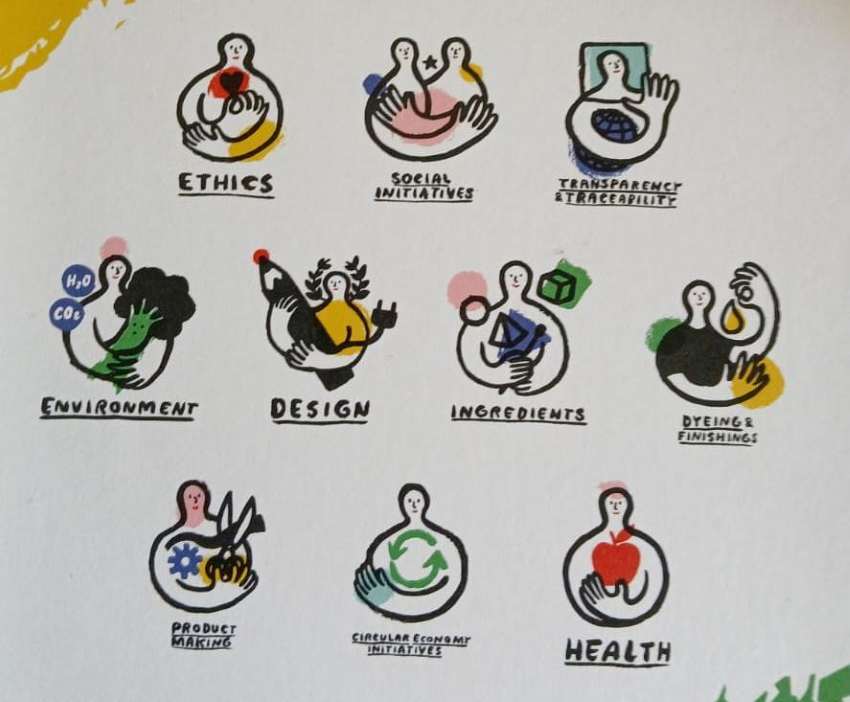
Extending straight into mill operations, the framework evaluates circular design, responsible natural and recycled ingredients, low-impact dyeing and finishing, clean product making, holistic circular economy loops, and health safeguards for wearers and workers alike. Rather than treating sustainability as a cosmetic marketing veneer, the initiative demands that the invisible labor, chemistry, and craftsmanship of the factory floor be worn on the outside.
Redefining Excellence: The rise of 'Integrated Quality'
The panel argued that conventional craftsmanship is no longer enough to command consumer loyalty. In its place, mills are championing "integrated quality", a standard where aesthetic appeal and hand-feel are inseparable from forensic traceability, fair labor contracts, clean chemistries, and verified circularity.
Lenzing Group showcased how this works at raw-material scale. Carlo Covini explained that producing wood-based cellulosic fibers like modal, lyocell, and viscose under the Tencel and Ecovero flags requires managing three distinct chemical generations alongside certified non-deforestation guarantees through FSC and PEFC standards. More importantly, to protect against market sensationalism and greenwashing, Lenzing embeds physical diagnostic tracers directly inside the fibers, verifying supply chain authenticity before any garment brand is permitted to license its trademark.
"We have to do a lot of education because now, with the amount of fiber and concepts on the market, I challenge the average consumer to find the solution," Covini stressed. "Once cotton was just cotton; now it is organic cotton, regenerative agriculture cotton; you practically have to go buy a t-shirt with an agronomist. There is a cultural speech that is missing because we have too much sensationalism, but you have to go all the way."
Downstream in the wet-processing sector, Francesco Ferraris of Tintoria Ferraris dismantled the illusion that textile finishes are merely chemical afterthoughts. Describing dyeing and finishing as the definitive stage that imparts soul, brightness, elasticity, and character to a fabric touched by hundreds of prior hands, Ferraris positioned human capital as the ultimate defense against commoditization. While algorithms and artificial intelligence transform processing, the essential difference lies in artisanal know-how, worker welfare, and regional stewardship, values that conventional retail labels routinely erase.
"Dyeing is not the first aspect you see on a fabric, it is what you feel when you get closer: the softness, the color, the soul," Ferraris explained. "Before us, hundreds of hands have touched that product, and taking care of the fabric means taking care of the people who work with us. The know-how comes from our people and applied technology, and in a world where artificial intelligence is rising, it is human care that makes the true difference between companies."
Circular economics was grounded into hard industrial reality by Manuela Gasolini of Filatura Astro, a family-owned mechanical recycling specialist celebrating its 70th anniversary. Moving beyond simple pre-consumer offcuts, Gasolini detailed a zero-kilometer circular breakthrough developed in Italy’s Biella textile district: a 100% recycled cotton yarn dyed entirely without synthetic dyestuffs or chemical liquor. Instead, post-consumer cotton garments ground down into ultra-fine powder are used to dye the next generation of recycled fiber, proving that end-of-life garments can form an endless, closed-loop color system.
"When I have overused a shirt and this shirt can no longer be worn, do I throw it away? No, we don't throw it away anymore—we make powder and use it to dye new fibers," Gasolini stated. "If you put in front of the consumer another product that costs half as much, but he does not know where it comes from or how it is made, it is obvious what he will pick. At least let’s tell him the story. Let’s give him the opportunity to choose with information."
The Gen Z Rupture: Rejecting legacy fashion's strategic method
Providing an unvarnished academic perspective, Giovanni Maria Conti, Associate Professor and Materials Specialist at Politecnico di Milano’s School of Design, warned that conventional fashion conglomerates are on the verge of losing the next generation of both shoppers and designers.
Conti revealed that today's design students, raised on screen immediacy and stripped of patience for corporate euphemisms, view the wardrobe of the future almost entirely through the lens of personal customization, repair, and second-hand sourcing. Physical storefronts have already ceased to function as points of sale, operating merely as fitting rooms to verify physical silhouettes before purchases are conducted on personal terms.
Crucially, this generational alienation has reached the hiring pipeline. According to Conti, top design graduates are now openly turning down prestigious roles at legacy Italian and global fashion houses. Refusing to perform menial tasks or participate in the routine "reverse engineering" and knock-off culture of commercial design studios, young creators are instead migrating toward agile micro-labels and ethical upstream suppliers where their personal values are reflected.
"Our students are able to say 'no thanks' to very important names in national and international fashion," Conti revealed. "For how they understand ethics, the way of working, and their time, they say, 'I prefer to go work at a new brand where maybe I earn less, but I learn something more than going inside a luxury house to make coffee or do reverse-engineering of vintage pieces bought at markets to copy collections.' It is a paradigm shift, and the university can be a tool to bridge this reality."
An ultimatum to the retail floor
The consensus from the Filo stage was unambiguous: if fast-fashion models commoditize garments and luxury houses obscure their supply chains, the factories making the clothes will claim the narrative themselves.
C.L.A.S.S. will take the InsideOut roadshow to upcoming citizen and industry forums in Venice on October 23 and Milan on November 25. The message to brands is clear: transparent, verifiable integrity is the only surviving definition of luxury, and upstream manufacturers are no longer willing to remain invisible.