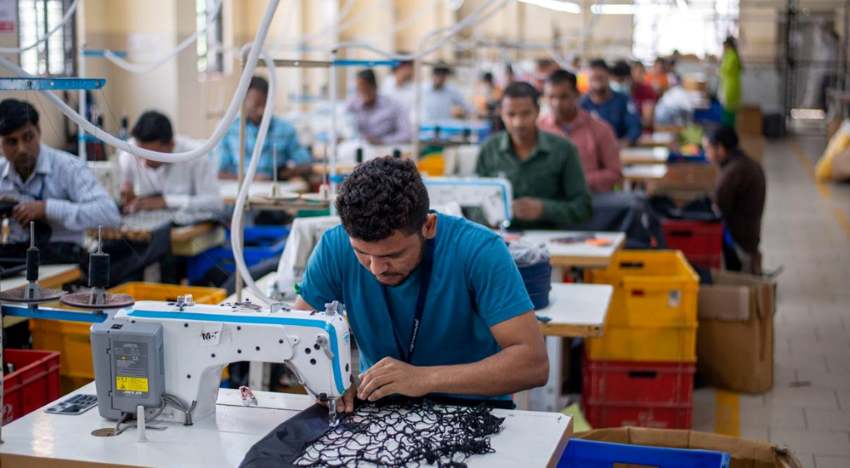
Bangladesh’s domestic textile manufacturing sector has intensified its lobbying efforts for stringent restrictions on foreign yarn inflows, citing severe financial distress among local spinning operations. The Bangladesh Textile Mills Association (BTMA) formally petitioned regulatory bodies to eliminate duty-free bonded warehouse facilities for importing medium-to-coarse cotton yarn variants, specifically targeting counts ranging from 10 to 30. Industry representatives report that local mills are currently saddled with unsold inventory exceeding 120 billion Taka, compounded by severe utility shortages and elevated operational overheads.
Domestic producers argue, unhindered access to cheaper cross-border yarn imports has marginalized local spinning capacities, forcing dozens of production facilities to shutter operations.
Apparel exporters warn of supply chain disruptions
The push for tighter trade controls has triggered sharp pushback from readymade garment exporters, who contend that curbing yarn imports will severely impair their global competitiveness. Apparel manufacturers emphasize, local spinning mills frequently struggle to match the price efficiency and volume consistency required for large-scale international orders. Imposing barriers on essential raw material imports forces the garment sector into a constrained domestic market, elevating production costs just as global buyers demand tighter pricing margins, noted a senior official from the Bangladesh Knitwear Manufacturers and Exporters Association. Economists warn that balancing the survival of upstream spinning units with the export velocity of downstream apparel remains a critical regulatory challenge for the regional textile economy.
Sustaining exports volume with sustainable production
The Bangladesh textile and apparel industry serves as the backbone of the national economy, encompassing extensive spinning, weaving, and garment-assembly units. Catering primarily to major global fashion brands across North America and Europe, the sector continuously navigates complex raw material sourcing challenges, evolving trade policies, and sustainable manufacturing mandates to sustain its export volume.