At Intertextile Shanghai, the real advantage was pure turnaround time: cutting the distance between a raw lab fibre, a finished garment, and the retail shelf.
For decades, everyone understood China’s textile success story; endless factory capacity, massive scale, and rock-bottom prices. That definition simply doesn't tell the whole story anymore. Walking the halls of Intertextile Shanghai Apparel Fabrics and Yarn Expo Autumn, an entirely different reality was on display. China's genuine competitive edge has shifted to speed. The country can now turn complex material concepts into finished retail goods faster than anywhere else in the world. For global clothing brands, the big question is no longer just where a fabric can be woven the cheapest, but where a new material can be designed, sampled, fixed, and shipped without getting stuck in red tape.
A massive gathering at the National Exhibition and Convention Center
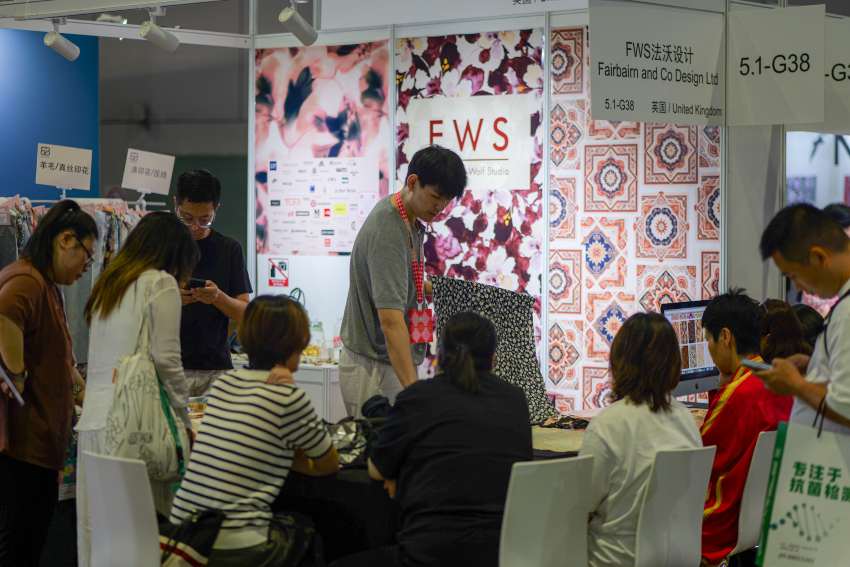
Held at Shanghai’s National Exhibition and Convention Center, the flagship autumn showcase served as a true barometer for the global rag trade. With Intertextile spanning some 240,000 square metres across multiple halls and co-locating alongside Yarn Expo, the twin events brought together over 4,000 international and domestic exhibitors. It wasn't just a place to place orders for next season; it offered a live panoramic view of an entire supply chain operating under one roof, running from basic chemical polymers to ready-to-wear garments. Intertextile alone covered more than 3,500 exhibitors, while Yarn Expo added nearly 600 suppliers across seven specialised zones.
The significance was not simply the size. Yarn Expo's Chemical Fibre Zone alone brought together more than 260 exhibitors, while its adjacent zones covered cotton, fancy yarns, linen, silk, cashmere and wool. At the same time, the concurrent Intertextile platform moved the conversation downstream into fabrics, accessories, technology and applications. That physical concentration effectively shortened the distance between ‘material discovery and product development’.
A ‘Live’ proving ground for global brands
Nicolas Banyols, Chief Commercial Officer at The Lycra Company, spelled this out clearly on the show floor at Intertextile Shanghai, "For us, China is almost like a 'playground' where we test all our stories. For every single product launch and innovation, the first adopter is very often China."
Banyols wasn't just talking about a big consumer market; he was talking about how fast things move. Because everything from yarn spinners to garment stitchers sits in the same regional hubs, a brand can take a brand-new concept from a laboratory drawing board to store shelves in just a few months. Instead of designing a fabric in Europe or the US and merely sending the production tech pack to China, global companies are now pulling Chinese partners into the room on day one of research and development.
That “live proving ground” is also visible upstream. Yarn Expo's Tongkun – China Fibre Fashion Trends Display Zone was designed around hands-on exposure to the latest domestic high-tech and eco-friendly synthetic fibres, while its New Fibre New World programme brought academic and corporate R&D voices into the same conversation. The point is subtle but important: “innovation is being placed closer to the people who can commercialise it quickly”.
Saving weeks instead of pennies
The old way of sourcing meant haggling over pennies on the price of a shirt. Today, the real money is saved in the weeks shaved off the production calendar. Instead of working in isolated silos, different steps of the textile chain are tightly linked.
A revealing example came from Coats Digital, which used Intertextile to demonstrate AI-powered solutions aimed at improving operational efficiency, production planning and decision-making. Its presentations focused on moving apparel manufacturing beyond conventional cost management towards smarter production…precisely the kind of shift that turns time saved into a competitive advantage.
The significance is bigger than one software company. When fabric planning, cutting, production engineering and factory decision-making become increasingly data-driven, the traditional advantage of simply having cheap labour becomes less important. The factory that can make the right decision faster can potentially compress the entire development-to-production cycle.
Intertextile's Innovation & Digital Solutions Zone was built around exactly this convergence, with HKRITA and Coats Digital showcasing technologies for digital product development, planning and manufacturing optimisation.
Rethinking fibres from the ground up
Over at Yarn Expo, the raw material side showed the exact same shift. Hundreds of fibre makers filled the Chemical Fibre Zone with bio-based yarns, fibres made with captured carbon dioxide, and chemically recycled polyester. China isn't just churning out generic thread anymore; it is creating the higher-value technical chemistry that sits inside the fibre itself.
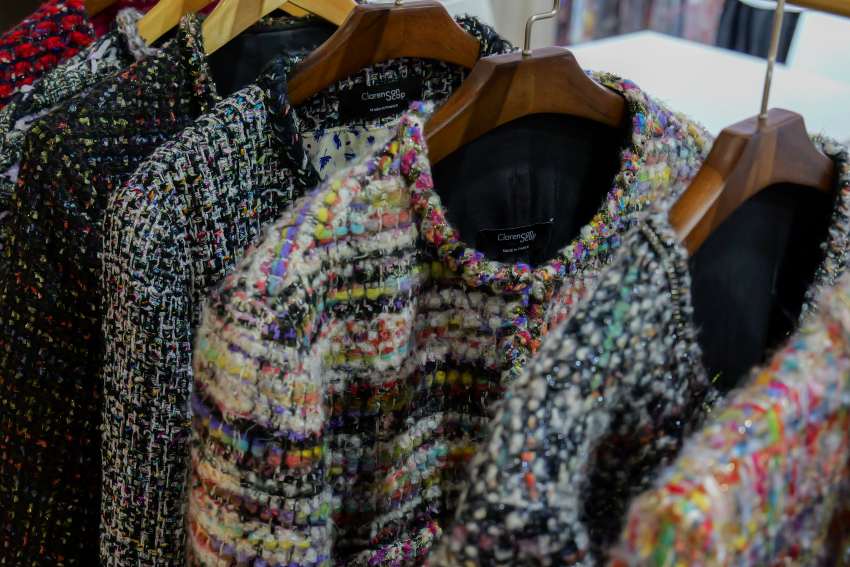
At the same time, suppliers aren't abandoning synthetics like polyester, nylon, and elastane, they are actively fixing them. Major global players like Hyosung and Toray used the fair to show off plant-based polyesters, recycled nylons, and renewable stretch yarns developed right alongside Chinese mills. Rather than waiting for someone else to figure out sustainable synthetics, they are building the formulas right there.
The breadth of the Chemical Fibre Zone underlined the point. Chinese producers including Fujian Cyclone Technology, Shenghong Group and Huafon Chemical were preparing high-performance materials, while the broader Yarn Expo platform included functional blends, high-tenacity fibres and sustainable cellulosic products from international suppliers. The innovation pipeline was therefore not one-dimensional: it ran from ‘chemistry to yarn specification to fabric application’.
Another interesting development was the Tongkun – China Fibre Fashion Trends 2026/27 display, where more than 200 chemical-fibre companies were represented around functional, bio-based, recycled and solution-dyed fibres. The Chinese industry was effectively putting future fibre concepts directly in front of downstream brands and product developers.
Why this setup is so hard to replicate
Other countries can build modern factories, buy advanced sewing machines, or offer lower wages. What is nearly impossible to replicate is how tightly packed China's industry is. The raw chemical plants, yarn spinners, dyehouses, knitters, garment workshops, and online retail giants practically live down the street from one another.

Tie that to local consumers who constantly want fresh fashion trends every few weeks, and the whole system starts running on fast-forward. Shoppers demand new looks, mills quickly spin and knit small test batches, factories sew the clothes, and real sales numbers tell the brands whether to scale up or try something else.
The structure of the Shanghai event itself illustrated that compression. Yarn Expo, Intertextile, CHIC and PH Value operated concurrently, bringing fibres and yarns, fabrics and accessories, finished fashion and knitwear into the same venue. The result is not simply convenience for buyers; it allows ideas to move across adjacent stages of the value chain without the usual physical separation.
That is where China's speed advantage becomes more interesting than its scale advantage. “Scale produces volume. Integration produces velocity!”
Intertextile proved that the conversation around Chinese manufacturing has fundamentally shifted.
It is no longer just about who can make an order the cheapest, it is about who can get the next idea into a customer's hands before anyone else has even finished a sample.
The Shanghai model increasingly looks less like a traditional manufacturing chain and more like a ‘Continuous product-development loop’: fibre innovation feeds yarn development; yarn moves quickly into fabric; fabric is tested against real applications; digital tools compress planning; and the resulting product can move into commercial production without crossing multiple disconnected ecosystems. That may ultimately be China's more difficult advantage for competitors to copy.