The global textile and apparel trade has grown from $560 billion in 2006 to $914 billion in 2025, reveals the August 2026 edition of The Textiles Observer published by the International Cotton Advisory Committee (ICAC). But beneath that growth is a deeper shift: the incremental volume created by population growth, fast retail cycles, activewear and technical textiles is being captured by man-made fibres (MMF).
The change is stark. Cotton's share of global industrial fibre demand has fallen from 68.3 per cent in 1960 to 21.1 per cent in 2025. Over the same period, synthetics rose from just 4.6 per cent to 71.7 per cent. This is not primarily about cotton production falling. Global cotton mill use has remained broadly within a 24-27.2 million-tonne range for two decades. The issue is that cotton has failed to capture most of the additional fibre demand generated by the expansion of global textile consumption.
Table: Global fibre & apparel shift (1960–2025)
|
Category |
Earlier period |
2025 |
|
Global textile & apparel trade |
$560 bn (2006) |
$914 bn |
|
Cotton share of industrial fibre demand |
68.3% (1960) |
21.10% |
|
Synthetic/MMF share |
4.6% (1960) |
71.70% |
|
Knitted apparel exports |
$145.2 bn (2006) |
$289.1 bn |
|
Woven apparel exports |
$158.5 bn (2006) |
$257.7 bn |
The cost advantage
The first competitive advantage is revenue. Cotton is always exposed to weather, pest pressure, agricultural cycles, currency movements and export restrictions. That creates greater volatility in raw-material procurement and raises the risk of inventory losses for mills and brands.
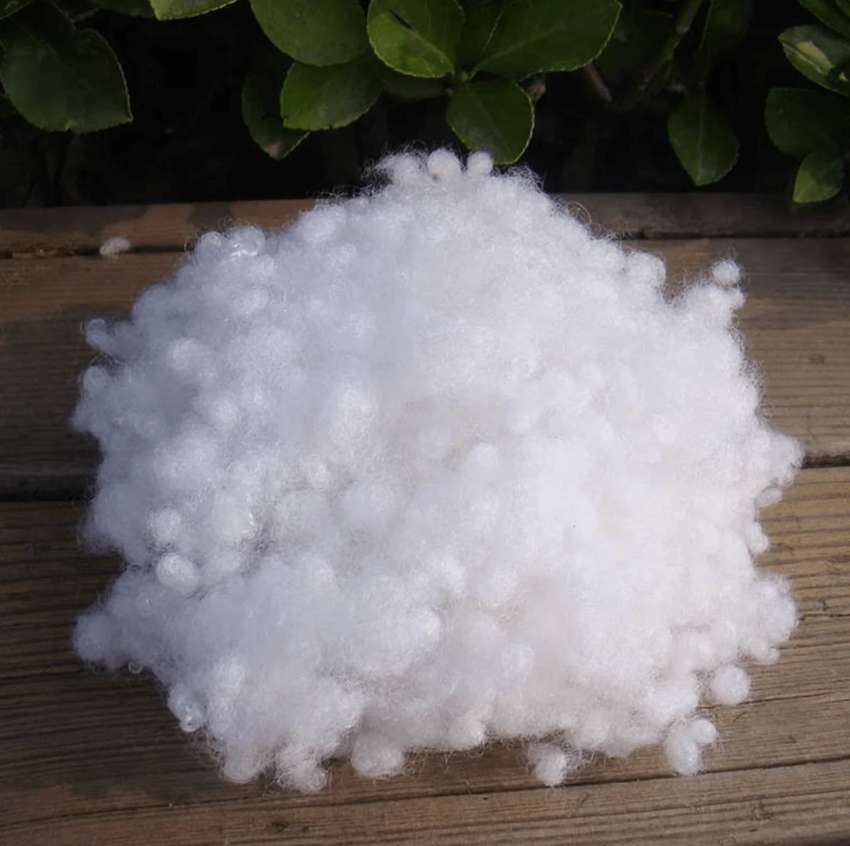
Polyester, in comparison, benefits from the scale and continuity of petrochemical production. PSF and filament yarns, produced principally from PTA and MEG, have generally maintained a substantial cost advantage, with PSF trading at a 30-50 per ent discount to benchmark cotton lint per kg. Conversion reinforces that gap. Cotton loses roughly 8-12 per cent of bale weight during opening, cleaning and combing through waste and noils. Synthetic staple fibres can approach near-complete material utilisation. Continuous filament production also bypasses several preparatory and spinning stages altogether. For mills, therefore, fibre choice is more a question of cost per usable kg and machine productivity, rather than simply raw-fibre price.
Performance changes demand
Cost, however, does not fully explain synthetics' rise. Polymer engineering has increased the functional envelope of textiles. Micro-denier fibres, engineered cross-sections and textured filaments allow manufacturers to build moisture management, thermal regulation, stretch, abrasion resistance and lightweight strength directly into fabrics. Polyester and nylon have consequently become central to activewear, technical outerwear, seamless products and performance workwear.
Elastane has boosted the transition. Stretch products that once required compromises between comfort, durability and recovery can now be engineered through combinations of synthetic fibres. This has changed the commercial equation for retailers. A fabric that dries faster, retains shape, withstands repeated washing and enables lighter garments can command consumer relevance while reducing product weight and, in some applications, logistics costs.
Trade follows fibre economics
The geography of textile manufacturing reflects these advantages. China remains the dominant exporter, supported by vertically integrated petrochemical, filament, spinning, weaving and garment ecosystems. Bangladesh rose from 14th among textile exporters in 2006 to second in 2025, while Vietnam has moved up from 21st to third, helped by its position in performance apparel and synthetic-intensive supply chains. Together, China, Bangladesh and Vietnam accounted for about 44 per cent of global textile exports in 2025.
The downstream numbers reveal the shift more clearly. Cotton remains dominant in basic apparel, but its share is declining even as absolute trade grows.
Table: Apparel exports by segment
|
Apparel segment |
2006 exports |
2025 exports |
2006 share |
2025 share |
|
Knitted Apparel |
$145.2 bn |
$289.1 bn |
— |
— |
|
Cotton Knits |
$69.9 bn |
$128.3 bn |
48.30% |
44.50% |
|
Synthetic/MMF Knits |
$35.6 bn |
$99.2 bn |
24.60% |
34.40% |
|
Woven Apparel |
$158.5 bn |
$257.7 bn |
— |
— |
|
Cotton Wovens |
$84.2 bn |
$112.5 bn |
53.10% |
43.70% |
|
Synthetic/MMF Wovens |
$52.3 bn |
$121.8 bn |
33.00% |
47.30% |
The inversion is particularly significant in woven apparel. Synthetic and MMF woven exports reached $121.8 billion in 2025, overtaking cotton woven exports at $112.5 billion.
Cotton's mill problem
Cotton's challenge is also operational. Fibre contamination can translate directly into lost productivity and commercial claims. Research cited in The Textiles Observer identifies insect-derived honeydew stickiness and seed-coat fragments among the problems. About 64 per cent of surveyed commercial spinners identified stickiness as a major fibre defect, with consequences including roller lapping, drafting failures and machine downtime. In severe cases, contaminated cotton lots can face price reductions of up to 50 per cent.
Seed-coat fragments create another downstream problem. Inadequately removed fragments can survive spinning and appear as undyed specks after processing, contributing to end-breakages, weaker yarn and rejected fabric lots. These are not merely technical issues. For global buyers operating on narrow margins and tightly scheduled production calendars, defects translate into rework, claims and delayed deliveries.
The composite response and reset
South Asian mills are responding by investing in automation and fibre diversification. For example Apex Textile Mills near Dhaka shows the direction: optical trash sorting was installed in the blowroom and 35 per cent of ring spindles were converted to polyester-cotton and cotton-modal blends. Over 12 months, the mill reported a 22 per cent reduction in yarn breakages and an 18 per cent decline in dye-house rework. The broader lesson is that cotton's future may not lie in competing with synthetics on every parameter. It may lie in becoming cleaner, more consistent and easier to blend.
For textile manufacturers, the fibre debate is therefore moving beyond cotton versus polyester. It is becoming a question of conversion economics, consistency and engineered performance.
Cotton retains powerful advantages in hand feel, breathability, natural origin and consumer familiarity. But unless improvements in cultivation, pest management, ginning, contamination control and automated sorting raise its industrial efficiency, synthetics are likely to capture a disproportionate share of future volume.
The $914 billion global textile trade is still growing. The question is no longer whether that growth will occur, but which fibres will absorb it. The evidence increasingly points toward those that can deliver lower conversion costs, predictable quality and performance at scale.