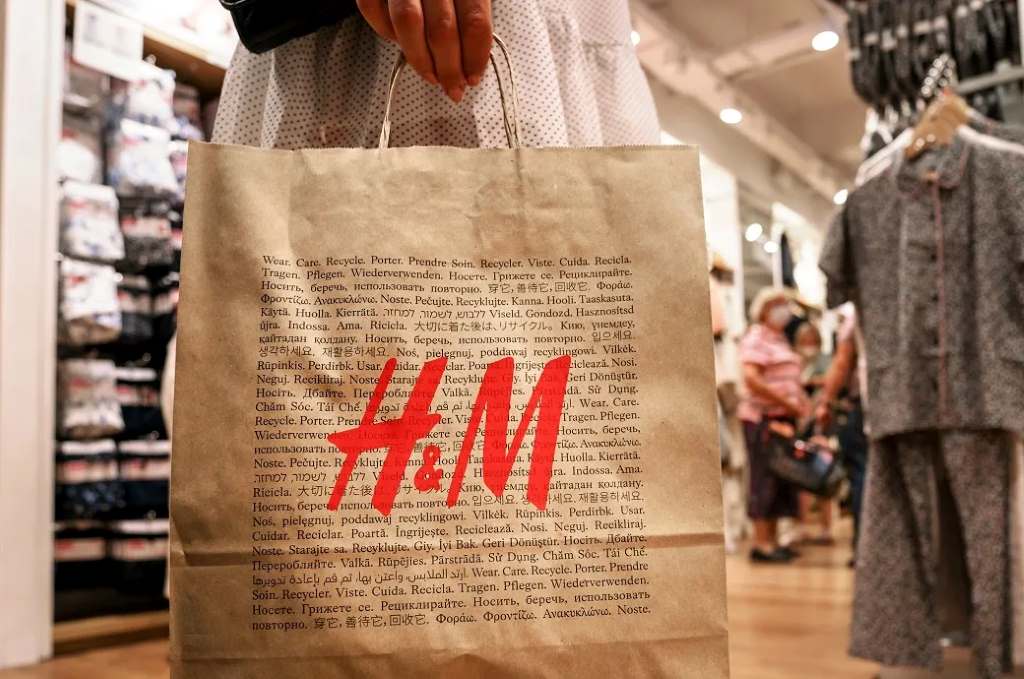
Profits are taking precedence over physical expansion in global apparel retail today. Years of building extensive store networks are giving way to a leaner operating model as fashion retailers adapt to slow discretionary spending, rising operating costs and rapid growth of ecommerce. H&M Group's latest half-year result for fiscal 2026 reflects this shift. Rather than pursuing aggressive store expansion, the Swedish fashion retailer is continuing to rationalise its physical footprint while investing in inventory efficiency, technology and supply chain agility, a strategy now being mirrored across the global fashion industry.
Smaller network, better returns
H&M ended the first half of fiscal 2026 with 4,038 stores worldwide, which is a net reduction of 128 outlets over the past year and over 600 fewer stores since 2022. The company plans to open around 90 stores during the full year while closing approximately 170, resulting in a net reduction of 80 locations. The retailer has also completed the closure of standalone Monki stores, integrating the youth fashion brand into Weekday to simplify operations and reduce duplication. While the restructuring contributed to a modest decline in sales, it strengthened profit.
Table: H&M Group financial performance (H1 2026)
|
Details |
Value |
Change |
|
Net Sales |
SEK 104.4 bn |
-1% in local currencies |
|
Gross Profit |
SEK 56.2 bn |
— |
|
Gross Margin |
53.80% |
+1.5 percentage points |
|
Operating Profit (excl. one-off items) |
SEK 8.1 bn |
+14% |
|
Operating Margin |
7.80% |
— |
|
Global Store Count |
4,038 |
— |
|
Inventory (stock-in-trade) |
SEK 34.9 bn |
-10% |
Despite a 1 per cent decline in net sales in local currencies, operating profit excluding one-time restructuring costs rose 14 per cent to SEK 8.1 billion, while gross margin improved to 53.8 per cent, highlighting the financial benefits of a leaner operating model.
H&M's strategy reflects a broader change across global fashion retail rather than an isolated restructuring exercise. Several established apparel retailers, including Gap Inc., have spent recent years reducing underperforming stores, while Inditex, the owner of Zara, has steadily consolidated its retail network by investing in larger, experience-led flagship stores instead of maintaining widespread smaller outlets. The economics of physical retail have changed significantly. Higher commercial rents, wage inflation, long-term lease obligations and increasingly stringent sustainability regulations particularly in Europe have raised the cost of operating extensive store portfolios.
At the same time, consumer purchasing patterns continue to shift online, increasing competition from digital-first platforms such as Shein and Temu that operate with shorter product development cycles. For traditional retailers, maintaining large inventories across thousands of physical stores has become an increasingly expensive proposition.
Table: H&M regional store net changes (May 2025-May 2026)
|
Region |
Net change |
Total stores |
|
Western Europe |
-20 |
985 |
|
Nordics |
-17 |
354 |
|
Eastern Europe |
-4 |
473 |
|
Southern Europe |
+2 |
564 |
|
Americas (North & South) |
+8 |
761 |
|
Asia, Oceania, & Africa |
-97 |
1,301 |
H&M's regional footprint reflects these changing priorities. The sharpest drop occurred across Asia, Oceania and Africa, where the company reduced its network by 97 stores over the past year. Western Europe also recorded a net decline of 20 stores, while the Americas posted a modest increase of eight outlets, indicating continued selective expansion in growth markets.
Inventory becomes the competitive edge
Beyond store closures, inventory management has emerged as one of the industry's most important profit drivers. For long fast-fashion retailers have relied on large seasonal inventory commitments that frequently resulted in aggressive markdowns when demand weakened. Today's focus has shifted towards faster stock rotation and more disciplined purchasing.
H&M reduced inventory by 10 per cent year-on-year to SEK 34.9 billion, equivalent to just 15.8 per cent of rolling 12-month sales. Lower inventory levels helped reduce promotional activity and supported higher full-price sales, contributing directly to improved margins. However, lean inventories also increase operational complexity. Smaller stock buffers require far more accurate forecasting to avoid missed sales opportunities.
Chief Executive Officer Daniel Ervér acknowledged that tighter inventory controls had occasionally limited the company's ability to fully meet customer demand. To improve responsiveness, H&M is flattening management structures, investing in RFID-based inventory tracking and bringing merchandise decisions closer to regional markets. The retailer absorbed restructuring costs of SEK 679 million as part of this organisational overhaul.
Supply chains move closer to consumers
Store optimisation is also reshaping sourcing strategies. As retailers operate with lower inventory levels, long production lead times have become a competitive disadvantage. Many global apparel companies are therefore shifting portions of manufacturing closer to major consumer markets through regional sourcing and nearshoring models.
Shorter supply chains allow retailers to replenish popular products more quickly, reduce excess inventory and respond faster to changing consumer preferences. Analysts believe this strategy is improving long-term financial resilience even if traditional retailers still trail digital-native competitors on speed.
As Yanmei Tang, Analyst at Third Principles Advisory opines, H&M may not lead the market in speed-to-market, but it has significantly strengthened profitability, inventory discipline and supply chain resilience compared with previous years. The company's future investments reflect this strategy. Rather than allocating significant capital to expanding store numbers, H&M plans selective growth in markets such as Paraguay and Argentina while upgrading flagship stores in major cities including Stockholm and Rio de Janeiro.
For global apparel retailers, the measure of success is shifting away from the number of stores they operate. Instead, sustainable growth is being defined by lean inventories, resilient supply chains, stronger margins and the ability to respond rapidly to changing consumer demand. H&M's latest restructuring suggests that in today's fashion retail landscape, fewer stores may ultimately deliver stronger financial performance.