Sri Lanka has bright prospects of recovering European Union's GSP Plus trade concessions that were withdrawn in 2010. The loss of the GSP Plus concession has greatly affected the Sri Lankan apparel sector. Various EU committees have already assured their support to help regain the facility and a visiting member of European Parliament has assured help to Sri Lanka to regain tariff concession.
The EU withdrew the GSP Plus facility in August 2010 claiming Sri Lanka's failure to comply with the eligibility criteria that included implementation of international human rights conventions. However, with Sri Lanka’s new government taking measures to restore democracy and human rights, the country is hopeful that the EU will consider reinstating the concession.
Sri Lanka’s clothing industry was the main beneficiary, using tax breaks to sell to high street retailers in Europe. It gained about $150 million annually due to preferential tariffs. It says the withdrawal of European Union trade benefits has increased its costs and eroded its competitiveness.
The GSP Plus gives some 15 developing countries access to EU markets with preferential conditions in return for implementing international conventions on human rights, labour standards, sustainable development and good governance.

- 1
- 2
- 3
- 4
- 5
- 6
- 7
- 8
- 9
- 10
The "Total Look" Retail Revolution: The integration of jewellery, acce…
The conventional boundaries separating fashion jewellery, ready-to-wear and leather goods, have collapsed on the international retail floor. At the September... Read more
Why Rules of Origin could limit India’s FTA gains
India’s growing network of trade agreements promises lower tariffs and wider market access for its textile and apparel exporters. But... Read more
India-New Zealand FTA opens tariff-free route for textile exporters
The India-New Zealand Free Trade Agreement (FTA), which comes into force on October 20, 2026, creates a new tariff-free corridor... Read more
Virgin polyester drives global fibre output to record 139 mn tonnes
Global textile fibre production reached a record 139 million tonnes in 2025, up 5.3 per cent from 132 million tonnes... Read more
Turkish apparel bets on ‘High-End Value’ at Ready to Show Milano
At the autumn session ( September 12-14, 2026) of Ready to Show inside Hall 10 of Fiera Milano-Rho, the Mediterranean... Read more
Technical Knits and Athleisure drive sourcing at Ready to Show Milano
On the trade floor of Ready to Show inside Hall 10 at Fiera Milano-Rho, European apparel sourcing encountered its fastest-growing... Read more
From Dhaka to Milan: Mascom Composite backs Southern Europe’s sports and lifesty…
While the trade floor of Ready to Show Milano inside Hall 10 at Fiera Milano-Rho placed a heavy spotlight on... Read more
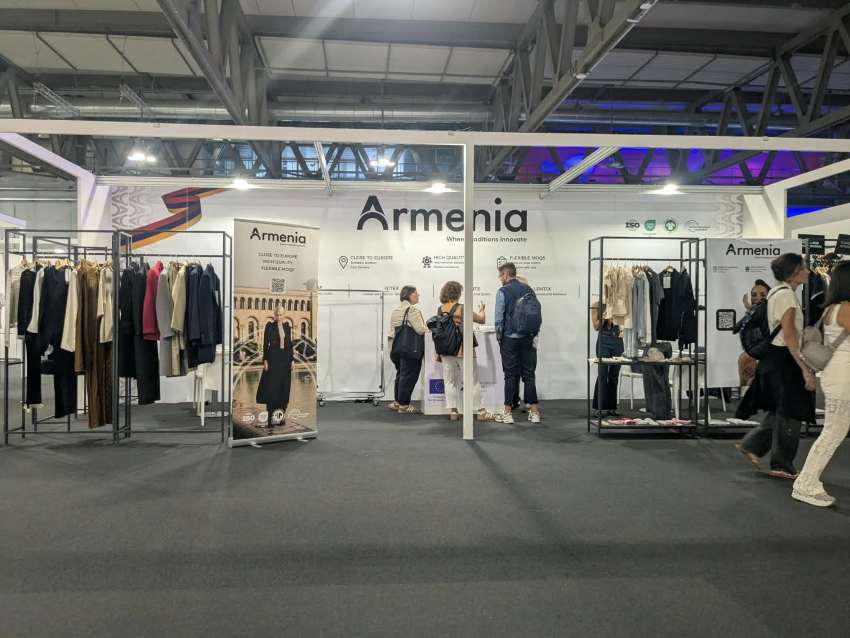
Armenia at Ready to Show Milano, bridges agility, circularity, and ‘Low-MOQs’ fo…
As European fashion brands and private labels navigate persistent supply chain bottlenecks, rising transport overheads, and tightening environmental mandates, an... Read more
India-Bangladesh textile corridor shifts from trade to co-production
The Petrapole-Benapole corridor is evolving from a conventional trading route into an integrated production network, linking India’s upstream textile capacity... Read more
Gen Z’s anti-polyester push forces apparel brands to rethink margins
The apparel industry is facing an unusual reputational challenge: the growing association of polyester with low quality and excessive cost-cutting... Read more