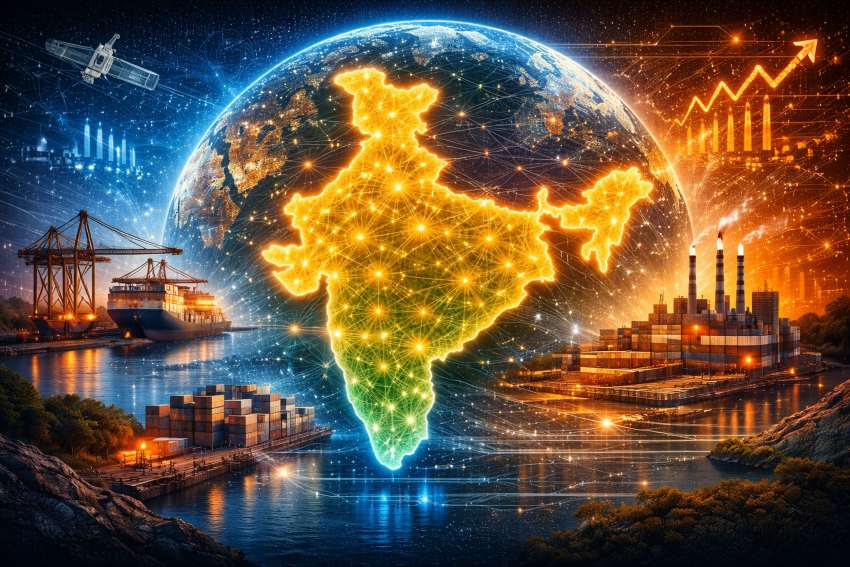
After nearly two years of battling volatile cotton prices, higher Minimum Support Prices (MSP), weak global demand and lower spinning spreads, India's leading yarn and textile manufacturers entered FY27 on a markedly stronger footing. The April-June quarter reflects more than a cyclical recovery, it signals an operational reset due to higher value addition, energy efficiency and disciplined capital allocation.
The turnaround comes as export demand strengthened amid renewed Chinese buying and shifting global sourcing patterns. At the same time, domestic cotton prices stabilized after correcting sharply from previous peaks, restoring healthier cotton-to-yarn spreads. Companies that spent the downturn investing in renewable power, downstream integration and product diversification are now reporting stronger profit despite only moderate revenue growth.
Margin-led recovery
The industry's growth over the past year reflects the shift. Q1 FY26 shows the earnings trough, with high domestic cotton costs, higher power tariffs and cautious overseas buyers squeezing profit despite steady production. FY26 then became a transition year as export volumes recovered and mills prioritised capacity utilisation over pricing power.
By Q1 FY27, however, the equation had changed. Yarn realisations improved, raw material spreads normalised and captive renewable energy assets began materially lowering operating costs. Industry estimates suggest operating margins could grow by 150-200 basis points during FY27 as these efficiencies continue to play out.
Table: Textile sector revenue Q1 FY27
|
Company |
Q1 FY27 Revenue |
EBITDA margin |
Growth driver |
|
Vardhman Textiles |
Rs 2,466 crore |
14.20% |
Premium yarn exports and technical fabrics |
|
KPR Mill |
Rs 1,937 crore |
20.80% |
Fully integrated farm-to-fashion model and captive green energy |
|
Trident Group |
Rs 1,803 crore |
17.60% |
Home textile exports and stronger yarn realisations |
|
Sangam India |
Rs 867 crore |
12.90% |
Denim, PV fabrics and renewable energy savings |
|
Nitin Spinners |
Rs 845 crore |
14.30% |
Export-led growth and capacity expansion |
|
Sutlej Textiles |
Rs 715 crore |
5.70% |
Shift towards technical textiles |
|
Sportking India |
Rs 612 crore |
— |
Product mix improvement and operating efficiencies |
|
GHCL Textiles |
Rs 370 crore |
13.80% |
Captive renewable energy |
Integration pays off
A defining feature of the quarter was the growing gap between integrated manufacturers and commodity spinners. KPR Mill continued to outperform with EBITDA margins above 20 per cent, riding on its farm-to-fashion model that converts captive yarn into finished garments. This strategy cushions the company against cotton price swings while allowing it to capture higher-margin export orders.
Vardhman Textiles adopted a different route, focusing on premium yarns and technical fabrics backed by its global distribution network. Although profit declined on a year-on-year basis due to a high base, the company maintained healthy operating margins as demand for specialised yarn strengthened across Europe and East Asia.
The contrast reinforces a broader industry trend: manufacturers producing fabrics, garments and home textiles are generating significantly better returns than mills dependent on commodity yarn sales.
Energy becomes strategy
Power costs, which account for up to one-fifth of spinning expenses, have emerged as one of the industry's biggest competitive differentiators. GHCL Textiles increased captive renewable power utilisation to about 72 per cent of its electricity requirements, helping lift EBITDA margins to 13.8 per cent. Sangam India followed a similar strategy, commissioning a 36 MW renewable portfolio while expanding additional capacity that is expected to generate meaningful annual savings. The financial impact has been immediate. Sangam's revenue rose only 8 per cent year-on-year, yet EBITDA jumped 60 per cent while net profit went up from Rs 2 crore to Rs 41 crore, highlighting how lower operating costs can drive earnings well beyond revenue growth.
Industry estimates indicate that every 10 per cent increase in captive renewable power can improve EBITDA margins by roughly 50-80 basis points, making green energy an increasingly strategic rather than purely sustainability-driven investment.
Expansion with discipline
Several companies are simultaneously preparing for the next demand cycle. Nitin Spinners, which derives nearly two-thirds of its revenue from exports, is executing an Rs 1,100 crore expansion that will raise yarn and fabric capacity by around 30 per cent. Sportking India has announced a Rs 1,000 crore greenfield investment in Odisha, diversifying beyond traditional textile hubs while benefiting from regional incentives.
Sutlej Textiles offers another example of changing strategy. After struggling in commodity spun yarn, the company pivoted towards technical and protective textiles while exiting weaker overseas operations. The move lifted operating profit from Rs 8.7 crore in Q1 FY26 to Rs 41 crore in the latest quarter, demonstrating the earnings potential of specialised product categories.
Exports regain momentum
External demand also gave a significant tailwind. Chinese buying rebounded sharply from a weak base, while orders from Bangladesh, Vietnam and Europe remained healthy. Companies are also positioning product portfolios ahead of trade agreements, including the India-UK FTA, which is expected to improve the competitiveness of Indian yarn and fabric exports by removing tariffs that previously ranged between 8 per cent and 12 per cent.
Not every segment benefited equally. Synthetic yarn producers continued to navigate volatility in crude-linked feedstocks such as PTA and MEG, whereas cotton spinners enjoyed more stable input costs following the correction in domestic cotton prices.
Future outlook
The first quarter suggests India's yarn and textile sector is moving beyond a cyclical rebound towards a stronger operating model. Vertical integration, renewable energy adoption and product diversification are steadily replacing scale alone as the industry's primary drivers of profits.
Global demand, freight disruptions and geopolitical risks remain variables to watch. Yet after several difficult quarters, the sector has entered FY27 with stronger balance sheets, healthier margins and clearer competitive advantages, positioning leading players to sustain earnings even if global conditions remain uneven.