FW
FTAs with ASEAN, Japan and Korea increases India’s trade deficit
As per a study published by think-tank Third World Network, India’s three free trade agreements with the ASEAN, Japan and South Korea have resulted in growing deficits in merchandise trade. The government is at present focused on how to make India’s free trade agreements deliver more for all stakeholders and has also employed three think-tanks to analyse the on-going RCEP negotiations.
After the initial spurt in middle of the previous decade, trade imbalances increased sizably after the three Comprehensive Economic Partnership Agreements (CEPA) with the ASEAN, Japan and Korea came into effect. Trade deficit with the three countries, which stood at $4.5 billion in 2004 and $16.4 billion in 2010, shot up to $29.7 billion in 2015 before cooling down a bit to $26.6 billion in 2016.The three CEPAs not only resulted in rising imports but also a progressive slowdown of exports.
Available trends in both exports and imports point to a hollowing out of the manufacturing base, which has prompted the present government to initiate measures for the revival of the manufacturing sector.
French Lingerie Show 2019 to be held in Paris next Januray
Promincor, Lingerie Française (Association for the Promotion of Corsetry Industries) and DEFI (Committee of Promotion and Development for the Clothing) will host the French Lingerie show in Paris on January 20, 2019. The show will attended by 14 prestigious French lingerie brands viz: Antigel, Antinéa, Aubade, Chantelle, Empreinte, Eprise, Epure, Implicite, Passionata, Lise Charmel, Lou, Louisa Bracq, Maison Lejaby, and Simone Pérèle .
Five guest French designers will present their latest collections to an audience of 600 people that include media, influencers and international buyers. This year, the show will have a rock twist with a live concert, unique scenography, and dances pieces as a contemporary ode to excellence, organisers report. With the theme Parisian Rock, French lingerie, which shines like a beacon all over the world, will display the heritage, know-how, passion and innovation of its iconic brands.
EU and Japan conclude FTA agreement to be launched next year
The European Union and Japan will launch the world’s largest free-trade zone early next year. This will create the world’s largest open economic area. The agreement will remove EU tariffs of 10 per cent on Japanese cars and three per cent for most car parts. It will scrap Japanese duties of some 30 per cent on EU cheese and 15 per cent on wines as well as open access to public tenders in Japan.
It will also open up services markets, such as financial services, telecoms, e-commerce and transport. The two economies account for about one-third of global gross domestic product. The agreement is expected to boost the EU economy by 0.8 per cent and Japan’s by 0.3 per cent over the long term. The deal is expected to bring clear benefits to EU companies and farmers.
Japan had been part of the 12-nation Trans-Pacific Partnership but then turned focus on other potential partners after the US pulled out. The EU has also looked elsewhere after Transatlantic Trade and Investment Partnership negotiations with the US stalled in 2016.
Europe’s food sector is one of the biggest winners from the deal, which should allow it to capitalize on Japanese demand for high-quality cheese, chocolates, meats and pasta.
Bangladesh export earnings from India up 165 per cent
During the first five months of the current fiscal year Bangladesh’s export earnings from India rose 165 per cent. Since giant business groups such as Reliance and Tata have opened up retail chain shops across India, gives an opportunity to Bangladesh to become a prominent supplier to these companies.
Another fact is that the Indian domestic market has grown and the number of fashion conscious consumers has increased. This is a win-win situation for both countries since Bangladesh imports readymade garment raw materials such as cotton and machinery from India.
Goods coming from Bangladesh are exempt from GST. This has a positive impact on imports from Bangladesh into India. What also helps is that the Indian market is closer to Bangladesh compared to the European and the US markets. The shipment time from Bangladesh to India is barely four hours.
In the first five months of the current fiscal year, Bangladesh’s export earnings from Germany grew 15.50 per cent. Export earnings from the UK grew 2.55 per cent. Earnings from Spain grew 12.81 per cent and earnings from the Netherlands were 13.14 per cent more than last year. Bangladesh’s currency has depreciated against the dollar and that is a strong reason behind the continuous growth in exports to European countries.
Denim Première Vision’s maiden London edition sees 17 per cent growth in visitors
Denim Première Vision, the denim trade show’s first London edition on December 5 and 6 registered a 17 per cent growth in visitors from its November 2017 session held in Paris. Most visitors were from the UK and Europe. The labels whose buyers attended the event ranged from Dior to Givenchy, from Paul Smith and Giorgio Armani to Tommy Hilfiger, Levi’s, Asos and Celio.
The dates for the next show in Milan were also finalised. Denim PV’s next session will be held on May 28-29, and will not overlap with the Kingpins New York show nor with Eid al-Fitr, the Muslim feast for the end of Ramadan. Denim PV will stick to the new itinerant format in future, with the cities of Berlin and Stockholm mentioned as potential venues.
Asia to meet growth forecasts this year
Asia is expected to meet its growth forecasts for this year and the next on strong domestic demand and easing inflation pressures. For this year and the next, China is expected to grow at 6.6 per cent and 6.3 per cent. India is expected to grow at 7.3 per cent and 7.6 per cent.
The Asian region as a whole is expected to grow at six per cent in 2018 and 5.8 per cent in 2019. However, the trade conflict between the US and China poses a risk to economic prospects in the region. Another risk is from the rising tide of trade protectionism.
The Asian Development Bank has raised its 2019 growth outlook for Central Asia to 4.3 per cent from the September projection of 4.2 per cent. The forecasts for southeast Asia and south Asia for the next year have been lowered to 5.1 per cent and 7.1 per cent respectively.
Easing commodity prices and central bank policy actions could cause the pace of inflation in developing Asia to settle at 2.6 per cent this year and to 2.7 per cent in 2019. Early this month, the US and China agreed to a 90-day truce on further tariffs as they try to negotiate a deal.
Production in Bangladesh garment units suspended as workers protest against new wages
Production in around 50 garment units in Bangladesh was suspended for three days recently as the workers protested against the implementation of the new wages. Of these factories, 25 are in Ashulia and 25 in Gazipur.
The new wage board for garment workers is expected to take effect from January, and the factory managements are currently working on it. BGMEA suspects a section of vested quarters are trying to instigate the workers ahead of the national election.
Subsequently, the association urged the government to take stern actions against the instigators, who are provoking the workers to go for work abstention during such an important time for the garment sector. It urged the factory owners to run their factories as normal.
T-MEC to boost apparel exports, fights undervaluation between US, Mexico, Canada
"The signing of a new regional trade deal between Mexico, the United States and Canada, on November 30, 2018 in Argentina, augers well for the Mexican garment and apparel industry. The deal, known by the acronyms USMCA in the United States, CUSMA and ACEUM in Canada, and T-MEC in Mexico, replaces the North American Free Trade Agreement (NAFTA), operation since the last 24 years in the three countries’ joint trading area. The T-MEC agreement will not only allow Mexico to maintain its pace of exports to the North American market but also improve quality of products and marketing initiatives."
 The signing of a new regional trade deal between Mexico, the United States and Canada, on November 30, 2018 in Argentina, augers well for the Mexican garment and apparel industry. The deal, known by the acronyms USMCA in the United States, CUSMA and ACEUM in Canada, and T-MEC in Mexico, replaces the North American Free Trade Agreement (NAFTA), operation since the last 24 years in the three countries’ joint trading area.
The T-MEC agreement will not only allow Mexico to maintain its pace of exports to the North American market but also improve quality of products and marketing initiatives. However, until T-MEC is approved by the USA, Mexico will continue to benefit from the NAFTA agreement signed in 1994. Other Latin American countries, however, are not likely to benefit from the deal, and will have to either find new markets or establish partnerships within the Mexican textile industry to approach the Canadian and US markets at less of a disadvantage.
Opportunity for the domestic market
Raúl García Tapia, Director of Fashion Outlet and former Director General of the Mexican National Chamber of the Garment Industry (Ca.Na.I.Ve.), believes that the new deal brings certainty in terms of customs duties, reassuring both Mexican companies and North American buyers.
However, the new treaty includes some tariff restrictions for Mexican textile manufacturers. It mandates that garment components such as sewing thread, fabric linings, elastic and coated fabrics should be sourced from the signatory countries only. This forces Mexican suppliers to stop importing certain components from Asian countries, and provides them with an opportunity to produce these materials internally, generating more employment and economic benefits.
Ensuring greater cooperating
The T-MEC will also help the Mexican textile industry fight undervaluation -- a disguised form of contraband where importers declare a lower value of the imported goods at customs. The T-MEC allows more stringent checks on the compliance of imported goods with rules of origin, and for checking for infringements of customs regulations, while at the same time it sets up a textile committee to facilitate consultations and ensure greater cooperation between authorities.
According to Ca.Na.I.Ve, the Mexican textile industry exports $6.4 billion worth of goods per year to the US, making it the largest Latin American apparel exporter to the USA, and the sixth globally.
Yarn prices in Bangladesh drop by 12 per cent
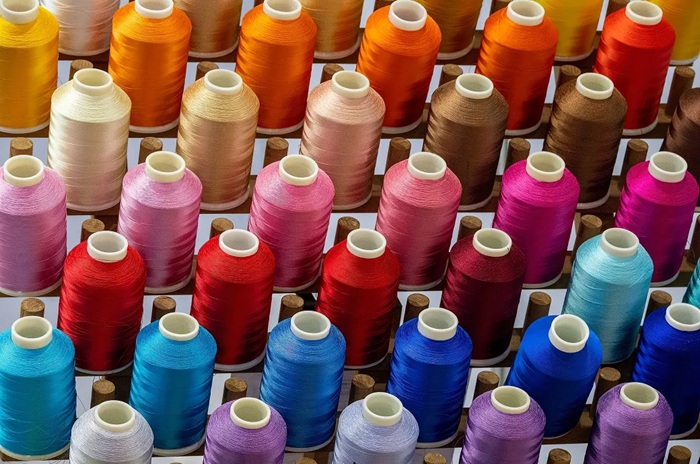
Yarn prices in Bangladesh in the last two months have fallen at least 12 per cent. Prices, between June and July, for the widely consumed 30 carded yarn ranged between $3.40 and $3.50 a kilogram. But from November onwards the prices of the same yarn dropped to $3.05 a kg. If the trend continues, the yarn stock, the main raw material for finished apparel items, may pile up, putting the $8 billion primary textile industry under threat.
Easy availability of cheap Indian yarn and lower prices of raw cotton worldwide due to the US-China tariff war are to blame for the sliding yarn prices. The oversupply of Indian yarn has been worsening the situation.
Supply of yarn from both the domestic and Indian market is very high at present, so the prices have decreased between 10 cents and 15 cents per kg. The price difference between Indian and Bangladeshi yarn is 10 to 15 cents per kg. Yarn prices have dropped because of the fall in cotton price worldwide, said Momin Mondol, Managing Director of Mondol Group. The total demand for yarn is more than 21 lakh tonne per year.
Vietnam resets ties with China
Vietnam is taking advantage of the heightened US-China rivalry to rebalance its relationship with China. Vietnam relies on China to propel its rapidly growing economy. China is Vietnam’s biggest trading partner. But now some uneasiness has crept in. China’s plan to create three special economic zones in Vietnam brought tens of thousands on to the streets in June to protest what was widely seen as a direct Chinese presence on Vietnamese soil.
In trade, Vietnam has capitalised on the fallout of the US-China trade war to become a top destination for manufacturers looking to avoid tariffs. A number of firms are relocating from China to Vietnam. The trade war has also highlighted Vietnam’s historic economic dependence on China, and increased the risks for Vietnam. The fear is that Chinese goods will come to Vietnam, be stamped as made in Vietnam and shipped on to the United States.
Already the US has come down on Vietnamese products. In May the US slapped tariffs on Vietnamese steel, saying China was using Vietnam to avoid US-imposed anti-dumping measures on Chinese steel. Therefore, Vietnam has resolved to diversify its risks, and build on its already highly active efforts to pursue trade agreements with a wide variety of partners.