In the lush, humid heart of Southeast Asian rainforests stands a giant, a silent sentinel of the forest canopy. Growing to almost 77 meters, a height that rivals the most colossal of skyscrapers the Kapok tree (Ceiba pentandra) has for centuries offered a gift of incredible utility, a fiber as light as a whisper and as buoyant as a life raft. While less celebrated than its ubiquitous cousin, cotton, kapok is a fiber with a story woven with fascinating facts, from its unique pollination by bats to its essential role in wartime life-saving gear.
Similar to cotton but different
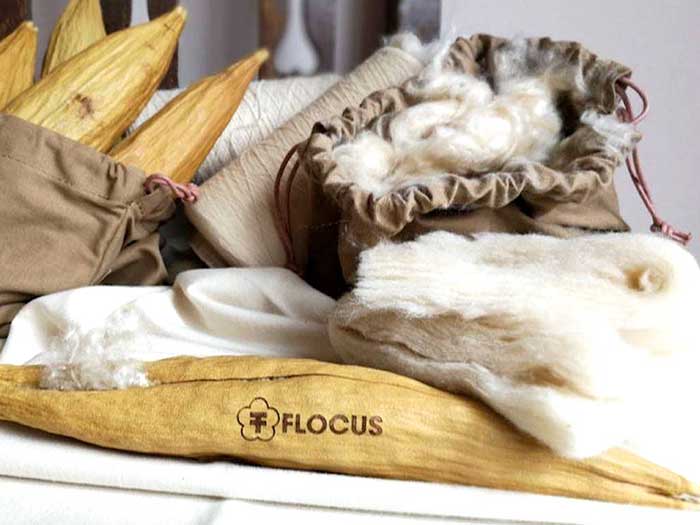
Often mistaken for a type of cotton due to its similar fluffy appearance, kapok fibers are in fact harvested from the large, leathery seed pods of these magnificent trees. The fiber itself is a marvel of natural engineering, characterized by a unique honeycomb structure that makes it incredibly soft, highly breathable, and remarkably water-resistant. In fact, it's more buoyant than cork, a property that was put to critical use during the Second World War when it was used to fill the life preservers of airmen. This same cellular structure also makes it an excellent insulator, offering superior thermoregulation, which makes it a compelling candidate for blending with other fibers in modern sportswear.
The kapok tree's life cycle is as intriguing as the fiber it produces. Unlike many other plants that flower annually, the kapok tree is a fickle bloomer, flowering only once every five to ten years. This unpredictable schedule, combined with a unique pollination process carried out almost exclusively by bats, presents a significant challenge to large-scale cultivation and consistent supply. The fleeting nature of its bloom has made scalability a considerable hurdle for any industry looking to embrace this fiber on a massive scale.
Multiple uses and properties
While its buoyant and insulative properties are well-known, kapok’s applications extend beyond simple fillings and stuffings. The fiber itself is notoriously difficult to spin into yarn due to its rigid and relatively short length. As a result, its primary use in its raw fibrous form has been for fillings in items like pillows, mattresses, and upholstery, or in blends to enhance the properties of other textiles. However, the kapok pod yields more than just fiber. The seeds are a source of oil that can be processed into soap, a more financially viable endeavor than creating garments from the fiber itself.
In recent years, kapok has garnered attention from sustainability advocates. It is often lauded as an eco-friendly alternative to cotton, primarily because the trees do not require irrigation, thriving naturally in their rainforest habitats. This makes it a far less water-intensive crop than cotton, which in many parts of the world demands vast quantities of water. However, the growing threat of climate change and the shrinking of its native rainforest habitat, which requires well-drained soil, raises questions about its long-term climate resilience.
Challenges despite all the pluses
Despite its unique properties, kapok is not without its challenges. The fiber itself is highly flammable, a key difference from cotton. Furthermore, dyeing the fiber is a complex and intensive process. While the tree's flowers can be used as a natural dye for other materials like wool, the fiber itself has a low color uptake. In 2008, researchers at Shanghai University patented a specialized mordant using rare earth minerals to improve the dyeing process, but it still requires significant pre-treatment.
Table: Kapok vs. cotton an ecological comparison
|
Parameter |
Kapok |
Cotton |
|
Water Requirement |
Minimal (rainfed, no irrigation needed) |
Extremely high (up to 10,000 liters per kilogram of cotton) |
|
Pesticide Use |
None (naturally pest-resistant) |
High (cotton cultivation uses 16% of global insecticides) |
|
Carbon Footprint |
Low (naturally grown, minimal inputs, no deforestation) |
Moderate to high (intensive farming, processing, transportation) |
|
Harvest Method |
Manual pod collection (sustainable, provides local employment) |
Mechanized harvesting (energy-intensive, potential for fiber damage) |
|
Fiber Type |
Hollow, wax-coated, buoyant, silky (difficult to spin into fine yarn alone) |
Solid, soft, easy to spin, absorbent (versatile for textiles) |
The environmental advantages are striking, kapok requires no irrigation, fertilizers, or pesticides, thriving naturally in tropical ecosystems. In an era of water stress and synthetic pollution, this positions kapok as a poster child for regenerative materials. However, its scalability remains its Achilles’ heel. Without structured farming or predictable yields, kapok cannot yet match the industrial efficiency of cotton or the consistency of viscose.
From inspiring the magical ‘soul tree’ in the film Avatar to saving lives in the most critical of circumstances, the kapok tree and its remarkable fiber remain a fascinating, if sometimes overlooked, part of the natural world. While it may never replace conventional fibers like viscose or cotton on a global scale due to its cost and cultivation challenges, kapok continues to find its niche, a testament to the enduring ingenuity and utility found in the heart of the rainforest.
Regenerative potential in a changing climate
As the textile industry races toward carbon neutrality and material circularity, kapok’s future could lie not in mass production, but in niche, high-value regenerative textiles. Research collaborations between biomaterial startups and luxury brands are exploring its potential in eco-luxury fashion, sustainable footwear padding, and plant-based insulation. If scaled sustainably through agroforestry models, fair-trade harvesting, and biotech-driven fiber modification kapok could emerge as one of the most promising forest-to-fabric innovations of the decade.
From cushioning pilots’ lives during wartime to inspiring modern eco-designers, the kapok tree remains one of nature’s quiet revolutions a whisper of the rainforest that refuses to fade. As global fashion seeks to reconnect with the natural world, the once-forgotten kapok fiber is ready for a renaissance not as a mass commodity, but as a symbol of what sustainable ingenuity can achieve when science listens to nature.