FW
KPR revenues up 11 per cent
During the first nine months of the current financial year, KPR’s revenues increased by eleven per cent. Out of its total revenue, domestic sales contribute 59 per cent and exports 41 per cent. Total production increased by 15.84 per cent.
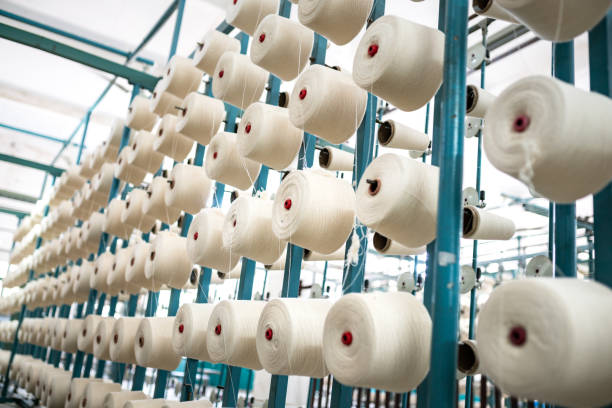
KPR Mills, based in Coimbatore, has increased its capacity to 115 million garments a year. It has emerged as one of the largest vertically integrated textile players with a presence across the entire value chain, from fiber to fashion. It is one of the largest knitted garment manufacturers in the country.
Its entire yarn capacity has been upgraded to value-added yarn (compact, melange, color melange, PC, slub and grindle yarn). Currently 19 per cent of the yarn produced is consumed captively to manufacture value-added products. Yarn sales contribute around 45 per cent to total revenue.
In fabric production, currently 60 per cent of the production is used for captive consumption to manufacture value-added products. The rest is sold to knitted apparel export manufacturers. Currently fabric sales contribute to five per cent of total revenues.
Key export markets of the company include Europe, Australia and the US. The company has set up a facility in Ethiopia with an annual capacity of ten million garments.
IVL acquires M&G Fibras Brasil
Indorama Ventures (IVL) has completed acquisition of M&G Fibras Brasil, in Cabo de Santo Agostinho, Brazil. The Cabo plant manufactures and supplies polyester staple fibre, with total polymerisation capacity of 75,000 ton per annum. This acquisition is the company’s debut into the fibre business in Brazil and is a strategic step forward. It provides IVL a unique opportunity to add capacity in fibres and establish its presence in South America’s largest economy, Brazil.
The acquisition will significantly boost IVL’s presence in the fast-growing market in Brazil, where the domestic demand is expected to grow in response to a recent recovery in consumption. In addition, IVL is well-positioned to expand more into nonwoven applications which are growing strongly in Brazil, supported by the presence of global brands.
IVL has a good track record of successfully integrating acquired business into its operations. IVL anticipates lowering its fixed costs by creating synergies and operating efficiencies, driven by supply chain optimization with the delivery of PTA from a nearby location, and consolidation of its commercial offices by joining with IVL’s PET site.
Kitex adds capacity, vertical integration on the cards
Kitex has plans for expansion and diversification. As a first step, the company is planning to add production capacity across the value chain, which includes expansion of the knitting capacity and the processing capacity to 80 tons each.
As for diversification, the company is planning to venture into manufacturing and sale of new products for the infant category, which includes products like socks for children, baby diapers and baby wet wipes. Kitex is also seriously considering vertical integration of its manufacturing value chain with the setting up of a cotton spinning mill for yarn production with a capacity of 80 tons a day. It is also setting up manufacturing facilities for ancillary materials such as cartons, tapes and paper tags.
Kitex, incorporated in 1992, manufactures and exports infant wear to apparel retailers based out of the US and other developed markets. The company has a fully integrated manufacturing facility in Kerala with a facility to manufacture 2.7 lakh pieces a day. The company has established relationships with leading international brands.
As part of the strategic future growth initiative, Kitex is planning to increase revenues by promotion of its own brand, Little Star, and a licensed brand Lamaze. It is also aiming at growth in the private label business with existing clients.
Exporters want more products to be included in MIES list
Exporters’ body FIEO says more products like jewellery and auto-components should be included the list of items that enjoy export incentives through e-commerce. Currently only items such as handicraft, handloom, books, leather footwear, and toys get exports incentives under Merchandise Exports from India Scheme (MEIS). Under MEIS, the government provides duty benefits depending on product and country. The proposed policy should bring uniform definition of e-commerce as various acts and policies define the world differently.
The limitation of Rs 25,000 for e-commerce exports or imports through courier, should be either removed or enhanced to Rs 5 lakh so that high value shipments can be exported through courier mode availing fast track facility. On February 23, the commerce and ministry released a draft proposal for setting up a legal and technological framework for restrictions on cross-border data flow and, also laid out conditions for businesses regarding collection or processing of sensitive data locally and storing it abroad.
Indra Nooyi on Amazon board
Indra Nooyi has joined Amazon as director. She has been granted 549 shares of common stock, which will vest in three equal annual installments beginning on May 15, 2020. She is the second woman to be named to the e-commerce giant’s board this month. Earlier this month, the company named Starbucks’ chief operating officer Rosalind Brewer as director, the second black woman to serve on its board.
Indra Nooyi comes to Amazon from Pepsi. Nooyi, who will be part of the audit committee of Amazon's board, stepped down as the CEO of Pepsi in October 2018 and as the chairman of the beverage-and-snack maker earlier this year. Amazon’s 11-member board now has five women including Nooyi, Brewer, Jamie Gorelick, Judith McGrath and Patricia Stonesifer.
Amazon has a new policy of increasing diversity on its board. Last year, facing an employee backlash and public criticism from black and Hispanic members of Congress, Amazon adopted a new policy to consider a slate of diverse candidates, including women and minorities, for future openings on its board. The company said at the time that it was merely formalizing its existing practice.
Corporations are increasingly being called upon to increase board diversity.
China bans South African wool due to disease outbreak
China has banned import of South African wool due to an outbreak of foot and mouth disease. South Africa is the second biggest producer of merino wool after Australia. Almost all of this is for export with around 67 per cent going to China. So this is a big blow.
The Chinese love wool. With increased affluence and a tendency towards leading healthier lifestyles, discerning Chinese consumers are now favoring natural, long-lasting garments, more so than following the latest trends perpetuated by fast fashion. Unemployment is low, salaries have been rising, and pension schemes have given people a greater security of income and more money to spend.
China’s wool imports increased 4.5 per cent from the previous year. Domestic consumption of woolen products in China has grown dramatically in the last five years. If previously most processing was for export, today at least 50 per cent is for domestic use, and this is growing year by year.
Although wool only represents 15 per cent of fibers consumed in China, the volumes are so large that even 15 per cent represents a huge quantity of wool. Even in Mongolia, a remote part of the world, women wear woolen coats.
Coterie and Curve 2019 to be held in New York
The 2019 editions of Coterie, one of the year’s most highly anticipated apparel shows, and Curve, an underwear event is being held at the Jacob Javits Center, will be held in New York from February 25 to 27, 2018.
Coterie will be attended by 15 Brazilian brands including Juliana Sanmartin, PatBo, Colcci, Skazi, Patricia Motta, Gilda, Lacerda, etc. The event will introduce the latest apparel, accessories and women’s footwear for F/W to a select group of North American and international buyers. Minas Gerais-based brand Skazi is taking part in the show for the first time and Leticia Morado, in charge of exports for the brand, says that one major difference of this event is its power to bring together quality buyers.
While the Mari M and Recco Lingerie brands will showcase their latest innovations in underwear at Curve, an event focusing on this segment. This is the second year in a row that the companies at the show, which now takes place at the same time and place as Coterie.
Bangladesh terry towel exports down four per cent
Bangladesh’s terry towel exports declined 4.40 per cent year-on-year in the last fiscal year. This is true of Bangladesh’s exports of home textiles in general. Around a dozen small and medium factories have reportedly shut down. Currently, some 90 factories are in operation. The sector’s growth started to decline from January 2014 when the European Union (EU) allowed zero-duty benefit to Pakistan under its GSP Plus scheme on export of home textiles and some other products. As a result, the impact was too severe for local manufacturers and exporters.
A relatively new item in the country’s export basket, terry towels demonstrated great promise due mainly to the easier production process and market access made easy by the EU’s EBA (Everything but Arms) scheme allowing duty free facility to all LDC exports, except arms. Coupled with it, there is the preferential duty facility under the EU GSP scheme meant only for less developed countries like Bangladesh.
Home textiles include mainly terry towels, bed sheets, linen, curtains and pillow covers. The very fact that exports of home textiles are in a bad shape is clear from the abundance of these products in street shops sold at throwaway prices. Bundles of terry towels are lodged on the shoulders of hawkers at busy road intersections instead of being packaged to be exported to North America and the EU countries.
Hong Kong: Upcoming Fashion Access to attract OEMs, ODMs, brands and buyers
"To be held from March 13 to 15, 2019 in Hong Kong. Fashion Access is a prime destination for fashion sourcing populated by bags, handbags, travel wear, footwear, leather goods and fashion accessories. The trade fair, in each of its edition, attracts international buyers seeking professional and reliable Original Equipment Manufacturers (OEMs), Original Design Manufacturers (ODMs) and brands primarily from Asia. The event gives them an opportunity to outsource and subcontract their manufacturing to create fashion-driven collections of high-quality."
 To be held from March 13 to 15, 2019 in Hong Kong. Fashion Access is a prime destination for fashion sourcing populated by bags, handbags, travel wear, footwear, leather goods and fashion accessories.
Opportunity to outsource and subcontract manufacturing
The trade fair, in each of its edition, attracts international buyers seeking professional and reliable Original Equipment Manufacturers (OEMs), Original Design Manufacturers (ODMs) and brands primarily from Asia. The event gives them an opportunity to outsource and subcontract their manufacturing to create fashion-driven collections of high-quality.
The fair enables boutiques, retailers, wholesalers, distributors and even department stores to specify the designs they need for the upcoming fashion season. It is also a venue for discovering specialist manufacturers and a wide array of services which can customise and manufacture fashion collections and accessories to both design and brand specifications.
Show features
The fair comprises many fashion shows; workshops led by experts in each field; trend seminars and networking events where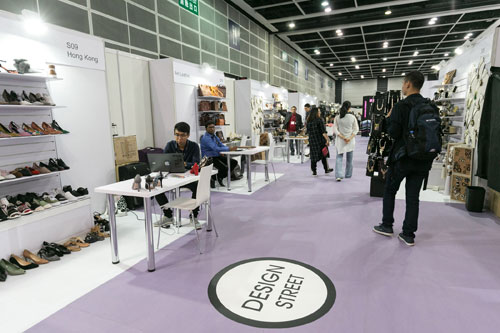 new contacts can be established. A few of these high-profile events include:
Global Footwear Executive Summit: To be held one day before Fashion Access, the Global Footwear Executive Summit (GFES) will focus on developments affecting not only footwear retail but the whole footwear supply chain. The scope will expand to cover more topics and include panel discussions in a full day program. The GFES will be jointly organised by APLF and the Footwear Distributors and Retailers of America (FDRA). With this partnership, the Summit will expand its scope to include topics on production and manufacturing.
Cashmere World: Cashmere World, held concurrently with Fashion Access, covers the whole supply chain of cashmere from raw materials to yarns to fabrics moving on the accessories. Key buying offices are regular visitors to Cashmere World as it is the only trade fair dedicated to cashmere and natural fine fibers. These buying offices include such prestigious brands such as Burberry, Hugo Boss, Armani, etc.
A dedicated area named Cashmere Trends Space will feature upcoming key cashmere and fine fiber colors for 2019-20, illustrating the upcoming trends through knitwear, cashmere and fine fiber samples
Workers toil for Australian brands at low wages
Hundreds of garment workers in Bangladesh and Vietnam toil for Australian fashion brands. These brands care more for the clothes than the people making them. Systemic exploitation of workers has been enabled by Australian companies like Kmart, Target, Big W and Cotton On whose buying practices compel factory operators to reduce cost of production.
These buying practices include fierce price negotiation, short-term contracts with factories, and reducing delivery times at one end while imposing fines for not meeting those squeezed deadlines. Buyers for instance insist on the installation of automatic fire extinguishers for rooms where finished clothing is stored, but do not require the same for the sewing floors where hot machines can also ignite.
Brands are supposed to be responsible for making credible commitments to ensure the payment of living wages to workers making their clothes. The global garment industry is infamous for its labour sweatshops in developing countries.
Workers are grossly underpaid and work under despicable conditions – producing for a global apparel market valued at around three trillion dollars. They get paid less than the living wage – the wage required by a worker to meet the basic needs of a family unit of four (two adults, two children) in order to maintain a decent quality of life.