


FW
KaHa launches smart wearable body and wellness-monitoring t-shirt
KaHa, a Singapore-based end-to-end smart wearable IoT platform company, has launched a concept smart wearable body and wellness-monitoring T-shirt prototype developed in partnership with SIMTech. KaHa has been working alongside SIMTech technology and supply chain partner for the research institute’s latest Collaborative Industry Project (CIP) on Smart Apparel Innovation. This CIP program, focusing on Flexible Hybrid Electronics (FHE), aims to accelerate the adoption of advanced technologies to tap the huge potential of smart wearable electronics and promises to help enhance the local smart wearable manufacturing ecosystem The t-shirt is considered to be in a prototype stage that promises to capture body vitals and transmits it to a detachable Smart Module.
According to the company, the global apparel market currently stands at US$3.6 billion (S$4.4 billion), and the latest IDTechEx report forecasts the global wearable tech market to reach US$160 billion by 2025. Singapore’s Smart Nation initiative is acclaimed to develop key pillars of growth, with wearable tech being one of them.
The smart apparel prototype was showcased to over 200 attendees at the CIP’s Kick-off Seminar for the second batch of CIP participants. The event is attended by garment manufacturers for international brands, companies from the electronics, consumer lifestyle, healthcare, hand tools, apparel, textile and fashion industries. The first batch of 10 CIP participating companies started in February 2018.
Co-developed by KaHa and SIMTech, the smart apparel prototype has printed Flexible Hybrid Electronics which claims to capture body vitals and transmits it to a detachable Smart Module on the apparel. The module cleans the data, which is then shared with KaHa’s IoT platform to be analysed. It monitors heart rate and automatically alerts users when their individual maximum prescribed heart rate reaches 80 per cent.
Hyosung plans to set up spandex manufacturing unit in India
Hyosung is setting up a spandex plant in India by 2019. Hyosung has selected India and Vietnam as the strategic bases for ‘100-year Hyosung. The spandex plant that the company will build in India is expected to lay the foundation for making inroads into the domestic market of the country.
In the first stage, Hyosung plans to invest $100 million for a new spandex plan. It is planning to set up the plant near Aurangabad, Maharashtra, and complete the construction of the plant by 2019. The company will continuously increase investment as market demands and growth are forecast.
The spandex market in India has been growing by more than 16 per cent a year on an average from 2012 to 2017, and it is forecast that it will grow by more than 12 per cent a year, while the market size will reach $200 million by 2020.
Hyosung’s spandex brand ‘creora’ accounts for about 60 per cent of the Indian market. It is focusing on the sale of spandex for Muslim wear like hijab, lingerie, sportswear, denim and diapers. By 2020, Hyosung will begin to concentrate on expanding the high-value-added premium market, after the new plant will become fully operational, also, the company is planning to consolidate its market dominance, creating high profits by increasing its market share to 70 per cent.
The new plant of Hyosung will help related industries such as weaving, knitting, dyeing and sewing to grow and lead to an employment growth, including hiring of competent manpower and invigoration of the overall economy.
Home Fashion Products Association argues against tariffs on textiles
The Trump administration’s had proposed tariffs on goods from China may include home textiles, according to an alert from the Home Fashion Product Association’s (HFPA) legal counsel. On May 17, The National Council of Textile Organizations (NCTO) gave evidence to The Office of the U.S. Trade Representative (USTR) in favor of textile tariffs. The U.S. Industrial Fabrics Institute (USIFI) and Narrow Fabrics Institute (NFI) joined the NCTO in a 24-page statement supporting the action.
The Home Fashion Products Association (HFPA) has issued a letter rebutting the argument for placing tariffs on Chinese textiles imports. The shift of home textiles manufacturing to Asia was highly troublesome, and several companies did not survive the transition, the HFPA noted in its argument against the proposal. Charging a tariff on Chinese imports would deal a hard blow to the roughly 500 U.S.-based home textiles companies in the business.
The letter was sent last week to New York Senators Chuck Schumer and Kirsten Gillibrand, the Office of the United States Trade Representative, Secretary of Commerce Wilbur Ross, New York Congresswoman Carolyn Maloney, the Chair of the Ways and Means Committee, The Chair of the Finance Committee and President Donald Trump.
NCTO president and CEO Auggie Tantillo asserted that China’s domination of global textile markets has been aided by intellectual property theft at the recent USTR hearing. In response, the HFPA noted that some US home textiles importers still operate substantial domestic “fill and finishing” operations employing thousands of employees that would be financially hobbled by tariffs.
The letter addressed the “alleged ‘domestic industry’” support for higher tariffs as a means of revitalizing U.S. manufacturing.
The White House announced it will impose a 25 per cent tariff on $50 billion worth of Chinese technology goods. The list of covered imports is scheduled to be published June 15. The original list of goods slated for tariffs earlier this spring did not include textiles.
VDMA, the German machinery event attracts visitors
VDMA was held in Mumbai on May 15 to 16, 2018. About 370 decision-makers and experts from the textile and nonwoven related industry attended the conference. German textile machinery engineering received the highest marks among the visitors. About 57 per cent visitors had very good and 38 per cent have had good experience with machines and components from German suppliers. The performance and service promise as well as the high quality standards have made German machine suppliers reliable partners in India and other countries.
Around 74 per cent of the visitors plan to expand their production capacities with new machines and components whereas 26 per cent intend to replace old machinery by new machines and components.
The technology topics along the entire textile value chain were meant to help the Indian industry fulfill their expansion plans and meet the challenges such as rising salary costs and shortage of labor in industrial regions.
India is an important market for the German textile machinery industry. Many German machinery builders have longstanding relations with Indian customers and quite a number of them also provide production plants and training centers in India. While the event on May 15 to 16 focused on customers, a training session at VJTI in Mumbai was addressed to future engineers. More than 220 textile manufacturing and mechanical engineering students followed the technical presentations.
Drexel University fashion show in June
Fashion ’18 will be held in the US on June 2. This is Drexel University’s annual fashion show. Each year, Drexel’s design and merchandising seniors work behind the scenes to produce, direct and execute the fashion show. Putting their years of education and practice to test, students help coordinate public relations and marketing, the selection of models and garments and facilitate ticket sales.
Fashion ’18 is a collaboration across multiple majors. Music industry students work with designers to arrange the music selection for each collection and graphic design students assist with the visuals. Some Drexel students also model in the show alongside professionals.
Fashion ’18 includes senior and graduate collections in women’s wear and men’s wear as well as designs in children’s, tailoring, lingerie, evening, swimwear and experimental categories. The show will be one of Drexel’s largest — with 34 senior and graduate designers debuting their collections on June 2 after months of cultivating their ideas and inspirations into reality. Eligible student collections have the opportunity to be honored in categories, including best in show, most creative and saleable and excellence in illustration.
This year’s panel of judges will include representatives from Neiman Marcus, Gentle Monster, Nicole Miller, Frank Agostino and Joan Shepp.
Growing demand pushes up cotton prices
Cotton prices have increased from around Rs 350 to Rs 400 per quintal and are likely to remain high due to an increase in international market prices. According to P Alli Rani, CMD, Cotton Corporation of India (CCI), cotton prices usually increase during this time in the season due to slowdown in arrival. And with increasing demand from spinning mills and ginners, these prices are likely to remain firm for sometime.
So far, 320 lakh bales have arrived in the market and the season is likely to continue for another 30 days. Arrivals have slackened to 0.5 lakh bales a day, thus increasing the prices. According to cotton ginners, market sentiment is positive due to the speculation that demand from China is surging due to depleting buffer stock. China, earlier, had a buffer stock for one-and-a-half years and this has now reduced to a year’s stock. Exports from India, therefore, are likely to touch 75 lakh bales instead of the originally estimated 65 lakh bales.
Cotton buying may turn ruinous for textile mills
The textile industry in India may be made to buy cotton and jute from farmers at least at the minimum support prices. This move is part of efforts to ensure a 50 per cent profit to farmers over their cost of production. The proposal — fraught as it is with serious implementation challenges — could spell trouble for the labor-intensive textile and garment industry.
MSP for cotton will increase by at least 28 per cent in 2018-19 from the current level. Cotton accounts for roughly 60 per cent of yarn costs and yarn makes up for 50 per cent of fabric costs. Fabric, in turn, makes up for 50 per cent of garment costs. So higher cotton prices will push up costs in the entire value chain and jeopardise its competitiveness.
The idea is being mooted at a time when garment production has dropped for 11 months in a row and exports have contracted for a seventh straight month through April, with most units reeling under elevated costs.
Garment production dropped 11 per cent in 2017-18 and exports contracted almost four per cent even though the country’s overall merchandise exports rose 9.8 per cent. Also, the proposal will potentially render the Cotton Corporation of India irrelevant.
Avantex Paris to be held in September
Avantex Paris will take place from September 17 to 20, 2018. This is a platform dedicated to sourcing for the high-tech fashion industry, to promote their innovative services or products related to fashion and textiles. It puts innovation at the heart of reflection, highlighting prospective visions and proposals about the fashion industry through roundtables and animations, brings together experts and well-known players of the industry, from source to end-user and from fibers to finished products, and features the latest research and innovations that contributes to a more sustainable fashion.
The show will showcase digital printing and textile printing equipment and services as well as innovative dyes. On display will also be e-clothing, e-accessories, developed by start-ups, schools, incubators, designer labels etc. Exhibitors will also showcase new fibers (new properties: water repellence, reflecting retro surfaces, etc.), conductive fibers, threads, surfaces, biotech textiles, innovative inks (conductive, thermochromic, etc.), advanced textiles, flexible or adaptive embedded systems for textiles (batteries, RFID, sensors, flexible boards, etc.), and smart components.
Avantex Paris was launched in France in 2015 by Messe Frankfurt France. The mutations brought about by technology have created a true revolution and new challenges for fashion designers: technology must enhance fashion while, at the same time, serving the consumer.
US-China trade face-off result of skewed understanding of realities
"Therefore, the reasons for China’s protest are perfectly valid. After all, the country has achieved phenomenal success in globalisation through selective protection, credit subsidies, state-owned enterprises, domestic-content rules, and technology-transfer requirements. Although the US has alleged that Chinese policies violate WTO rules, it still cannot be called a trade cheat as the country would not have been able to diversify its economy and grow as rapidly had it become a WTO member before 2001."
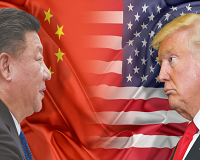 The ongoing US-China spat reached a dead-end when a high-profile United States trade delegation returned empty-handed from its mission in China. This wasn’t surprising as US demands were not only unfair but also highly unjust. The Americans wished to completely revamp Chinese industrial policies and intellectual property rules, besides refraining the Chinese government from retaliating against Trump's proposed unilateral tariffs against Chinese exports.
Therefore, the reasons for China’s protest are perfectly valid. After all, the country has achieved phenomenal success in globalisation through selective protection, credit subsidies, state-owned enterprises, domestic-content rules, and technology-transfer requirements. Although the US has alleged that Chinese policies violate WTO rules, it still cannot be called a trade cheat as the country would not have been able to diversify its economy and grow as rapidly had it become a WTO member before 2001.
Playing the right game
China plays the globalisation game by Bretton Woods rules. As a Chinese official once explained, their strategy is to open the window but place a screen on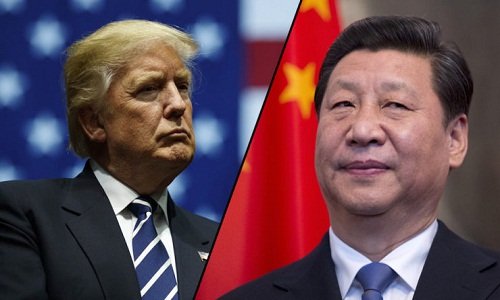 it. They get the fresh air (foreign investment and technology) while keeping out the harmful elements (volatile capital flows and disruptive imports).
Chinese practices are not very different from that of other advanced countries yet one of the major US complaints is that the Chinese systematically violate intellectual property rights to steal technological secrets. It is imperative for international trade regimes to accept the unfeasibility and undesirability of restricting the policy space other countries have. Levels of development, values, and historical trajectories differ too much for countries to be shoehorned into a specific model of capitalism. Sometimes domestic policies backfire, eliminating foreign investors out and impoverishing domestic economy. At other times, they propel economic transformation and poverty reduction, as is in the case of China.
Unsolicited restrictions
International trade rules cannot discriminate between these two sets of circumstances as they are a result of painstaking negotiations among diverse interests - including, corporations and their lobbies. Countries pursuing harmful policies endanger themselves; since if these strategies go wrong, the home economy pays the steepest price. So, although many liberal commentators rightly support the US, it can’t be denied that Trump's trade agenda is driven by a narrow mercantilism that privileges the interests of US corporations over other stakeholders. It shows little interest in policies that would improve global trade for all. Such policies should start from the trade regime's Golden Rule: do not impose on other countries constraints that you would not accept if faced with their circumstances.
Despite increasing popularity, growth in wool industry is an uphill task
"Woolgrowers at the event said, production has serious limitations. In Australia, the producer of over 80 per cent of the world fine apparel wool, production growth is limited by the lack of Merino ewes, the high lamb and mutton price, poor seasons, wild dog predation, land committed to cropping and in some cases a lack of infrastructure and even expertise amongst prospective woolgrowers. In New Zealand, land suitable for Merino wool growing is limited partly due to similar factors in Australia but also the drive to preserve some high-country areas for conservation."
 AWI, in its monthly report, examined the global and domestic state of the wool industry in light of the recent World Merino Congress in Montevideo, Uruguay, coupled with record prices at Australian wool sales and a recent Australian wool production forecast.
The World Merino Conference was held in May 2018 in Montevideo, Uruguay. It was attended by over 400 delegates from Australia, New Zealand, South Africa, Uruguay, Argentina, Lesotho, Russia, United States and Portugal. Despite the optimism that the conference hoped to convey, there was a hint of pessimism given the Merino wool producing countries’ inability to lift production.
Socio-political limitations
Woolgrowers at the event said, production has serious limitations. In Australia, the producer of over 80 per cent of the world fine apparel wool, 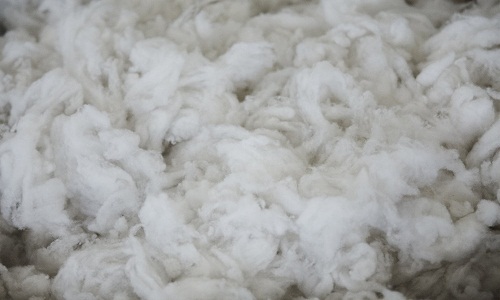 production growth is limited by the lack of Merino ewes, the high lamb and mutton price, poor seasons, wild dog predation, land committed to cropping and in some cases a lack of infrastructure and even expertise amongst prospective woolgrowers. In New Zealand, land suitable for Merino wool growing is limited partly due to similar factors in Australia but also the drive to preserve some high-country areas for conservation.
In South Africa, political changes, predation and indeed the development of some areas to mining is impacting growth potential and in Argentina major predation by foxes and pumas are limiting weaning rates to less than 70 per cent for many Merino producers. Wool-growing regions of Patagonia, Argentina have only recently recovered from significant volcanic activity in Chile so there is a myriad of reasons why the global supply of wool is not about to lift significantly, despite the relatively favourable market.
Value for money
Wool price as represented by the EMI has traditionally traded at three to four times the price of cotton as represented by the Cotlook A index and this can be seen above when examining the first 10 years of the graph when comparing the white line of the EMI relative to the orange line of the Cotlook A index. In fact, all fibres other than wool: cotton, acrylic, nylon and polyester, have traded in a band of prices that appear rather flat relative to wool since 2001. The exception is the price spike in late 2010, early 2011 that effected both wool and cotton. One very clear trend when comparing wool to these man-made and commodity fibres is the relative price ratios beyond around 2013-14. Over the past 4-5 years the EMI has clearly pulled away from these fibres, so much so that the current market shows that wool:cotton ratio is currently closer to 7:1 rather than the traditional 3-4:1. It is clear that wool is now perceived as a more valuable fibre relative to cotton, nylon, polyester, acrylic and nylon.
The bottom line is world’s consumers, those who ultimately set the price for wool at the cash register, are willing to pay a premium for Merino wool as a renewable but rare natural fibre and unless consumers know about wool and its superior natural benefits, they will not demand it let alone pay a significant premium for it over these man-made and cellulosic fibres.











