FW

Orders for Italian textile machines rose 66 per cent for Q3. Domestic orders rose by 130 per cent and foreign orders were up by 54 per cent, reveals ACIMIT stats. However, the index of orders intake dropped by 17 per cent when compared to the previous quarter this year, due mainly to the summer break and a demand for machinery that has stabilized over the last few months.
Overall, the number of new orders remain positive in spite of a slight decline compared to the months prior to the summer period. This proves that Italian companies have been capable of responding quickly to new market conditions, as has often happened in other historical periods. This positive moment for Italy’s textile machinery sector is expected to continue to the year’s end. Italian machinery manufacturers are forecasting an increase in order intake for the last quarter of the year, both abroad and domestically. However, difficulties remain particularly in the areas of digitalization and sustainability.
Creativity, sustainable technology, reliability and quality are the characteristics which have made Italy a global leader in the manufacturing of textile machinery. Exports amount to more than 86 per cent of total sales. And 30 per cent of Italy’s revenue from the sale of textile machinery derives from the production of technical and innovative textiles.
 The government has played a key role in the turnaround of India’s textile sector. The initiatives it introduced in the last two years, is boosting sales that had slumped to $75 billion during the pandemic, to $300 billion by 2025-26. Exports of technical textiles exceeded imports by Rs 2,998 crore in FY21 as a report titled ‘Textile Industry: Trends and Prospects' released by Infomerics Valuation and Rating, a SEBI-registered and RBI-accredited financial services credit rating company.
The Indian technical textiles market is expected to grow at a CAGR of 7.6 per cent in Asia-Pacific to reach $23.3 billion in 2027, the report states. Government plans to increase exports to five times in three years, from the current approximately $2 billion to $10 billion.
Schemes launched by the government
The government has introduced several initiatives like the Technology Mission on Cotton (TMC), Technology Upgradation Fund Scheme (TUFS), Scheme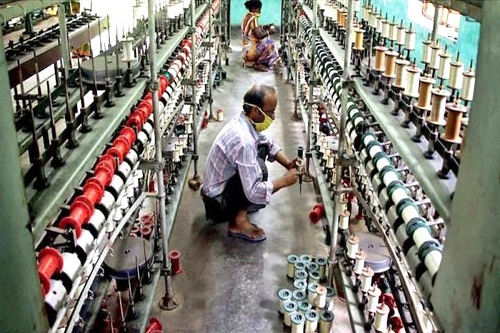 for Integrated Textile Park (SITP), etc to bolster sector’s growth. It recently introduced new schemes like National Technical Textiles Mission (NTTM) for four years with an outlay of Rs 1480 crore.
One of the largest textile and apparel hubs in the country, Tamil Nadu aims to drive innovation and reduce foreign dependence through its participation in the Techtextil India 2021 - the leading international trade fair for technical textiles and non-wovens. The state has also introduced a few other measures like the Scheme for Capacity Building in Textile Sector (SAMARTH) to train 10 lakh workers in the sector.
Low funds and other generic factors
One major challenge that the industry faces is low fund allocation, says the report. The sector received only Rs 3,631.64 crore funds as against the proposed outlay of Rs 16,883 crore during the FY22, it adds.
Manufacturing activities in the sector have reduced, raising prices of the final product as reflected in the annual NIC-2 digit and sectoral indices of industrial production, For the first time in a decade, the index for 'manufacturing of textiles' has fallen to as low as 91.1, adds the report.
The report further highlights, generic factors like weakened consumer demand or production networks; obsolete technology, inflexible labor laws, infrastructure bottlenecks and industry fragmentation due to the COVID-19 pandemic, has caused the yearly wholesale price index for 'manufacturing of textiles' to hover 6-7 notches above the decadal average of 118-point mark,.
Cementing global position
The reports emphasizes on the industry’s need to command premium prices; target niche products and markets; redesign products in higher value-added segments, the report emphasizes. The industry also needs to focus on regional and cluster subsidies, technology upgradation and skill development subsidies for sustained development, it adds.
To scale operations, the industry needs to invest in value added services, e.g., marketing, warehouse rentals, logistics, courier, other product fulfillment costs, it further adds. To cement India’s position in the global textile market, the report advises the industry to address the risk factors and the distinctive peculiarities of the sector and integrate the textile value chain.
For the third quarter Ted Baker’s revenue jumped by 18 per cent. Ted Baker’s revenue from North America jumped by a third as sales are rebounding for the British fashion chain with office and party wear becoming popular again after the lifting Covid restrictions. Customers looking ahead to parties in the Christmas season are also helping. But lower level of tourism in places such as London has hurt store footfalls. Ted Baker which opened 34 years ago hopes for a full return to international tourism.
Ted Baker, known for formal wear, suiting and occasion wear, has 377 stores and concessions with three-quarters of those located in the United Kingdom, Europe and North America. Over the seven month period, the group’s revenue went up 18 per cent year over year but it’s still down 36 per cent compared to pre-pandemic levels in 2019, suggesting a longer road to recovery. Within the store portfolio there have been clear changes in footfall patterns and there is uncertainty over the timing and degree of the return to previous patterns. The upmarket retailer is now half-way through a three-year turnaround and is focused on cost cuts and boosting its online presence and product range.
Soorty, Pakistan’s largest vertically integrated denim company promises to revolutionize the traditional stonewash in denim laundry. It recently launched Zero Stone wash that offers several environmental and social advantages in the denim world, such as minimal use of natural resources, positive effluent discharge, increase in the speed of production permitting use of lower laser power and prevention of fabric tearing during laundry.
Zero Stone helps achieve stonewash appearance in denim garments without using the conventional pumice stones. This new method allows savings of resources like water, energy and chemicals. With traditional stonewash, the pumice stones and denim garments are put together in an industrial washing machine where garments are repeatedly pounded and beaten in a tumbler, which eventually gives jeans a vintage and worn look on a freshly made garment.
Zero Stone replicates the visuals of traditionally made garments but reduces the use of water and implements a positive effluent discharge rather than the emission of hazardous chemicals. Further minimizing the use of natural resources, the innovation transforms sustainable garment manufacturing at scale.
For years, Soorty has invested in disruptive technologies and developed environmentally and socially conscious denim laundry systems that help in reducing the use of water, chemicals, and energy.
For the second quarter Grasim Industries consolidated net profit increased 27.36 per cent. Revenue from operations was up 25.71 per cent. Total expenses were up 24.16 per cent. Grasim’s revenue from viscose-pulp, viscose staple fiber and filament yarn segment was up 79.03 per cent. The viscose staple fiber business recorded the highest ever total sales volume with domestic sales volume back to the pre-pandemic level in the second quarter. The share of value-added products in the overall sales mix almost doubled year on year to 27 per cent. The revenue from the cement business UltraTech Cement was up 15.69 per cent. Revenue from the chemicals segment was up 44.48 per cent. Revenue from the financial services segment was up 21.73 per cent.
The caustic soda capacity utilization stood at 86 per cent, sequentially higher. The domestic demand for caustic soda was driven by the textile and pulp and paper sectors.
Grasim is making brisk progress to enter in paint business. The company has already acquired land at five locations as part of its pan-India footprint for paint manufacturing. These locations have been identified in different regions, based on proximity to key consumption hubs across India. Grasim Industries is an Aditya Birla Group firm.
India’s apparel exports have grown by 44 per cent during April 2021 to October 2021. In fact, shipments have grown to double digit in the past two months. With peak season approaching, India has the opportunity to leverage the good global demand and order position and meet the $20.03 billion export target for 2021-22.
However, the Indian apparel industry has been impacted by the steep rise in cotton yarn and fabric prices. Apparel Exports Promotion Council (AEPC) chairman A Sakthivel feels the recent growth in apparel exports would be impaired if the runaway rise in yarn and cotton prices are not curbed. The industry fears if measures are not taken to rein in the rise in raw material prices there could be shortages as early as February and March next year.
Apart from the uncertainties caused by cotton yarn prices, the industry is also facing growing input cost pressures on other fronts. The rise in cotton yarn and fabrics prices has started impacting the entire value chain. Add to this are the volatile crude oil prices, logistics costs, coal prices, prices of dyes and chemicals etc which have impacted costing of apparels considerably. Because of this, exporters are not being able to service existing orders and finding it difficult to take new orders. The industry has urged quantitative restrictions on export of cotton and cotton yarn to bring down the galloping prices.
Exports of men’s garments increased 32 per cent. Exports of home textiles increased 22 per cent. Cotton fabric exports grew 20 per cent. Cotton yarn exports increased by 73 per cent, jerseys and cardigans by 60 per cent, women’s garments by 20 per cent and synthetic fabric exports by 35 per cent. Pakistan’s overall exports increased 24.71 per cent in the first four months of the current financial year reveal Pakistan Bureau of Statistics stats.
The United States remained the top export destination of Pakistani products during the first four months followed by China and the United Kingdom. Pakistan’s exports to the US increased by 33 per cent. Exports to China grew by 82 per cent. Exports to the UK were up by 11 per cent. Meanwhile, Pakistan’s exports to the Netherlands grew by 23 per cent, Spain 33 per cent, United Arab Emirates 19 per cent, Italy 35 per cent and Bangladesh 40 per cent.
On the other hand, Pakistan’s imports went up by 65.15 per cent in the same period. Therefore, the country’s trade imbalance showed a massive growth of 105.43 per cent.
 The spandex market in China set a new high in the third quarter of this year. The domestic price of 20D Spandex reached 117,524.90 yuan per metric ton during the quarter due to a high market demand and tight supply. It was 49,214.29 yuan per metric ton in January 2021, which increased substantially by 70.20 per cent to 83,761.90 yuan per metric ton in May 2021 over the price in January.
The net profit of Huafon Chemical surged by 295.0 per cent to 2.28 per cent over the same period last year. As per a CCF Group report, the company is engaged in the R&D, production and sales of polyurethane products such as spandex fiber, polyurethane solution, adipic acid and so on. In the first three quarters of 2021, the company’s net profit attributed to shareholders of listed companies surged by 393.6 per cent to 6.13 billion yuan over the same period last year.
Similarly, the net profit Xinxiang Chemical Fiber attributed to shareholders in the third quarter improved significantly to 492-562 million yuan. The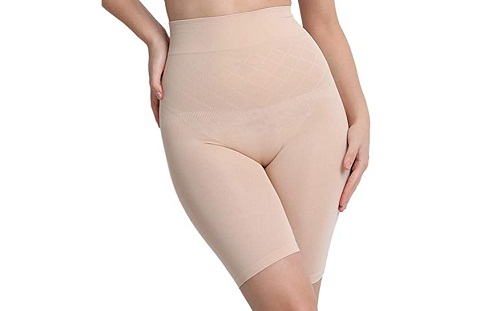 company had registered a loss of 3.09 billion during the third quarter of last year. It expects to achieve a net profit of 5, 022 per cent amounting to 1.23-1.3 billion yuan from January to September.
Manufacturer of para-aramid and m -aramid besides spandex, Tayho New Materials’ net profit attributed to shareholders of listed companies increased by 398.7 per cent to 290 million yuan in the third quarter of this year. During the first three quarters of the year, the company’s operating income increased by 94.77 per cent to 3.28 billion over the same period last year while its net profit belonging to shareholders of listed companies increased by 301 per cent to 731 million yuan
Sports and athleisure wear demand boosts prices
Outpacing other raw materials of textiles and apparels, spandex prices rose sharply in 2021. The prices of 20D, 30D and 40D varieties of spandex rose by 122 per cent, 98 per cent and 106 per cent respectively in Q1-Q3, 2021. On a year-on-year basis, its surged 83.1 per cent, 137.7 per cent and 183.1 per cent respectively. Growth was mainly driven by a strong demand for sportswear, yoga clothes, sun-proof apparels and sport underwear.
Demand from mask and protective clothes also surged during the period. In addition, sales of dralon fabrics, fabric for thermal leggings and super-soft fabrics rose exponentially. The mismatch between supply and demand greatly pushed up spandex prices during the quarter. Spandex exports also surged during the first three quarters.
High prices raise cash flow in the market
Stimulated by demand from PTMEG, PBT and PBAT sectors, average cash flow in the BDO-PTMEG-spandex market expanded during the first three quarters of this year.
The average cash flow for spandex 40D climbed upto 11,836yuan/mt, 16,104yuan/mt and 26,110yuan/mt respectively during the Q1-Q3 period corresponding period of last year. Spandex 15D, 20D, 30D and some other differential products turned out to be more lucrative. Overall, the spandex markets saw higher profitability during the first three quarters compared to the corresponding period of last year.
Welspun has ordered for a complete neXline spunlace line from Andritz. The line will be used for the production of nonwoven roll goods and wipes at Welspun’s new plant in Telangana. The line has a capacity of up to three tons per hour. The start-up of the line is scheduled for the fourth quarter of 2021. The high-capacity spunlace line will process various types of synthetic or natural fibers, such as polyester, viscose and cotton. The final products will have fabric weights ranging from 25 to 120 GSM, thus covering many applications. This neXline spunlace line also offers the option to integrate a third component from a selection of smart layers, enabling Welspun to also manufacture products for the health care and hygiene sectors.
Andritz is a global technology group. Welspun is the largest global exporter of home textiles. Innovation and quality lie at the heart of the company’s success, which already has nonwoven production lines in operation, including needlepunch and spunlace equipment. With a new plant in Telangana, Welspun will significantly increase its existing spunlace capacity and also maintain a broad range of applications as the final products are used in hygiene, home care and industrial cleaning. The new, advanced facility is a 1,00,000-square-meter greenfield development that is part of a larger 1,500,000-square-meter industrial complex also accommodating the Welspun floorings facility.
Tamil Nadu is emerging as a strong and growing medical textiles industry says a Expert Market Research Study. In fact the state’s focus on medical textiles is more than a decade with the South India Textile Research Association (SITRA), Coimbatore identified for development into a Centre of Excellence (COE) for production of medical textiles products.
First and foremost is the availability of raw material as most raw materials used in medical textiles are available with ample production of cotton for spinning, weaving and knitting etc. Also Coimbatore, a big textile hub and a major city, has a large number of good hospitals and textile units. This helps textile companies have better R&D and feedback about their products as well as a ready market for their products. Moreover, Tamil Nadu has many lucrative initiatives for investors.
India holds second position globally in medical textile manufacturing. The domestic market provides innumerable opportunities. Higher rate of child birth and growing medical tourism is providing further boost. Many medical textile products are imported and not manufactured in India, so there is a huge potential for manufacturing them in India. Many medical textiles products are classified as medical devices. About 80 per cent of medical devices are imported.
Tamil Nadu accounts for nearly 34 per cent of India’s apparel exports. The state has 45,000 registered textiles factories and around ten per cent of these are in the meditech segments.