FW
Archroma helps in value creation
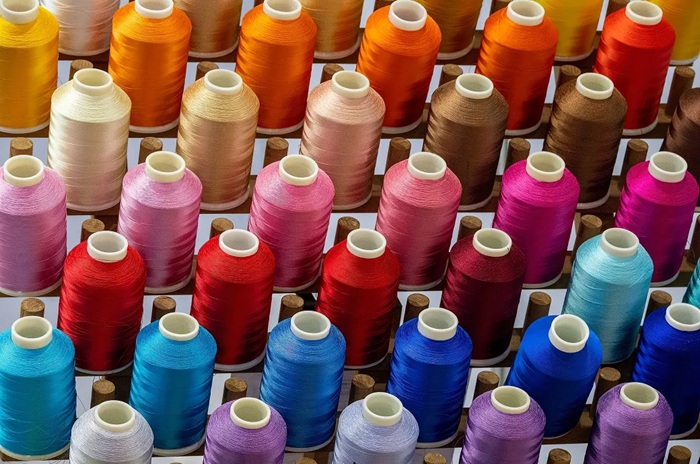
Archroma offers a wide portfolio of dyes and chemicals aimed at increasing sustainability and innovation along the entire value chain, from fiber to finish.
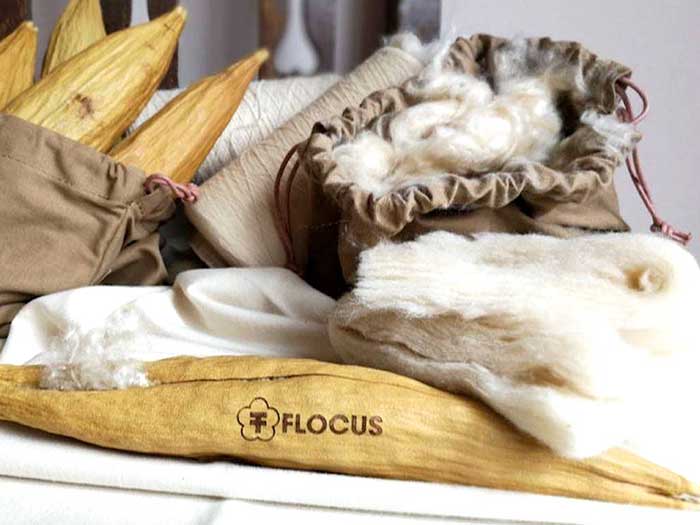
Its innovations and system solutions are aimed at helping textile manufacturers with optimized productivity and/or value creation in their markets. Archroma is reputed for its continuous flow of ground-breaking innovations, such as Earth Colors, a range of dyes made from non-edible natural waste from the agricultural and herbal industry, Inkpresso, a digital printing system that enables ink mixing on site and on demand, Smartrepel Hydro, a nature-friendlier protection that keeps cotton, polyester and polyamide textiles dry and the Color Atlas, a revolutionary color system comprising of a physical and online library of 4,320 new colors developed on cotton poplin. More recently, Archroma has introduced Denisol, an aniline-free synthetic pre-reduced liquid indigo, Appretan, a new nature-based binder for nonwovens, and Fadex, a new super UV protector for automotive and transportation textiles.
The textile industry is currently undergoing deep transformations and challenges, such as the constant consumer demand for more innovation and performance in apparel and textiles, as well as the growing concerns about resource scarcity and product safety. With its new approach based on system solutions, Archroma is further supporting customers in addressing those challenges and opportunities.
Mothercare cuts net debt by 84 per cent
Last year Mothercare cut net debt by 84 per cent as a result of reductions in rent, store costs, and other overheads. Like-for-like sales in Britain, where it has been losing money for more than a decade, were down nearly nine per cent while annual worldwide sales slipped eight per cent. The brand saved more money than expected from store closures on which it has pinned its recovery and hopes to be debt-free this year. Mothercare, which floated in 1972, has closed a third of its British stores over the past year.
Mothercare, based in Britain, owns brands like Little Bird, Baby K and Blooming Marvellous. It is the worldwide category leader in fashion products for newborn, babies and toddlers. Facing competition from a new generation of web-based players, Mothercare has done a huge amount of refinancing, restructuring and reorganizing. The next phase of the strategic transformation plan is to develop Mothercare as a global brand, maximising the opportunities across many international markets.
Mothercare would look to gain an online presence in four more countries this year. Online sales currently contribute to 45 per cent of its annual sales in Britain and represent five per cent of its global turnover.
Forbes Global 2000 ranks Christian Dior world’s largest apparel company in 2019
The 17th annual ranking of Forbes Global 2000 for 2019 has ranked Christian Dior the planet’s largest apparel company. The company is ranked on the 143rd position in the overall list and is listed as the number one company in apparel industry. Sales rose by double digits to $55 billion in 2018. It posted a 16 per cent increase for the first quarter of 2019 compared with the same period last year, with total revenues for the quarter totaling over $14 billion. The fashion house benefits from a 41 per cent stake in its parent company, LVMH, which owns 70 luxury brands including Louis Vuitton, Dom Pérignon and Sephora.
According to The Forbes Global 2000, the second-largest apparel company is Nike whose return to growth and its buzzy Colin Kaepernick ad campaign helped fuel the stock, which increased by 19 per cent in 2018. The Forbes Global 2000 is a useful indicator of which are the leading public companies in the world. The ranking is based on a mix of four metrics: sales, profit, assets and market value. Of the 61 countries represented on the list, the United States is home to the largest number, 575 companies. China and Hong Kong were next with 309, followed by Japan with 223. The breakdown looks very different than it did when Forbes first published the Global 2000 in 2003. That year, the United States contributed 776 companies while China and Hong Kong had just 43.
Swedish textile machinery keeps getting better
Swedish textile machinery manufacturers focus on customer service, aligned with the drive to constantly innovate. They are doing well in major markets such as Europe, China, India and the US. They are displaying an even higher degree of real time monitoring of processes, automation, flexible customisation, and the incorporation of robots into production lines.
Gruppen has a new robotic pillow filling system. This has the ability to fill and finish some 3,840 pillows per eight-hour shift, which is a considerable improvement on what is currently possible with existing systems, resulting in significant savings in both labor and energy for busy home textile businesses. Eton has concepts for fully automated work flows in finished garments and textile-based products. Eton has a complete material handling solution with advanced software providing real-time information covering every aspect of the process. Eltex is achieving considerable success with its yarn fault detection and tension monitoring systems across a range of sectors, including the tufting of carpets, the creeling of woven materials and even the production of woven reinforcements for the composites industry. Unlike scanning inspection systems, Eltex monitors each individual yarn position in real time. As a consequence, it has concentrated on the further miniaturisation of its sensors.
Supply chains shift to Vietnam
Strong foreign direct investment flows from China and Hong Kong into Vietnam are a possible sign of regional supply chain reshuffling. In the first four months of this year, FDI from China and Hong Kong has outstripped investment from all other major investors year-to-date, as well as the same period last year.
China’s investments in Vietnam include sectors such as energy, construction, manufacturing, and property. Nearly 40 companies explicitly stated plans to shift production from China to Vietnam since January 2017.
Trade tensions between the United States and China may have prompted supply chain shifts to Vietnam. Supply chain shifts so far have mainly taken the form of using or expanding existing facilities and adding capacity, instead of greenfield investment or acquisitions. There has been greater interest from US companies in outsourcing to Vietnam, especially in sectors such as apparel and furniture. It’s unclear though whether the cushion from supply chain shifts will be sufficient to offset the negative impact from the trade war or a weak semiconductor recovery. Vietnam also has low domestic value-added in exports, with limited spillovers from FDI. Also, Vietnam might be most at risk of being labeled a currency manipulator by the US as a pretext for trade tariffs.
India’s Texprocil to launch new code for textile, clothing sector
The Cotton Textiles and Export Promotion Council (Texprocil), plans to launch an initiative to have a standard-neutral, converged assessment framework for the textile and clothing industry. The initiative, ‘Social and Labor Convergence Programme (SLCP),’ is led by world’s leading manufacturers, brands, retailers, industry groups, non-governmental organisations and service providers. The objective of this initiative is to improve the working conditions in textile units by allowing resources previously designated for compliance audits to be redirected towards the improvement of social and labor conditions.
The SCLP is not a code of conduct or compliance programme. The converged assessment framework is a tool developed by the SLCP, which provides a data set with no value judgment or scoring. It is, however, compatible with existing audit systems and codes of conduct. The same data set can be used by a wide-range of stakeholders. It eliminates the need for repetitive audits to be carried out on the same facility.
For exporting units, it will reduce the number of social audits and facilitate measuring of employment practices, thus improving working conditions and employee relations. It also redeploys resources towards improvement actions and fosters collaboration between supply chain partners. The SLCP would be holding free seminars at Mumbai, Bengaluru, Tiruppur, and New Delhi and will launch operations in India, China, Sri Lanka and Taiwan this month.
Indian apparel suppliers winning global awards
Indian apparel manufacturers are proving to be great suppliers and they are winning awards. The sweater division of Orient Craft, Gurgaon, got the best supplier award for the year 2018 from Argos (Sainsbury’s). The event took place in Hong Kong and there were around 50 to 60 apparel vendors from across the globe. Similarly, Aditya Birla, Matrix Clothing and Richa Global won Superdry awards. This event took place in the UK, where around 100 plus vendors from across the globe were present. Aditya Birla was honored as a global vendor while Matrix Clothing and Richa Global were honored as key suppliers and part of the millionaire club. In India, Superdry has around 16 vendors for apparels. Superdry has entered the fitness market with Superdry Sport. From technical gear to workout essentials, the brand has everything from active wear, athleisure to sportswear.
In the last few days, many international brands and retailers have had their annual supplier conferences. These supplier conferences or meets are instrumental in strengthening mutual relations between global brands, retailers and their suppliers. Awards for suppliers not only recognise their best practices but also motivate them to improve their overall services. Quality, timely delivery, compliance and sustainability are some of the major parameters considered by brands before awarding suppliers.
CITI advises caution on RCEP pact
Sanjay K Jain, Chairman, CITI has advised the Indian government to be cautious about the textile industry in the RCEP pact. He noted the pact, likely to be concluded by the end of 2019, contributes approximately 39 per cent of the global GDP. The total T&C exports of RCEP member countries’ was $413 billion and accounted for 49.44 per cent share of the world exports in 2018. India’s share in the total export of T&C among RCEP nation’s remained at 9 per cent (approx.) during the same period.
India had a trade deficit of almost $1 billion with China in T&C in 2018. The ongoing US-China trade war presents an opportunity to the Indian textile manufacturers to enhance exports to the US, while the RCEP trade scenario reveals India must tread cautiously, particularly with China, as half of India’s T&C trade in RCEP is with China, with which it had a big trade deficit of almost $1 billion in 2018.
As China would be looking for new markets for its products, India needs to be over cautious while negotiating with China. India’s trade deficit with China in T&C sector is likely to widen once RCEP is concluded and could be detrimental for India’s domestic textile manufacturers.
India wary of China’s presence in textiles segment
India is wary of Chinese presence in the proposed Regional Comprehensive Economic Partnership (RCEP). India does not want to cede space to China in the global textile and clothing sector. While the ongoing US-China trade war presents an opportunity to Indian textile manufacturers to enhance their exports to the US, India must tread cautiously, particularly with China, as half of India’s textile and clothing trade in the RCEP is with China.
China is already re-routing its textiles into India through Bangladesh, Sri Lanka etc. India’s trade deficit with China in the textile and clothing sector is likely to be widened once RCEP is concluded and could be detrimental for its domestic textile manufacturers.
RCEP comprises 10 Asean members and their six free trade partners - India, China, Japan, South Korea, Australia and New Zealand. Asean members comprise Brunei, Cambodia, Indonesia, Malaysia, Myanmar, Singapore, Thailand, the Philippines, Laos and Vietnam. The RCEP negotiations aims at covering goods, services, investments, economic and technical cooperation, competition and intellectual property rights. Member countries are looking to conclude the talks by the end of this year, but many issues, including the number of products over which duties will be eliminated, are yet to be finalised.
Bangladesh set to be denim giant
The global denim fabric market presents huge opportunities for Bangladesh. Last fiscal year, Bangladesh exported denim goods worth $3 billion. Globally, the denim fabric market has been mainly driven by growing demand for clothing, household items and other fields. With the fashion effect of denim, downstream application industries will need more denim fabrics. So denim fabric has huge market potential for Bangladesh. Denim fabric is used for many purposes such as traditional trousers and shirt making. Denim fabric is used for almost all fashions, both for male and female customers. With the change of fashion worldwide, denim fabrics are used for making jackets as well.
Envoy Textiles in Bangladesh produces 4.5 million yards of fabrics a month. Two years ago, it used to produce three million yards and increased output to cope with the demand. Like Envoy Textiles, many other domestic producers have also increased their production capacity. So there are many suppliers in the market and prices are going down. At present, Bangladesh has 30 denim mills with a capacity to produce 150 million yards of fabrics a month. Global denim sales are growing by 4.7 per cent. Global denim fabric sales are growing by 3.2 per cent.