FW

Many embroidery machines suppliers and jobworkers are facing a tough time in India. There is 40 to 50 per cent fall in the demand of embroidery machines. According to Deepak Choudhary, Founder and CEO, Aura Technologies, one of the main reasons for the dip is embroidery is not in fashion as much as it used to be. Its popularity even in domestic market has reduced. Import of multi-head computerised machines has seen a drastic fall.
Kavita Ahlawat, Director, Q-One, Gurgaon renowned embroidery jobworker with 1,300 heads of computerised embroidery also accepted that last year was really difficult and even couple of seasons too seemed tough. She feels, one of the biggest reasons for this is shifting of orders towards Bangladesh
Novelty in products and unexplored markets seemed to be the main options for the companies. For further growth opportunities, Aura Technologies is focusing on technology upgradation for adding more value in products. The organisation has recently developed innovative technology for glass beads. Simultaneously, it is also exploring new markets. Like recently it forayed into Bangladesh for the first time and is already expecting good installation of his machines in the country in the long run.
Q-One recently participated for the first time in the India International Garment Fair (IIGF). The company is also in process to work with some Jaipur-based exporters which is a new market for the company. It is also focusing on new and different kinds of embroidery.
Bangladesh needs additional investments in the export-oriented garment sector to reduce its dependence on imported fabrics. Domestic textile millers can supply four billion meters of fabrics, so Bangladesh imports six billion meters of fabrics from China and three billion meters from India.
Currently, Bangladesh’s textile millers can meet 85 per cent of the demand from the knitwear sector and 35 per cent from the woven sector. At least another 20 big textile mills have to be built which can supply quality fabrics to the garment exporters. Right now quality fabric is being supplied but in insufficient amounts.
However, there are difficulties in attracting fresh investments in the sector. Among these are high interest rates and scarcity of industrial land. Gas connections and effluent treatment plants are needed. Bangladesh needs to improve the capacity of its primary textile sector. Increased supply of local raw materials also decreases the lead time, which is very important in the competitive apparel business. The primary textile sector needs to be able to add more value in the garment sector, which typically rakes in more than 82 per cent of the export receipts in a year. Bangladesh wants to targets $50 billion in garment export receipts by 2021.
For the fourth quarter Arvind has clocked in 30 per cent growth in its top line and has also reached double digit ebitda. The benefits of economies of scale have started kicking in for Arvind. Margins have moved into double digits for the first time and are expected to improve from here on as the upfront investment in fixed costs gets amortised over large volumes and the company moves into more advanced and hi-tech products.
Significant improvements in export numbers are expected since currency hedges are improving and a better rupee-dollar for exports is anticipated. Arvind is working on cost efficiency and diversifying the product mix. A denim knits range has been launched.
The advance fabric business started as an experiment but now is becoming a business vertical for Arvind. The company is very bullish about this business and hopes to close the business above Rs 600 crores this year. Very high double digit growth is expected in this business, upward of 20 per cent.
Though the denim segment has been under pressure, and continues to be under pressure due to oversupply in the industry, Arvind has been largely unaffected since it operates in segments that not all competition can operate in.
"The European Union and Vietnam are moving closer to clinching the Europe-Vietnam Free Trade Agreement (EVFTA) after nearly seven years of negotiations. The long-sought deal will boost Vietnam’s economic growth by nearly 8 per cent by 2025. As per the terms of the deal, Vietnam’s ruling Communist Party will accept certain liberalising reforms, namely those related to labor rights and environmental policies."
 The European Union and Vietnam are moving closer to clinching the Europe-Vietnam Free Trade Agreement (EVFTA) after nearly seven years of negotiations. The long-sought deal will boost Vietnam’s economic growth by nearly 8 per cent by 2025. As per the terms of the deal, Vietnam’s ruling Communist Party will accept certain liberalising reforms, namely those related to labor rights and environmental policies.
Delaying the deal to tackle human rights issues
The EU negotiators have been delaying this trade deal mainly to pressurise Hanoi to improve human rights and liberties in areas beyond the EVFTA’s provisions. This will include the mass release of political prisoners, currently estimated at more than 100. European negotiators also plan to press for more religious and online freedoms, the latter being a particular concern since an intrusive new cyber security law came into effect on January 1.
If the European Parliament fails to vote on the EVFTA before April 2019, it could be delayed until later this year. The Council must accept the agreement before it is proposed in the Parliament.
EVFTA, a boost to Vietnam’s GDP
The EVFTA is arguably just, if not more, important to Vietnam than the CPTPP and RCEP combined. As a Trade Sustainability Impact assessment conducted by the EU several years ago indicated the EVFTA could increase Vietnam’s GDP by as much as 15 per cent after the deal’s adoption, though the current percentage is expected to be slightly lower. The trade deal with Vietnam is effectively split into two. The EVFTA involves only terms and issues that the EU has exclusive say over. A separate EU-Vietnam Investment Protection Agreement (EVIPA), however, involves trade regulations that concern individual European member states, all of which must vote on the agreement.
Because of the split, the two deals are likely to be ratified at different times, with the EVIPA expected to take much longer to finalise. But the most important trade-promoting provisions and regulations for Vietnam are contained in the EVFTA. In mid-October, the European Commission finally agreed to both the EVFTA and EVIPA, and sent them to the European Council for consent. But progress has been slow, and while the EVFTA was expected to be agreed by the Council last month, it could now be postponed until after European elections.
Analysts are split on whether this delay will be good for Vietnam. Polling projections show, if voting is delayed until after May, it will certainly frustrate eager Vietnamese politicians and businesses. In anticipation of the EVFTA, Hanoi has laid out a timetable for ratifying International Labor Organization (ILO) conventions it has not yet signed.
The city will introduce a reformed Labor Code by October 2019. It is also adapting its laws to mirror the ILO’s core convention on collective bargaining, forced labor and freedom of association. Vietnam’s full ratification of these labor rights reforms is expected by 2023.
Realising a wider ambition
In September, a group of 27 European parliamentarians wrote in an open letter that Hanoi must further improve its human rights situation if it plans to accept the trade deal. They called specifically for a repeal of the most egregious part of Vietnam’s penal code, which makes any criticism of the Communist Party a criminal offense punishable by lengthy jail terms. European parliamentarians have also called for the end of Vietnam’s death penalty. They believe that the trade deal will advance the EU’s wider ambition to reach a free trade deal with the ten-member Association of Southeast Asian Nations bloc.
"On December 17th, 2018, Eurovet Group, the organiser of the leading international trade show events for lingerie, swimwear and active-wear supply chain and different sectors from Indonesian Lingerie Industry joined the develoPPP.de programme of the German Federal Ministry for Economic Cooperation and Development (BMZ), in partnership with sequa gGmbH."
 On December 17th, 2018, Eurovet Group, the organiser of the leading international trade show events for lingerie, swimwear and active-wear supply chain and different sectors from Indonesian Lingerie Industry joined the develoPPP.de programme of the German Federal Ministry for Economic Cooperation and Development (BMZ), in partnership with sequa gGmbH.
Under the framework of the development partnership, Eurovet will initiate different activities to promote sustainable and circular lingerie manufacturers from Indonesia and to contribute to the development of the Indonesian lingerie industry through awareness creation, capacity building, knowledge transfer, practical implementations and the Interfilière Hong Kong trade fair.
The 13th edition of Interfiliere Hong Kong will be held on March 20-21, 2019 at Kai Tak Cruise Terminal, Hong Kong. The event will featuring intimatewear, swimwear and athleisure will focus on innovation,sustainability and performance in Hong Kong, the hub of Asia. The event will bring the BEST exhibitors & visitors together around Asia with new initiatives and innovation
Eco-friendly solutions on display
Over 500 innovative products selected by a steering committee will be displayed at the interactive gallery. Out of these 3 per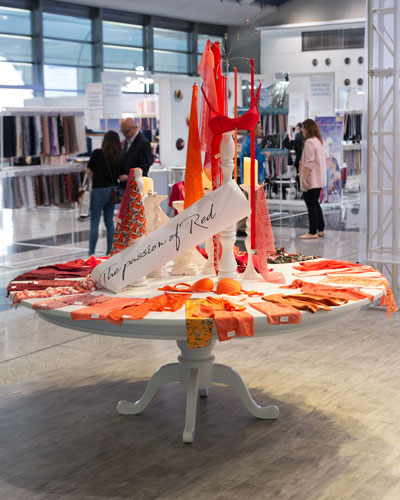 cent will be fibers, 7 per cent embroidery, 24 per cent lace, 33 per cent fabrics, 16 percent accessories, 17 per cent OEM/ODM. Around 50 per cent of the exhibitors will showcase eco-friendly solutions (collection or production process)
Forum –The Creativ’Lab: The Creativ’ Lab will showcase a selection ofsamples and technological innovations, materials, accessories, colors, prototype displays made by exhibiting mills and curated by Concepts Paris. The Interfiliere Hong Kong Creativ’Lab decrypts a preview of Autumn / Winter 2020-2021.
Conferences: It will also hold high-level trend conferences, discussion panels or talks with visionary keynote speakers. The topics will cover the future of our industry, the current industry progress and challenges and more. Networking events including breakfast, Lunch, happy hour, etc will create a fun yet fashionable networking atmosphere and encourage casual (yet fruitful) business connections.
The United Nations hosted a fashion conference February 1, 2019, which brought together around 400 participants with the goal of inspiring collaborations that will move fashion toward a more sustainable future.
The participants, made up of industry experts, scientists and UN representatives, among others, were offered the chance to highlight success stories within sustainable fashion and map out opportunities for further action.
The recurring topic at the event was the UN’s 2030 Sustainable Development Goals, which are the UN’s blueprint to achieve a better and more sustainable future for all.
The consensus was that improving the economic livelihoods of the communities in which it operates, paying fair and equal wages to all its employees and ensuring that no one within the supply chain is living beneath the poverty line are some of the ways a business can reach the goal by 2030.
The need for innovative, creative and bold action was stressed.
Various panels also took part throughout the day, featuring representatives from names such as Adidas, NASA and G-Star Raw. These panels discussed themes such as the power of collaboration in accelerating the achievement of the Sustainable Development Goals, if sustainable design is reality or fiction and the future of the fashion industry in general.
Itma will be held in Spain from June 20 to 26, 2019. This is a leading textile and garment technology exhibition. The exhibition will feature over 1,600 exhibitors who will showcase their latest technologies and sustainable solutions for the entire textile and garment manufacturing value chain as well as fibers, yarns and fabrics.
As technological developments are happening at breakneck speed, and collaboration is becoming increasingly necessary in a globalised economy, the industry has to stay abreast of the latest developments and trends. Hence, ITMA will stage several forums to help participants be ahead of the competition curve.
One is the nonwovens and chemical and colorant forum. Another is the Chemical Leaders Forum. Exciting opportunities will be offered to visitors who are involved in or have the intention to move into nonwovens manufacturing. The Chemical Leaders Forum will focus on the circular economy and resource sustainability strategy and how innovation will drive future industry success. The forum is meant for dyestuff, color and chemical professionals from around the world.
These forums will offer a valuable platform for various associations and professionals to connect and network with the right players. This is especially important as collaborations and partnerships from research institutions to technology, chemical and raw material providers and users are increasingly more critical to business success.
Momad is being held in Spain, February 8 to 10, 2019. This is the largest trade and trend forum for the fashion industry in the Iberian peninsula. Nearly 800 brands are presenting their offers for autumn/winter and spring/summer, classified by fashion styles, in the sectors leather and coat; urban; casual; man; party; contemporary; metro space; footwear, accessories; lingerie and bath; large sizes; sustainable fashion and Momad 4.0.
New strategies for the fashion business based on digitalization and sustainability, among other topics, will be analysed, and a preview of the new season’s trends will be presented. The program of activities will be completed by Momad catwalk parades as well as various training activities, workshops and events.
After working for the past few years as the umbrella brand that encompassed the Momad Metropolis and Momad Shoes shows, Momad is evolving as a brand and from this edition on it will give its name to the leading fair for professionals in the fashion and clothing sector, where footwear and accessories brands that wish to associate with fashion retail also have a place.
In this edition, the fair is strengthening its commitment to sustainable fashion. About 30 companies are committed to an environmentally-friendly production will participate. The sectors represented in this area are women, men, children, footwear, leather goods, swimwear, jewelry, accessories, glasses and watches.
Levi Strauss’s net revenues grew 14 per cent this fiscal year. The company’s strategies to diversify the product portfolio, expand the direct-to-consumer business and deepen its connection with consumers worldwide have worked, resulting in both higher annual revenues and gross margins.
The company had 74 more company-operated stores at the end of fiscal 2018 than it did the previous year. Levi Strauss, based in San Francisco, is known for Levi’s jeans.
While revenue grew in 2018, net income for the fiscal year remained flat. That was due to higher operating income, lower interest expense, gains on hedging contracts in the current year as well as a debt refinancing charge in the prior year. For the fourth quarter, net revenue grew nine per cent with net income declining 17 per cent from the previous year. Profits were affected by an increase in selling and general and administrative expenses for the fourth quarter. The increase in costs reflected the expansion of the company’s direct-to-consumer business, higher compensation expenses reflecting the company’s stronger performance and higher advertising expenses.
During fiscal 2018, net revenues for the Americas were up 10 per cent. Sales in Europe grew 25 per cent. Sales in Asia grew eight per cent.
The global garments market is growing at a compound annual growth rate of 4.4 per cent. High-end luxury brands are capitalizing on consumers’ inclination toward discretionary expenditure and instant gratification by moving toward a see-now-buy-now model.
Demand for garments is mostly influenced by disposable income and overall economic conditions of a region. Most of the demand for garments is from developed and developing countries due to rising disposable incomes and changes in lifestyle patterns. Consumers prefer to buy garments in bulk at lower prices, which has benefited the global garments market. Key industry players in developed countries have been able to maintain profit margins by offshoring the production process to less developed countries. This has led to a reduction in the cost of production due to the low labor costs which have eventually translated to a fall in the price of garments. The demand for garments has increased significantly due to offshoring.
The global garments market is divided on the basis of gender, type of product and distribution channel. Women’s and men’s garments account for 63.8 per cent of the revenue, and the rest is generated by hosiery, sports and swimwear, intimate apparel, and clothing accessories. The market is still dominated by brick and mortar stores.