FW

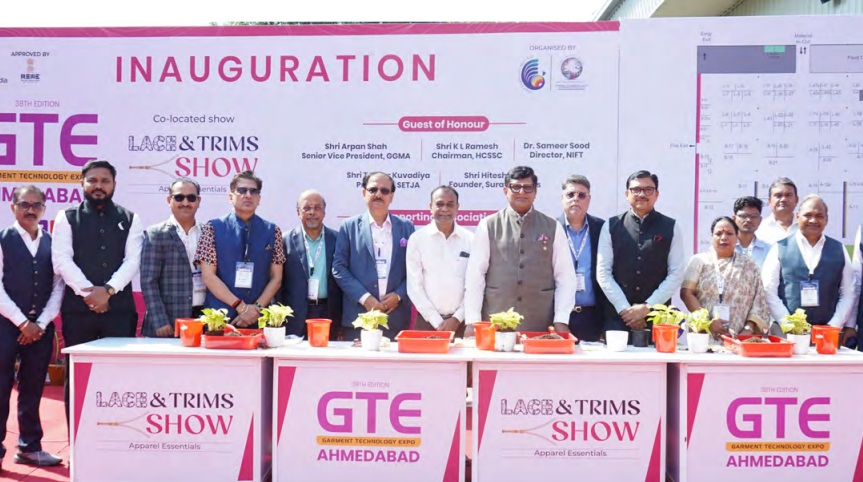
Garment Machinery Manufacturers and Suppliers Association (GMMSA) was held in Ludhiana from January 25 to 28, 2019. This is a show dedicated to knitting and sewing technology. It had a good number of players displaying value addition machinery, be it embroidery, printing or laser cutting. Many Chinese companies exhibited circular and flat knitting machines. There were some players offering chemicals, inks and trims.
Visitors included big as well as emerging garment firms of Ludhiana. Exhibitors and visitors felt that currently overall business is good and they are hopeful about the coming months too. Some players in Ludhiana are continuously focusing on new offerings and product developments. As survival is all about offering newness in products, they are going in for advanced infrastructure.
Apparel manufacturers of Ludhiana are geared up for growth considering the good winter season. But city’s manufacturers have realized for for survival advanced infrastructure, focus on product development and a changed mindset is a must. Many garment manufacturers are facing issues of long credit periods, as in the domestic market they have a payment cycle of almost six months. To manage the payment cycle they need to have enough resources. As this factor also increases costs, they are now seriously working to reduce the credit period.
Cambodia's garment industry is confronted with some major challenges. The most pressing concern is a new rule that workers are entitled to seniority bonuses twice a year. Workers support the plan but fear that employers will somehow find a way to pay them less than entitlement.
Workers have questions about the size of the bonus and how much they will receive if they have worked at a factory for six or seven years. Workers, who form a massive voting bloc, were promised more protection and higher incomes during last year’s elections.
Another threat lies with the possible suspension of Cambodia from the Everything But Arms (EBA) trade scheme between the European Union and the world's least developed nations. The EBA allows Cambodia to export its products tariff-free to EU countries.
Cambodia would suffer badly if suspended from the EBA. Garment factories in the country which supply to major brands such as H&M, Adidas, Nike, C&E and Puma employ more than 7,00,000 Cambodians. The EU is by far the country's most important export market. A loss of trade preferences could mean that fashion brands turn away from Cambodian factories. Although the suspension won't start before 2020, workers already fear the impact.
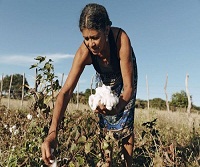
China has overtaken India’s lead in cotton production. At the end of the 2018-2019 season, China will be again the world’s largest producer of this raw material. China’s cotton production will increase by one per cent. India, by contrast, will reduce it by seven per cent due to lack of rain.
India had maintained leadership for the last two years, since China changed its policy of incentives to cotton. Meanwhile consumption of cotton in general will not be affected by the trade war between the United States and China, but could have an impact on the textile trade if it slows down economic development. On the other hand, the increase of production in countries such as China, Brazil, regions of West Africa, Turkey and Uzbekistan will not be enough to compensate for the fall in the United States, India, Australia and Pakistan.
The increase in cotton prices is directly related to the decrease in production and the increase in demand, which will cause a reduction in global stocks during 2019. In fact, cotton reserves will decrease by 6.6 per cent in the 2018-2019 season. This is the lowest figure since the financial year 2011-2012 when crops in the United States and China were affected by climatic factors and the price of cotton registered historic peaks.
Bangladesh is looking to enhance ties with Poland. The country is encouraging Polish investment in sectors like energy, leather and footwear, agro-processing, food processing and packaging. Poland is ready to consider investing in Bangladesh’s mining sectors including coal mining. Poland has been urged to recruit Bangladesh’s semi-skilled and skilled workers and professionals in sectors like health care, construction, agriculture, industries and tourism to tide over the labor shortage in Poland.
The two countries have friendly relations and have stressed on enhancing cooperation particularly in sectors including science and technology, industry, trade and commerce. Bangladesh is looking to expand apparel exports to Poland. In addition to apparel items, Bangladesh is also looking to expand exports of medicine and other pharmaceutical products.
Poland has been urged to consider easing visa procedures for Bangladeshi businessmen, visitors and students. The two countries may explore possible areas of cooperation in the promising blue economy sector. During fiscal 2017-18, Bangladesh exported apparel worth $95 million to the central European country. Knitwear fetched $59.5 million and wovens fetched $35.7 million.
During the first six months of fiscal 2018-19, Bangladesh’s apparel exports to Poland amounted to $502 million with knitwear logging in $315 million and wovens fetching $187 million.
"Though fashion provides consumers with a mode of self-expression, a celebration of originality and fine craftsmanship, or a temporary pleasure, it is also one of the world’s most polluting and wasteful industries. As a recent report by Ellen MacArthur Foundation reveals, global textile production has more than doubled in the past 15 years, while the average shopper holds on to clothing for half that long. Over 85 per cent of discarded clothing in the US ends up in landfills, and this cycle of make/use/waste comes at a considerable cost as the industry generates more greenhouse gas emissions than do international maritime shipping and aviation combined."
 Though fashion provides consumers with a mode of self-expression, a celebration of originality and fine craftsmanship, or a temporary pleasure, it is also one of the world’s most polluting and wasteful industries. As a recent report by Ellen MacArthur Foundation reveals, global textile production has more than doubled in the past 15 years, while the average shopper holds on to clothing for half that long. Over 85 per cent of discarded clothing in the US ends up in landfills, and this cycle of make/use/waste comes at a considerable cost as the industry generates more greenhouse gas emissions than do international maritime shipping and aviation combined.
Eco-friendly materials to promote sustainability
This colossal irresponsibility on part of the brands sparked the idea for Veja, the footwear industry’s initiative for sustainable fashion. In 2005, while other brands set up their online stores, François-Ghislain Morillion and Sébastien Kopp opted for physical stores. These two entrepreneurs devoted all their resources to a sustainably manufactured product. Today, they also use upcycled tilapia hides; recycled plastic bottles; and flannel, silk, and other eco-friendly materials for their shoes. Till date, they have sold nearly 2 million pairs of shoes around the world and continue to push and emphasise the importance of a sustainable business.
Bringing transparency to the luxury business
However, legacy brands, with their embedded supply chains and manufacturing facilities, face a bigger challenge. Kering, publicly announced its quantitative objectives in sustainability through 2025. Chief among them included reducing its environmental footprint overall by 40 per cent. The rest of its actions, which touch every step of the supply chain, as well as manufacturing, distribution, and R&D, are explicitly outlined online, suggesting transparency is no longer an enemy to luxury’s aura of exclusivity.
Though traditionally, change was unlikely in the rarefied world of high-end jewelry, Place Vendome, the Parisian mecca of the world’s most prestigious and jewelery brands, is currently facing disruption. Courbet was launched in May as the first 100 per cent ethical and sustainable line, using recycled, traceable gold and lab-grown diamonds of the highest color grade. These are 30 per cent less expensive than mined diamonds—the latter producing 15,000 times the pollution of lab-grown ones, which are made with solar- powered machines. Department stores world-wide have already started placing with the local interest being instantaneous.
However, in an attempt to protect the environment, brands are ignoring the aesthetic value of their products. This is why many eco-only brands have failed to attract their consumers. As for a product to sell, it has to be pleasing both in manner and appearance.
Monforts is advancing in the field of Industry 4.0 and automation, with its latest Qualitex 800 control system and the Web-UI app for remote visualisation of Monforts technologies via smart phones and tablet devices. The new Monforts Thermex Econtrol continuous dyeing line considerably shortens processing times for heavier fabrics. It’s an extremely versatile range and allows easy movement between reactive and disperse dyeing, for example.
The Thermex Econtrol range has a working width of 1.8 meters and allows the single-bath continuous dyeing of cotton and polyester fabrics with selected reactive and dispersion dyestuffs as well as cotton-polyester blends to be processed without reductive intermediate cleaning, eliminating the need for a steamer.
Other processes, such as the use of indanthren vat dyes for enhanced wash and boil fastness, or the over-dyeing on reactive-dyed cotton fabrics to achieve an extremely broad range of color effects, can also be carried out on the range.
Turkish dyehouse Istanbul Boyahanesi has invested in new Monforts technology. The company is the only dyehouse in Turkey with its own proprietary software for virtual control of all operations via smartphone or TV from the boardroom. It provides real-time information on all machine parameters and operator activity.
For the seven month period of this financial year Bangladesh’s exports of readymade garments grew by 14.51 per cent. After garments, the other leading products are agricultural products, leather and leather goods, leather footwear, pharmaceuticals, shrimps, jute and jute yarns, bed and kitchen toiletries, home textiles and engineering products.
However, as prices are competitive in the international market, Bangladesh despite its growing volume is not earning much due to low prices. The country’s exporters want the currency devalued against the dollar and incentives so that they can target more markets.
Bangladesh’s export growth during the first seven months of the current financial year was 13.39 per cent and in January the export growth was 7.95 per cent over the corresponding month of the last financial year.
India, Brazil, Mexico and Chile are also turning into major export destinations for Bangladesh. Similarly, China, the largest apparel supplier worldwide, has also been turning into a major export destination for Bangladesh. China also allows duty-free access to over 5,000 Bangladeshi products, most of which are garment items.
Bangladesh’s garment exports to non-traditional markets have been growing since 2010-11 and have been made possible by a stimulus package and duty-free market access. Apart from the US, European Union and Canada all others are considered non-traditional or emerging markets for Bangladesh.
Imports of apparel from China by US companies rose by 0.91 per cent in the January to November period. US companies are looking to source apparel from countries other than China. During the same time, apparel shipments from Vietnam—the number two supplier to the US—rose 5.83 per cent. Cambodia posted the largest increase, gaining 12.37 per cent. Similarly apparel shipments from Bangladesh rose by six per cent, shipments from Pakistan rose 5.93 per cent and India’s shipments rose 2.8 per cent.
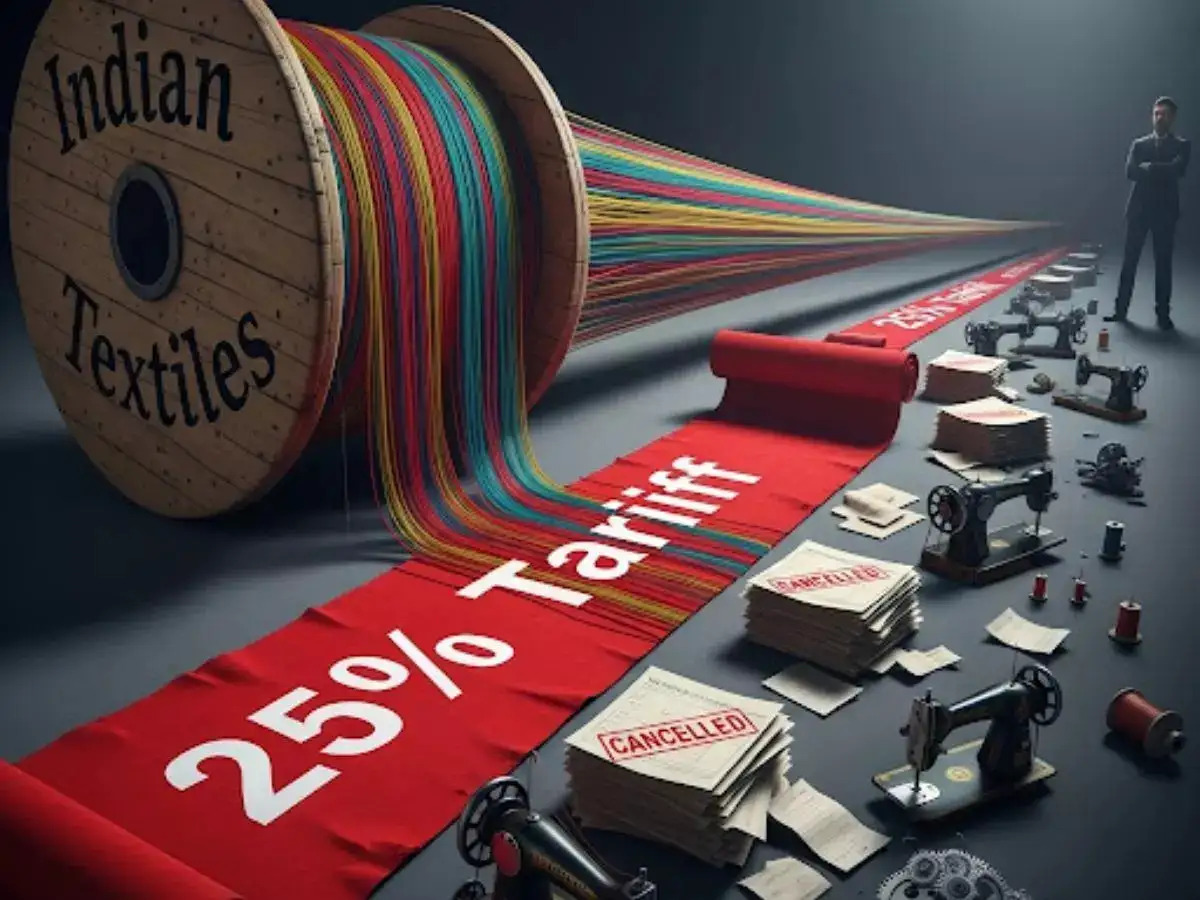
The trend is likely to continue at least until the trade war between the US and China is resolved. There is a March 1 deadline that threatens a 25 per cent tariffs on goods expected to include apparel and footwear.
Among the suppliers to the US in the western hemisphere, imports from Honduras were up 1.83 per cent. Mexico’s shipments fell 5.33 per cent and imports from El Salvador dipped 0.64 per cent.
In November, US imports of apparel were down 2.7 per cent in square meter equivalents compared to the same month a year earlier. This included declines from every major supplier except China, which ticked up 0.1 per cent. For the year to date, apparel imports were up 2.2 per cent in square meter equivalents and up 2.9 per cent in value.
The global recycled yarn market is expected to grow at a CAGR of 6.3 per cent from 2018 to 2025. Recycled yarn can be classified as recycled PET yarn, recycled cotton yarn, recycled nylon yarn and others in terms of raw material source. Recycled PET yarn is the major kind of recycled yarn due to the comparatively convenient source--PET bottles. Recycled PET yarn takes a 67.27 per cent share of the global recycled yarn market and the product is mainly produced in China.
The markets for recycled cotton yarn and recycled nylon yarn are more fragmented, with the US and European countries as the major producing areas. China is the biggest producer of recycled yarn. Major players are Far Eastern New Century Corporation, Haili Group, Cixi Xingke chemical fiber, Longfu Recycling Energy Scientech from China, Martex Fiber and Unifi from USA. The largest production areas of recycled yarn are China, US, Europe and India.
Recycled yarn refers to fibers recovered from waste plastic and part of natural fibers, then made into yarn. The market for recycled yarn is highly fragmented, with a series of manufacturers from transnational players to small private companies. Key regions are North America, Europe, China and Japan.
The Cotton Association of India has reduced cotton crop output for the 2018-19 season and estimated at 330 lakh bales. Crop estimate for Telangana has been reduced by 2.50 lakh bales, Andhra Pradesh by 50,000 bales and Karnataka by two lakh bales. The main reason for the lower crop is that in the Southern zone farmers have uprooted their cotton plants due to moisture deficiency as a result of which there is no scope for third and fourth pickings.
Total cotton supply till the end of the cotton season, up to September 30, 2019, has been estimated at 380 lakh bales. Domestic consumption is estimated at 316 lakh bales. Exports for the season 2018-19 are estimated at 50 lakh bales. Last year the export estimate was 69 lakh bales. The carryover stock at the end of the 2018-19 season is estimated at 14 lakh bales.
Cotton consumption from October 2018 to January 2019 has been estimated at 105.34 lakh bales while the export shipment of cotton up to January 31, 2019, has been estimated at 24 lakh bales. Stock at the end of January 2019 is estimated at 69.46 lakh bales including 39 lakh bales with textile mills and the remaining 30.46 lakh bales with MNCs, traders, ginners etc.