FW

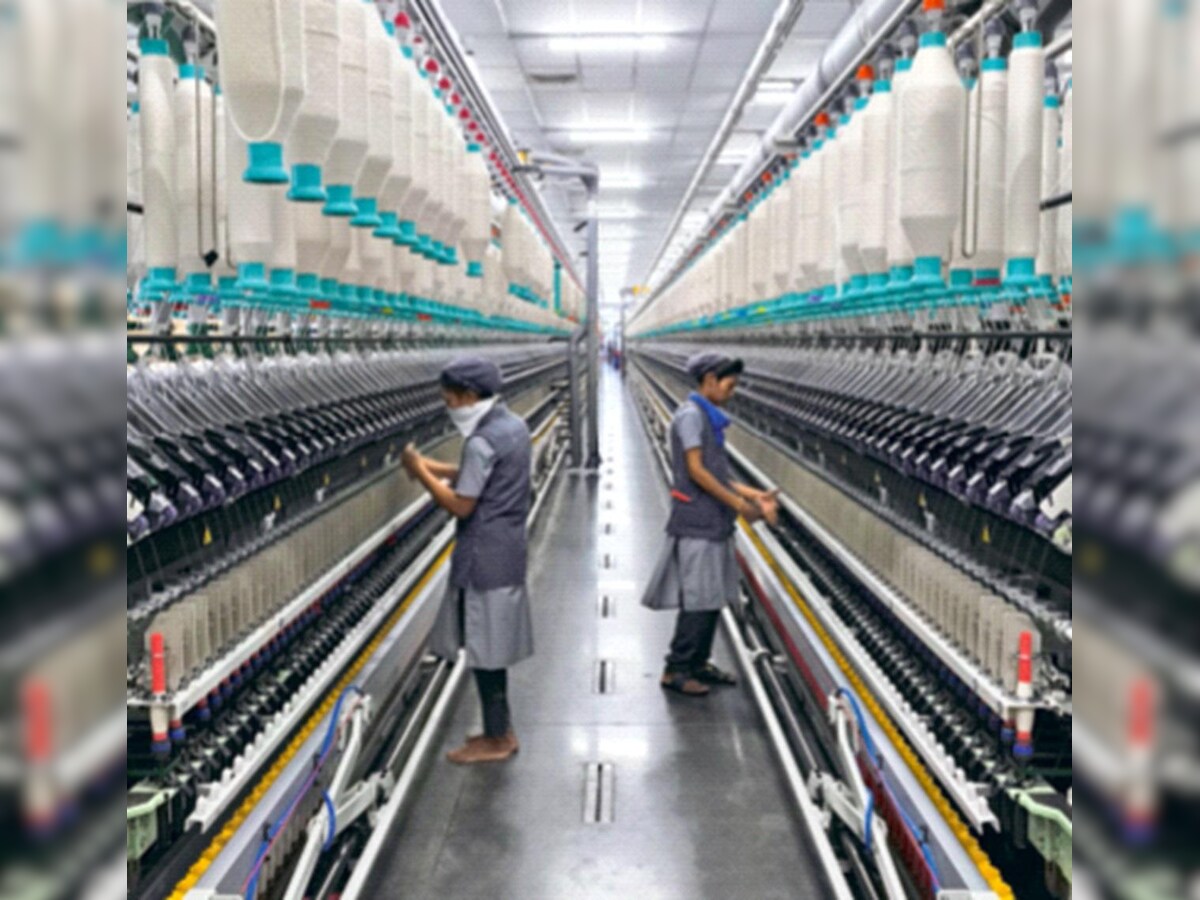
For the third quarter Century Textiles’ net sales were Rs 957.22 crores as compared to Rs 1091.26 crores during the earlier quarter. Net profit for the quarter was Rs 134.27 crores as against Rs 156.52 crores for the period ended September 30, 2018. For the whole year net sales were Rs 957.22 crores as compared to Rs 1033.46 crores during the earlier year.
Net profit for the year was Rs 134.27 crores as against Rs 89.94 crores for the earlier year. EPS for the year was Rs 12.02 as compared to Rs 8.05 for the earlier year. For the nine month period net sales were Rs 3031.55 crores as compared to Rs 2999.30 crores during the earlier nine month period.
Net profit was Rs 453.45 crores for the nine month period as against Rs 262.96 crores for the earlier nine month period. EPS was Rs 40.60 for the nine month period as compared to Rs 23.54 for the earlier nine month period.
Mumbai-based Century Textiles and Industries is active in textiles, viscose filament yarns, cement, and pulp and paper. The cotton division of Century is one of the oldest players in India.
European Union has welcomed Bangladesh government’s initiatives to resolve the labor unrest in the apparel industry. This was conveyed by Rensje Teerink, European Union’s envoy to Bangladesh, who also welcomed the government’s steps towards ensuring peaceful atmosphere in the sector and labor welfare. The junior minister conveyed the government’s efforts to publish the gazette of minimum wages, formation of 29 committees to monitor the overall situation in labor-intensive areas, and establishing a hotline to listen to the complaints of apparel industry workers.
Meanwhile, Minister Sufian upheld the European Union’s assistance towards the apparel industry and sought its assistance in creating new employment opportunities in other sectors. Ambassador Teerink assured that its assistance will continue in the apparel industry and other sectors as well in the future.
Bluezone is being held in Germany on January 29 to 30, 2019. This event reinforces denim’s sense of community and discovery. Brands in the denim and sportswear categories are showcasing their latest fabric developments.
This edition of Bluezone will carry the conversation about cleaner denim forward. The event is giving a clear signal for more transparency, resource-saving process solutions and conscious consumption. It is highlighting great synergies in the market, helping brands get closer to the manufacturing sector, and a let them know education initiative by inviting the best skilled professionals to bring seminars and workshops with the latest groundbreaking discoveries for the denim community.
More than ever, denim makers and retailers are demanding better options for sourcing and manufacturing, and with its readymade solutions, Bluezone caters to that. There are seminars, workshops and talks on the denim industry’s latest developments. In Munich, where the show is being held, the future of denim is happening now. Bluezone boasts a spectacular portfolio of the best brands and the most innovative products. It is regarded as one of the best denim shows worldwide. The show features a futuristic customization gallery, which is a collaborative project by denim specialists in addition to a presentation of a capsule collection.
Devoid of cursive lettering and drop shadows, Zara’s new logo abandons straight lines in favor of curves and presents itself with overlapping letters and, unlike luxury firms’ logos, an updated serif. The redesigned logo had been already used in some of the brand’s marketing material, labels and for capsule collections available exclusively at recently opened stores, and now it has made its debut on the online store, where it appears in blue, orange and black. It is also used in Zara’s social media accounts.
Zara is a global fast fashion giants. The logo redesign is the third for Zara following its most recent update in 2010. Its first ever logo was introduced in 1975. In November last year, Zara expanded its online reach to 106 new countries and regions through a new global website, bringing its online presence to a total of 202 markets.
Logo redesign seems to be a trend on the rise. Building on the evolution of typography and the growing role of visual identity, the rebranding strategy has led numerous firms to change their image with refined, sans-serif and bold logos, from luxury houses such as Burberry and Balenciaga to Hedi Slimane’s Celine.
Garment exporters from Bangladesh will be a part of Apparel Sourcing Week, Bangalore, March 15 and 16, 2019. The show provides manufacturers a platform to showcase their products to retailers.
The Standard Group is one of the oldest garment manufacturers in Bangladesh. It sees the exhibition as an opportunity to explore and enter the Indian retail market. The group, which will be displaying the best of its woven casual bottoms, also has a big sweater production facility and its own in-house garment washing, printing, embroidery, apparel design, garment testing and various accessories’ production facilities. Established in 1984, the Standard Group today has 19 factories and generates 418 million dollars annually, and with a prospective eye on Indian retail, it is looking forward to Apparel Sourcing Week for its future expansion plans.
Pakiza Knit Composite will display T-shirts, tanks, polos, pyjamas, jackets, leggings and knitted children’s wear. In less than five years of its establishment, Pakiza works with the likes of NKD, Pep&Co, OVS, NewYorker and Scanwear, among others. Anzir Apparels known for sweaters, will display its new sweater collection.
With different product categories and distinct strengths, all the exhibitors at Apparel Sourcing Week will have something for every retailer and brand that visit the two-day sourcing fair.
Tex-Ray and Applied DNA will set up a center in Taiwan. This will integrate Applied DNA’s authentication platform into new product development of yarns, finishes and fabrics and design streamlined supply chain processes to reduce time-to-market for Applied DNA products and services.
Applied DNA is a leader in PCR-based DNA manufacturing for product authenticity and traceability solutions. Tex-Ray is a pioneer in performance fabric and smart clothing for modern active lifestyles. Tex-Ray, based in Taiwan, is the world’s largest functional fabric production base accounting for approximately 50 per cent of the global output value of performance fabrics. Founded in 1978, Tex-Ray manages global textile supply chains and counts the world’s leading brands as customers and operates in nine countries within Asia, Africa, and North America.
Applied DNA’s CertainT molecular authentication platform for forensic authenticity and traceability delivers brand differentiation and protection of goods whose value chains span large commercial ecosystems and geographies. Unique in its ability to provide identity and traceability embedded in goods themselves, CertainT is a natural fit with the technology innovations that comprise Tex-Ray’s product portfolio.
The alliance with Tex-Ray enables Applied DNA to engage key participants along multiple points in the global textile value chain to more broadly drive adoption of Applied DNA’s authentication technology platform.
"Though, a recent survey by UN initiative Better Factories Cambodia (BFC) indicates improving conditions in the country’s garment factories, human rights violations demand new mechanisms for accountability and transparency in these companies. Hun Sen government and the international race to search the cheapest labor, have created an economy that forces Cambodians, especially women, to rely on these low-paying jobs that still expose them to rights violations.It’s crucial that the government, garment industry corporations and international allies support the Cambodian people in pushing for transparency, accountability and better conditions."
 Though, a recent survey by UN initiative Better Factories Cambodia (BFC) indicates improving conditions in the country’s garment factories, human rights violations demand new mechanisms for accountability and transparency in these companies.
Hun Sen government and the international race to search the cheapest labor, have created an economy that forces Cambodians, especially women, to rely on these low-paying jobs that still expose them to rights violations.It’s crucial that the government, garment industry corporations and international allies support the Cambodian people in pushing for transparency, accountability and better conditions.
Compliance improves, violations continue to exist
The BFC report found improved compliance for international laws around overtime wages, discriminations against employees, child labor, routine evacuation drills, and reprisals for union membership.
However, across the nearly 500 factories surveyed, still 234 violations wereregistered between November 2017 and May 2018. According to Cambodian government’s own statistics, over 2,000 workers fainted in 2018 in just 16 factories that were surveyed. In one shoe factory in October, nearly 100 workers fainted during a single shift.
The survey also found only 11 violations of international child labor laws among 600,000 workers, far fewer than the 74 violations found in 2014. But there’s a good chance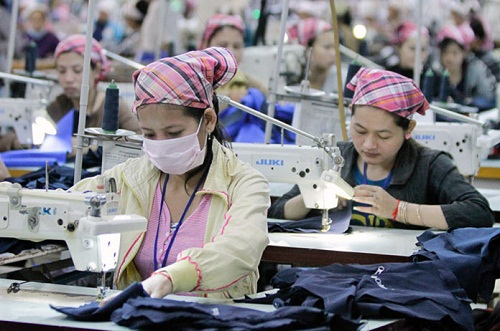 that children have simply stopped working in licensed factories, working at home or with subcontractors instead. Also,it’s possible that many children are now passing the age checks unnoticed.
Some of the improvements that supposedly represent progress aren’t much cause for celebration. According to new recommendations, pregnant women are now allowed to leave work 15 minutes early and are given a benefit of 400,000 Riel (about $100) for having a single child. These concessions may signal improving conditions, but they also demonstrate severe gender-based discrimination.
Recent data from the World Bank suggests that demand for Cambodia’s exported textiles is increasing at a rate of 16.1 per cent per year, more than double that of the country’s economic growth rate.
Growth is partly due to the European Union’s decision to give Cambodia tariff-free access to their markets under the “Everything but Arms” (EBA) program. TheUnion has begun a six-month review of Cambodia’s trade status that will determine if they can continue trade within the EBA program.
Time to be accountable
Despite rights violations in the garment industry and the country as a whole, Nike, Adidas, H&M, Gap Inc, and other international brands continue to rely on Cambodia for the manufacture of a significant portion of their products.
H&M recently hosted a summit on fair wages in Phnom Penh and stated that wages for factory workers producing their clothing were 24 per cent higher than the minimum wage, for a total of $210.80 per month. However, Clean Clothes Campaign, a network that has been advocating for garment sector reform for 30 years, highlighted H&M’s failure to follow through on its promise to provide minimum wages to its 850,000 garment workers.
Hun Sen and his government appear content to allow the Cambodian economy to rely on this single industry, as they have for over two decades. It is upto international government and textile companies to shake them out of this slumber and advocate for a meaningful change in the country.
Welspun is all set to introduce ‘its new product range -Welspun Quik Dry ’towels. Known for its strong R&D and technology backed products; the new range has been designed based on extensive consumer research and insights. With the aim to cater to the mass market through first-hand experience, the brand will mark this new launch by participating in the Kumbh Mela, the largest human congregation of the World.
The brand will deploy 3,000 Welspun Quik Dry towels each day outside the changing rooms at the mela to give women the first-hand experience of the product. Apart from branding 20 changing rooms at the bathing ghat, Welspun will set up a stall at the commercial area of the Kumbh and also roll out Geo-targeted notifications for a better on-ground interaction. The idea is to touch base with at least 5 lakh consumers through this initiative. After achieving success globally in the home-textile industry, where-in every fifth towel sold in the US is from Welspun, the company is now all set to leverage their presence in the Indian market with the new range of towels priced at Rs. 249.
Bangladesh’s apparel exports to India have grown significantly in the last two years. The country has duty-free access to the Indian market. India's exports to Bangladesh are also growing. Bangladesh is a major importer of cotton and active pharmaceutical ingredients from India.
Bangladesh is developing special economic zones for Indian investors. A river cruise between Bangladesh and India will begin from March this year. The value of Bangladesh’s knitwear exports rose 107 per cent in July to December 2018 compared to July to December 2017. The value of woven exports rose 161 per cent.
India has been growing into a big potential market for Bangladesh’s apparel exporters. Last fiscal, Bangladesh’s apparel exports witnessed a 100 per cent gain in India – a trend which is continuing through to this year and expected to rise. India recently introduced a uniform taxing policy across its states – lifting a major trade barrier and proving a boon for business. Also, international brands and stores are opening up in India, which demand more apparel products from Bangladesh.
Also, many renowned fashion brands are exploring Indian market now – opening outlets across states. These fashion brands and outlets are demanding apparel items from Bangladesh.
Jacket Required was held in the UK, January 23 to 24, 2019. The former menswear-focused fair started incorporating women’s wear a few seasons ago, and though its identity is still decidedly masculine in feel, many brands opted to showcase ranges for both genders.
Day one was busy but day two started on a quieter note, though footfall increased in the afternoon. Proceedings kicked off with a panel talk on slow fashion. Footwear purveyor Cat is at the top of the chunky-sole-trend-ladder and displayed a variety of sneakers.
French heritage brand Le Mont St Michel introduces its men’s and women’s ranges to several new buyers from the UK and beyond. Its unisex workwear jacket is an archival carry-over style made in cotton canvas. One new shade is brought out once a year. Bottle green is the shade of 2019.
Raeburn’s range featured all manner of remade and recycled elements. A particular highlight: the puffa jacket filled with waste material from the Raeburn Lab, and enrobed with surplus parachute material.
Sustainable UK-based label Absolutely Bear focused on a collection of ethically made, high-quality wardrobe essentials for men and women. New designs are added occasionally. A bear-adorned tee was screen-printed in London onto organic cotton jersey.