FW
Bangladesh to allow overseas companies to set up industries
According to the sources of Global Economist Forum (GEF), the Bangladesh government may permit overseas investment proposals to set up industries by recruiting 50 percent of skilled manpower from Bangladesh and safe return of the investment.
Many stakeholders in the field of RMG and pharmaceuticals have the immense potential to invest the overseas investment for contributing more to boost country’s economy
Currently, Ethiopia is permitted for convenient access to USA and EU market as the country is availing ‘zero tariffs’ to enter such potential traditional markets. On the contrary, Bangladesh needs to pay 15 to 16 percent tariff to enter USA market which is hampering the RMG exports.
The government has to allow investment opportunity in apparel, leather, plastic, light engineering, ship building and IT sector to invest the black money under special scrutiny.
Currently, USA and China are receiving highest FDI, simultaneously, they are investing huge money in overseas market which is helping to expand their business in the international market.
Indonesia looks for trade pacts
Indonesia is going all out to strike trade pacts with about a dozen countries and blocs.
The US-China trade war has hurt its shipments and threatens to worsen a current account deficit.
The country has signed a free trade pact with Australia and is close to clinching deals with Iran, Turkey and the European Union.
Indonesia’s current trade policy is very proactive in looking for market access in various parts of the world, whether the traditional markets or the non-traditional ones such as in Africa and Latin America. The urgency to seal as many trade pacts as possible stems from the need to reverse a slump in exports. Notably, in the past three months, exports pushed the nation’s trade deficit, to a record last year.
Besides simplifying export procedures and ensuring efficient logistics, Indonesia is leaning on diplomacy to secure preferential tariffs, access to non-traditional markets and cheaper export financing.
Indonesia’s current account deficit swelled to the highest in four years in 2018 after the trade gap reached a record amid the US-China trade war. The aim is to narrow the deficit to around 2.5 per cent of the GDP in order to address market sentiments. Risks loom from a prolonged US-China trade war.
India to maintain steady growth
India’s economy is likely to grow at 7.3 per cent in 2019 and 2020, according to Moody’s Investor Service.
India is less exposed to a global manufacturing trade growth slowdown than many other Asian nations and is poised to grow at a relatively stable pace in two years.
The announcement in the interim budget 2019-20 on direct cash transfers for farmers and the middle-class tax relief measures are expected to contribute a financial year stimulus of about 0.45 per cent of the gross domestic product.
The Reserve Bank of India is likely to be able to maintain its current monetary policy stance after some tightening last year. Though the overall strength of the banking system is improving, it remains a constraint on the economy.
However, a complete turnaround of the banking system requires more time amid slower-than-expected resolution of legacy problem loans.
With range-bound oil prices, export growth has outpaced import growth for the last two years. Fiscal spending on infrastructure and the rural economy should continue to support domestic activity, recommends Moody’s.
Moody’s growth estimates are based on the calendar year. India, however, measures its economic growth on the basis of the April-March financial year.
Government spending announced this year is expected to support near-term growth.
Himatsingka, India does Royal Velvet for US
Himatsingka Seide, under the brand Royal Velvet ,will make fashion bedding, sheets, core bedding, utility bedding, bath and bath accessories for the US market.
Royal Velvet is a heritage luxury brand belonging to the US-based Iconix Brand. Royal Velvet is one of the 30 brands in Iconix Brand’s portfolio of consumer brands. The company owns, licenses and markets its brands through a network of leading retailers and manufacturers in both the United States and worldwide.
Himatsingka Seide is a home textile manufacturer. The collaboration is consistent with Himatsingka’s strategy to expand its global brand portfolio in the home textile space. Founded in 1985, the Himatsingka group has operations across Asia, Europe and North America and is one among the leading manufacturers of bedding and bath products, drapery and upholstery fabrics and fine count cotton yarn.
Himatsingka’s retail and distribution network caters to over 7000 points of sale at the global level. Armed with a strong portfolio of brands (both licensed and owned), the group is focused on strengthening its intellectual property portfolio across key global markets. The portfolio consists of the most respected fashion labels as well as technology-driven brands that have led the industry. The group has been the leader in the branded cotton, track and trace space.
The Royal Velvet collections from Himatsingka are expected to launch for spring 2020 at various department and specialty stores.
Dubai mall to host Brazilian brands
Galeries Lafayette in Dubai will host a pop-up store of Brazilian casual wear, beachwear and resort wear. This will begin from March 6 and go on for two months.
Among the Brazilian brands to be exhibited are Amir Slama, Karla Vivian, Skazi, Guria beach wear, Salinas, Agua de Coco por Liana Thomaz, Cecilia Prado and Sinesia Karol. These brands want to be on the wish lists of Arab women, with their identity, colors and prints.
The event is a collaboration between Texbrasil (Brazilian Textile and Fashion Industry Internationalization Program), Apex-Brasil (Brazilian Trade and Investment Promotion Agency), Abit (Brazilian Textile and Apparel Industry Association) and the Fashion Jardim showroom.
Brazilian evening wear is very well known in the Arab world, thanks to major brands in the segment that have exported to the region for years. The choice of Dubai as a starting point is strategic for the organizers to reach the Arab audience, since the city is in a unique position in the region and has a heavy flow of tourists.
The launch event will feature a cocktail party, with 150 people expected to attend, including major Arab media channels, digital influencers and special guests.
The largest department store in Dubai, Galeries Lafayette is a unique shopping destination with a French heritage.
Garment makers urge US and Bangladesh to sign cotton purchase agreement
Garment manufacturers recently urged the US and Bangladesh to sign cotton purchase agreement so that they could get duty privileges on export of apparel items to American markets and ship more products.
If the US agrees to the proposal, local millers will import cotton from the US under a special arrangement for Bangladeshi apparel manufacturers to make garment items from the yarn and fabrics for American customers. Under the agreement the US can allow the duty benefit on condition that all the garment items would be made from the yarn and fabrics using American cotton.
Two local spinning mills have already proposed that the government allow them to set up mills in the US to produce yarn there and make garment items in Bangladesh. But, the proposals were not approved.
Earlier, US cotton exporters also raised the issue and the BGMEA agreed to the proposal. Such trading arrangement in garment business had been incorporated in the now-scrapped Trans Pacific Partnership Agreement keeping Vietnam in mind.
H&M launches prints for children wear
H&M has unveiled a children’s wear print collection made in collaboration with a French artist Nathalie Lété.
The capsule comprises an assortment of colorful and poetic artworks by Lété, juxtaposed as prints over children’s clothing and accessories. The pieces in the recent collection include vibrant T-shirts, jackets, jeans, dresses, jumpsuits, shorts and swimsuits for toddlers and children. The motifs comprise animals and floral patterns starting from Lété’s acrylic paintings, where the designs are artfully arranged together to create an imaginative and fun story. This enfolds to a tropical jungle with chameleons and tigers, along with the artist’s signature depiction of flowers with cats, birds and rabbits.
Nathalie Lété is famed for her illustrations, textiles, ceramics and paintings. In her work, she creates a fantasy land for herself, a land that she wants to share with other people to make them dream. Through flowers, animals, birds, naivety and colors, she aims at creating a cocoon that brings happiness and harmony all around. The relationships between the different elements tell stories, stories that create a nice atmosphere.
The Swedish multinational fast fashion brand has been involved in such print-based collaborations in recent seasons. It collaborated with British heritage interiors brand GP&J Baker for a women’s line last summer, endorsing archive prints.
Fame showcases cool trends
Fame was held in the US, February 25 to 27, 2019.
Numerous extremely important products and solutions were exhibited. Several of these were about fashion, fashion accessories, footwear and fashion design. The show takes place twice a year.
Fun, fresh and full of cool trends, Fame is a one-stop shopping destination where retailers discover ready-to-wear young contemporary and trend-driven fashion for women.
The trade show offered an array of hemlines for bottoms, with a wide selection of finishes. Fame vendors targeted the younger contemporary market, focusing more on adding a bit of spark and glitter for a glammed update to the look.
Animal prints and camouflage were favored on Elan’s denim jackets. What did attract more attention were the embellished jean jackets with faux pearls or rhinestones. At Vocal, a denim vest looked more like a jean jacket with the sleeves ripped off and featuring petite studs in rows down the front panels. Buyers looking for bottoms paid particular interest to its black denim jeans with a tapered leg and rhinestones down the side. Another favorite was a jean with leg lacing.
Since juniors and young contemporary markets want on-trend denim looks, embellished offerings did the trick in ways that help them stand out from their older siblings.
Adidas takes Martin Shankland on board
Martin Shankland is on Adidas’ executive board. He will be responsible for global operations. He succeeds Gil Steyaert.
Martin Shankland joined Adidas in 1997. Since 2017, he has led Adidas’ emerging markets as managing director, setting up the organisation for sustainable success across the Middle East, Turkey, India and Africa. Prior to that, he was managing director Adidas Russia/CIS for 17 years. Under his leadership, Adidas Russia/CIS became a clear market leader through the development of an extensive own-retail network for both the Adidas and Reebok brands.
Steyaert had worked at Adidas since 1999 in local and regional roles with increasing responsibility, among others as managing director Western Europe from 2013 to 2017. Since 2017, he was executive board member responsible for global operations.
Adidas dominates fashion. It’s technically a sports brand and not a fashion brand. But that hardly matters when sports and style have become inseparable and street wear is blending with high fashion. The brand has opened an experiential new retail store in New York, debuted a sneaker made of synthetic spider silk and sold its first 3D printed shoes. Its classic styles, such as the Stan Smith, Sambas, and especially the Superstar, have helped drive the big swing toward casual shoes.
Winter Magic focuses on the US-China trade talks, rolls out new trends
"With the deadline for China and the US to conclude their tariff negotiations just around the corner, the air at the recent Winter Magic event was rife with speculations regarding the impact of tariffs on the fashion sector. As Julia K Hughes, President of the United States Fashion Industry Association (USFIA) noted the major fear now is a failure to agree to deal could result in tariffs on all Chinese imports including apparel, textiles and footwear. A recent USFIA study indicates, many companies plan to diversify their sourcing. Topping this list are companies in Vietnam, Indonesia, India and Bangladesh, with Ethiopia who have noted a 92 per cent increase in their orders from the US in the past 12 months."
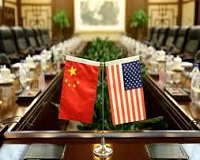 With the deadline for China and the US to conclude their tariff negotiations just around the corner, the air at the recent Winter Magic event was rife with speculations regarding the impact of tariffs on the fashion sector. As Julia K Hughes, President of the United States Fashion Industry Association (USFIA) noted the major fear now is a failure to agree to deal could result in tariffs on all Chinese imports including apparel, textiles and footwear.
A recent USFIA study indicates, many companies plan to diversify their sourcing. Topping this list are companies in Vietnam, Indonesia, India and Bangladesh, with Ethiopia who have noted a 92 per cent increase in their orders from the US in the past 12 months. To minimise the impact of these tariffs, these companies plan to re-engineer their products, reduce the value of goods and ship directly to consumers from their overseas manufacturing facilities.
The floorplan at this year's show featured fewer Chinese manufacturers than in previous years. This, however, provided an opportunity for a number of potential new sourcing destinations to shift centre stage.
Focus on sustainability and smart fabrics
Sustainability and higher-performance fabrics continued to be important topics at this year’s event. Denim exhibits focused on sustainable practices, such as the E-flow technology on offer from Jeanologia, a Valencia-based textile technology specialist, which delivers dye to fibres via nanoparticles, a process that uses 95 per cent less water and produces no waste.
Attendees could also familiarise themselves with the Styku Body Scanner, the latest high-tech offering from Tukatech, a California-based fashion-technology specialist. The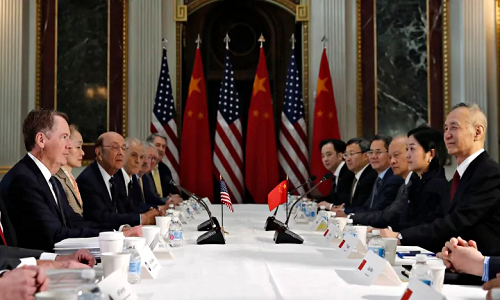 system creates an exact replica of the original model as a 3D avatar, after taking hundreds of measurements as part of a body scan.
Other advanced fashion manufacturing technologies on show included a fabric digital printer developed by Mutoh America, an Arizona-based printing group. There was also an automatic laser-cutter, which relied on the latest camera tech to maintain pinpoint accuracy.
Trendspotting for Spring/Summer 2020
This year, Fashion Snoops, a Los Angeles based trending consultancy identified future fashion trends at the event. The first trend Ethos was inspired by JOMO – the joy of missing out. Drawing on Scandinavian design with a dash of folk, this trend translates into bark, green and rust shades, sunset-scapes and basket stripes, all on such items as baggy pants with high waistlines, linen bomber jackets with short sleeves and heeled mule shoes. Materials used in this trend are plant-based, alongside Earth-friendly textures and crafty crochets.
Inspired by psychedelics, the second trend Dose resulted in bright, artificial colors such as "blazing dandelion", neon greens and purple pinks, while used a number of iridescent materials, high-tech PVC, trippy graphics and dreamy dyes. The key items here include see-through windbreakers, bra tops with a branded trim, sling-back sandals, etc.
Genesis, the next trend focused on fusing prehistoric life with new technologies. Here, consumers could envisage a keen adherent attending the unearthing of ancient burial sites especially if they're wearing brushed silk cargo pants, a campshirt with oversized pockets and a novelty purse, decked out with feathers Flash fused sci-no-fi tech with retro aesthetic and translates into disco metals, fierce feline prints and waxed denim. In terms of colors, chicory, cinnabar and chakra (a type of purple) and neutral "potter's clay" with pink undertones trended along with awe- a neon blend of lime and yellow.