FW
ITE Group announces three-year investment plan
During leading fashion trade event Moda at NEC Birmingham, the ITE Group announced a three-year plan of investment, support and growth to offer exhibitors and visitors incredible events to promote trade and offer unique platforms for all fashion buying needs.
This three-year plan will include investment across the shows including new appointments, shared intelligence and data analysis, the development of its educational content programmes and the continued commitment towards sustainability through our Power of One campaign. Working together as a portfolio, each show benefits from the knowledge and experience of the teams and their networks, but they will continue to be run separately as they are each unique.
The group is committed to investing in each of the shows, building on its visitor acquisition programme, delivering newness, innovation and creativity. Each event is tailored to meet the specific needs of buyers across the UK, in Europe and around the world.
India’s cotton procurement to reach 15 lakh bales by the end of season
Cotton procurement by the Cotton Corporation of India (CCI) crossed 8.5 lakh bales in the ongoing 2018-19 cotton season as prices remained below the minimum support prices (MSP) due to weak global prices and low exports. The Corporation expects procurement to touch 15 lakh bales by the end of the season.
A majority of this stock had been procured from Telangana and Maharashtra where farmers are now coming forward to sell to the CCI instead of approaching traders. Cotton is also being bought from Madhya Pradesh, Karnataka and Odisha. Daily arrivals were 13,000-16,000 bales. As per CCI, this increase in procurement is due to a drop in prices. Prices have been declining in the global market. On the Intercontinental Exchange, the price hit a 15-month low last week, while on the Multi Commodity Exchange of India, prices are currently ruling at 10-month lows.
Bangladesh: Accord adamant on staying on
Accord wants an extension beyond its five-year operation term. Pressure has been mounting on Bangladesh to let Accord continue operations. Accord, the platform of European buyers and retailers, wants time to make a prepared transition of its factory inspection and remediation work to the Remediation Coordination Cell (RCC).
Nearly 200 investors and the Clean Clothes Campaign have been spearheading demands for an extension of Accord’s tenure and have called upon global partners to coerce action against Bangladesh on the Accord issue.
Accord’s five-year-term to remediate Bangladesh’s apparel factories ended on November 30. But apparel industry leaders are unwilling to let it stay on in Bangladesh any longer. They say Accord has forced many of them to undergo expensive remediation work, but even after such expensive remediation work, buyers, though they are happy with the compliance work, are not paying a fair sum to enable factories to recover their costs.
Some other actions of Accord – like terminating ties with over 500 factories for noncompliance – have also been highly criticised. Bangladesh wants to impose conditions on Accord—but international rights groups say this will strip it of its independence. Accord’s petition challenging the directive to stop activities will be heard by the court on April 7.
Buyers exploit us, say Bangladesh exporters
Bangladesh is facing the pressure from buyers to deliver cheap apparel. Exporters say they cannot afford to refuse orders and buyers know this and exploit this weakness and mount pressure. The apparel industry is Bangladesh’s single biggest export earner and accounts for about 83 per cent of Bangladesh’s total exports.
But the country’s apparel exporters are hoping retailers and brands pay a fair price for their products. For one, say the exporters, they have spent huge amounts on beefing up workplace safety and that has increased the cost of production by 25 per cent to 30 per cent. Their complaint is that buyers always demand higher compliance at the factory level but do not want to increase the prices of products.
One reason Bangladesh’s exporters do not get fair and reasonable prices is the lack of negotiation skills. Exporters get lower prices for readymade garment products than what Cambodian and Vietnamese exporters from global buyers. Buyers do not want to pay higher prices, although the cost of production will go up further with wage hike, port congestion and higher transportation cost. Factories in Bangladesh that need to relocate have to bear the relocation costs and do not receive financial support from buyers, the government or their industry associations.
Aditya Birla Fashion plans to set up manufacturing plant in Odisha
Aditya Birla Fashion and Retail (ABFRL) is investing Rs 114 crore to set up a new apparel manufacturing plant in Rayagda district of Odisha with potential to create over 2750 jobs. This unit will have a capacity to produce 3.6 million pieces of apparel per annum. The plant will be financed 30 per cent by equity and balance 70 per cent by term loan. The project will be implemented within 24 months from the date of approval.
ABFRL sells in-house brands such as Louis Philippe, Allen Solly, Peter England and also operates the fashion retail chain Pantaloons. The company’s first unit in Odisha has a capacity of four million shirts per annum and employs around 2,000 employees who are mostly women.
Bangladesh garment earnings up 14 per cent from July to January
Bangladesh’s earnings from exports of readymade garments rose 14.51 per cent in July to January period compared with the same period of the previous fiscal year. Earnings from the sector were 7.65 per cent higher than target. Export earnings of knitwear products rose by 13.86 per cent. Export earnings of woven products rose by 15.18 per cent.
Relative peace in the country, US-China trade war, and improvement in safety conditions in the readymade garment factories are the main reasons behind the increase in readymade garment exports. Earnings from specialized textile sector was up 41.11 per cent while earnings from home textile fell 0.79 per cent. Earnings from leather and leather goods fell 11.71 per cent and earnings from jute and jute goods fell 24.66 per cent.
India, Brazil, Mexico and Chile are also turning into major export destinations for Bangladesh. Similarly, China, the largest apparel supplier worldwide, has also been turning into a major export destination for Bangladesh. China also allows duty-free access to over 5,000 Bangladeshi products, most of which are garment items.
Bangladesh’s garment exports to non-traditional markets have been growing since 2010-11 and have been made possible by a stimulus package and duty-free market access.
AATCC approves first international standards for e-textiles
AATCC research committee RA111, Electronically-Integrated Textiles, recently approved its first evaluation procedure. The AATCC EP13, Evaluation Procedure for Electrical Resistance of Electronically-Integrated Textiles, is one of the very first international standards for e-textiles.
The procedure provides detailed instructions for measuring resistance of e-textiles—a key indicator of functionality. It also includes guidance and calculations for determining change in resistance after laundering, stretch, or other treatment.
AATCC EP13 is currently available for purchase from the AATCC website as a downloadable PDF. It will be included in the 2019 AATCC Technical Manual Mid-Year Supplement published this summer.
AATCC standards are developed, approved, and periodically reviewed by a global team of volunteer subject matter experts. All stakeholders are welcome to participate in this consensus-based process. The standards are recognized and used around the world.
Shima technology goes on show at GTE 2019
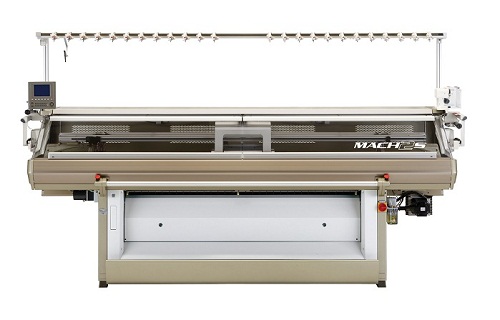 Leading Japanese computerised flat knitting machine manufacturer Shima Seiki, of Wakayama, Japan, will exhibit at the upcoming Garment Technology Expo (GTE 2019) to be held in New Delhi, India, later this month.
A pioneer of Wholegarment knitting technology, Shima Seiki will present exclusive solutions to meet the current needs of the Indian market, as well as future market needs. Such solutions are provided by the company’s MACH2S Wholegarment knitting machine that offers the flexibility of producing Wholegarment knitwear using every other needle, as well as conventional shaped knitwear using all needles. “This feature helps users to invest in their technology wisely,” the company says.
Demonstrations will also be performed on the latest version of Shima Seiki’s 3D design system SDS-ONE APEX3. At the core of the company’s Total Fashion System concept, APEX3 is designed to provide comprehensive support throughout the product supply chain, integrating production into one smooth and efficient workflow from yarn development, product planning and design to production and even sales promotion.
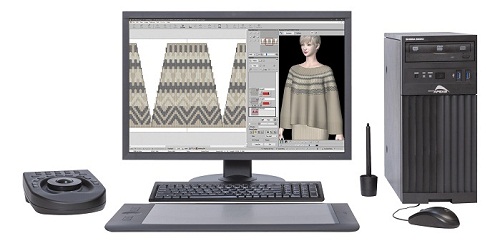
“Especially effective is the way APEX3 improves on the design evaluation process with its ultrarealistic simulation capability, whereby virtual samples minimise the need for actual sample-making,” the manufacturer explains. “Together with Wholegarment knitting, APEX3 realises significant savings in time, cost and material, contributing to truly sustainable knit manufacturing.”
Exhibition details
Exhibition: Garment Technology Expo 2019 (GTE 2019)
Date: 22-25 February 2019
Location: NSIC Exhibition Complex
Okhla Industrial Estate, Near Kalkaji Temple, New Delhi, India
Tel: +9111269262750
Organiser: Garment Technology Expo
Tel: +911141601662
Booth No.: C7
Exhibited technology
MACH2S 8G Wholegarment knitting machine
SDS-ONE APEX3 3D design system
For more information please contact:
Voltas Limited
Tel: +914226619002
Email: This email address is being protected from spambots. You need JavaScript enabled to view it.
Attn: Mr. Kishor Dash
+919958322200
Busi presents complete range of medical sock machines
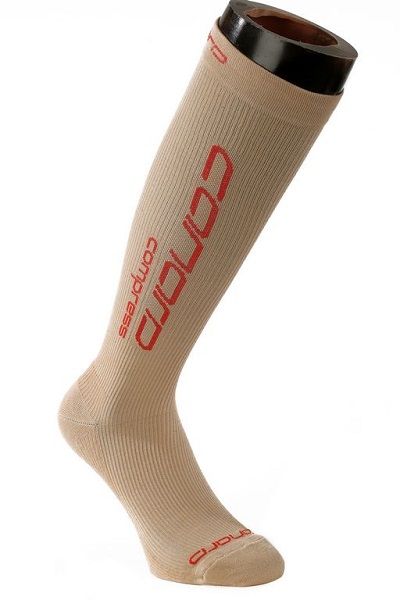
Family-run Italian hosiery knitting machine builder Busi Giovanni presents its complete range of machines capable of knitting certified-compression medical socks. The company announced extending its portfolio in September 2017, with the introduction of a 5-inch diameter to the previously existing ones of 4" and 4.5".
“Our complete range of machines for medical (certified compression) socks is available in 4", 4,5" and 5" diameters, capable of covering approximately 90% of the required sizes and producing items in compliance with the international medical classes 1, 2 and 3,” said Michele Castagna, Export and Marketing Manager.
The available versions include Busi Medical and Busi Medical Terry machines, equipped with two feeds for the main yarns, plus two more feeds for elastic ones. Sandwich terry and selected terry options are available on the Terry version only. The machines are provided with two knitting feeds for both plain stitch and true rib.
The compression graduation is achieved by using the automatic stiffening, which is available on all the stitch motors and by graduating the tension of the inlaid elastic yarn.
All of these versions are available equipped with the company’s Rimaglio automatic, stitch-by-stitch, toe-closing device, even up to the highest possible gauges. It downloads the sock from the machine, after completion of the knitting operation, and it transfers the sock to the linking device, where it is sewn loop by loop. The sock is turned inside out, so that the linking remains on the inside of the sock, resulting in a perfect traditional-looking linking. After being sewn, the sock, already reversed to the right side, is removed from the machine and is ready for the next boarding operation.
Since 1958 Busi Giovanni has specialised in the design and construction of single-cylinder machines with rib needles in the dial for the production of high-quality stockings, socks and tights. The company is a supplier to the most important producers of stockings, socks and tights, for the men's, women's and children's markets - classic, patterned, sports, technical-sports, as well as medical, with special solutions for graduated compression.
The family-run company sells in 63 countries around the world (90% export) through a network of partners that provide distribution and service. With 61 years in the business, Busi manufactured 8,066 machines so far.
Exhibitors announce product highlights ahead of Asia Print Expo 2019
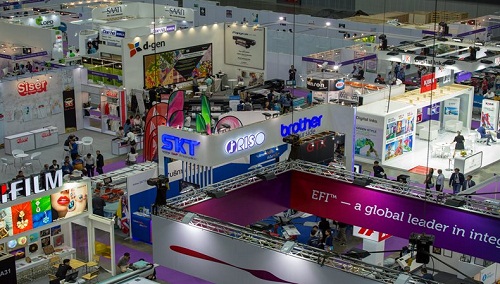
Asia Print Expo, the ASEAN region’s premier event for speciality print, takes place from 21 to 23 February 2019 at the BITEC Exhibition Centre in Bangkok, Thailand.
Asia Print Expo will be the number one destination for ASEAN print service providers (PSPs) and sign-makers looking for the latest wide format technology. With just under one week to go until the exhibition doors open, exhibitors are publicising what they will be demonstrating at the event. With 80 companies confirmed to exhibit, local and international PSPs will have a whole host of technology to discover, with some exclusive products being shown for the first time in Thailand.
Exhibitor highlights include:
Best In Ground Co., Ltd (stand D20) will debut the Massivit 1500 3D printer by Massivit 3D for the first time in Thailand. The printer is a mid-entry-level industrial 3D printer that can print models up to 1.5m tall, 1.5m wide and 1.2m in depth. It is a fast 3D printer that uses Massivit 3D’s own proprietary GDP technology and is suitable for a range of markets.
Chaiyaboon Brothers Co., Ltd (stand C11) will present Direct Color Systems’ UV LED printer, which features the TEXTUR3D™ printing process that uses one ink type to print on a variety of substrates including plastic, metal, wood and acrylic.
Inkcups (stand A15) will feature live demonstrations on its stand of its Brite ICN 2200PS and ICN 2200LI-2P pad printers. ICN 2200PS produces high quality one- and two-colour prints on t-shirts, while ICN 2200LI-2P is a high-speed printer for printing on shoe insoles. Inkcups will also host a live plate-etching demonstration on its laser plate-making system, the ColbaltONE, which boasts fibre laser technology able to precisely etch spot sizes down to 50 microns for over 30,000 impressions.
Technology 2004 Co., Ltd (stand D10) is a Thai importer and distributer specialising in creating, printing and cutting designs to suit PSPs’ needs in packaging, signage and textile. At Asia Print Expo, Technology 2004 will show its latest range of large format inkjet printers, cutters, plotters, laser cutting and engraving machines.
Epson Thailand (stand E10) will showcase its printing technology for the textile and outdoor advertising industries. Epson Thailand will unveil its advertising signage printers, the Epson SureColor S-Series and Epson SureColor B-Series, which can print products for both indoor and outdoor applications. Epson will also present its SureColor F-Series for textile printing to demonstrate the production process from pattern printing to the finished product, including pillows, scarves, t-shirts and bags.
The inaugural Print Make Wear Asia will also take place at Asia Print Expo, which is sponsored by Easiway Systems, Vastex and PSI Marketing.
Highlights from the sponsors include:
Vastex will showcase its manual screen printing machine, which requires fewer operators resulting in lower overhead costs as well as a dryer and flash unit
Gildan will present its printable garments, which will be printed live during the exhibition
Easiway will demonstrate how 3-minute stencil reclaiming can be made possible by the Easiway SUPRA, which reduces pre-press staff and makes the most of mesh fabrics.
In addition, visitors can take advantage of the other free-to-attend visitor features, including the Wrap Masters Asia competition, where 30 competitors will battle it out to be crowned the winner, and a packed programme in the FESPA conference theatre.
Visitors travelling by plane to Bangkok and still looking to book flights can book with FESPA’s official airline partner, Thai Airways, using code TG1902008. Booking can be accessed here: www.thaiairways.com/en/mice/index.page