FW

"They were times when overseas operations of luxury retail brands would automatically boost their domestic image. But now, times have changed. Today, in order to grow and scale up, well-known labels are merging with each other. The most recent example is the purchase of Versace by Michael Kors for $2bn. With the retail market facing growth stagnation for sometime mergers provide an effective route for expansion. Last year, mergers and acquisitions in the retail sector increased 15 per cent."
 They were times when overseas operations of luxury retail brands would automatically boost their domestic image. But now, times have changed. Today, in order to grow and scale up, well-known labels are merging with each other. The most recent example is the purchase of Versace by Michael Kors for $2bn. With the retail market facing growth stagnation for sometime mergers provide an effective route for expansion. Last year, mergers and acquisitions in the retail sector increased 15 per cent.
Balancing exclusivity and growth
The fiduciary responsibility of public companies leads to increase in sales and profits particularly in case of luxury retail companies. This ultimately leads to more commercialisation. However, exclusivity will always remain the pillar of luxury. The prevailing problem for luxury retailers therefore, is to drive growth without compromising on exclusivity. To achieve this, retailers are opting for consolidation. Several factors are driving consolidation, these include: bifurcation, expanding into places like China and digitization.
There numerous examples of brand consolidation across the luxury market, for example, Louis Vuitton and YSL are both now owned by LVMH and Kering. The Chinese groups Fosun International and Shandong Ruyi are currently dominating the market having bolstered significantly their luxury fashion portfolios by acquiring European brands like Lanvin and Bally. But these groups already have an increasing number of competitors including the US-based Tapestry, which now owns Coach, Kate Spade and Stuart Weitzman and, most recently, Michael Kors.
Evolving versus maintaining the brand
Consolidation provides easier access to products, greater experiences through digitisation and better product guidance through brand integration for consumers. For example, Sainsbury’s acquisition of Argos’ parent company has enabled customers to gain easier access to a wider variety of products under one roof. However, these new conglomerates need to carefully communicate the integrated brand vision to avoid compromising the authenticity and integrity that made the original brands successful. It’s essential to strike the right balance between growth and brand integrity – particularly exclusivity and uncompromising quality. Design and customer experience are the essential ingredients of luxury brands - not price points.
Establishing a balance
Consolidation benefits not only the acquiring brand but also the one that is acquired. The acquiring brands needs to rejuvenate and increase relevancy through new brands, whether emerging luxury players or more established and iconic luxury brands. The acquired brand, on the other hand, needs to expand its footprint and penetrate new markets which seem difficult with finite resources, distribution channels and supply chain. These benefits make the choice a lot easier for brands like Michael Kors et al, to buy market share rather than investing time and pounds into trying to capture it.
However, consolidation has its own share of problems. Striking the right balance between growth, exclusivity and brand integrity is likely to be a major challenge for brands embarking on the consolidation. So is integrating different cultures, fashion principles and value system.
VF Corporation, a global leader in branded lifestyle apparel, footwear and accessories, has appointed Stefano Saccone as the Vice President, General Manager of Vans®, EMEA. Saccone will lead the brand across the EMEA region from April 1, 2019.
Saccone will join the Vans from the company’s Eastpak® brand, where he served as Vice President, General Manager in Belgium. He will replace Jan Van Leeuwen, who previously served as Vice President, General Manager of Vans, before his November 2018 appointment to the position of Vice President, General Manager, The North Face®.
Saccone has more than 20 years of international experience in sales, marketing, merchandising and brand leadership across the apparel, footwear, and accessories categories. Before joining VF in 2012 as VP Sales & Marketing for the Napapijri® brand in EMEA, Saccone held management positions with Nike, Ralph Lauren, P&G and Ermenegildo Zegna.
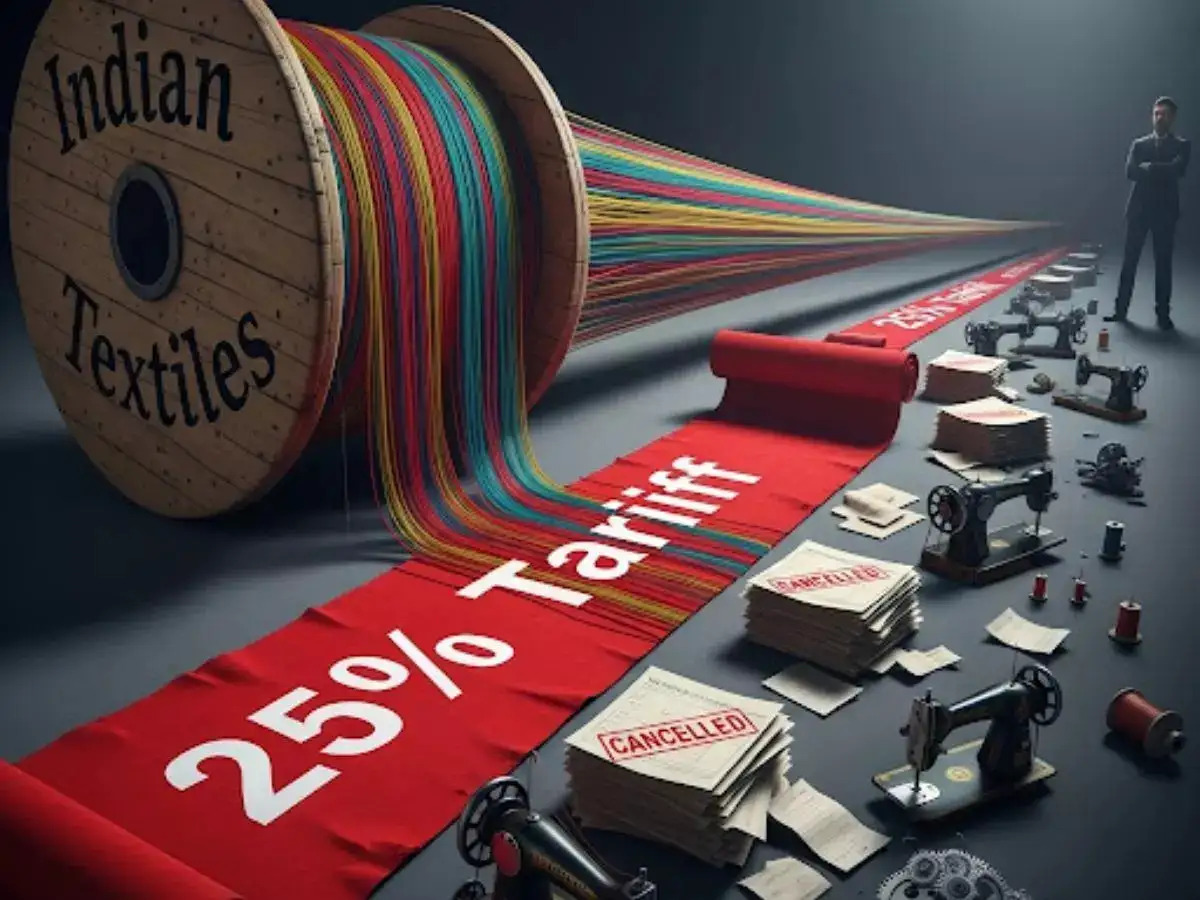
The US Trade Representative’s (USTR) officially changed the scheduled date of tariff hikes on $200 billion worth of Chinese goods to March 2, 2019 as the United States and China pursue talks on trade and intellectual property. The change was made in a Federal Register filing from a previously scheduled effective date of January, 1, 2019 for increase to 25 from 10 per cent. The notice does not affect the 25 per cent tariff already levied on $50 billion worth of Chinese technology items, including semiconductors, printed circuit boards and other electronic components, machinery and vehicles.
The change was attributed to new US-Chinese engagement with the goal of obtaining the elimination of the acts, policies, and practices covered in the investigation following a December 1 meeting between US President Donald Trump and Chinese President Xi Jinping in Buenos Aires.
The USTR statement made reference to goals set forth by the White House to negotiate over a 90-day period structural changes by China on forced technology transfer, intellectual property protection, non-tariff barriers, cyber intrusions and theft, services and agriculture.
Texhong has bought over Winnitex and formed a new joint venture company named Texhong Winnitex. Texhong is a textile group and one of the world’s largest core spun yarn suppliers. Winnitex is a renowned leading group in dyed woven fabrics. It has a long track record of direct sales to large international fashion and workwear brands and is well-known for its service, quality, reliability and innovation within the textile industry.
The reorganisation will lead to the establishment of a global vertically integrated industrial chain for Winnitex’s dyed woven fabrics business, and the group can also leverage its strategic advantages in Vietnam and the tax-free zone in Nicaragua to generate tremendous synergies. The entire business of the Winnitex group and the group’s existing weaving and dyed woven fabrics businesses in Vietnam and Nicaragua will be integrated under Texhong Winnitex.
This transaction will enable Texhong Winnitex to leverage its experienced management team and extensive customer base, and significantly increase its annual production capacity of dyed woven fabrics by 90 million yards. The joint venture is expected to lead to an increase in the scale of production in Vietnam and Nicaragua. The vertical integration of the spinning, weaving and dyeing activities is expected to establish a new milestone for the group’s dyed woven fabrics business.
R Jagadish Chandran and Sanjay Jayavarthanavelu have been awarded by the Textile Association of India (TAI) for their contribution to the growth of the industry. Premier Mills chairman Chandran was presented with the lifetime achievement award for service to the industry. Chairman and managing director of Lakshmi Machine Works Jayavarthanavelu got the industrial excellence award for his contribution to the field of machinery.
TAI aims at promoting the use of scientific knowledge in the field ranging from fiber to garment and implementing programs of continued education in textile technology management.
The Textile Association of India, founded in 1939, provides for professional growth of technologists, managers, traders, researchers, teachers, consultants and entrepreneurs. It caters to the needs of all fibers, products and all sectors of the industry. It organizes seminars, conferences, workshops and exhibitions of textiles and allied machines. It has 26 federal units throughout the country and promotes scientific and technological knowledge and conducts programs for textile professionals and technocrats.
The global spandex market is estimated to grow at a CAGR of more than eight per cent from 2016 to 2023. It is also commonly known as elastane. The spandex market is expected to grow with the recovery in the US economy post recession. Technology advancement with moisture management properties coupled with performance efficiency is likely to benefit elastane market growth.
Factors such as superior elasticity, regaining original shape, durability, lightweight, resistance to UV light are likely to favor spandex market demand. Spandex is used in textile manufacturing applications such as leggings, gloves, cycling jerseys and competitive swimwear. Strenuous movements are involved in active sports that may require garment stretch. This stretch can result in movement restriction for the wearer. This can be overcome by using spandex material.
Increase in automobile production, particularly in the Asia Pacific, is likely to drive market growth. In the Asia Pacific, the Chinese spandex market size accounted for more than 60 per cent of the total volume in 2015. In 2012, China had around 30 manufacturing units with a total capacity of 520 kilo tons with domestic production exceeding 320 kilo tons in the same year. 40D and 20D are major products manufactured in China.
Swedish International Development Cooperation Agency (SIDA) in collaboration with the International Labour Organization (ILO) will launch a project to improve the garment supply chain in Asia in 2019. The project will focus on South-Asia, South East Asia and China, given their significant roles in international division of garment production.
The initiative will focus on social dialogue and industrial relation system; advancement of gender equality; enhanced productivity and competitiveness and reduced environmental impact. It will be supported by government workers and employer’s organisation and other private sector organisations. The ultimate goal of this project is to create an improved working condition and rights of women, men and workers. Also, it will improve the productivity and environment sustainability of the manufacturers. Also, the ILO mentioned that the project will contribute to better knowledge-sharing and synergies of action.
The project will be funded by the Regional Development Cooperation Section of Embassy of Sweden in Bangkok and managed by the ILO regional office for Asia and the Pacific in collaboration with ILO country offices
Pittie Group is one of the largest manufacturers of cotton yarn in India. The 5,00,000 sq ft facility in Oman will be fully operational by April 2019. Altogether, there will be four state-of-the-art yarn manufacturing units, covering two million sq ft area, housing the latest and most efficient automated technology in the textile industry. With planned completion by November 2019, the units will consist of 3,00,000 spindles and 7,000 rotors producing over 1,00,000 metric tons of world class compact cotton yarn.
With a vision of creating a full-fledged textile cluster in Oman, Pittie has brought in the best-in-class machinery and technology and to work on them will be training and employing a large number of Omani youth. The goal is to build a strong national workforce and bring stability, comfort and pride to thousands of Omani families.
The SV Pittie Sohar Textiles Training Center will be a world-class program by itself, building on the company’s vast level of operational experience in the textile industry, and will be partnered with other local training institutes to help them gain value with a common goal in mind: empower the next generation of Omanis and their families.
According to media reports, Renzo Rosso, founder of fashion label Diesel, is interested in buying Italy's Roberto Cavalli through his OTB holding company. OTB is one of around 10 players that have expressed interest in Cavalli, which is being advised by Rothschild.
Roberto Cavalli, controlled by private equity firm Clessidra, reported sales of around $172 million last year.
Ecoprint technology is the innovative printing technique patented by Eurojersey, which is designed to reproduce tone-on-tone and contrasting effects on the smooth surface of Sensitive Fabrics, thanks to the use of lacquers, color and metal pigments, which creates patterns with amazing effects of transparency and high-definition luminous contrasts.
Four effects are diversely interpreted on soft sensual fabrics for creating flowing garments with a feminine touch. A selection of prints re-proportions the figure with a result that is natural and body-shaping, poised between a harmonious silhouette and functional comfort.
Digital printing, thanks to 3D print technology, successfully creates designs and structures which are textural-looking and endowed with realistic 3D effects. With this printing technology, colors and graphic designs benefit from an extremely precise definition, as well as generating high-resolution textures.
Lightweight fabrics similar to a second skin ensure a perfect fit, ideal for underwear and night wear collections of refined charm, to target a dynamic and versatile woman. Lingerie garments follow the movements of the body, in an amazing color palette interpreted by prints and played out in transparent and glittering effects, in which gold and metallic finishes are offset by yarn-dyed color accents.