FW
GTTES textile show attracts over 9,000 visitors
Global Textile Technology and Engineering Show (GTTES) was held in Mumbai, from January 18 to 20, 2019. More than 9000 people attended. Key brands, companies and business houses visited the event. The event was a platform to connect exhibitors with many new markets which have never looked at India as a sourcing opportunity. Both for Indian manufacturers and foreign exhibitors these new and developing markets can bring future opportunity for business and expand their customer networking in an unprecedented way.
The fair offered new optimism, opportunities and prospects for the textile industry with 400 exhibitors, 49 countries and 65 international business delegations. GTTES is a global relationship builder that provides a platform to the textile and textile technology segment to facilitate meaningful business relationships. These services inspire, empower and connect the most promising companies with latest technologies, corporations, investors, industry experts, and international media with the goal of increasing their chances of success and positive impact on the textile industry. GTTES is a platform that enables networking and exchange of ideas and brings together the latest technologies from around the world under one roof.
Ehtiopia to host ITME Africa next year
India ITME Society will host ITME AFRICA 2020 in Ethiopia in February next year. This is an unique, exclusive business event with the theme “Prosperity for AFRICA through Textile Technology”. The aim is to initiate a revolution in generating employment, encourage skills development, motivate entrepreneurship in textiles, ushering investment, economic growth and thus bringing new aspirations for a younger generation of African countries.
This business event, conceived and developed by India ITME Society, will showcase a complete range of textile and textile engineering with a total of 27 chapters. The broad categories covered are textiles, textile technology, textile engineering, financial institutions and allied segment.
ITME Africa hopes to be instrumental in establishing Africa’s textile footprint globally, to bring to the table complete solutions to textile industry development in the continent through affordable technology, international exposure, learning and experience, confluence of business houses, Investment opportunities, joint ventures, access to finance, networking with technocrats, educators, thus paving the way for a wave of knowledge, progress, growth and prosperity.
This event is expected to bring multiple growth effects for not only the textile industry but also airlines, hotels, transport, tourism etc. Despite an enormous untapped potential for trade expansion between India and Africa, India’s trade with Africa is concentrated in certain sectors and countries and is dominated by exports of primary commodities.
Vietnam needs to reduce import dependence
The Comprehensive and Progressive Agreement for Trans-Pacific Partnership (CPTPP) is expected to pose challenges for Vietnam. The garment and textile sector may suffer the most from goods origin regulations under the CPTPP. Vietnam has to import around 80 per cent of its materials for production. The heavy demand on imported material has become a serious problem for the industry.
Currently, Vietnam has to import up to 99 per cent of its cotton requirements, 70 per cent of fiber requirements and 80 per cent of fabric requirements. The biggest shortcoming is that only 10 per cent fabric is imported from Japan and countries that are part of the CPTPP. The biggest bottleneck is that Vietnam has been unable to produce fabrics for export.
Vietnam is the third biggest exporter of garments and textiles in the world following China and India. The country has an abundant labor force. To take advantage of the opportunities from the CPTPP, Vietnamese firms need to gain a deeper understanding of the sector, their advantages and markets in the CPTPP. In order to solve the bottleneck, policies need to be developed for the next ten to 15 years to take advantage of this agreement.
Raymond gets Sebi show cause for market violations
The Securities and Exchange Board of India (Sebi) has issued a show-cause notice to textile maker Raymond alleging multiple securities market violations. The allegations include failure to obtain necessary approvals for related party transactions in the JK House episode, corporate governance violation for non-disclosure of material information about litigations and non-compliance of shareholder reclassification norms.
Sebi says Raymond did not take necessary approvals for the related party transaction involving lease of JK House to some of the promoters for a decade between 2007 and 2017. Raymond had leased four duplex flats in JK House to an entity named Pashmina in 2003.Pashmina subleased the flats to tenants all of whom were part of the promoter group of Raymond.
Sebi rules mandate each company to decide the quantitative threshold for determining whether a transaction is a material development or not. Raymond had decided that any litigation that amounts to five per cent of the gross turnover of the company or 20 per cent of its net worth would be categorised as material development and needed to be disclosed to the shareholders. The lack of disclosure of the matter despite falling into its definition of a material development was a violation of the listing agreement.
Bestseller adopts sustainable strategies
Bestseller has launched a new strategy, Fashion FWD, placing sustainability at the core of its business. Fashion FWD emphasises the immediate need for inclusive and holistic action on sustainability across the value chain. It is based on becoming as sustainable as possible, as soon as possible, across four focus areas covering Bestseller’s value chain. These areas are using sustainable materials and working with innovative new fibers, improving its environmental footprint to have a positive impact on the environment, embedding human rights in the industry and focusing on a circular business model.
Each of these focus areas includes specific, measurable goals for the period 2019 to 2025. Bestseller commits to being fashion forward until the company is climate positive, fair for all and circular by design. Climate positive means that it will remove more emissions than it emits. Fair for all means it will promote equality, dignity and safe working conditions for all, and circular by design means that the company will turn waste into a valuable resource throughout its value chain.
To accelerate its progress within sustainability, Bestseller has also committed to a new investment platform as a part of Fashion FWD. Dubbed Invest FWD, this new initiative will see Bestseller strategically invest in sustainable innovation and solutions throughout the whole life cycle of fashion.
Brands add a personal touch to their digital operations
"The invasion of technology is reinventing the fashion world with customers moving away from brick and mortar stores to online shopping. However, the luxury fashion sector has, until now, remained immune to this change as here the experience of shopping in opulent boutiques is almost as important for customers as the clothes themselves. Therefore, for most luxury brands, going digital is just an effective way to add value to their business and communicate with their global market."
 The invasion of technology is reinventing the fashion world with customers moving away from brick and mortar stores to online shopping. However, the luxury fashion sector has, until now, remained immune to this change as here the experience of shopping in opulent boutiques is almost as important for customers as the clothes themselves. Therefore, for most luxury brands, going digital is just an effective way to add value to their business and communicate with their global market.
A case in point is the Thailand-based firm Club21, a distributor of luxury fashion brands such as Alexander Wang, AX Armani Exchange, Bao Bao Issey Miyake, Comme des Garcons, DKNY, Diesel, Emporio Armani, Marni, Mulberry, Pleats Please Issey Miyake, Paul Smith and Stella McCartney. The company, which has been successfully operating for four decades under the banner Club21 Asia, has always emphasised building long-term relationships with its clients through its brand trust and services.
Applying the 3C’s to attract more customers
For projecting a consistent positive image, the company applies the principle of 3Cs. Of these, the first ‘C’ stands for communication. The company ensures effective communications with its clients through its online operations. It also has a presence on other social media tools such as Facebook, Instagram, YouTube, etc.
The second ‘C’ stands for Commerce. The company enables its customers to solve their queries regarding the nature of its products and their prices. For this it has started @line where the customers can leave messages even when the shops are closed. The third 'C', Customer, the customer service team forwards this message to the listed brands who send the pictures of their products with prices to the service teams. This service team then passes on the information to the customer.
Once a customer decides to purchase the product, the company organises for its free delivery, thus applying the third principle of offering convenience to its customers. This is the main reason the overall return rates for online purchases from the company are considerably lower than the standard 30 per cent.
Personalised attention ensures brand loyalty
Like Club21, Pacifica Group provides its customers human interaction or personalised services that make them feel comfortable when they shop. The company ensures delivery of its products to its customers irrespective of their locations. For this, the company uses its e-commerce operations. For instance, if a customer who visits the company’s store at CentralWorld but doesn’t find a particular garment in her size, the company finds and delivers it to her. It is also uses courier mode of delivery as it ensures that the delivery reaches its customers safely besides providing them a personalized experience.
New tools, customisation, emerging growth centers to drive retail growth
"A major upheaval in the fashion and fashion related businesses in the past few years and a cooling economy is likely to restrict consumer spending this year. This could be further aggravated by the growing trade war between US and China that began last summer when the Trump administration levied a 10 percent tariff on $200 billion worth of goods coming from China. Paula Rosenblum, Managing Partner for market researchers RSR Research views if the trade war continues the prices of low-end and moderately-priced products will increase significantly and the impact of this price-rise will be swift."
 A major upheaval in the fashion and fashion related businesses in the past few years and a cooling economy is likely to restrict consumer spending this year. This could be further aggravated by the growing trade war between US and China that began last summer when the Trump administration levied a 10 percent tariff on $200 billion worth of goods coming from China. Paula Rosenblum, Managing Partner for market researchers RSR Research views if the trade war continues the prices of low-end and moderately-priced products will increase significantly and the impact of this price-rise will be swift.
New tools to battle retail challenges
Another problem plaguing retailers this year is the growing number of returns being made by online shoppers. An estimated 15 to 30 per cent of online orders purchased during the holiday 2018 season will be returned, according to a recent report from real-estate and investment company CBRE. Online returns could cost as much as $37 billion for the 2018 holiday season compared with $32 billion for the 2017 holiday season.
But new tools of trade might help retailers battle some challenges in the retail world. One tech item expected to become more popular this year is voice-activated retail such as Amazon Echo. This is a voice-activated retail that enables consumers to order a product anytime they want by vocalizing a request into a machine.
Personalisation and customisation will be increasingly important to consumers. Mercedes Gonzalez of retail consultants Global Purchasing Companies says strides in manufacturing will allow companies to offer more unique looks to consumers.
Increasing cotton exports boosts profit margins
"According to an ICRA report, the surge in exports of cotton yarn during the initial few months of current financial year helped the domestic spinners record a healthy recovery from the multi-year low profitability reported during FY2018. Cotton prices have softened with fresh arrivals in the recent months, cotton yarn realisations have exhibited stickiness which, together with movement in cotton yarn stock levels, point towards a pick-up in domestic demand. Moreover, notwithstanding the moderation in Y-o-Y growth in cotton yarn exports in the recent months, growth in absolute exports remains healthy.
 According to an ICRA report, the surge in exports of cotton yarn during the initial few months of current financial year helped the domestic spinners record a healthy recovery from the multi-year low profitability reported during FY2018.
Cotton prices have softened with fresh arrivals in the recent months, cotton yarn realisations have exhibited stickiness which, together with movement in cotton yarn stock levels, point towards a pick-up in domestic demand. Moreover, notwithstanding the moderation in Y-o-Y growth in cotton yarn exports in the recent months, growth in absolute exports remains healthy.
Strongest growth recorded in five years
Commenting on the emerging trends, Jayanta Roy, Senior Vice-President and Group Head, Corporate Sector Ratings, ICRA, noted healthy demand and higher cotton fibre prices (vis-a-vis last year) have shifted cotton yarn realisations into a higher trajectory this year, with realisations averaging 13 per cent higher vis-a-vis an 11 per cent increase in cotton fibre prices since last year. Additional benefits of lower cost cotton stocked during the last harvest season have helped in placing the recent performance of the cotton spinners amongst the strongest seen in more than five years in terms of gross contribution margins.
The sharp rupee depreciation between July and October 2018 also supported spinners’ rupee realisations and hence contribution margins. The aggregate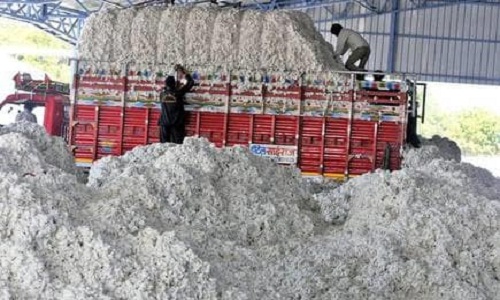 operating margins of ICRA’s sample of 13 large spinning companies improved to two-year high of 13.7 per cent in Q2 FY2019 vis-a-vis 12.2 per cent in Q1 FY2019, after remaining subdued at 9-11 per cent during the preceding five quarters. On an absolute basis, the aggregate operating profit of ICRA’s sample in Q2 FY2019 stood at five-year high level, with 59 per cent Y-o-Y growth and 9 per cent Q-o-Q growth.
Export growth supported by competitive prices
After growing at a strong pace of 50 per cent Y-o-Y during five months FY2019, India’s cotton yarn exports normalised in the subsequent months of September and October 2018, reporting a moderation in growth to 34 per cent Y-o-Y in seven months FY2019. The growth initially had been driven by more than two-fold increase in exports to China – one of India’s key markets for cotton yarn. Besides a low base effect, the staggering growth in exports was supported by the relative competitiveness of Indian cotton and yarn prices, providing an arbitrage opportunity to Chinese buyers.
Given India’s continued high dependence on China, its ability to strengthen its presence in other export markets remains crucial. Besides, incremental developments on the US-China trade row can play a key role in influencing India’s export prospects, as China has a significant reliance on the US for import of cotton fibre.
Vietnam depends heavily on imports
Vietnam emerged in second spot in global garment and textile export turnover in 2018. However, the country has had to import around 80 per cent of its materials for production. Currently, Việtnam imports up to 99 per cent of cotton, 70 per cent of fiber and 80 per cent of its fabric.
The heavy dependence on imported materials has become a serious problem for the industry. The Comprehensive and Progressive Agreement for Trans-Pacific Partnership (CPTPP) which took effect in Việtnam earlier this week, is expected to bring huge opportunities. However, there are many challenges as well. The biggest shortcoming is that only 10 per cent of the fabric is imported from Japan and countries that are part of CPTPP. Việtnam is unable to produce fabrics for export.
The ongoing US-China trade war threatens to dent exports from the world's two largest economies but other countries may see Chinese and American demand diverted their way. Vietnam is expected to benefit the most from the trade war-inspired buying. The Southeast Asian nation has been touted as a possible winner in the US-China trade war because of its low cost of manufacturing. Some companies have already begun shifting production out of China to avoid tariffs imposed by America.
Chinese fashion group Trendy takes over Dutch brand Denham
p> Trendy has acquired a majority stake in Denham. Chinese fashion group Trendy over the years has rolled out well-known international brands in China, including Miss Sixty and Superdry. Launched in 1999, Trendy has grown into an international fashion conglomerate. Its portfolio includes fashion brands like Ochirly, Five Plus, Coven Garden and Trendiano.
Denham is a Dutch company. Founded in 2008, Denham operates in more than 20 countries, with stores in Amsterdam, Antwerp, Hamburg, Tokyo, Osaka, Shanghai and Seoul. The label is also available via wholesale partners and via its own online store. Denham sees many opportunities to grow the business in existing markets but also as the most influential denim player in the future. This will not only be achieved by extending its jeans business, but also by adding product categories.
In March 2017, Denham and Trendy announced a joint venture with the aim of further expansion of the denim brand in China. To date, the joint venture has introduced 16 retail stores in key cities in China and has plans to further grow the business in the coming years as a result of the acquisition. Trendy is taking over majority stake from Amsterdam-based investment firm Amlon Capital.