FW
Canada imports from Vietnam up five per cent
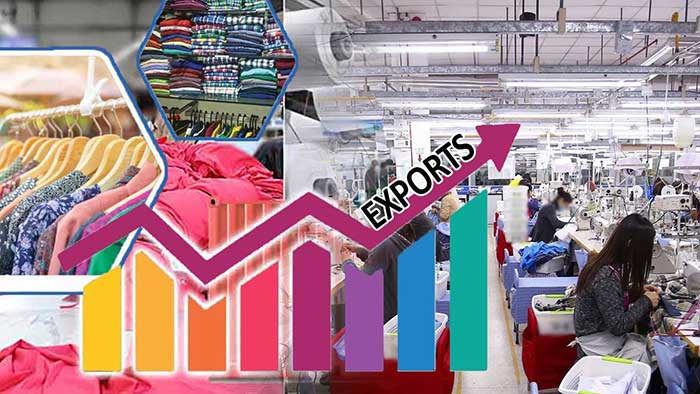
Vietnam’s exports to Canada were up 5.2 per cent in 2018.
Earnings from textile, garment, footwear and wood products posted good growth. Earnings from plastic and rubber products grew 27 per cent, coconut oil 100 per cent and paper products 50 per cent.
The Comprehensive and Progressive Agreement for Trans-Pacific Partnership (CPTPP) is expected to promote bilateral trade between Vietnam and Canada. Aside from the CPTPP, the impact of the US-China trade war has also made many Canadian firms think of moving some of their factories and orders from China to Vietnam, which is also a chance for Vietnam to boost shipments to Canada.
Vietnam expects strong export growth from textiles-garments, footwear, handbags, plastics and wood products in 2019.
For their part, Canadian businesses are interested in Vietnam’s opening of its market for foreign agricultural products such as pork, beef, chicken, aquatic products and fresh fruits.
Vietnam has yet to sign a free trade agreement with Canada, so the CPTPP will help open up chances for it to accelerate textile-garment shipments to the North American market in the coming years.
US reviving as a potential textile manufacturing powerhouse
The US is looking at reviving textile manufacturing. This can be done by focusing on high quality textiles, complete automation and improved cotton breeding programs.
While the country’s advanced textile industry – including nonwovens – is showing steady growth and investments, conventional textile manufacturing has continued to decline since 1997.
While global trends are toward finer yarns and ring spinning technology, US mills mostly focus on coarser yarns.
The United States is still the most cost effective place to produce cotton yarns. Such high strength cottons could help pave the way for high production vortex spinning.
Skilled labor, cheap energy and the availability of high quality cotton within its borders can encourage the United States’ textile sector to take a serious look at revitalizing its spinning and the upstream textile sector.
Chinese textile manufacturers are shifting to the US.
While labor costs are greater than they are in China, American energy, land and raw materials are cheaper in the United States. Therefore the total cost of production is less. Chinese manufacturers find the production cost per ton of textiles is 25 per cent lower in the US.
The cost of labor in China has been rising and other countries like the US could potentially do it better and cheaper.
UKFT takes over the management of Textile Scotland
UK Fashion and Textile Association (UKFT) has taken over the management of Textiles Scotland (STLA), following a unanimous vote by STLA members and lengthy discussions between the two organisations. UKFT and STLA have strong historical links and the move provides new opportunities for Scottish companies by being part of a wider network while retaining a national, Scottish focus.
The Textiles Scotland branding will be continued, as will the Scottish focus of the activities, support and government lobbying. From 1 January 2019, existing Textiles Scotland members are transferred to a new company called UKFT Scotland. UKFT Scotland joins the main UKFT board and UKFT CEO Adam Mansell joins the Scottish Industry Leadership Group.
UKFT will work with the industry to develop a new membership offer that will help Textiles Scotland become a self-sustaining organisation, including using its expertise to develop an export strategy and a skills strategy for Scottish members.
UKFT’s members include some of the UK’s most well-known fashion and textile brands, heritage success stories and emerging designer labels, alongside the manufacturers and suppliers.
SGCCI organized SITEX opens today
The Southern Gujarat Chamber of Commerce and Industry (SGCCI) is organising SITEX, a textile machinery exhibition from January 04-06, 2019 at the Surat International Exhibition and Convention Centre (SIECC) at Surat, India. The exhibition will display spinning, winding, texturing, twisting and auxiliary machinery and accessories and technologies for web formation, bonding and finishing of nonwovens, felting and technical textiles.
There are more than 150 exhibitors showcasing the latest technologies across the entire textile value on more than 100,000 square feet of exhibition area. The fair will see participation from Indian and global textile machinery companies. Machines for weaving preparatory, weaving, tufting, knitting, embroidery, braiding, washing, bleaching, dyeing and printing, drying, finishing will remain centre for attraction. SGCCI is also organising buyer-seller meets to help buyers and sellers interact at the venue.
Textile vendors' PromoTex Expo 2019 to showcase innovative, sustainable sports textiles
The annual textile event PromoTex Expo 2019 will be held from January 08-10, 2019 in Düsseldorf. The show will present innovations, bestsellers, smart and sustainable product highlights by sport textiles suppliers. It will host a number of side events as well as the two trade shows held concurrently, viscom and PSI.
Enterprises such as Gildan Activewear, the Falk & Ross Group Europe, Herka, ID Rexholm, Kariban France, Regatta Professional, Maprom and Stormtech Europe will present their latest collections and machinery to textile finishers, promotional products distributors, sign makers, designers, textile experts and agencies.
The centerpiece of the event, Textile Campus will focus on smart textiles and sustainable textiles. The University of Niederrhein, the Competence Centre 4.0 (textil+mode), Lunative, ZSK Stickmaschinen and SmartTex-Netzwerk will demonstrate what state-of-the-art smart textiles can already do today and what will be possible in the near future. In terms of sustainability information on the current requirements and challenges will be provided by the Fair Wear Foundation, TÜV Rheinland, Bremer Baumwollbörse, RK Textil, the Hohenstein Institute and University of Niederrhein.
Seam tapes growing at six per cent
The seam tapes market is expected to grow at a CAGR of 6.7 per cent from 2018 to 2023. Growth of the sports and outdoor apparel industry is expected to drive the overall growth of the seam tapes market.
The polyurethane segment is the fastest-growing in the seam tapes market, in terms of value, and is expected to grow at the highest CAGR during the forecast period. This growth is attributed to the various benefits of polyurethane in seam tapes compared to polyvinyl chloride, including high abrasion, impact resistance, water resistance, and high flexibility.
Asia Pacific is expected to be the largest market and have the highest growth rate during the forecast period, owing to the presence of huge garment manufacturing hotspots such as China, India, Vietnam, Indonesia, and Bangladesh in the Asia Pacific region. Cheap labor cost and availability of domestically produced raw material place Asia Pacific as the preferable region to manufacture textile and apparels.
In addition, the growing demand for sports and outdoor apparels in China, Japan, and India driven by the growing health awareness, as well as an increase in consumer spending on value-added apparels attributable to the rising disposable income, is expected to create opportunities for the seam tapes market in the region.
Moral Fiber uses science to make sustainable fashion
Moral Fiber, an Indian-American startup based in Los Angeles uses science to make fashion everlasting.
The company, previously named Ambercycle, was started in 2015, by co-founders Akshay “Shay” Sethi, a biochemistry and molecular biology graduate from University of California, Davis, and his classmate Moby Ahmed.
While at University, the two youth worked with microbes to break down polyesters, and discovered during the process the three-step chemical process.
The three-step process is being tested in a pilot plant in Los Angeles. The plant is powered by incinerating the material that is left over in the processing, basically forming a sustainable cycle. The founders expect to switch to solar power to run the machinery in the future. But by 2020, Sethi and Ahmed hope to begin sending the shipping container size “box” to countries which have a growing and large middle-class with high consumption levels.
US, EU top export destinations for India
As revealed the by the Textile Ministry, the US is the top export destination for apparel made in India with a share of 17 per cent, followed by the EU, Bangladesh, China, Pakistan, UAE, Vietnam, Sri Lanka, Brazil and South Korea, respectively
Indian companies face higher trade barriers, compared to other competing countries like Bangladesh, Vietnam and Pakistan, in the US and European Union, Parliament was informed Wednesday.
The average tariff on textile products faced by India in the EU and US is 5.9 per cent and 6.2 per cent, respectively.
In comparison, Pakistan faces zero per cent and 5.3 per cent average tariff in the EU and US, respectively; for Bangladesh it is zero per cent and 3.9 per cent; whereas Vietnam attracted 6.1 per cent and 5.5 per cent tariff.
Indian home textile exports to the US edge up
India’s market share in home textile exports to the US in October has increased one percentage point from the year ago to 33 per cent.This is the second consecutive month of market share gains.
The gains come after a period of business disruption. Transition to the online marketplace and the resultant reorganisation at traditional retailers had led to inventory destocking. This impacted the sales of Indian textile exporters. The impact was accentuated by the reduction in duty drawback rates for most textile product categories under GST.
But heading into 2019, some of these headwinds are already easing. One is the recovery in export volumes. After a weak start in 2018, India’s exports to the US in terry towels and cotton sheets showed a year on year growth of 24.2 per cent and 7.2 per cent in the past three months.
Another is the revision of the duty drawback rates. The increase of duty drawback up to 0.6 percentage points across home textile products and the rupee depreciation are a welcome relief to the textile space.
This will help exporters claim more incentives, strengthening their competitive advantage.
Yet another key variable is cotton prices which began easing. The softening of headwinds should aid companies’ earnings in 2019.
Indian exporters get subsidies
India will boost exports from labor-intensive sectors such as agriculture, textiles, leather, handicrafts and more.
This will be done with incentives amounting to Rs 600 crores. Merchant exporters will be included under the interest equalisation scheme for pre- and post-shipment rupee export credit by allowing them interest equalisation rate of three per cent on such credit for export of products covered under 416 tariff lines identified under the scheme.
The subsidy scheme is expected to increase production and also generate employment in these sectors, which generally are micro, small and medium industries.
There have been challenges for the export sector over a period of time and one big challenge is credit. There has been a sharp decline in credit to the export sector.
Another challenge the export sector is facing is related to GST. A e-wallet mechanism may be introduced to effectively address the woes of exporters who have been complaining of delays in refund of taxes under the GST regime.
To reduce transaction costs for exporters, there may be multi-modal transport, which will help enhance efficiency in the logistics sector. Each logistics company will be rated by a regulatory organisation, which will be created by the industry.
India’s exports grew by a meager 0.80 per cent in November. During April to November, exports rose 11.58 per cent.