FW
US holiday retail sales hit highest growth rate in six years
Mastercard SpendingPulse, which provides insights into overall retail spending trends across all payment types, including cash and check, reported a 5.1 per cent holiday sales increase to over $850 billion this year – the strongest rate since 2012. The research firm reviewed holiday shopping from November 1 through December 24.
Led in part by a surge in home improvement spending, this season’s holiday retail sales were at their highest in six years. Online shopping increased 19.1 per cent over last year. The expenditure on home improvement was recorded at 9 per cent. Sales in the home furniture and furnishings category also increased by 2.3 per cent.
However, sales in electronics and appliances declined by 0.7 per cent. Department stores sales also slipped by 1.3 per cent following two years of growth below 2 per cent. Online sales growth for department stores, however, increased by 10.2 per cent.
Turkey aims at $19 billion clothing exports in 2019
Turkey’s clothing exports reached nearly $18 billion in 2018. The aim is now to reach $19 billion in 2019. The clothing sector has strategic importance for the country’s economy with its production power, contribution to employment, and value-added exports. Meanwhile, the country’s domestic clothing market size has grown 20 per cent since last previous year. The apparel sector contributes 10.7 per cent to Turkey’s overall exports and 13.1 per cent to industrial exports.
The EU is the biggest market for Turkey’s ready-to-wear and apparel sector. This is followed by Germany, Spain, Britain, the Netherlands, France, Iraq, the US, Italy, Denmark and Israel. Other significant markets are Russia, one of Turkey’s largest trading partners, and China, the world’s largest ready-to-wear supplier. Turkey’s exports of textiles and raw materials increased eight per cent in the first half of 2018.
The most exported product in the first half of 2018 was woven fabrics. Woven fabric exports increased 8.3 per cent compared to the same period in 2017. The second most exported product was yarn, which constitutes 18.1 per cent of total textile exports from Turkey. Exports of third important product group, knitted fabrics, increased by 2.3 per cent. Turkey is one of the world's leading manufacturers of knitted fabrics. Fiber exports, the fourth most exported product group, increased by 16.9 per cent.
Pakistan textile units await tax refunds
The textile industry in Pakistan is facing a serious liquidity crunch. The main problem is: sales tax refunds amounting to billions of rupees are yet to be formatted. Pakistan’s textile exports remained flat during the first five months of the current fiscal year as the value-added sector couldn’t perform up to the mark despite the constant currency devaluation against the dollar.
Export sector is the backbone of Pakistan’s economy and earns a major amount of foreign exchange and revenue. Besides, the sector is also labor-intensive and the largest employment provider and generator. Value-added textile exporters say they are battling for survival in the global market due to costly inputs and high cost of manufacturing. The currency has lost a quarter of its value against the dollar since December last year. Banks are reluctant to revise financing limits of companies as per the increased cotton rates.
Textile exporters want immediate payment against tax drawback and levies. They say current and deferred sales tax refunds are lying pending at various large taxpayer units and regional tax offices mainly due to the cross-matching of invoices. In addition exporters want an enabling business environment and a level-playing field.
Pakistan aims to have FTA with Latin America
Pakistan is interested in a free trade agreement (FTA) with countries of the Latin America trading bloc. The trade bloc comprises Argentina, Brazil, Paraguay, Uruguay and Venezuela.
Latin America is one of the most important non-traditional markets where Pakistan’s market share is negligible despite a huge potential for both traditional and non-traditional exports. A free trade agreement will provide Pakistan an opportunity to diversify exports and markets and enhance trade with Latin American countries in order to introduce new products in pharmaceutical, information and communications technology, auto parts and light engineering sectors.
It will also benefit the textile industry, which is currently Pakistan’s biggest exporter. And it will help in strengthening Pakistan’s business and trade relations in the region and will provide a level playing field to Pakistan vis-a-vis its competitors in Latin America.
Argentina and Brazil in particular are lucrative markets. These countries are among world leaders in agro-food production and adoption of modern technology in making innovations in seed production and food processing.
Pakistan hopes the preferential trade agreement it signed in 2006 will lead to a free trade agreement. So the free trade agreement will create win-win opportunities for both Latin America and Pakistan.
Iran textile exports up 40 per cent
This year, Iran’s textile exports grew 40 per cent and textile production grew by two per cent. Efforts are on to make things easy for garment manufacturers to enhance exports. The decision to prohibit imports of some items has created huge opportunities for local manufacturers to increase their exports despite all challenges pertaining to the currency.
The country has taken measures aimed at renewing the garment manufacturing industry, in a bid to enter international markets. Exporting apparel products to neighboring countries, including the CIS and, in particular, Azerbaijan, is on the agenda. There are about 50,000 apparel manufacturing units in the country.
Foreign representatives, branches and distributors of apparel in Iran who seek business licenses have been mandated to produce goods worth 20 per cent of their import value inside Iran and to export at least 50 per cent of this domestic production.
The initiative is aimed at increasing domestic production, creating jobs and reviving Iran’s apparel industry. Public interest in domestic products has dramatically surged over recent months. Plans are underway to establish a new apparel industrial town in Fashafouyeh, located in Tehran province’s Rey county, with the aim of limiting imports, boosting domestic production and making the price of Iranian clothing more competitive.
Louis Vuitton tops BrandZ’s France Top 50 ranking
"In the second annual BrandZ France ranking, released by WPP and Kantar, Louis Vuitton secured the first position ($46.4 billion), Chanel second ($39.2 billion) and Hermès third ($31.5 billion). The total value of BrandZ French Top 50 rose by 12 per cent. While this is significantly ahead of the 2.3 per cent increase in the country's GDP, it is less than the 21 per cent rise in total brand value seen in the BrandZ Global Top 100 Brands earlier this year. One potential reason for the growth lag could be comparatively low perceived innovation score for France's top brands. Taking 100 as the benchmark score for this measure, the Top 50 most valuable French brands average 103 compared to 113 for both the BrandZ Global Top 50 and the US Top 50 rankings."
 In the second annual BrandZ France ranking, released by WPP and Kantar, Louis Vuitton secured the first position ($46.4 billion), Chanel second ($39.2 billion) and Hermès third ($31.5 billion). The total value of BrandZ French Top 50 rose by 12 per cent. While this is significantly ahead of the 2.3 per cent increase in the country's GDP, it is less than the 21 per cent rise in total brand value seen in the BrandZ Global Top 100 Brands earlier this year.
One potential reason for the growth lag could be comparatively low perceived innovation score for France's top brands. Taking 100 as the benchmark score for this measure, the Top 50 most valuable French brands average 103 compared to 113 for both the BrandZ Global Top 50 and the US Top 50 rankings.
But some French brands are delivering on innovation with initiatives that include encouraging staff to act as brand ambassadors on social media and providing opportunities for consumers to test products. Sports retailer Decathlon is viewed by consumers as the most disruptive brand within the ranking
BrandZ French Top 50 study highlights the key trends:
Dior registers fastest growth: Dior emerged the fastest riser in the ranking, up 58 per cent, with Rémy Martin growing by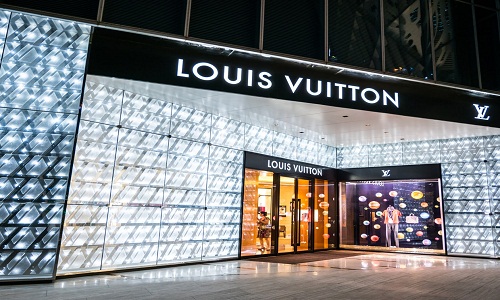 39 per cent and Saint Laurent by 34 per cent.
Preference for fresh products: The percentage of French consumers opting for fresh produced has risen to 33 per cent from 29 per cent a decade ago. More than half of French consumers say they will willingly pay more for higher quality.
Ratio of older consumers increase: Nearly a third of the French population is aged 55-plus and the proportion is growing. They also account for more than 40 per cent of spending on consumer goods and are on the lookout for great food, fashion, travel and tech.
Promoting regional products: Supermarkets and national brands are now promoting the regional heritage of selected produce, and a new brand, C'est qui le Patron, co-created with consumers, is successfully selling a growing range of fresh food, from milk and butter to burger patties.
Commissioned by WPP, the valuation behind the BrandZ™ Top 50 Most Valuable French Brands was conducted by brand equity research experts Kantar Millward Brown. The methodology is similar to the one used to calculate the annual BrandZ Top 100 Most Valuable Global Brands ranking.
The ranking combines rigorously analysed market data from Bloomberg and Kantar Consulting with extensive consumer insights. Globally, the research covers 3.6 million consumers and more than 122,000 different brands in over 50 markets. In France, we interviewed more than 101,000 consumers for over 1,100 brands in 88 categories. As the only brand valuation ranking grounded in consumer opinion, BrandZ's analysis enables French brands to identify their strength in the market and provides clear strategic guidance on how to boost value for the long-term. The BrandZ Top 50 Most Valuable French Brands is the most definitive and robust ranking of the country's brands available, and the brands ranked all meet these eligibility criteria.
Brands make sustainability inherent to their operations
"Even though in the Global Fashion Agenda, sustainability has been this season’s must have accessory, almost half of fashion industry is yet to take any action on it. The term has been reduced to self-serving market jargon used by brands to perk up sales. As Orsola de Castro, Co-Founder of Fashion Revolution notes, big brands usually associate th2e word ‘sustainability’ with something unobtainable. However, smaller labels and independent designers are effectively creating their garments in the most conscious way."
 Even though in the Global Fashion Agenda, sustainability has been this season’s must have accessory, almost half of fashion industry is yet to take any action on it. The term has been reduced to self-serving market jargon used by brands to perk up sales. As Orsola de Castro, Co-Founder of Fashion Revolution notes, big brands usually associate th2e word ‘sustainability’ with something unobtainable. However, smaller labels and independent designers are effectively creating their garments in the most conscious way. The key to their success is their consideration for the environment, believes Clair Bergkamp, Head of Sustainability and Innovation at Stella McCartney. She advises brands to incorporate sustainability right from the inception of their operations.
Environmentalist advice focus on organic and recycled materials
Few leading designers are embracing sustainability by using recycled materials and deadstock fabrics. For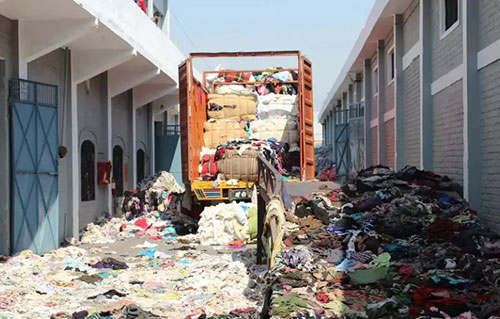 instance, womenswear designer Richard Malone works with nylon recycled from ocean plastics. Designer Bethany Williams sources her recycled denim from a waste depository in Kent and turns waste paper into woven textiles. Dutch designer Duran Lantink splices second-hand designer clothes into mash-up hybrids. Phoebe English sources all her organic recycled materials from Britain to reduce carbon footprint, while Stella McCartney recycled deadstock from previous collections into an entirely new one at Paris Fashion Week this season.
Bergkamp further advises these brands to focus on their fabrics, use organic cotton, recycled polyester and nylon, chose a viscose supplier that can guarantee they do not destroy ancient and endangered forests for their fibre, use hemp and linen and don’t use leather.
Independent suppliers, plant-based materials to deal with sustainability
One of the biggest issues the fashion industry faces in implementing sustainability is the arcane supply chain that is difficult to trace. To deal with this, new platforms such as the Open Apparel Registry are emerging to map out garment factories across the globe to encourage consumer transparency. Designers are also working with independent suppliers who are controlling their environmental impact. Richard Malone, for instance, uses plant-based dyes for his fabrics, many of which are recycled and made by a community of women who dye all the yarn, spin and hand-weave the fabric in Tamil Nadu.
According to Francois Sourchet, Head, Make Fashion Circular campaign, another method through which brands can reduce wastes is through repairing, customising, swapping, donating or resale. He believes if the clothing has been made from safe and renewable materials, and designed to be recycled, it can feed back into the system and be used to make new clothing.
New e-com channels and partnerships
The internet offers lots of information on the source of these clothes. De Castro believes consumers need to patiently go through this information, to read between the lines, and question everything, and then rely on their gut instincts to discern what feels relevant. Many companies are developing plant-based materials as an alternative to animal products. One such company Bolt Threads makes silk from protein, created using fermentation, and leather made from mycelium, the root structure of mushrooms.
For many, sustainability starts with limiting their production and building meaningful relationships with retailers and individual clients. This may also include working outside of the conventional fashion calendar, or simply partnering with recycled textile suppliers and designing smaller collections around those materials that are available. To achieve this, brands may have to ask their customers to wait longer for their clothes or make clothes only when required. They need to also employ the most appropriate business besides entering into new partnerships and collaborations. Only then, their goal of sustainability can be achieved.
Braiding Machines — A New Line Of Business For Mayer & Cie.
ALBSTADT, Germany — December 18, 2018 — Mayer & Cie. (MCT) has since December had a new line of business. From January 2019, the company is manufacturing braiding machines in addition to circular knitting machines at its Albstadt works. Mayer Braidtech, a wholly owned Mayer & Cie. subsidiary, is responsible for sales and service of the new machines, manufactured for the past 40 years by US-based affiliate Mayer Industries. With Mayer Industries due to cease operations in the medium term, Mayer & Cie. has decided to integrate and take forward this successful line of business at its Albstadt location.
Good reasons for braiding machines
“We see this step as an opportunity to come much closer to our target of sensible diversification,” says Marcus Mayer, managing director at Mayer & Cie. and in charge of technical development. “As a manufacturer of circular knitting machines we are subject to the vagaries of the textile machinery market, which experience has shown to be liable to strong fluctuations. A sector-unrelated product such as braiding machines will make us a good deal more — and healthily — independent.”
It was apparent right now, how important diversification is, Benjamin Mayer, Mayer & Cie.’s co-managing director, noted. He is responsible for sales. After a fast and furious start to 2018 demand for circular knitting machines had tailed off in the second half. That was mainly due to turbulence in international trade policy, he said, in the wake of which uncertainty had spread widely in many important circular knitting markets. Order books for braiding machines, in contrast, are full for months ahead because other laws apply to the hydraulic hoses used in, for example, automobile manufacturing and aviation. That is also true of tubes that drive pumps on the seabed in offshore operations. Braiding machine manufacturing capacities are currently fully booked until the beginning of 2020.
Although circular knitting and braiding machines are only distant relations, there are many synergy effects between the two lines of business. “That was a powerful argument for integration,” says Benjamin Mayer. “Our new investment stays within limits because we can make many braiding machine parts with our existing machine tools and production machinery. Assembly employees can not only assemble circular knitting machines, shipping employees can not only ship circular knitting machines.” Mayer & Cie. also anticipates a positive effect in the key sector of research and development, but with the stated aim of establishing a separate research department as soon as possible.
Series manufactured in Albstadt from January
In January 2019, Braidtech is embarking on series production in Albstadt-Tailfingen. Preparations for this milestone took nearly 12 months. Premises needed to be provided, the production line prepared, procurement organized and, not least, the team lined up. At the moment, it consists of 12 employees who do production-related work in, say, assembly, quality assurance and logistics. They are currently working flat out on the prototype of their first braiding machine, an MR 15 24 Carrier. Patrick Moser, head of the new Mayer Braidtech business unit, explains that “the model as such is tried and established, but for us here, in new conditions, it is an ‘original’.”
The plan for the first half of 2019 provides for the shipment of two double deck systems, each consisting of two MR15 24 Carriers, per month. Preparations are also be made for series production of the second model in a range consisting of six products.
Distribution structures are well established. Mayer Braidtech has handled world sales of braiding machines for years. “Our business,” Moser says, “is project business, so the largest sales markets can vary from year to year, but for some time we have had many orders from Italy and China.”
Interim production support from the United States
As overall demand still exceeds production capacity in Albstadt-Tailfingen, Mayer & Cie. affiliate Mayer Industries will continue to manufacture braiding machines in the year ahead. Mayer Industries, based in Orangeburg, S.C., has made a name for itself in this field over the past 40 years and its systems are considered to be premium products. Founded in 1970, Mayer Industries originally manufactured circular knitting machines, but when orders stopped coming in during the 1970s crisis the owners, the Mayer family, acquired patents for braiding machines, thereby laying the foundations for a new, distinct line of business. When Mayer Industries ceases business operations, probably at the end of 2019, this line of business will continue to provide its services, but at a different location.
Durst And Koenig & Bauer Enter Joint Venture For Digital Printing Production Lines
BRIXEN, Italy — December 21, 2018 — Durst, a manufacturer of advanced digital printing and production technologies, has entered into a 50/50 joint venture with printing press manufacturer Koenig & Bauer for the joint development and marketing of single-pass digital printing systems for folding carton and cartonboard corrugated industry.
As technology leader in inkjet printing, Durst bundles this expertise with the market presence and excellent mechanical engineering of the Koenig & Bauer Group, which, with more than 5,700 employees, is one of the world’s major suppliers of packaging and banknote printing.
In future, fully automated production lines will be developed in the joint venture and distributed worldwide. The digital transformation is also in the packaging industry, as the ever-changing requirements can no longer be met with conventional production technologies. Unlike in the graphics industry, an inkjet press alone is not enough, but there is a need to integrate different peripheral systems into a fully automatic production line. The new partner company will be based in Germany and will also manage the service and ink business in close cooperation with the global network of both companies.
“Durst and Koenig & Bauer is really a ‘perfect match’ because combining our strengths will drive digitalization in the packaging industry,” said Christoph Gamper, CEO of Durst Group. “Both companies are similar in their culture and strategic direction, and both are technology leaders in their fields. With the partnership, we are even more strongly positioning ourselves as a high-end systems supplier to the industry.”
Claus Bolza-Schünemann, CEO of Koenig & Bauer AG, said: “We look forward to the joint innovations and further development of future-oriented digital printing solutions for folding carton and corrugated board printing, which offer our customers added value. For folding carton printing, the modular concept of the VariJET enables the combination of digital inkjet printing with off-set printing and inline finishing options. Durst is the ideal partner for these goals because of its existing know-how and experience with inkjet and its high-quality solutions.”
Mimaki Announces Digitally Printed Design Collaborations To Be Showcased At Heimtextil 2019
AMSTERDAM — December 21, 2018 — Mimaki Europe, a manufacturer of inkjet printers and cutting systems, today announces its collaboration with over 10 inspirational world-leading designers for Heimtextil 2019 (8-11 January 2019, Frankfurt, Germany – Stand J81, Hall 3.0). Under the theme of ‘The Fusion of Innovation and Design’ and celebrating digital print within all elements of art, interior design and fashion, Mimaki commissioned work from designers including Sigrid Calon and Claire Vos (Studio Roderick Vos), will be showcased throughout the Mimaki booth and used to demonstrate the power of digital print to increase the creative process.
Seeing printed applications on a diverse range of textiles, fabrics and interior materials, visitors will learn how they too can use advanced Mimaki technology to drive design innovation and profitability. From designers including Anousjka Röben displaying shoes; creative studio Deux d’Amsterdam showing a unique kimono designed specifically for Mimaki and Heimtextil, all designs were digitally printed by Textiles & More (T&M). The Mimaki stand will showcase a printer for almost every type of textile application, with additional digitally printed textiles applied to design classics in the ‘Pode’ range from Leolux, and feature walls utilising photography from Arjan Benning also being displayed.
“Heimtextil is always a really good show for us. For 2019, we’re excited to share the results of our collaboration with these amazing designers and to demonstrate what’s possible with our comprehensive range of printers,” says Mark Sollman, Mimaki Application Manager EMEA.
“From entry-level printers to production workhorses, each Mimaki system delivers premium quality print and profit-enhancing productivity. What’s more, using our wide range of inks, a huge variety of substrate applications now becomes available too. So, whether you’re a designer seeking to push the creative boundaries of textile printing, or a brand looking to increase your productivity and lower your environmental footprint, a visit to the Mimaki stand is a must,” continued Sollman.
Heimtextil visitors will experience Mimaki’s broad portfolio of printing solutions, split into three distinct areas including interior design, fashion and art. In the art section, the UCJV150-160 inkjet printer with environmentally-friendly UV-curable inks, will be used to produce wallpaper. Textiles will be printed in both the interior design and fashion areas, with the ultra-productive TS55-1800 sublimation transfer inkjet printer focusing on upholstery. Using a belt-conveying solution, the TX300P-1800B entry-level direct-to-textile system will also be printing onto stretchable fabrics used in fashion.
Claire Vos, introduced by Textiles & More (T&M) and a graduate of Design Academy Eindhoven, studied her craft in Italy, Switzerland and Indonesia before settling in the Netherlands. With a contemporary graphical industrial flavour to her work, many of Vos’s products are produced using Mimaki printers for Textiles & More. Her work, shown under the theme of ‘The Dressing Room’, will be shown at Heimtextil through Mimaki-printed upholstery including chairs and cushions.
Bringing vivid colour and fine graphical elements into her work, Sigrid Calon is a visual artist. At Heimtextil, the detail and vibrancy of Calon’s art will be brought to life by a 2×2 metre artwork utilising Mimaki’s latest printhead technology delivering smooth gradations and sharp and precise details. Examples of Calon’s work will also be shown in various materials, produced by Mimaki advanced print technologies including UV and 3D printing.
“Quite simply, fabric diversity means that designers no longer have to compromise,” states Sollman, “Whether it’s for the fast paced and ever-changing high-street marker or for more bespoke pieces, substrate availability is paramount for all fashion today.”
Danna Drion, Senior Marketing Manager EMEA, Mimaki Europe, concludes: “We’re absolutely delighted to be showcasing this collection of talent at Heimtextil – it perfectly demonstrates what can be achieved when you mix design excellence with high quality digital printing from Mimaki technology. Of course, we will also show the business case that supports these projects too – profit generating print solutions that enable innovation and business growth.”