FW
Apparel Manufacturing of the Future
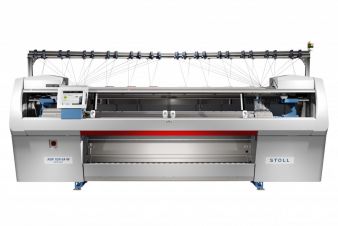 With 300 3D flatbed knitting machines, Stoll and Project I restore high-tech domestic manufacturing jobs
With 300 3D flatbed knitting machines, Stoll and Project I restore high-tech domestic manufacturing jobs with a full-scale, next generation facility that moves fully-fashioned knit production to the US and helps retailers meet demand.
Project I is an apparel manufacturing group started by fashion executives Jon Lewis and John Elmuccio with the goal of reshoring high-paying fashion jobs to the United States.
John Elmuccio
“We’re partnering to create the apparel manufacturing and supply chain facility of the future,” Elmuccio said. “The collaboration with Stoll will strengthen America’s fashion market, restore apparel production jobs using the latest technology, and revitalize the fully-fashioned knit sector.”
The driving force within the knitting industry
Between this new founded collaboration with Project I and the kick-off of the company’s 145th anniversary, Stoll consistently proves to be the driving force within the knitting industry.
Project I and Stoll’s advanced apparel manufacturing facility results in the largest single order of Stoll’s latest 3D knitting machinery and software solutions within the United States. This impactful collaboration will bring a revolutionary output of jobs and help position the US as a key player of the apparel manufacturing and supply chain market. “The apparel, fashion, and luxury markets are ripe for disruption and resurgence in the U.S.,” Lewis said. “By shortening the supply chain and locating production in the U.S., fashion brands and retailers will be able to keep pace with emerging trends and react to — not just anticipate — customer demand.”
The installation of these 300 high-tech flatbed knitting machines will happen throughout the next three years. Stoll will install the latest generation of ADF machines, which feature yarn carriers that are independent of the carriage and can move horizontally and vertically, and the latest CMS 830 C&S knit & wear (seamless knitting) machines.
Stoll will provide programming, training, manufacturing and on-site production support while guiding new and existing customers alike to Project I.
Saurer Epoca 7 pro innovative embroidery system sets new benchmark
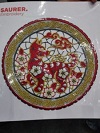 Saurer exhibited the Epoca 7 pro at ITMA Asia. The machine on display evoked great interest from all visitors. It was interesting to know from Mr. Simon Benzer of Saurer Embroidery that the machines on display was sold to Thailand based customer KS Perfection. Saurer is very encouraged by the positive response received at ITMA Asia this year.
Saurer Embroidery is a leading producer for shuttle embroidery systems. Extensive experience accumulated over many generations is combined with modern knowledge to help shape the future of textile production. This brand merges textile tradition with state-of-the-art technology in a symbiosis of expertise, quality and safety.
Based on more than 150 years of experience, Saurer Embroidery is the leading manufacturer of sophisticated embroidery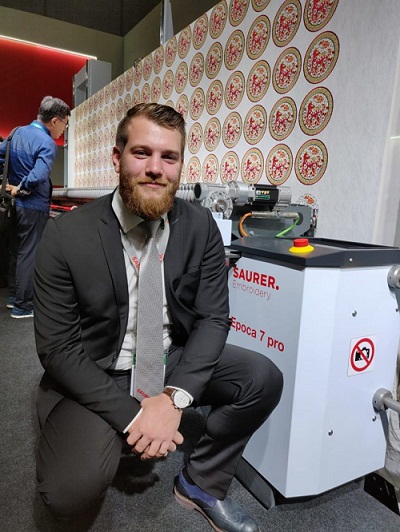 systems and provides to the embroidery industry innovative solutions from the embroidery sketch to the finished product.
The Epoca 7 pro is an innovative embroidery system setting a new benchmark. It offers an increase in productivity of up to 20% and embroidery speed of up to 700 rpm. With unique setting options and new technology features it ensures a trouble-free production of high quality embroidery.
Latest Itema Weaving Model To Make Debut In Vietnam
A new important partnership marks the path of Itema towards a greener future for the whole denim production chain. Prosperity Textile, one of the main denim producers worldwide, has chosen for its new facility one of the most interesting and sustainable-oriented Itema technologies, iSAVER™ equipped on the Itema R95002denim. Prosperity Textiles is, in fact, one of the early adopters of this new technology chosen for the new plant that the world-famous indigo fabricsproducer will open in Vietnam, and that will be exclusively equipped with the latest Itema weaving machine model, demonstrating once again its green, future-oriented approach.
Thanks to its partnership with Itema, Prosperity Textiles makes again a step forward in terms of sustainable innovation, as one of the first denim producers able to successfully turn - even the weaving production - green.
A partnership that is planned to be showcased in some of the most important textiles exhibitions worldwide focusing on Asian and denim markets. A path that starts with Kingpins Show, Amsterdam (October 24-25) where the Chinese denim producer will put into the spotlight this brand-new solution aimed at further increasing the eco-driven approach of the company; an important appointment is also in the Itema calendar: the ITMA Asia + CITME 2018 exhibition, Shanghai (October 15-19) where the Italian company showcased the important green step-forward in denim weaving processes and the full range of its innovations.
iSAVER™: the ideal green tool for denim weaving
This new technology, developed by ItemaLab™, the Itema Advanced Innovation Department, is able to completely eliminate the left-hand weft waste, allowing to insert the weft yarns in the fabric without the need of additional yarns. iSAVER™ significantly reduces raw material waste, leading to tangible benefits in terms of machine’s efficiency, cost reduction and energy saving.
Just consider that the weaver will gain a minimum saving of € 2.000 per year per machine, and our planet will gain even more. In fact, for the first time in the weaving industry, a sustainable approach when choosing the weaving equipment is now possible. Thanks to iSAVER™, 1.000 Kg of cotton per machine per year – the 3% of the total raw materials - will be saved, thus avoiding the waste of 20 million liters of water, equivalent to 400.000 showers.
Numbers are clear: the introduction of iSAVER™ clearly sets a new benchmark in terms of sustainability within denim fabric production. Furthermore, the iSAVER™ is one of the key features of the Itema R95002denim, the rapier weaving machine born and designed to weave denim guaranteeing to weavers superior textile quality, outstanding user-friendliness and tangible energy and raw materials saving.
A joint eco-driven path
Itema, understanding very well the importance of saving resources and energy to drive the textile production in the direction of a more conscious manufacturing, focused its attention to develop breakthrough weaving solutions and in 2018 introduced to the market the iSAVER™, a revolutionary device dedicated specifically to denim fabrics able to eliminate the waste selvedge on the left-hand side of the fabric.
This is one of the reasons-why Prosperity Textiles has chosen to adopt this extraordinary technology for its new facility. Today Prosperity Textiles is one of the main denim producers worldwide, counting 1,300 employees and 20 offices worldwide. Moreover, a second state-of-the-art denim mill will be inaugurated in Vietnam by the end of 2018.
What makes Prosperity able to stand out on a global scale, is not simply its products high quality but the ability to conciliate flawless denim fabric production with a sustainability-oriented mindset that permeates every stage of their textile supply chain.
Prosperity, indeed, adopted innovative green manufacturing concepts through all stages of the company’s operations, from product development, raw materials procurement and processing, to natural resources and energy utilization including waste management. Prosperity’s denim production is based on the employment of best quality yarns available on the market, while still targeting the most sustainable sources, from BCI to organic, recycled cotton, and from Tencel™ Lyocell to Sustans™, in 2017, more than 20 million yards fabric sales from Prosperity are with sustainable fibers inside.
The introduction of eco-friendly dyeing and finishing practices allows the company to create beautiful indigo shades and performance denims, with less water and energy consumption compared to the traditional systems. Last year, Prosperity produced 20% more fabrics than 2016, yet the water and electricity use and greenhouse gas emission was down by 11.5%, 7.9% and 5.4% respectively.
In this continuous process of improvement and contribution to a greener industry and planet, plays a central role the recent renewal of the historic partnership and strategic alliance with Itema – the leading manufacturer of cutting-edge weaving solutions – which represents the natural evolution of a constant process of research for partners able to support Prosperity Textiles’ growth as a sustainable company.
Up to now, all innovations and efforts done in this regard addressed the traditionally more polluting steps of the denim production. In fact, if the development of green technologies is nowadays spread in many fabric processing stages, such as finishing and dyeing, weaving was not yet capable to provide sustainable solutions to weavers.
SAVIO’s EcoPulsars Presents A New Concept In Winding Technology
 SAVIO Macchine Tessili S.p.A. is a hundred-plus years old company, established in 1911 at Pordenone, Italy. Savio is the first manufacturer to come out with a breakthrough concept for energy saving in winding: suction on demand.
SAVIO introduced the new concept winder EcoPulsarS at ITMA at Milan, Italy, in 2015. The unique EcoPulsarS is designed to save up to 30% of the energy used to wind yarn. The EcoPulsarS has no common suction fan – which in the case of conventional automatic winders works all the time, and is an energy guzzler. Instead, in the EcoPulsarS each individual spindle has a small suction fan and a waste collection chamber which work only when the yarn end breaks. In other words, when the productive motor (drum motor) is in normal operation, the suction motor does not operate, resulting in significant savings in energy.
In addition, unlike conventional automatic winders with common suction fans, the EcoPulsarS does not need any trench for hot air discharge, which results in reduced civil work for EcoPulsarS installations. Instead, suction is generated close to the application according to the requirement in all spindles, the preparation station, the stripper area, etc.
General features:
Flexible cycle – independent operation of upper arm, lower arm and splicer
Intelligent on/off modulation – anti-patterning device that works only on critical diameters
Tensor – online tension monitoring system
Integrated panel – with 15” monitor
Possibility of centralised monitoring
High speed preparation stations
Intelligent feeding system
Modular layout – possibility of providing second station in between the machine for proper distribution of
cops
Exclusive features of EcoPulsarS
Suction on demand – individual suction arrangement – offers up to 30% power savings
Increased productivity – up to 10%
No common suction fan and so no exhaust trench required
CCS – Controlled Cut System – for less/no repeat cycle
High suction pressure on consecutive attempts
Flexibility of positioning wax – above/ below clearer
MESDAN 985 – newly designed air splicer – with 2 air controls
Double damper tension device – with finger system; more precise and effective
Cyclone waste collection – not disturbing production; no need to stop machine for cleaning
New designed heavy duty cradle with touch sensors
LED illumination for faster reach and identification
To maintain high quality standards, most of the components used in the SAVIO winders are manufactured within the SAVIO group:
Drum, twin splicers from SAVIO
Electronics and PCBs from EUTRON
Electronic Yarn Clearers (EYC) from LOEPFE
Air, water and thermal splicers are from MESDAN
Monitoring software from BMS VISION
SAVIO is the only winder manufacturer having a huge set up in India for after-sales support.
The service headquarters at Coimbatore with more than 30 qualified engineers and a fully loaded spares centre is in operation to extend customer support after sales. A well-equipped electronic lab is situated at Coimbatore for PCB related support. The technical support office helps customers on trials on simulated conditions on customer materials for better results. The facility also has a training centre and showroom of machines to train the customers’ technicians in depth. A similar service office with training facility is also available at Ludhiana with a dedicated team of experts. Offices at locations like Ahmedabad, Bhopal, Guntur and Kolhapur take care of regional service activities.
Jakob Müller AG successfully enforced interim injunctions against design patent infringements
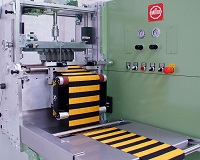 ITMA ASIA +CITME 2018 is China’s most important textile event. The sixth edition of the combined show has been held from 15 to 19 October 2018 at the new National Exhibition and Convention Centre (NECC) in Shanghai.
The subsidiary corporation COMEZ International s.r.l. of Switzerland based Jakob Müller AG, has at the on-site IPR Office successfully applied for interim injunctions to stop design patent infringements against Chinese manufacturers DKY Machinery Co. Ltd, Huibang Machine (Yingkou) Co. Ltd, and Dah Heer Industrial Co. Ltd.
On the first day of the fair, Jakob Müller found that the machines of the three companies showed a clear violation of COMEZ’s intellectual property without Jakob Müller’s or COMEZ’s permission. The patentee at once filed a complaint to the IPR Office against these companies, to prohibit the exhibition of the infringing systems.
The IPR Office served the complaint materials to three companies in the morning of the second day and set a time limit of 24 hours for a counterstatement to the three infringers. One of them, Dah Heer, removed the infringing system actively, and the others, DKY and Huibang, submitted a counterstatement. After the IPR Office assessed these statements and evaluated the possibility of the infringements, the IPR Office required them to remove the systems concerned in the patent on 17th October 2018. The systems concerned were removed by DKY and Huibang and not exhibited any more until the end of the fair.
Bernhard Engesser thanks the responsible patent lawyers of the intellectual property rights office and emphasizes that Jakob Müller AG will take a high priority against further patent infringements. Jakob Müller AG and its relevant companies reserve the right to take further civil actions against the respective companies.
Switzerland: the cradle of innovation
With Swiss textile machinery companies, the ‘inventor gene’ leads to added value for customers
Over the centuries, the sheer innovative spirit of the Swiss has been demonstrated many times through inventions spanning various fields of human experience. Their impact on the global textile industry has been among the most notable, with continuous and significant developments. Swiss textile machinery companies have been at the core of this naturally-evolving tradition of inventiveness. Today, the producers of machines and components and service providers in Swiss Textlile Machinery sustain that heritage by a commitment to ongoing innovation that will influence the textile industry worldwide in future.
A single click and an application starts, another one and a file opens, or closes... Nowadays, hardly anyone remembers how we managed before the mouse made computer interactions so easy, quick and intuitive. In fact, it was a Swiss, Daniel Borel, whose inventiveness first brought the pc mouse to series production in 1982, launching a mass-market driver of progress that has been literally life-changing.
India asks China to reduce tariffs
India wants tariff concessions for its exports to China. Among the exports are naphtha, bovine leather, shrimps and cotton yarn. Other products eligible for concessions include frozen, shelled shrimps, broken rice, fresh grapes, zinc, aluminium oxide and hydrocarbons like paraxylene, polyethylene, polypropylene and benzene.
The reason is that China has granted deep duty cuts to India’s competitors including Peru, Pakistan, Australia, South Korea and Asean countries in free trade agreements with them, which has displaced some of India’s exports. The Asia Pacific Trade Agreement is the only operational trade pact linking India and China. South Korea, Bangladesh, Lao PDR and Sri Lanka are also APTA members.
For instance, India’s exports of naphtha, a major industrial fuel, to China are subject to a six per cent duty with a ten per cent margin of preference under APTA. This is the highest duty for any of China’s FTA partners as Asean countries pay zero, Australia 2.4 per cent and South Korea 4.8 per cent. India’s exports of frozen shrimp and prawns form a small share in the Chinese market due to the absence of tariff concessions. Asean members face zero per cent tariff in the Chinese market and thereby account for a six per cent share in that country’s imports of these products.
The free economic zones coming up in Egypt to boost textiles industry
The world’s first specialized free zone for the textile industry is underway in Egypt. It covers an area of 2.2 million sq. mts. Free zones have a great role in the Egyptian economy. They recorded exports worth $14.7 billion from January to September 30, 2018, with an increase of $1.1 billion compared to the same period in 2017.
The textile industry is facing global changes, one of which is transferring the focus of this industry from the east to other regions in the world. And Egypt wants to take advantage of the opportunity and attract textile investments. The Middle East including Egypt has many advantages, among which are geographical location, consumer market, free trade agreements with COMESA, and availability of labor and a suitable investment atmosphere.
There are several free economic zones in Egypt. Free zone companies in Egypt enjoy a lifetime exemption from income tax, sales tax, import, and export duties. Egypt free zone companies with high electrical consumption (steel, cement, and fertilizers) are subject to 20 per cent corporate income tax on their net profits.
The country’s various zones have a wide range of different sector focuses. The Media Public Free Zone hosts radio and television companies. The Shebin El Kom Public Free Zone is mostly populated by the textile spinning and weaving industry.
American Apparel makes a comeback in Canadian avatar
One of America's most controversial clothing brands is making a comeback, but ditching some of its signature traits. American Apparel, founded in 1989, was known for selling basics, including its popular unisex hoodies, bodysuits, tights and leggings.
However, it came under criticism with its provocative advertising that often featured scantily clad women in suggestive poses. In the Me Too era, American Apparel is being careful about its portrayal of women. The brand still aims to be sexy, but gone are the ads that may have made women feel vulnerable, uncomfortable or like the camera is looking down at them.
The re-emergence of American Apparel comes at the hands of Gildan Activewear, a Canada-based manufacturer that won an auction to buy American Apparel, after it entered bankruptcy protection. So this time the brand will be Canadian-owned.
American Apparel relaunched in the US in August 2017 by operating a test store that it will use to study the brand’s traction and potentially pave the way for a return to physical retail. To stay competitive, American Apparel will standardize and expand its sizing to include extra large pieces, lower its prices by up to 23 per cent and offer its previous hits including disco pants, high-waisted jeans and bodysuits.
Myanmar hopes EU relents on duty free trade preferences
Myanmar would like the EU to continue with the trade preferences. Myanmar garment manufacturers say the loss of duty-free export trade preferences could put more than 4,00,000 jobs at risk and badly damage the country’s economy by depriving it of its largest source of foreign exchange income.
The country says it is progressing with the reforms and needs the EU’s support for further reforms. The EU says before taking a decision to withdraw the preferences it would investigate human rights violations, and whether Myanmar had committed labor rights violations and followed international law and regulations.
The value of Myanmar’s garment exports to the EU has significantly increased from 2013 to 2017. The EU has become Myanmar’s largest trade partner for garments, purchasing more than 47 per cent of the products. Since 2013, the EU has lifted duties on goods from Myanmar under the EBA’s zero-tariff import regime. Nearly 70 per cent of Myanmar’s exports go to EU countries, and more than half of these are garments.
As a result of the opening of the EU market, the number of factory workers in Myanmar has grown from 2,40,000 in 2012 to 4,50,000, and the garment sector is the most labor intensive of the country’s major industries.