FW
Next edition of ATSM will be held in May 2019
Apparel Textile Sourcing Miami (ATSM) will be held from May 20 to 22, 2019. The event will host more than 300 international and domestic manufacturing companies exhibiting a wide range of products and process solutions in the field of manufacturing and sourcing services.
ATSM connects Southeastern United States, the Americas and the Caribbean to the production world of apparel, textile, and fashion. The apparel sector remains important to Florida’s international economy. In 2017, nearly $8 billion in apparel trade flowed through Florida ports and airports.
Top buyers from more than 40 countries are expected to attend ATSM 2019 to source, connect and develop lasting relationships with qualified international and domestic suppliers. The show will see participation from popular brands from across Asia in addition to a wide range of suppliers and products. These are all highly successful, leading apparel brands in China, looking for US partners to represent them in America and help grow their brands globally.
This is an unprecedented opportunity for buyers in the US and Latin America to source and negotiate licensing rights with these innovative brands. Conference and educational sessions will feature industry experts who will cover fashion trends, new technology applications such as AI and 3D printing, sourcing tips, sustainability, e-commerce strategy, international trade policy, marketing techniques and much more.
Strong need for skills development in the apparel industry
"Growing consumer needs are increasingly pressurising retailers and manufacturers to deliver products faster, cheaper through transparent and sustainable supply chains. Consequently, organisations across the apparel industry are facing a rapidly changing need for skills training and development of their workforce. Training, though happening within companies, is not enough to keep up with the lack of skilled workers. There is high dissatisfaction with the content and modes of training provided. Furthermore, the investment provided for the training is not adequate."
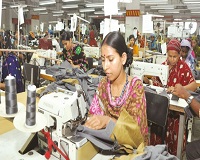 Growing consumer needs are increasingly pressurising retailers and manufacturers to deliver products faster, cheaper through transparent and sustainable supply chains. Consequently, organisations across the apparel industry are facing a rapidly changing need for skills training and development of their workforce.
Training, though happening within companies, is not enough to keep up with the lack of skilled workers. There is high dissatisfaction with the content and modes of training provided. Furthermore, the investment provided for the training is not adequate.
Employees focus on career development
According to a recent survey, one of the biggest complaints from brands and vendors is that they have trouble hiring people with the right skills, with 62 per cent saying they are struggling to fill certain positions. Apparel businesses need to ensure that younger people see the apparel industry as an attractive place to focus their careers.
According to the 2018 LinkedIn Learning Workplace Learning Report, 94 per cent of employees would stay at a company longer if it invested in their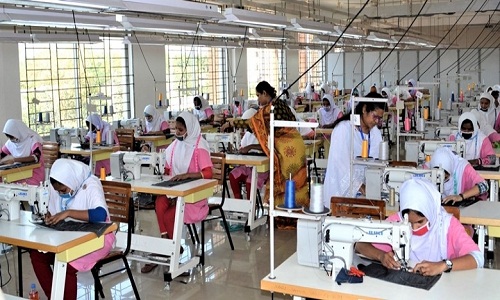 career development. Around 91 per cent of managers see training as important for the professional development of their employees, while 88 per cent viewed it as important for maintaining job satisfaction.
Only 16 per cent managers surveyed revealed their companies have undertaken skill assessments of their whole workforce. These companies have done skill assessments of their whole workforce employees. Around 49 per cent managers, and 50 per cent of others had taken some sort of company sponsored training over the past 12 months, while only one-third work for companies that use a Learning Management System,
Budget constraints impair employee training
Although there is an awareness of the need for more training, budgets aren’t matching this. Less than 30 per cent of those surveyed have seen their budgets increase in the last two years, and over 70 per cent think that more investment is required. Additionally, only 38 per cent see a planned increase in investment in training over the next two years. Many businesses hold back due to the lack of a clear method for measuring the effectiveness of training. This suggests that there is no consistent way of measuring the success of training, and thus no way to justify further investment.
Restoring old skills
Some functional areas require more ongoing training, with technical design and product development ranking the highest. This is followed by technical apparel making, quality control, production and process management, retail operations and visual merchandising ranked the lowest.
Brands are planning to increase on-shoring as they face new challenges around trade rules, currency fluctuations and speed to market. Additionally technology advances are lessening the number of workers. There is a pressing need to train new talent into local industry in order to restore what many view as dying skills. This is a particularly urgent challenge for specialised skills like bra-making, hosiery and pattern making.
Textile automation grows at six per cent
Automation in textile industry is expected to register a six per cent CAGR by 2023.
There are several investments and developments in the industrial sector, which will have a positive impact on the automation market. Availability of favorable policies will be one of the major factors that will have a positive impact on the growth of the market. Favorable policies will attract investments in this sector and create a demand for automation products and services in the textile industry. These policies are beneficial for the growth of the industry and drive the automation of processes, in turn, increasing the demand for field, control, and communication devices.
Rapid developments in the textile industry have led to improvements in product offerings by vendors and superior quality solutions to customers. Vendors are also offering licensing options that allow end-users to reduce the cost of initial investments.
Asia will be the major revenue contributor to the automation market in the textile industry throughout the forecast period. Additionally, the increase in investments in the textile industry will also fuel the market’s growth in the region. Countries like India are key revenue generators for the global textile industry. India already allows 100 per cent FDI in the textile industry under the automatic route.
Epson launches new solution for polyester printing
Epson recently launched a new Direct-to-Garment (DTG) pretreatment solution for polyester garments available for Epson's DTG solutions – the SureColor® F2000 and F2100. The easy-to-use solution is in line with the traditional DTG workflow. It helps to expand business opportunities to include industries that primarily feature 100 percent polyester garments, such as team sports apparel, activewear, imitation silk and leather, and accessories.
Epson polyester pretreatment has been optimised for use with Epson UltraChrome® DG inks to produce vivid prints with excellent wash-fastness on both light and dark colored polyester garments. The pretreatment solution is Oeko-Tex Eco Passport certified for product safety to the end consumer, and is free of GHS health risks, making it safe for operators as well.
This new polyester pretreatment solution will open opportunities for direct-to-garment printing and customisation for new industries, as well as enable on-site garment customisation at sporting events.
Global lingerie market to generate around $55 billion revenue by 2024-end
According to Transparency Market Research, the global lingerie market was valued at approximately $33 billion in 2015 and is expected to generate revenue of around $55 billion by end of 2024.
Females in the developing countries are changing their outlook towards accepting innerwear as a casual affair. They are purchasing lingerie depending on the occasion or event, such as there are special sport wear bras for gymnasium purpose.
Online marketers like Amazon, Zalando, Asos, and other e-commerce brands are focusing on lingerie which will improve the global demand through social media. Most of the large brands have exclusive stores in shopping malls or independent stores. In developing countries like India and China, brands like Jockey are trying to reach out to customers through small roadside innerwear shops.
CPTPP to take effect soon
The Comprehensive and Progressive Trans-Pacific Partnership (CPTPP) may take effect early next year.
This is an eleven-member free trade pact in which Japan has a leading role. It was earlier known as the Trans-Pacific Partnership.
The accord will come into force 60 days after at least six countries have worked on their domestic procedures. So far, Japan, Mexico and Singapore have completed the process, with Australia, Canada and New Zealand seeking to do so by the end of the year. Brunei, Chile, Malaysia, Peru and Vietnam are also part of the pact.
After the US pulled out of the TPP in January 2017, the remaining eleven members signed the revised TPP in March this year.
The UK, Colombia, Indonesia, South Korea, Taiwan, Thailand and South Korea are believed to be interested in joining the CPTPP.
This agreement will focus on goods and will be different from a free trade agreement that is more comprehensive.
This is a Pacific-nation trade deal.
The TPP was previously negotiated by the US with Japan, Canada, Mexico, Australia and seven other Pacific countries. It was touted at the time as an alternative framework to the World Trade Organization amid criticisms that the current trade enforcement regime was outdated and failed to address issues related to services, intellectual property and the digital economy properly.
PVH Corp receives award for corporate excellence
Park PVH Corp, leading clothes manufacturer in Ethiopia’s Hawassa Industrial Estate received the 2018 U.S. Secretary of State’s Award for Corporate Excellence (ACE).
The company, one of the world’s largest apparel companies and owner of iconic brands, including Calvin Klein, Tommy Hilfiger, Van Heusen, Speedo, Warner’s and IZOD, has received recognition from the US Department of State for promoting corporate exellence
Hosted at the U.S. State Department in Washington, D.C., the ceremony honored the company for upholding high standards of responsible business conduct. PVH accepted the Sustainable Operations Award as lead investor of a best-in-class apparel manufacturing facility in Hawassa, Ethiopia.
A golden opportunity for India to seize the textile and clothing market
The rising industrial wages in China offer India an opportunity to seize the $284 billion of textiles and another $443 billion of clothing market. But India needs to first address the regulatory mess that successive governments have created over the years.
A series of imprudent regulations on fiber, wages and trade policy have made India mainly a supplier of raw material. It’s no surprise that India’s apparel export accounts for 40 per cent of its total textile export.
India’s export of $40 billion lags far behind China’s $269 billion despite its long history and obvious advantage in raw material and labor. Between 2000 and 2010 China doubled its global export share in apparels from 18.2 per cent to 36.4 per cent, but India’s share inched up from 3 per cent to 3.2 per cent. Again, between 2010 and 2016 China was able to retain its global market share at 36 per cent, Bangladesh could increase it from 4.2 per cent to 6.4 per cnet, Vietnam almost doubled it from 2.9 per cent to 5.5 percent, but India managed to raise it from 3.2 per cent to 4 per cent.
EU may withdraw GSP for Myanmar
The EU is thinking of revoking GSP for Myanmar.
Reasons include abuses by Myanmar’s military, including crimes against humanity and genocide.
This move is certain to devastate key sectors of the economy. The export-oriented garment sector, one of the country’s few economic bright spots, would be especially hard hit.
Garment exports account for 72 per cent of Myanmar’s shipments to the EU , making the EU one of the few markets with which Myanmar enjoys a trade surplus.
The EU granted Myanmar GSP status in 2013 following a series of political and economic reforms that eventuated in the 2015 elections after decades of military rule.
Myanmar’s garment sector employs about 5,00,000 people, and 95 per cent of these are women. The country’s business scene is increasingly dominated by Asian investors including from China. Chinese investment started to flow into the garment sector in 2013 to capitalize on Myanmar’s GSP status in the EU’s lucrative markets.
While the presence of European business in Myanmar champions European values including gender equality, transparency, accountability as well as social and environmental responsibility, Chinese-owned garment factories are not known for strictly abiding by these principles.
This is not the first time Myanmar’s garment sector has been threatened by sanctions. In 2003, the US imposed economic sanctions on Myanmar for chronic rights abuses, effectively decimating a then fledgling garment sector.
Made in the US’ resurgence in textiles premature
According to figures from a new paper by the US International Trade Commission (USITC), the talk of a ‘Made in the US’ resurgence in textiles may be premature. The figures show that after four years of decline, US textile shipments increased in 2017 to US$39.6bn, much of this – over 60 per cent – for the domestic market. However, this figure remained 3 per cent below the 2013 level. Textile exports also remained static. At US$10.6bn, US textile exports in 2017 were below the five-year high of US$12.1bn in 2014.
Total capital expenditures in plants and equipment for the textile and textile product sectors increased by 36 per cent during the 2013–16 periods, rising from US$1.6 billion in 2013 to US$2.1bn in 2016, the latest year for which data are available.
Employment in the textiles sector declined by 4 per cent to an estimated 126,000 in 2017. Moreover, the paper suggests labor productivity for yarns and fabrics – which accounts for most of the employment in the textiles sector – declined steadily during 2013–16.