FW
Pakistan misses cotton sowing target by 8 per cent
As revealed in the Senate Standing Committee on National Food Security, Pakistan has missed its cotton sowing target by over 8 per cent due to extraordinary shortage of water and is unlikely to achieve production target of 14.37 million bales set for the year 2018. Sindh province produced around 32 mounds seed cotton per acre compared to 21 mounds in Punjab, but due to water shortage, Sindh missed the sowing target by around 31-35 percent.
The target for cotton seed sowing for 2018-19 in Punjab was 2.31 million hectares and the sowing was done on area of 2.29 million hectares while in Sindh the sowing was done on 0.42 million hectares against the target of 0.62 million hectares. The overall sowing area in Pakistan was told to be 2.71 million hectares against the target of 2.95 million hectares. The targets in Punjab saw a positive percentage increase of 11.5 percent and in Sindh there were a negative percentage of 31.
Extraordinary shortage of water during the current Kharif season has badly affected the cotton sowing in early season. However, in Punjab, 99 per cent of the sowing target was achieved, whereas in Sindh, only 68 per cent of the target area could be sown.
China to host World Textile Merchandising Conference
World Textile Merchandising Conference will be held in China, September 20 to 21. The conference will explore latest changes and trends in the textile industry and seek to build a cooperation system throughout the industrial chain, therefore promoting high-quality development.
The conference will have four forums. Opening-up for New Connection forum will witness the establishment of a textile industrial chain cooperation system under the Belt and Road Initiative. The Science and Technology as New Driver forum will highlight the development trends and cutting-edge technologies in the textile industry to explore new growth drivers for innovation-driven development.
The Fashion as New Trend forum will focus on global and domestic trends, the fashion economy, new consumption trends and other dimensions to explore fashion trends. The Green Growth as New Business forum will discuss policies, roadmaps and technological trends towards environmentally-friendly production to boost green growth.
The textile industry is facing changes. For this purpose, it is necessary to coordinate and promote the localization and globalization of the industry, increase openness and cooperation in building innovation capacity, advance cross-border flows of such resources as products, productivity, technology, capital, and talents, and fully integrate and utilize global resources to achieve coordinated development.
Italian companies Carvico, Jersey Lomillna introduce elegant fabric collection
Italian warp and circular knitted fabric manufacturer Carvico and which belongs to the same group as Jersey Lomellina have come up with collection of elegant, innovative, high-quality fashion fabrics. These fabrics are ideal for producing lightweight, fast drying, no iron garments. They are versatile and adaptable for different events and looks, sporty or glam, casual or posh. The collection has both smooth and rough, metallic and velvety, matt and glossy surfaces, and soft or more technical hand feels. They have been designed to suit any kind of performance and application.
Both Carvico and Jersey Lomellina have always been actively committed to progressively reduce the environmental impact of every stage in their production process. Starting from fishing nets, carpet fluff, tulle, industrial and textile waste, Carvico and JL produce high performance, sustainable fabrics. Carvico produces Vita, Vita Power, Vita Suede and Revolutional Eco while Jersey produces Renew Cult, Renew Prime, Renew Style, Renew Fine and Style Peach.
The new fabric’s colors are light and soft, almost neutral shades: nude, dove grey, blush pink, fawn, sand, pink, gold. Such nuances make all outfits look sophisticated, impeccable and bon ton. Such nuances ensure the maximum yield with the minimum effort and they make outfits look sophisticated, impeccable and classy.
ATSC Canada draws record number of visitors, exhibitors
Apparel Textile Sourcing Canada (ATSC) took place from August 20 to 22. The three-day event drew record number of international exhibitors and attendees, with an unprecedented 6,000 registrations and representatives from 20 countries giving a boost to the Canadian apparel and textile industry. The show size also broke event records, with floor space doubling from 2017 to occupy more than 120,000 square feet and more than 500 booths.
Attendees included sourcing executives from Canada’s leading retailers and brands. A new India Pavilion of 40 exhibitors signals a strategic directive that India is keen to compete and become a permanent part of the Canadian apparel and textile supply chain. The pavilion showcased the latest innovations in Indian apparel, textiles and accessories.
Canada’s major global trading partners reaffirmed their commitment to fueling strong trade relations with Canadians. A Ukraine showcase displayed leading fashions from eight Ukrainian designers and manufacturers. Other new international showcases included trending displays from Bangladesh, Indonesia, Pakistan, Vietnam, Guatemala and the Americas.
A Brand China exhibition – called Avenue ATS – was launched to introduce Canadian retailers, importers and distributors to China’s top 10 cutting-edge fashion brands. This successfully forged sales and distribution deals. ATSC introduced to the Canadian market categories such as accessories, giftware, home electronics, footwear, luggage, housewares and general merchandise.
US cotton most preferred by mills, manufacturers across the world: Study
"Exporting three times more cotton than its closest competitor, the United States achieved a 40 per cent share of cotton fiber exports in its latest marketing year. A study conducted on mills and manufacturers from across the world aimed to understand how the US industry maintains high share of exports found the quality of US cotton to be superior then cotton from other regions. An assessment of US cotton industry and Cotton Council International’s role in the industry was conducted by a third party research firm in 2017. The firm surveyed 228 mill and manufacturers to gain insight into their purchase decisions as well as perceptions toward US cotton and the Cotton USA brand. These representatives spanned 18 countries including the six largest cotton purchasing regions in the world: Northeast Asia, Southeast Asia, South Asia, China, Latin America, and Central Europe."
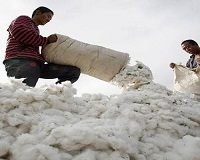 Exporting three times more cotton than its closest competitor, the United States achieved a 40 per cent share of cotton fiber exports in its latest marketing year. A study conducted on mills and manufacturers from across the world aimed to understand how the US industry maintains high share of exports found the quality of US cotton to be superior then cotton from other regions.
An assessment of US cotton industry and Cotton Council International’s role in the industry was conducted by a third party research firm in 2017. The firm surveyed 228 mill and manufacturers to gain insight into their purchase decisions as well as perceptions toward US cotton and the Cotton USA brand. These representatives spanned 18 countries including the six largest cotton purchasing regions in the world: Northeast Asia, Southeast Asia, South Asia, China, Latin America, and Central Europe.
Ranking the most important factors influencing cotton purchase decisions, respondents listed quality, price, overall product satisfaction, contamination and living up to their contracts as the top five factors. Respondents were then asked to rate their associations with cotton from various parts of the world.
Value for money
US cotton emerged on top because of positive factors in the decision to purchase cotton. Nearly 90 per cent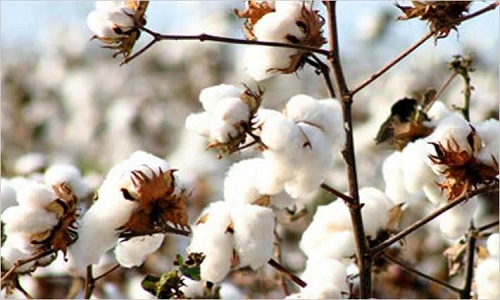 respondents perceived US cotton as being of high quality, consistent, and low contamination while 75 per cent believed US cotton provides good value despite higher price points. US cotton was consistently positively rated than cotton from other parts of the world across all significant purchase factors.
With over 50 per cent respondents preferring US cotton, it was overwhelmingly the most preferred cotton by both mills and manufacturers across the world. Over one-third of the cotton purchased in the past year was reportedly from the US. This is nearly three times that of any other country. Respondents expressed great satisfaction about US cotton purchases with over 90 per cent planning to recommend US cotton to their customers.
Cotton USA’s strong brand value
As far as brand awareness is concerned, CCI, since 1989, has been licensing products such as apparel and home textile with the Cotton USA trademark. The trademark has so far, been used by over 51,000 product lines. Given this long track record, 96 per cent mills and manufacture representatives are aware of the Cotton USA brand with 77 per cent believing the trademark adds value to their business.
India:RIL develops RElan and creates fashion from bottles
Reliance Industries in association with the United Nations and House of Anita Dongre has developed R Elan, a fashion line made of 100 per cent pet bottles. Discarded pet bottles are recycled into garments. This range is a blend of art and smart, with fabrics that provide several attributes such as enhanced performance, aesthetics, and sustainability. The brand is meant to serve growing consumer demands for better functionality, aesthetics and sustainability, while ensuring each level of the value chain is also benefited.
R Elan encompasses a wide range of fabrics providing superior aesthetics, functionality and sustainability. This large superior product range can serve multiple brands across multiple applications. The brand is experiencing a high level of acceptance from various brands across different applications such as active wear, denim, formal wear and women’s wear. Reliance expects this to be a pioneer in increasing acceptance of specially engineered polyesters.
World over the environmental dangers of fast fashion model of use and throw with seasonal trends are giving rise to slow fashion – where ecologically friendly clothes are designed for long term wear. Materials used are available resources which cut down the carbon footprint greatly. This not only makes fashion economically sustainable but also ecologically friendly.
Australian and New Zealand-based companies team up for sustainability
Australian fashion technology firm BlockTexx will collaborate with New Zealand-based textile research company The Formary to develop new strategies and workflow models for the recycling and repurposing of textile waste.
Both firms are motivated by the fact that less than one per cent of global textile waste is currently recycled, with most of the sector’s cast-offs being shipped to developing countries where the vast majority ends up in landfill. The duo also cite the 2020 Circular Fashion System Commitment, which has seen 94 global brands – such as H&M and Adidas – commit to addressing the altering the linear approach to textile production.
Formary will extol the virtues of blockchain as a transformative industry tool at the Circular Economy Summit, which this year is being held in New Zealand and has been organised by the Sustainable Business Network’s Circular Economy Accelerator and WasteMINZ.
BlockTexx fashion technology platform will connect manufacturers, brands and logistic providers a blockchain-enabled marketplace; a method which it believes can unlock value throughout the entire supply chain.
IFDC launches Milan Fashion Week Modest Soiree
Islamic Fashion & Design Council’s (IFDC) will host Milan Fashion Week Modest Soiree, in conjunction with Milan Fashion Week on September 24, 2018. This exclusive event will showcase Modest Fashion in the city with the greatest fashion appetite. The IFDC Award winners from Torino Fashion Week 2018 will be the main attraction of this event. These winning designers are Bow Boutique (Saudi Arabia), Al Nisa Designs (USA), Chantique (Brunei) and another made-in-Italy modest brand, Luya Moda. This event is produced by IFDC and its strategic partner, Milano Fashion Library (MFL ).
IFDC formed strategic partnership with MFL, a consulting, publishing and advertising company that operates within the largest fashion library in Europe. MFL served on the jury for the IFDC Awards at Torino Fashion Week 2018. This prestigious fashion organisation is situated in the Tortona area in Milan, which is known for hosting a number of prestigious fashion and design events throughout the year. This iconic venue is key to catapulting any designer’s career to the next level.
India: Maharashtra identifies cotton growing areas
Some 115 tehsils have been declared as cotton growing areas in Maharashtra. Out of these, around 55 are in Vidarbha region alone. A tehsil is defined as one with cotton production of 9,600 tons per annum. This is the amount of cotton production needed to sustain a co-operative spinning mill.
The objective is to identify tehsils where co-operative spinning mills can be set up under the new textile policy. The decision of declaring 115 tehsils as cotton growing will have a long-term impact on the growth of the textile sector in a planned manner.
In the past, spinning mills were set up in parts of Maharashtra that were not cotton producing. The new policy ensures this mismatch is done away with and the foundation of a properly planned cotton-to-cloth chain development is laid.
The number of cotton growing tehsils in various districts is as follows: Jalgaon 15, Ahmednagar one, Aurangabad and Amravati nine each, Jalna, Nanded, and Akola seven each, Beed five, Parbhani and Nagpur six each, Hingoli two, Buldhana and Wardha eight each, Yavatmal 13 and Chandrapur four.
Jalgaon and Yavatmal are the districts with the highest number of cotton growing tehsils.
No end in sight to US-China trade war
US multinationals are bracing up for what is shaping up to be an all-out trade war between their country and China. Within weeks, the US may impose tariffs on more than half of all Chinese exports to the US. In response China is contemplating hitting back at more than 80 per cent of US exports to China.
Tariff increases are not just a tax on consumers but also bring uncertainty to the supply chain for brands. Top brands depend a lot on a stable global supply chain. Around 1,000 types of Chinese products in the textile and apparel category are subject to tariffs imposed by the US.
But as much as US companies operating in China hate the idea of tariffs, many of them feel the threat of tariffs can be useful. The US and Chinese trade negotiators have finally begun to talk about critical issues that had been ignored for years, such as China’s industrial policies and mandatory joint venture structures that facilitate technology transfer to Chinese companies.
Multinational corporations have been growing ever more frustrated with the many hurdles they face in China, from market access restrictions to an opaque regulatory environment. Some of these issues have been repeated year after year — some of them have been issues for 30 years.