FW
Industry seeks tariff exemptions on outdoor and sporting goods
US industry leaders are pursuing exemptions from tariffs on outdoor and sporting goods industries. The US Trade Representative office recently released a list of targets for 10 per cent tariffs $200 billion of Chinese imports. These include sporting products such as backpacks, duffel bags, bicycles, hats, gloves and some leather goods. The baseball and softball gloves are expected to be the hardest hit.
The tariffs would also hit the booming $887 billion outdoor recreation economy, which supports 7.6 million US jobs and generates $80 billion in tax revenues at the federal. They could have a devastating impact on outdoor companies and significantly raise costs for consumers. The current import tariffs on outdoor products are as high as 20 percent. Apparel and footwear were not on the list. The organisation has urged administration officials to continue to engage their Chinese counterparts in a constructive dialogue to resolve legitimate concerns about China's IP (intellectual property) practices and forced technology transfers.
Global demand for cotton increases
As per Hank Reichle, Executive Vice President, Staplcotn Cooperative, Greenwood, there is a huge increase in overall demand for cotton globally, and the new year is likely produce the most cotton worldwide. This growing demand for cotton is also likely to reduce ending stocks from 85 million at the beginning of the current marketing year to 77.8 million a year from now, July 31, 2019. Though there will be more acres planted worldwide, there will be 1.5 million fewer acres harvested. This will lead to a 7 million bale shortfall this year in matching consumption with production. The world production will be led by the US, China and Australia while the consumption will be led by Bangladesh, China, India, and Vietnam, who will together account for 83 percent of the growth.
Scoring high on corporate governance, Coats enters the FTSE4Good UK Index
Coats, the world’s leading industrial thread manufacturer and a major player in the America’s textile crafts market, has entered the FTSE4Good UK Index. The company scored especially highly on the metrics around governance, particularly corporate governance and anti-corruption. Coats’ entry to the FTSE4Good Index comes after its entry to the unrelated MSCI Global Small Cap Index in May 2018. Additonally, in June 2018, Coats marked the one year anniversary of its re-entry to the FTSE 250, having been a founding member of the FT 30 index in 1935.
The FTSE4Good Index Series is designed to measure the performance of companies demonstrating strong Environmental, Social and Governance (ESG) practices which are clearly defined and transparently managed. It is used to create financial products which focus on sustainable investment as well as for benchmarking, research and reference.
Business groups urge tariff rethink in the US
American business groups have urged the US not to impose more tariffs on necessary Chinese imports. They warn new duties would be harmful to US businesses, especially those that rely heavily on products that only China can provide.
The plastics industry has urged the administration not to push ahead with tariffs that target fluoropolymers, of which Teflon is an example, saying the new tariffs would cause severe and irreparable damage to the US fluoropolymer industry.
Such duties are expected to harm more than 4,000 businesses and jeopardise the tens of billions of dollars the industry contributes to the US economy. The chemical industry says its companies are reliant on imported products that only China offers.
Manufacturers say complex supply chains could take up to five years to rebuild if China was no longer a viable supplier. The US Chamber of Commerce has expressed its staunch opposition to tariff escalation, saying it would be US businesses and customers who would foot the bill of the hidden, regressive taxes. The body says the time is now for serious bilateral discussions that can identify solutions and forestall unintended impacts.
The US is willing to impose tariffs on all Chinese products imported to the United States, with the total value of goods targeted reaching 500 billion dollars.
Brazil hopes to boost trade with Bangladesh
The Brazilian Ambassador in Dhaka Mr Joao Tabajara de Oliveira Junior has said Brazil desires to boost bilateral trade and investment with Bangladesh; however intermediaries are the main problem to tap real gains of business by the entrepreneurs between the two friendly countries. The ambassador expressed his opinion during a courtesy meeting with Enayet Karim, President of the Global Economist Forum, a United Nations Consultant Organisation-working for the promotion of trade and investment, held yesterday at the Embassy of Brazil in the capital.
The ambassador revealed his plans to introduce more private sector entrepreneurs of the two countries to know the potential of each other and take trade and investment cooperation to a different height. Currently, the annual bilateral trade volume amounts to $1.3 billion with Brazil mostly exporting sugar and Bangladesh garment items.
Bangladesh sees steady rise in RMG orders
The readymade garment industry of Bangladesh has transformed over the last five years. Global apparel brands and retailers are placing a higher volume of work orders to compliant factories in Bangladesh. Bangladesh’s overall apparel exports to the US rose by 3.76 per cent during January to May 2018.
Bangladesh is the fifth sourcing destination for US-based apparel and fashion companies in 2018 mainly because of the most competitive price it offers. Bangladesh was also the fifth sourcing hotspot in 2016.
Made in Bangladesh enjoys a prominent price advantage over many other Asian suppliers. In terms of sourcing cost, China scores 3 points, Vietnam 4 and Bangladesh 4.5. Companies are interested in expanding sourcing from Bangladesh in the next two years. They are actively seeking alternatives to Chinese and Vietnamese products.
Besides Vietnam and Bangladesh, buyers also plan to increase sourcing from India, Indonesia, Cambodia and Africa. Trade barriers as well as compliance with factory, social, and environmental standards are driving up sourcing costs this year. Labor cost remains the top factor driving up sourcing cost in 2018.
Wage levels are continuing to rise quickly in many Asian countries where US fashion companies primarily source, including China, Vietnam, Cambodia, Sri Lanka and Bangladesh.
Bangladesh emerges top trousers supplier to the EU market
Bangladesh emerged as the top trousers supplier to the European Union during January -April 2018. The country exported 147.63 million kg of trousers during the period accounting for 35 per cent of overall trousers imported by EU. Overall, the Union imported 420.91 kg up 9.53 per cent) of trousers worth € 6492.46 million with a marginal rise of 0.17 per cent during the January-April period.
Bangladesh too upped its shipment values by 1.73 per cent to the EU. This marked an impressive growth of 17.84 per cent on the yearly note in volume-terms. The growth is even more significant, as China, which once was the top exporter of trousers to EU, has become a laggard and Bangladesh has been able to occupy its position.
Australian sourcing show to be held in November
International Sourcing Expo will be held in Australia from November 20 to 22. It will host 700 textile, apparel and footwear manufacturers and agents from 16 countries.
This year’s show will feature a wider range of clothing and footwear. The trade-only show offers fashion buyers and designers the full spectrum of product and service offerings from off-the-shelf clothing through to made-to-order pieces, fabric and functional textiles.
Alongside all the fashion staples like jeans, active wear and T-shirts, International Sourcing Expo exhibitors surprised visitors with more upmarket fashion last year. The expo attracts sourcing managers for Australia’s large fashion retailers, niche fashion brands, online outlets and designers. This is for anyone looking to improve or diversify their supply chain and product offering, compare production capability and costs, produce their own label or start a new sourcing business.
International Sourcing Expo allows Australian fashion industry to visit 700 suppliers and see and feel the quality of the product first hand. Exhibitors are drawn from India, China, Bangladesh, Pakistan, Hong Kong, Fiji, Indonesia, Vietnam, South Africa, Taiwan, Turkey, Australia, South Korea, Malaysia and Singapore.
The expo is a sourcing event for members of Australia’s fashion trade but it’s also a fantastic networking event that gives locals an opportunity to rub shoulders with global leaders in the industry.
ASFW 2018 to feature 250 international companies
The 4th Africa Sourcing and Fashion Week (ASFW) will be held from October 1 -4, 2018 in Ethopia. The show will feature over 250 international manufacturers and exporters from 25 countries who will showcase their products and innovations to over 4.000 trade professionals and sourcing industry from around the world.
The show will also feature over 12 new South African manufacturers of leather products who will present their expertise and products to international fashion brands and buyers. The event will include the unique Walk for Business project that will connect over 25 high-end African designers from South, West and East Africa with international buyers and fashion brands for future collaboration.
The 4th ASFW Conference will be focus on ‘Sustainability in Production’ and ‘Transformation in Technology.’ A special conference on “Continental Free Trade in Africa” will also be held. In addition, an investment panel will highlight opportunities in Mauritius, Madagascar, Kenya and Ethiopia.
The event, endorsed by the Ethiopian government, will be organised in partnership with Messe Frankfurt Exhibition GmbH, Ethiopia Textile Development Institute (ETIDI) and Ethiopia Textile and Garment Manufacturers Association (ETGAMA).
India could be at risk of breaking global trade conduct
"The global trade law for the 164 WTO members prohibits discrimination on the basis of tariffs. India raised basic customs duties on 43 broad categories of goods, including electronics, in this year’s Budget. It also raised import tariffs on 76 textile products and announced higher safeguard duties on solar cells imported from China and Malaysia. The tariff increases that India implemented so far are within the bound rates, unlike US President Donald Trump’s global tariffs on steel and aluminium as well as the ongoing tariff measures being taken by Washington DC and Beijing against each other."
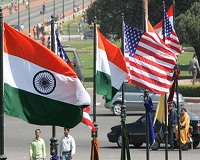 By imposing retaliatory import duty, India can fall under the list of nations that have broken their commitments to WTO, say trade experts. The bound tariff rate is the customs duty rate committed by a country to all other members under the most favoured nation principle.
The global trade law for the 164 WTO members prohibits discrimination on the basis of tariffs. India raised basic customs duties on 43 broad categories of goods, including electronics, in this year’s Budget. It also raised import tariffs on 76 textile products and announced higher safeguard duties on solar cells imported from China and Malaysia. The tariff increases that India implemented so far are within the bound rates, unlike US President Donald Trump’s global tariffs on steel and aluminium as well as the ongoing tariff measures being taken by Washington DC and Beijing against each other.
Talking about India’s decision to increase duty rates, Biswajit Dhar, trade expert and professor at the Jawaharlal Nehru University says India had informed the WTO of its plan to raise tariffs through safeguards measures. But existing norms do not allow a country to take safeguard measures against just one nation, as India has done. The US has not respected the multilateral system recently, but if it feels that the tariffs are unjust, it should go to the WTO. In order to take control of the situation, a team of officials from India are camping in Washington DC, trying to secure an exemption from America’s aluminium duty hike, following which India may also roll back its own import hike.
Is trade deficit on course?
A recent WTO report said, India has implemented 28 reforms facilitating trade, much higher than the two taken by China. Between mid-October 2017 to mid-May 2018, India led the pack among G20 nations in imposing tariff increases, stricter customs procedures, imposition of taxes and export duties. Aditi Nayar, principal economist, ICRA, feels the current account deficit is likely to widen to $16-17 billion or around 2.5 per cent of GDP in Q1 FY2019, from $14 billion in Q1 FY2018, with higher crude oil prices negating the contraction in gold imports.
On the other hand, domestic industry across varied sectors such as steel, apparel and electronics has complained of foreign goods flooding the market. Sanjay Jain, Chairman, at Confederation of Indian Textile Industries points out a substantial drop in import duty was observed after implementation of GST, which has encouraged cheaper imports. Imports in 2017-18 grew at a rate of 16 per cent. Therefore, the decision to increase import duties on many apparel items comes as a relief.