FW
US textile makers hail President Trump’s tariff enactment
"After opening up trade tariff war with China in recent times, the US textile industry has been witnessing growth waves lately. Aided by Trump’s US-friendly policies, companies are eyeing a fortune in business but it’s said that the industry requirements don’t end here as Michael Woody, CEO, Trans-Tex, a Rhode Island-based maker of lanyards and shoelaces says there is a need to bring in a level playing field and the government needs to put tariffs on end products too that are imported from China. But the other lobby suggests placing duties on finished items is anathema to US retailers and consumer brands that rely on Chinese goods, including $28bn worth of apparel last year, to keep prices low for shoppers. They say levies will only increase price tags, and ultimately cost jobs."
 After opening up trade tariff war with China in recent times, the US textile industry has been witnessing growth waves lately. Aided by Trump’s US-friendly policies, companies are eyeing a fortune in business but it’s said that the industry requirements don’t end here as Michael Woody, CEO, Trans-Tex, a Rhode Island-based maker of lanyards and shoelaces says there is a need to bring in a level playing field and the government needs to put tariffs on end products too that are imported from China. But the other lobby suggests placing duties on finished items is anathema to US retailers and consumer brands that rely on Chinese goods, including $28bn worth of apparel last year, to keep prices low for shoppers. They say levies will only increase price tags, and ultimately cost jobs.
The Trump administration largely avoided hitting consumers in the first round with 25 per cent duties — mostly on machinery that came into effect from July 6, 2018. In return, China imposed retaliatory tariffs on goods from soybeans to electric vehicles (EVs), such as Teslas. The US again reciprocated with a proposal to put 10 per cent levies on $200bn worth of imports that included end products such as handbags, baseball gloves and air conditioners. According to Rick Helfenbein, President, American Apparel & Footwear Association this will not do anything to help American workers, consumers, or businesses. This will result in inflationary costs throughout the supply chain, ultimately to be paid by American consumers.
Textile advantage
More protections against Chinese imports could also boost production in American textile sector, if companies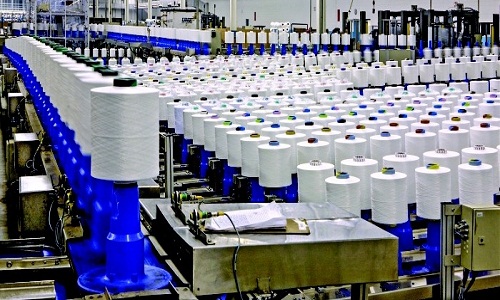 are looking for a green shoot, this could be an industry that could benefit. In 2017, the US imported $45bn textile products from China, and exported less than $1bn. That’s a trade gap of about $44bn just for textiles and apparel. Experts says, even a 10 per cent tariff, such as the one the Trump administration proposed recently, would help a company consider matching the Chinese more.
India faces unchecked fall in garment exports
India’s garment exports have dipped for nine months in a row up to June. Apparel exports dropped almost four per cent in 2017-18 when the country’s overall goods exports jumped nearly 10 per cent. The contraction in exports has already stroked fears of job losses and compounded problems of policymakers who are contemplating how best to compensate textile and garment sector once subsidies to promote such exports are phased out.
Garment exporters are handicapped by duty disadvantage against key competitors like Bangladesh and Vietnam to key markets — the EU and the US — and high logistics costs. While Bangladesh ships out garments to the EU at zero duty, Indian companies are forced to cough up 9.6 per cent. India’s logistics costs account for as much as 15 per cent of consignment value against 10 per cent in many countries.
Under the Merchandise Exports from India Scheme, garments and made-ups exporters get duty exemption scrips, freely transferable for cash, worth four per cent of their total exports. But this supports seems inadequate. The cut in duty drawback and RoSL in the GST regime, capital blockage due to slow GST refunds initially and uncertainties on the future of export subsidies have affected the deeply-fragmented garment industry.
Texworld & Apparel Sourcing USA to organise summer ’18 seminar series
Texworld USA and Apparel Sourcing USA will organise the Summer 2018 speaker listing and educational seminar series. This season will include a multitude of themes including discussions on preferred fibers, sourcing, the upcoming Fall and Winter trends outlook and a movie screening of the movie RiverBlue
Texworld Showcase will highlight trends for the Autumn/Winter 2019/20 season, curated by Texworld Art Directors, Louis Gerin and Gregory Lamaud. Gerin and Lamaud will also present vignettes to be displayed in the SPOTLIGHT area of Apparel Sourcing which will feature ‘The Art of Customisation – Findings, Trims and Accessories’.
Jana Platina Phipps, a New York City-based expert known as the Trim Queen, will feature a trim activation. Known for her refined vision and impressive list of clients in the world of fashion and home furnishings, Jana will also conduct a hands-on passementerie workshop providing a brief history and how-to instructions for attendees.
Pakistan’s textile exports grew almost 9 per cent last fiscal
Pakistan registered a 8.67 per cent growth in textile exports in last fiscal mainly due to sharp rupee depreciation, improvement in energy supply, partial releasing of refunds and cash subsidies under the Prime Minister Export Package. The country exported textile and clothing products worth $13.5 billion during the year 2017-18 as against $12.5 billion of the preceding year, according to the Pakistan Bureau of Statistics (PBS).
As per PBS, the main growth driver was the value-added textile sector. Exports of ready-made garments increased 11.22 per cent in the last financial year while knitwear exports increased 15.17 per cent during the period under review. Exports of bed wear went up by 5.77 per cent in value. Similarly, exports of made-up articles, excluding towels, increased by 7.04 per cent. Art, silk and synthetic textile exports grew by 65.09 per cent during the period under review. Exports of cotton yarn witnessed an increase of 10.3 per cent and exports of cotton cloth recorded a growth of 3.17 per cent.
Karnataka to support Sutlej Textiles new unit
The Karnataka government will support the proposed textile unit of Sutlej Textiles & Industries at the industrial estate in Badanaguppe and Kallambahalli villages in Chamarajanagar district. The new unit will be set up with an investment of Rs 786 crore, and will manufacture sportswear in the 46 acre allotted to it.
The government is keen to develop the Chamarajanagar district as it is the most backward district in the state. The Single Window Clearance Committee headed by the Deputy Commissioner has approved around 94 projects with a total investment of Rs 162 crore in the district. This will boost development of the district and increase employment opportunities for youth.
London Textile Fair sees quality buyers
London Textile Fair was held July 18 to 19. British mills highlighted struggles around rising costs, while international exhibitors noted the UK market had cooled in recent seasons. Market concerns and nervousness were offset by the presence of good-quality buyers and a strong British showing.
Visitor numbers were down compared with the spring ’19 edition, which took place in January. However, several big names were spotted, Topshop, Debenhams and Urban Outfitters, as well as top designer names and contemporary brands.
Although some exhibitors reported lower footfall compared with previous seasons, the quality of buyers won praise. There were fewer people than the winter edition, but the visitors were all high quality and people really were looking for something specific. Visitors were overwhelmingly British. Most exhibitors reported 90 per cent UK buyers on the stands.
Almost all exhibitors were from Europe and Turkey. In fact, Turkey increased its delegation of suppliers this season, reflecting increased demand. There is a strong textile market in Turkey. Because of the short distance, people choose to do both in the same place to save transport costs, and lots of mills are also manufacturers. There was a section dedicated to sustainable and eco-friendly fabrics.
Pure London features latest emerging brands and designers
Pure London, the largest fashion festival in London and leading destination for fashion inspiration opened recently. The show featured some of the most exciting brands and the hottest emerging designers and global manufacturers. One of the highlights of the event included the re-launch of the Spirit fast fashion section as Gen Z to reflect the growing demographic du jour shaping our current culture and the future. Encapsulating the energy and mood of young fashion, Gen Z is filled with off-the-minute, trend-led, street style and unisex collections.
The S/S’19 Catwalks, showcased inspirational and creative talents of this year’s Graduate Fashion Week winners and graduates and key looks from the Common Ground, Creative Manifesto and In Touch trends. WGSN delivered their Future Consumer 2020 Buyer Briefing and a SS19 Trend Presentation spotlighting the new consumer voices including Gen Z bringing ‘Responsible Tech’, ‘Watch Now Buy Now’ and the new ‘Ethnic Majorities’ to the fore.
Laura Balmond from the Ellen MacArthur Foundation kicked off the Pure Origin stage outlining their vision for a circular economy and setting out how manufacturers, brands and the consumer can get on board and join forces to redesign fashion’s future.
Rise in minimum wages ticks off foreign investors in Myanmar
Myanmar’s low wages is among the top reasons foreign manufacturers choose to set up base in the country. The garment industry was under pressure to raise the minimum wage. Now that the minimum wage has risen, businessmen are thinking twice before investing in manufacturing-intensive sectors like garments. The country’s daily minimum wage has been raised by more than 30 per cent.
Rising land costs are also a problem. Some manufacturers have been forced to move out of industrial zones as a result of rising land leases. At the same time, productivity, which is already lower than other countries in the region, has not improved. As a result, many garment businesses no longer want to operate in Myanmar.
Seduno Fashion Company, run by a Chinese investor, is a recent example. Earlier this month, the firm closed its factory citing low production, the inability to export in time, rising land and factory rentals and higher minimum wages as the main reasons for ceasing operations.
On the whole, FDI in garment sector is still robust. FDI into manufacturing sector are the third highest in Myanmar. Manufacturing in Myanmar mainly consists of garments, which represent the country’s second largest exports.
Vietnam denim show highlights latest trends in denim
Denim and Jeans show was held in Vietnam from June 27 to 28. The event brought together latest technologies, trends, and skills. Sustainability, innovation and technology was on display everywhere. The turnout too was impressive with 40 exhibitors across several nations participating in the two-day event.
Each exhibitor showcased something new and trendy. Prosperity Textiles displayed spring/summer 2019 collection. Its ultra high stretch performance fabrics have the trait of big stretch. Co-flex reflects soft and comfort stretch with unparalleled recovery. After a good start to the year, Prosperity is now excited about its new state-of-the-art denim mill that will come up later this year.
Artistic Milliners, a vertical denim manufacturing company from Pakistan that has a strong focus on innovation, showcased its product Shogun. This has the look of Japanese denim with a softer feel. Japanese denim of 14 or 15 ounces looks very good but is heavy and rigid and therefore, difficult to wear. Shogun makes it comfortable and commercial.
Foison Textile displayed colored denim and silver shiny fabric. Rajby Textiles from Pakistan displayed dobby designs, stripes, and unifit stretches among its various exquisite collections. In addition to using innovative multi-colored web, Rajby showcased hyper-flex, which has 90 per cent stretch and is made initially in three colors.
Global apparel labels unhappy with hike in import duty
The government’s decision to increase import duties on textile, apparels, fibres and related products has annoyed global apparel brands selling their products in India. This hike would make apparels costlier by 4-6 per cent for Indian consumers. It may also adversely impact investments in India by price-sensitive brands such as Hennes & Mauritz (H&M). Post hike, textile products being imported from countries like China, Bangladesh, Vietnam, Cambodia and Sri Lanka will face the heat.
Basic customs duty has also been hiked ranging from 10 to 20 per cent to protect textile industry and employment. Indian textile bodies Tirupur Exporter’s Association (TEA) and Confederation of Indian Textile Industry (CITI) lauded government for taking this commendable move to protect domestic players. RMG import increased from Rs 3,994 crore in 2016-17 to Rs 4,983 crore in 2017-18. Additionally, leading India retail stores also started importing from Bangladesh and other countries due to availability of cheaper products.