FW

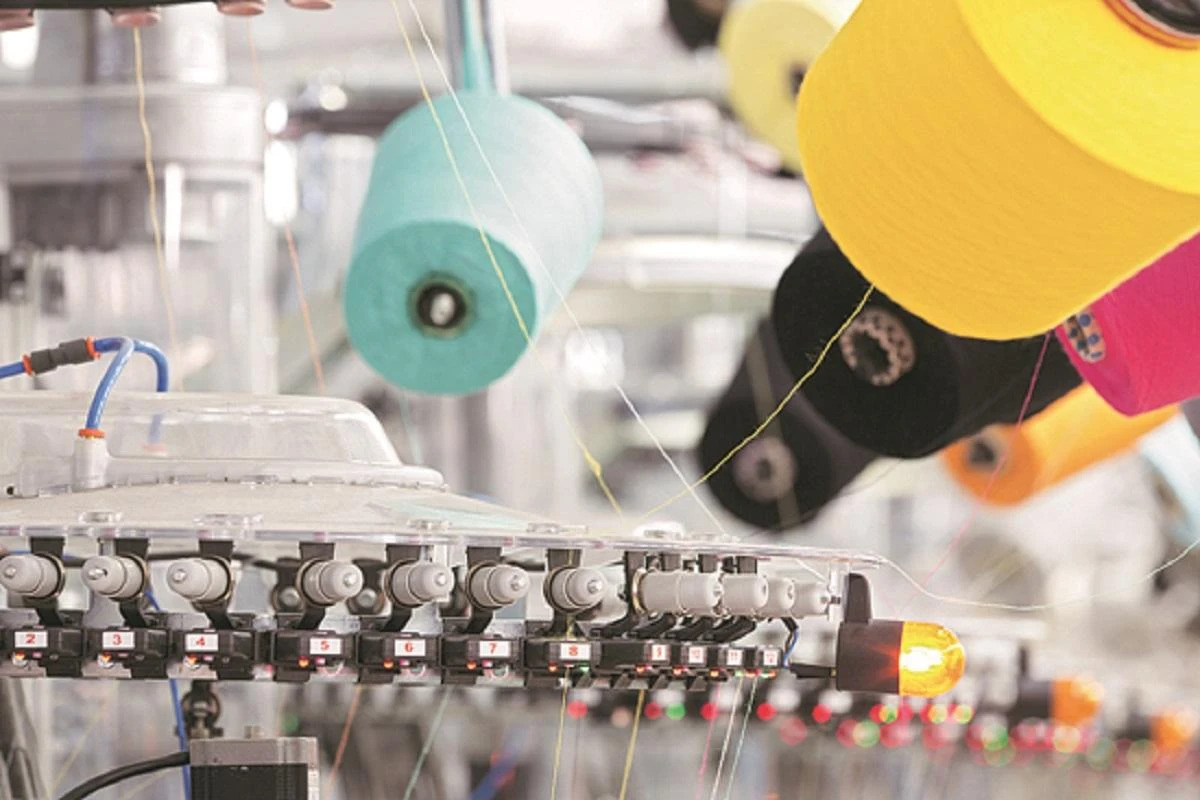
Stäubli provider of weaving solutions offers range of solutions for automated weaving preparation, frame and jacquard weaving, and carpet and technical textile weaving. The machines feature state-of-the art technologies.
Whether weaving upholstery fabrics, terry cloth, or technical textiles, Stäubli jacquard machines master every challenge. The recently re-engineered LX series features a lifting mechanism that allows high-speed weaving of even extremely heavy fabrics. With a coaxial drive shaft, and a special chassis supporting the beams and bearings, the latest models can handle up to 26 per cent greater loads than the previous models.
Improved positioning of the fans in the LX housing optimizes internal airflow, ensuring that the machine interior remains clean and at a controlled temperature. Both the SX and LX series include special models for the production of all sorts of velvet fabrics. Offering the possibility of flexible combination of the three-position modules with the height-adjustable two-position modules, the pile and ground warp can be activated with the same machine. Because a precisely matched jacquard system gives mills even higher performance, Stäubli offers high-end harnesses for any application.
Stäubli offers automatic warp-tying machines for reliable single- or double-knot formation at maximum tying speeds. The machinery ensures efficiency, and the warp threads are perfectly drawn through the weaving harness.
For the first quarter Puma’s net earnings went up by 35.8 per cent. Double-digit sales growth in all regions and product segments, including an exceptionally high growth in Asia, led to a strong 21.5 per cent organic sales increase.
Gross profit margin improved by 110 basis points from 47.1 per cent to 48.2 per cent. The increase came from a favorable regional sales mix, higher sales of new products with a better margin and further sourcing improvements. Operating expenses grew by 7.5 per cent in the first quarter. The increase was mainly caused by higher marketing and retail investments as well as higher sales-related variable costs.
The operating result increased by 60 per cent in the first quarter due to a strong sales growth, a higher gross profit margin and an improved operating leverage. This corresponds to an EBIT margin of 9.9 per cent compared to seven per cent in the first quarter last year.
Puma started the year with both first-quarter sales and profitability coming in stronger than expected. Because of an uncertain business environment caused by volatile currency rates and the difficult economic trade environment, Puma has raised its outlook for the full year only slightly. It now expects sales to grow ten per cent to 12 per cent in local currency.
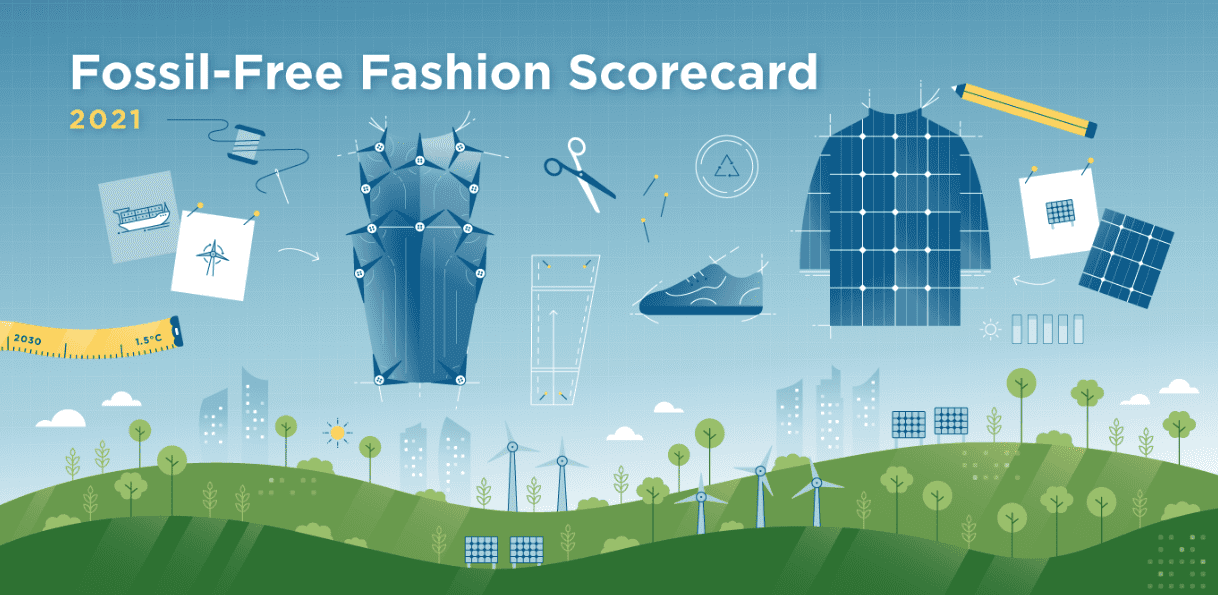
Circularity has become the buzzword in fashion circles today. But it’s usually an abbreviated definition of circularity that is going around. A more comprehensive circularity would look at the amount of clothing produced and the full life-cycle costs of a garment, from eliminating the industry’s reliance on petroleum-based plastics and coal-powered plants to toxic dyes, sweatshop assemblies, and massive shipping footprint required to make our clothing.
The circularity conversation in the fashion industry tends to focus primarily on reducing waste and, more specifically, recycling clothing. The global fashion industry’s circularity focus is on reusing and recirculating clothing, not a retooling of the industry. And while recycling is important, it misses the mark when it comes to meaningfully reducing emissions. Even if the fashion industry reaches the ambitious target of recycling 40 per cent of fibers by 2030, it would reduce emissions by only three or six per cent. At best, that’s a reduction rate of a paltry half of one per cent a year. To seriously address climate change and the industry’s environmental impact more broadly, it must do better.
A genuinely circular agenda would focus on slowing down the cycle of fashion production and consumption and getting these fossil fuels out of every aspect of our clothing.
Indonesia hopes to increase export of Muslim apparels by 10 per cent this year. The country’s exports of Muslim fashion products in 2017 were up 8.7 per cent from the previous year. Indonesia will continue to encourage Muslim fashion industrialists and designers to make innovations by increasing their productivity and strengthening their brands to be able to penetrate the export market.
At present, Muslim fashion industry is projected to absorb 1.1 million of the total 3.8 million fashion industry workers in the country. World Muslim fashion market is expected to grow to $327 billion by 2020. Indonesia, at present, is the fifth biggest exporter of Muslim fashion products among members of the Organization of Islamic Cooperation after Bangladesh, Turkey, Morocco, and Pakistan. Several established international brands have looked to tap into growing demand for modest and Islamic clothing and footwear, with the likes of Zara, Louis Vuitton, Gucci and H&M all releasing collections targeting the sector. Dolce & Gabbana has a hijab and abaya collection, specifically aimed at Muslim women.
Muslim consumers spend an estimated $230 billion on clothing - more than the combined clothing markets of the UK, Germany and India.
The buzz is that Hennes & Mauritz AB will probably cut dividend for the first time next year as the Swedish clothing retailer struggles to attract shoppers to its stores. The company is expected to reduce its dividend 7.5 per cent for fiscal 2018, according to the average estimate of 27 analysts surveyed by Bloomberg. That would be the first cut since H&M shares began trading in 1974.
H&M’s dividend policy is to distribute about half of its profit after taxes to shareholders. By maintaining dividend this year, H&M paid out almost all of its profit from last year. As H&M increases spending on its online platform, it may not have enough cash from operations to maintain such payout levels. Plus, analysts expect the company’s profit to drop about 10 per cent this year.
The company’s return on invested capital is down 38 per cent from the first quarter of 2016 and at the lowest level in 16 years, while its debt level is at a historic high.
Aitor Throup has stepped down as Executive Creative Director, G Star Raw to focus on new challenges through his own, Aitor Throup studio. His exit put an end to his nearly five-year-long collaboration with G Star Raw. Throup has been working for the denim brand as a creative consultant since 2013 but was appointed Executive Creative Director in 2016. He began working full-time for G Star Raw, as he was in charge of the brand's women’s wear and menswear collection in addition to the Raw Research division.
At the time Throup took over the creative reigns from Pierre Morriset, who had worked for the denim label for 27 years. Morriset remained on board as a mentor for the creative division and Throup saw his appointment as a collaborative process between him, Morriset and the other designers. His final collection for the label was shown in spring 2018.
Cambodia expects garment exports this year to grow by three or four per cent. A top garment-making hub, Cambodia is now the sixth fastest-growing economy in the world over the past two decades, with an average GDP growth rate of 7.6 per cent, thanks largely to garment exports.
Around 30 per cent of its garments are destined for the European Union. The country’s growth in the EU market was largely the result of preferential treatment under the Everything But Arms agreement, which allows its garment products to enter the EU market duty-free due to its status on the list of least developed countries.
Last year, minimum monthly wage of workers in Cambodia’s textile and footwear industry was raised by 11 per cent. Cambodia’s new minimum wage is more than double the minimum wage for garment workers in Bangladesh. The country expects purchasing orders in the garment sector in 2018 to be higher than in 2017.
Cambodia is the fifth biggest supplier of garment and textile products to the European Union. It’s behind China, Bangladesh, Turkey and India. There is a lot of room for progress in the garment sector and many opportunities for the government and buyer companies to work together towards a better future for the industry.
The European Union and Mexico have reached a new agreement on trade, part of a broader, modernised EU-Mexico Global Agreement. Practically all trade in goods between the EU and Mexico will now be duty-free, including in the agricultural sector. Simpler customs procedures will further benefit the EU’s industry, including in sectors like pharmaceuticals, machinery and transport equipment. The agreement also lays down progressive rules on sustainable development.
Among other things, the EU and Mexico have committed to effectively implement their obligations under the Paris Agreement on climate change. It will also be the first EU trade agreement to tackle corruption in the private and public sectors. With this agreement, Mexico joins Canada, Japan and Singapore in the growing list of partners willing to work with the EU in defending open, fair and rules-based trade.
Since the previous EU-Mexico trade agreement came into force in 2000, trade between the EU and Mexico has risen at around eight per cent per year, resulting in an overall increase of 148 per cent in trade in goods over the period. Agricultural exports from the EU are set to benefit the most, such as poultry, cheese, chocolate, pasta, and pork. When it comes to customs procedures, the new agreement will bring in new rules to simplify and speed up paperwork and physical checks at Mexican customs.
Italy-based Garmon Chemicals has launched a Stretch Care collection. In January, the company was acquired by Kemin, a global ingredient manufacturer committed to improving the quality, safety and efficacy of feed, food and health-related products.
Garmon, has set benchmarks in the textiles auxiliaries business. It has been creating special relationships with top denim and sportswear brands, affirming itself as a key player able to offer a fashion-forward approach toward textile chemistry. Now the aim is to become a truly glocal company, make the business more efficient and more eco-friendly by reducing its carbon footprint and saving energy.
Consisting of all eco-sustainable and Green Screen certified products, Stretch Care is a real green package, offering avant-garde solutions. It is a set of truly responsible tools to give the garment a unique personality. In this way the line offers many alternatives and an incredibly flexible product range. Thanks to a special formulation, the Stretch Care collection develops a full range of product treatments with extraordinary characteristics. It minimizes the loss of elasticity, for superior shape retention and recovery performance. It protects fabrics and accessories from damages, greatly improving garment quality and provides the garment with a special personality and extraordinary contrasts. Finally it makes the garment feel incredibly softer to the touch.
The tragedy of Rana Plaza collapse has improved the world’s emphasis on the appalling conditions endured by garment workers in Bangladesh and elsewhere, and put public pressure on western brands to do more to ensure safety and labour rights in their supply chains.
It led to the inception of Accord on Fire and building safety in Bangladesh, an independent, legally binding agreement between brands and trade unions to protect workers. The Accord has 222 signatory companies and is estimated to cover two million workers it has covered 1,600 factories, 767 of which have mostly completed safety remediation.
The agreement also gives greater legal power to workers to ensure brands are protecting them. Earlier this year, the Accord was used by garment worker unions to reach a landmark $2.3m settlement with a multinational apparel brand accused of delays in remedying life-threatening hazards at its factories. As per a Oxfam report an alliance of 13 well-known Australian brands are dragging their feet.
Just Group, Just Jeans, Peter Alexander, Fast Future, incorporating Valley Girl and Temta are among the businesses that did not sign the last Accord and are yet to sign the 2018 Accord. Oxfam Australia chief executive, Helen Szoke, advised the companies to live up to their responsibilities to workers. She stated signing the Accord is about safeguarding the absolute basics in the rights of more than two million garment workers and 70 per cent of whom are women in Bangladesh. She is expecting all suppliers to follow to the ethical sourcing policy to make sure ethical, safe and lawful manufacture and supply of merchandise.