FW

Denim and casual wear major Pepe Jeans will open around four EBOs to strengthen its retail footprint in Indonesian market. The brand has retail presence in 61 countries currently. The brand will open three stores by next month while the fourth store is slated to open by August.
It has more than 215-220 exclusive brand outlets and has recently shared their plan to add about 20-30 stores in India in 2018. The brand’s retail design in India, which has been unchanged for a few years now, will see some changes soon in terms of design and VM. Pepe Jeans India recorded a turnover was Rs 424 crore (in wholesale price) last fiscal. Retail value of Pepe Jeans India is pegged at Rs 800 crore.
"While the Accord and Alliance came into effect in 2013, recent amendments seem to be driving workplace changes effectively in the RMG sector in Bangladesh. For example, brands/retailers/buyers and international trade unions are involved in ensuring workplace safety at the manufacturers’ end. Secondly, local entrepreneurs now have as a requirement high level of safety standards and maintenance at their own factories."

While the Accord and Alliance came into effect in 2013, recent amendments seem to be driving workplace changes effectively in the RMG sector in Bangladesh. For example, brands/retailers/buyers and international trade unions are involved in ensuring workplace safety at the manufacturers’ end. Secondly, local entrepreneurs now have as a requirement high level of safety standards and maintenance at their own factories. Thirdly, local public agencies have appreciated the gaps in monitoring and enforcement mechanism that they follow and also the requirement of improvement of their process and lastly, workers of RMG enterprises have become cognizant of safety-related issues and concerns and how to respond in case of emergencies in factories.

As the Accord and Alliance initiatives are going to end in 2018, it needs to be seen if recent remediation activities can extend the scope of the alliance. Accord is willing to extend their operation beyond the limited time but Alliance is not willing to extend their contract. In 2017, a new body was formed under the Directorate of Inspection of Factory Establishments (DIFE) of the Ministry of Labour and Employment (MoLE) with a view to oversee the progress of remediation-related activities of, initially, factories under the National Initiatives and later other factories including those under Accord and Alliance. The creation of a Remediation Coordination Cell (RCC) is important for a public agency to take charge; at the same time, this set-up is expected to deliver the services maintaining the quality and standards.
Results achieved
As per their Accord and Alliance reports, a significant number of problems have been remediated by the factories. In case of Accord-inspected factories, 85.4 per cent of electrical, 76.4 per cent of fire-related and 65.4 per cent of structural problems have been addressed while the respective shares in case of Alliance-inspected factories are 89 per cent, 85 per cent and 78 per cent, respectively. In both cases, factories are relatively slow in remediating structural problems because of difficulty in addressing their concerns. Additionally, Accord and Alliance have taken initiatives to increase awareness among workers about the safety standards of factories by setting up safety committees at the enterprise levels as well as introducing hotline for workers. These initiatives have provided a strong supplementary role in addressing the safety concerns at the factories.
Extension criteria & objective
There needs to be strengthening the monitoring and inspection capacity of public agencies. Given the limited capacity in terms of human resources, technical issues and database management, public agencies need to prepare themselves under a targeted timeline with specific objectives and action plans. The RCC has been formed with the long-term objective to inspect factories maintaining global standards. Hence RCC needs to be equipped with competent human resources, technologies, skills, logistics, testing facilities, adequate resources and database management system.
Having said that, it is not technically viable to monitor and inspect all factories by this sole agency as this would require large-scale investment in RCC. Considering the level of competency available at the private sector, undertaking their services under public-private partnership (PPP) where a public agency would be in charge of overall supervision of the monitoring process and private agencies accredited by the public agency would undertake monitoring and inspection-related work would surely help. Such an arrangement will result in quick monitoring, better reporting and more transparency. Additionally, it is also important to integrate the brands and buyers in the compliance assurance process. All these initiatives should ultimately aid in enhancing workers’ safety and security initially in export-oriented sectors and gradually in other sectors with jobs having a high degree of risk.
All fashion designers draw inspiration from the world around them and from their competitors, but fast fashion stores are frequently accused of crossing the line between being inspired by a designer and copying the item entirely. Fast-fashion brands like Zara and Forever 21 are frequently accused of crossing the line between being inspired by a designer and copying the item entirely.
Fashion does not enjoy the same level of protection as other creative media such as art, literature, and film. This is because, by nature, fashion items serve a purpose, which means they are exempt from copyright laws. There are certain ways to protect a product's design, but the process to do so is time-consuming and expensive. Retailers can use trade dress trademark laws to protect the visual characteristics of a product: the color, original pattern, or unique design element, for example, that are specific to that designer or product.
Designers can also file for a design patent, but these are expensive and can take around two years to process. Even if designers do decide to take the option to sue for copyright infringement, this lengthy process is undermined by the speed at which fast-fashion stores can have copycat items on shelves. This means that fast-fashion retailers are less intimidated to make products that are strikingly similar to what's seen on the runway.
Some retailers aren’t willing to give up without a fight. Adidas is extra aggressive at protecting trade dress and trade markets.
Sales of readymade garments in Indore are likely to jump by about 15 per cent in the coming months led by wedding purchases. Most of the demand has started pouring in from rural areas and the trend is likely to continue till the end of June. There are around 3,000 garment manufacturing units in Indore.
A rise in income of farmers after better crop production in the kharif season has lifted the purchasing capacity of rural buyers. Enquiries from local and outstation wholesale buyers have also picked up and are likely to improve further in coming weeks. Looking at rising demand, traders have started building up inventory. Orders are coming in from Madhya Pradesh, Rajasthan, Gujarat and Maharashtra. Demand is mainly coming for wedding dresses and ethnic clothes. Festivals and weddings are the peak season for sales of garments. The wedding season starts from November and extends until June.
Indore is known in the country for garments and cloths that are supplied to states such as Karnataka, Tamil Nadu, Rajasthan, Gujarat and Maharashtra. Annual sales of garments and clothes from Indore are worth Rs 1,000 crores. There are a number of textile mills in the region and Indore is the bastion of wholesale garments. There are a number of firms involved in the export of textiles and such business firms contribute a lot to Indore’s economy.
Stäubli, based in Switzerland, is a high-speed textile machinery manufacturer including machines for weaving, jacquard patterning, weaving preparation, as well as automation solutions and accessories. It offers an extensive machinery range that provides mills with increased advantages in terms of reliability, long service life and versatility in application.
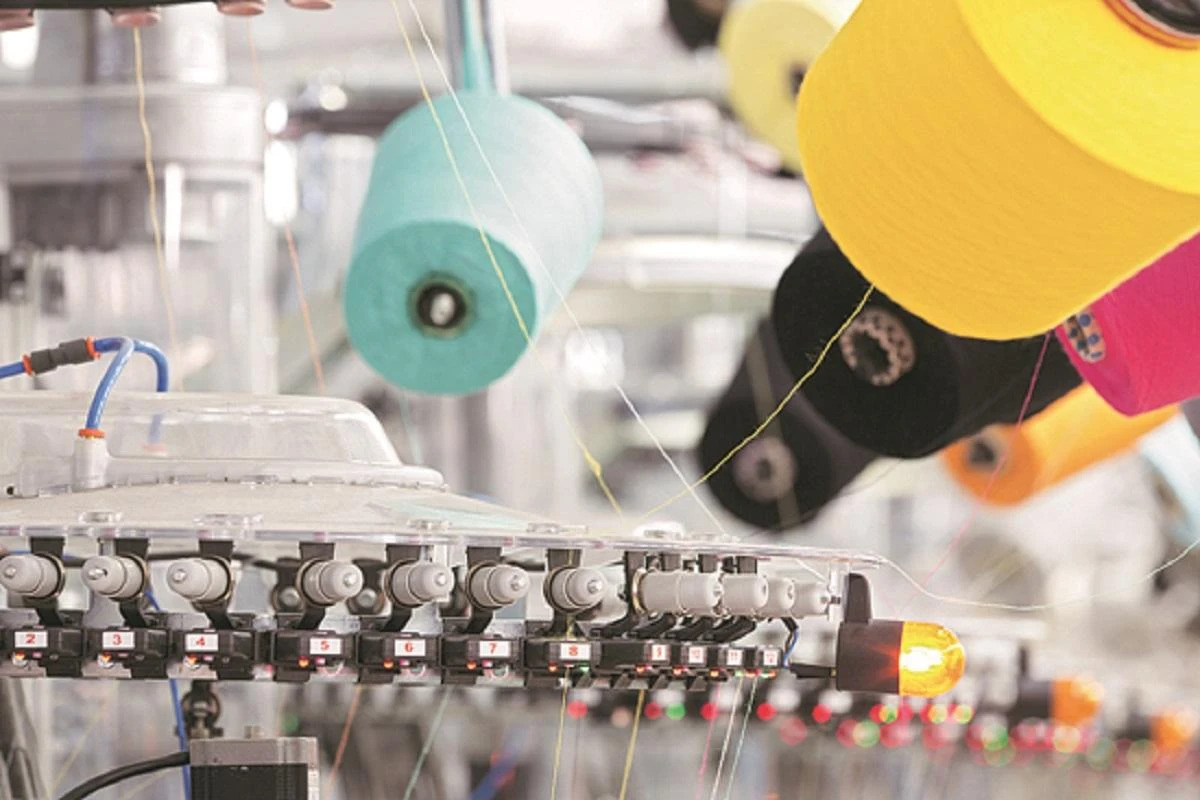
The D4S is a fully automatic toe-linking device for sock knitting machines. It links socks directly on the knitting machine so that no operator intervention is required. Once the D4S is installed on a knitting machine, adjusting to different gauge ranges is fast and easy. The D4S represents a quantum leap for knitters who want to excel in the hosiery market. Time consumption in the sock knitting process can significantly be reduced.
Some of the key benefits of the innovative device include significantly higher productivity in sock manufacturing, short idle time of the machine for removal of the finished knitted socks, and rapid payback thanks to price/performance ratio. The machine is also easily adaptable to various diameters.
With its Deimo knitting solutions, Stäubli is also a leading manufacturer of drive and control systems for a wide range of applications in the knitting and hosiery industries. The manufacturer constantly analyses customers’ needs and integrates solutions in the development of new products.
Maharashtra’s textile policy offers a primary capital subsidy of 25 to 40 per cent across the value chain. There are area-wise and sector-specific incentives, such as ten per cent additional subsidy and lower electricity rates for setting up units across under-developed regions.
Apart from the conventional textile business, the policy also offers incentives for pollution-free and eco-friendly dyeing and processing plants. Non-conventional yarn like bamboo, banana, ghaypat, ambadi, coir and maize has also been identified for incentives to make yarn. The policy has also offered to set up a textile university and a Textile Development Fund with an initial corpus of Rs 300 crores to Rs 400 crores.
Maharashtra will set up nine textile parks in the northern cotton-growing regions of the state. The aim is to supplement farmers’ income through value-added products. Value addition -- from produce to fiber to fabric to fashion – is expected to help farmers get a good price for cotton.
The state has reserved 93 hectares of land in Yavatmal district for setting up a textile park. The park would ensure large scale employment to the youths of the region besides providing better avenues for farmers to garner the maximum benefit. Basic infrastructure including supply of energy, water and provision for sewerage water treatment plant at the site would be provided.
Pakistan’s bilateral costs are relatively higher than those of other developing economies. The country’s high real exchange rate has proven to be harmful for exports. In contrast competing economies have devalued their currency or allowed their exchange rate to depreciate.
For example, between January 2014 and December 2015, the Indian rupee and Chinese yuan fell by approximately seven per cent, the Turkish lira by 26 per cent and the Vietnamese dong by 76 per cent. Between 2013 and 2015, Pakistan’s garment exports to the EU increased by ten per cent compared to Bangladesh’s and India’s 13 per cent and 17 per cent respectively.
Pakistan also has an opportunity to expand its share of agriculture exports. China imported 160 billion dollars worth of agricultural products in 2015. However, Pakistan’s share was less than 0.5 per cent. The higher demand for garments in China has created opportunities for countries like Pakistan to get a bigger share. Rising labor costs in China, a growing demand for garments in major Asian economies, and the GSP Plus status have created new opportunities for Pakistan to increase textile and garment exports. By 2019 China is expected to be the biggest apparel market creating space for Pakistan to benefit from the developments.
"In 2012, Europe adopted GSP+. The Plus (+) is a Delegated Regulation aimed at simplifying the entry mechanism to ensure transparency and predictability of the process. When a Standard GSP beneficiary requests GSP+ status, the country has to undertake a binding commitment to the ratification and effective implementation of 27 core conventions from the United Nations (UN) and the International Labour Organisation (ILO), in areas such as human rights, labour rights, good governance and environmental justice, highlighted Henri Malosse, former president, European Economic and Social Committee."
In 2012, Europe adopted GSP+. The Plus (+) is a Delegated Regulation aimed at simplifying the entry mechanism to ensure transparency and predictability of the process. When a Standard GSP beneficiary requests GSP+ status, the country has to undertake a binding commitment to the ratification and effective implementation of 27 core conventions from the United Nations (UN) and the International Labour Organisation (ILO), in areas such as human rights, labour rights, good governance and environmental justice, highlighted Henri Malosse, former president, European Economic and Social Committee.
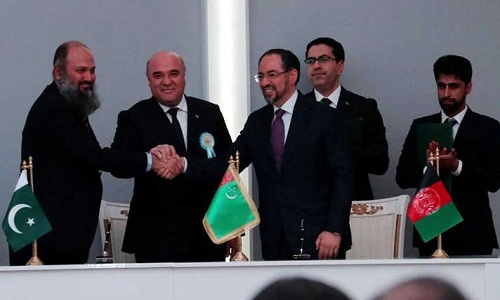
Pakistan was added to the list of GSP+ beneficiaries in 2014 due to devastating floods. It ratified the GSP+ Conventions but implementation has been far from effective. Since then, despite the country continuously violating norms has been a part of the pact. The European Commission, specifically The Directorate General responsible for Trade, is still considering to maintain GSP + for Pakistan without any inquiry or serious verification.
Significance of Plus
As per DG Trade, GSP+ encourages Pakistan to make great efforts to adopt international conventions – It is true, Pakistan has adopted some new laws but implemented few. The EU values fair, multilateral and rule-based order in trade arrangements, hence beneficiary countries are expected to put into practice key UN human rights and International Labour Organisation conventions. But, this rights based approach to trade is being ignored by DG Trade as it believes that suspending GSP+ will destabilise the economy, especially the textile industry, and those left unemployed may face serious hardships. The real concern should be that Pakistan has concentrated its exports in the textile sector with low-cost workers without trade union, social or labour rights of any kind. Women especially are receiving wages below the minimum standards and have no rights due to a justice system with inherent gender inequalities. While it cannot be disputed that a few companies are benefitting from GSP+ subsidies, especially those close to the Government, the benefits are not being percolated to each and every worker.
Other GSP and GSP+ accorded countries such as Bangladesh, Sri Lanka, Armenia or Colombia have been complying with the criteria. Countries such as Belarus and Sri Lanka have also borne the brunt of the stringent regulations when their subsidies were removed for non-compliance. This actually sets a benchmark for others. Even after lot many warnings, Pakistan doesn’t seem to change and the GSP+ authorities are also not removing it from the list is quite surprising, according to trade analysts.
DG Trade recognises the importance attached to the GSP + status, still no concrete measure is being taken to comply with the same. While on one hand, there are few European countries who are still exporting machinery or importing products from Pakistan, forgetting the overall negative effects on manufacturing and jobs in Europe. On the other hand, the European Union’s partner countries in the Maghreb or those countries, like Sri Lanka, who are genuinely addressing previous human rights abuses, are being ignored completely.
Complexities
The European Union is bound by Article 207 of the Treaty on the Functioning of the European Union, the EU’s common commercial policy must be conducted ‘in the context of the principles and objectives of the Union’s external action’, and that, pursuant to Article 3 of the Treaty on European Union, it must contribute, inter alia, to sustainable development, the eradication of poverty and protection of human rights. Trade is not an end in itself.
In 2017, Oerlikon delivered its targets and recorded top-line growth as well as improved operating profitability across all segments. The group recorded profitable growth by securing wins in its markets and industries, delivered on its strategy and sustained a high ebitda margin after offsetting sizeable investment expenses.
Full-year group order intake increased year-on-year by 24.5 per cent, including a positive currency impact of 0.7 per cent while sales were 22.1 per cent higher year-on-year, including a positive currency impact of 0.8 per cent.
The global economic expansion provided a steady backdrop for the upward trend in trade, export and capital investments in practically all of Oerlikon’s end markets, including automotive, aviation, tooling, general industries, energy, filament equipment, agriculture, construction and transportation.
The surface solutions segment continued steady upward trend, generating notable organic growth that was complemented by technology-strengthening acquisitions. The manmade fibers business reported substantial recovery, driven mainly by the China-led filament equipment market. The drive systems business made significant gains in sales, orders and operating profitability.
Oerlikon achieved strong year-on-year growth in operating profitability for the full year, as measured by both ebitda and ebit. Group ebitda increased 24.3 per cent, yielding a margin of 14.6 per cent. Full-year group ebit for 2017 was 7.7 per cent of group sales.
India’s textile exports dropped 13 per cent year-on-year in January following a sharp fall in cotton textile exports. Cumulative exports of textile and apparel products dropped four per cent year-on-year in April to January 2018. While cotton textile exports fell one per cent year-on-year, apparel exports dropped five per cent year-on-year.
The share of textile and apparel exports also declined from 14 to 12 per cent in January 2018 as compared to the corresponding period previous year. One of the key factors for the decline in exports is embedded duties, which are more than five per cent. The slide in exports comes at a time when there has been a rise in imports of textile products post GST. Imports of textile yarn, fabric and made-ups increased by 15 per cent year-on-year during April to January 2018.
Post-GST effective import duties have come down sharply, making imports cheaper for the domestic industry by 15 to 20 per cent. Cotton yarn exports dropped over 26 per cent between 2013-14 and 2016-17 in spite of the textile industry’s adding over three million spindles and 62,000 rotors in spinning capacity during the period under review. The industry wants export incentives for cotton yarn as it is a vulnerable sector.