FW

The Massachusetts Manufacturing Innovation Initiative (M2I2) and the Massachusetts Technology Collaborative announced a $3.9 million grant to support the second phase of R&D at cutting-edge research hub, the Defense Fabric Discovery Centre that opened in October. The funding follows an initial $2.2 million announced in May by Lt Gov. Karyn Polito to support the opening of the Defence Fabric Discovery Center, and brings the state’s investment to the partnership between MIT Lincoln Laboratory and the U.S. Army Natick Soldier Research Development & Engineering Center to $6.1 million.
The grant, which will support R&D into innovative, revolutionary fibres and fabrics that have applications in the defence sector was made as a part of M2I2 which provides a vehicle for the state to match Federal investments made in the Manufacturing USA institutes, including the Advanced Functional Fabrics of America (AFFOA). Gov. Charlie Baker says by supporting important projects and organizations like this, the Commonwealth’s M2I2 program helps ensure Massachusetts continues to lead in innovation and advanced manufacturing.
Eric Evans, Director of MIT Lincoln Laboratory explained the Commonwealth’s investment in the Defense Fabric Discovery Center creates a significant, new research and development capability at MIT Lincoln Laboratory. The Baker-Polito Administration has committed over $100 million in funding over five years to the M2I2 effort.
Through manufacturing excellence the Indian textile industry is aiming at trying to achieve worldwide acceptance for its products. A new textile policy for 2017-2022 is being drafted. Awareness about government subsidies and schemes is being created across all forums. The textile industry is being encouraged to experiment with technical textiles such as agro textiles, geo textiles, medical textiles in order to be able to compete with European nations which contribute 60 per cent of the overall production of geo textiles.
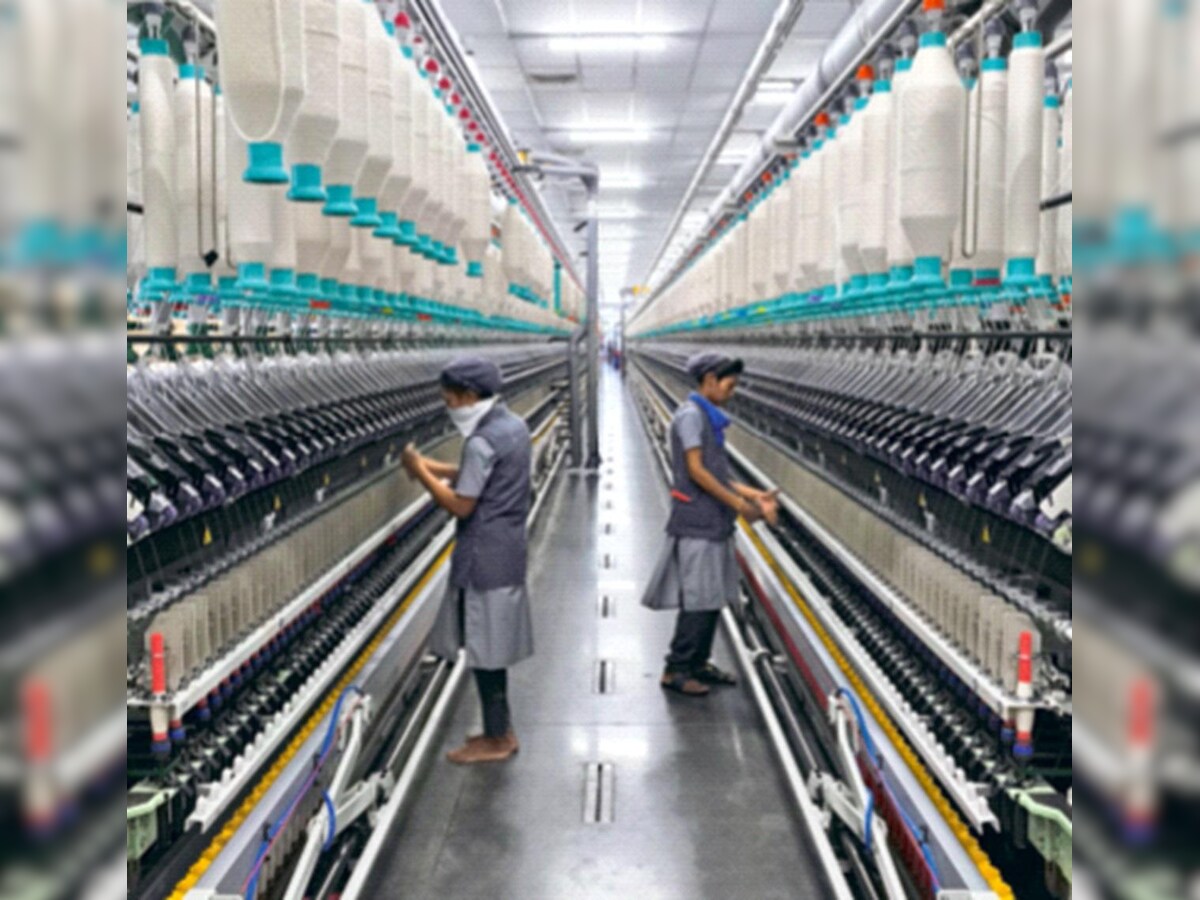
Instead of just making a typical commodity product, the industry is attempting to change the product pattern and add more value to it to make India the largest producer of synthetic fiber globally. Systems and processes are key enablers for competitiveness in the apparel industry. India is known for having a robust industry structure. Even though labor costs are reasonably low, they can be improved upon with skill development. This would help in greater efficiency and also in satisfying the customer demand for quality, latest designs and timely delivery. Work efficiencies are being improved, starting from fiber to fashion. Four key trends are significantly impacting industries around the world. These are the millennials, digitization of business, the emergence of industry 4.0 and China’s expanding economy.
India will undertake a scheme for capacity building in the textile sector with a budget outlay of Rs 1300 crores for two years. The scheme would enable the industry to adopt scientific principles for upgrading the skills of employees and achieving higher productivity. It would also facilitate cost cutting and quality improvement, train fresh workers, but also upgrade skills of supervisors, executives, managers and entrepreneurs. The Indian textile industry has been lagging in productivity behind countries like China, Bangladesh, Vietnam etc. It is the second largest employment provider next only to agriculture.
It is essential to train the workforce on a scientific basis and constantly upgrade skills to remain globally competitive and also enable employees to earn good remuneration. Earlier the ministry of textiles had launched the Integrated Skill Development Scheme. Under this scheme, around 11 lakh people got benefited. And of the people who have been trained 70 per cent need to be placed in the entire value chain of the textile sector.
India is looking at policies and programs to encourage economies of scale. Looking at the demand the industry is working toward economies of scale. India is the second largest exporter of textiles and apparel next to China. But while China’s share is almost 40 per cent of global exports, India’s share is about five per cent.
The Indian Institute of Technology-Delhi (IIT-D) in collaboration with the Defence Research and Defence Organization (DRDO) are working to develop a smart, intelligent, lightweight and lower in price jacket for soldiers with unique feature and design; it is also integrated with interconnects, antennas, sensors and chips. Advanced features like signal processing chip, chemical sensor and communication chip will help soldiers in mobility, threat detection and communication.
Textile-based flexible circuit boards and multi-chip modules will be developed in the initial stage. Later, modelling, fabrication and testing of different types of radio frequency and microwave antennas on textile-based and polymeric substrates will be undertaken. Finally, several kinds of sensors will be developed and integrated into the textiles. Anuj Dhawan, Professor-in-charge of the five-year timeframe project, disclosed it is in the initial stages, but their goal is to get it operational within three years.
At IIT-D’s Joint Advanced Technology Centre (JATC) set up by DRDO where over a dozen researchers are working on the jacket in three phases at the JATC as per the IIT-D website. An official said that these features embedded in the jacket will be very help soldiers in adverse circumstance. For instance, the gas sensors will help detect gases and identify their type and through communication chips, soldiers can pass on messages and at times of emergency, inform their colleagues, or seek help.
While the garment industry has been the focus of global campaigns with the creation of numerous initiatives aimed at increasing standards, the footwear sector still lags in adoption of better and more rigorous practices. Though apparel has made great strides towards advancing supply chain sustainability, footwear has been a step behind. Generally, shoe brands lag behind other industries in terms of the transparency of the supply chain—even within ethical shoe brands.
Structural problems and inherently poor practices have plagued the shoe sector. The industry needs to take urgent action to improve working conditions and sustainability in footwear supply chains. More than 23 billion pairs of shoes were produced globally in 2016, and 87 per cent of those shoes were made in Asia—two-thirds of which came from China. Looking at leather shoes in particular, 40 per cent are produced in China, followed by Italy and Mexico each making six per cent, and Brazil and India at four per cent each.
Purchasing strategies have also posed problems in footwear supply chains. The pressure to reduce costs, has, as in the apparel industry, led to lower wages and wage or working hours violations. Some footwear firms are using PETA approved vegan materials, organic cotton and natural rubber for soles that comes from certified rubber tree plantations.
A fashionology summit will take place in Bangladesh on February 12, 2018. The aim is to attract a wide spectrum of the fashion, technology, and innovation stakeholders across the entire ecosystem. The idea is to bridge the gap between the present and the future of the textile and fashion industry through technology, innovation and knowledge sharing.
Apparel stakeholders, including brands, garment makers, technology and innovation companies, fabric producers, and software service providers across the world will participate in the summit to discuss the latest products, technologies and innovations that will take shape in future and dominate the fashion industry. The summit aims at uniting the most inspiring and innovative thinkers/companies from around the globe to initiate the much-needed conversations about technology, digitization, and innovation in the apparel and fashion industry.
Keynotes, exhibits and knowledge sharing sessions from some of the brightest minds and most inspired thinkers from across the globe will converge at Bangladesh Fashionology Summit. They will cover a wide range of compelling topics that are relevant to shaping the future of our industry. The ideas and discussions will be brought closer to reality by an exhibition in parallel hosting a diverse range of forward thinking exhibitors ranging from promising start-ups to established industry leaders.
The Better Cotton Growth and Innovation Fund (GIF) is well under way to meet the target to reach five million farmers by 2020. The fund has been set up by the Better Cotton Initiative (BCI) and IDH, The Sustainable Trade Initiative.
In 2016 Better Cotton GIF was also able to invest in more sustainable cotton farming in seven major cotton producing countries: India, Pakistan, China, Mozambique, Turkey, Tajikistan and Senegal. These investments enabled over 6,00,000 farmers to participate in BCI programs over the 2016/17 cotton season.
Better Cotton Growth and Innovation Fund is a global project portfolio designed to be a catalyst for transforming cotton production by achieving scale and impact. The aim is to transition from hundreds of thousands of farmers — more than a third of the total farmers reached by BCI with its partners — to millions.
Better Cotton GIF provides a mechanism for retailers and brands so they can make investment decisions and have an impact on scale they would never be able to reach on their own. It also enables public-private cooperation on an unprecedented scale which adds to its successful implementation. In 2016, BCI saw its retailer and brand membership base grow by 43 per cent.
Cotton cannot be imported from India as permits issued by the Department of Plant Protection, Ministry of Food Security are valid only from January 1, 2018 to March 31, 2018. Following significant decreased in local production of the natural fibre, the federal government permitted the import of cotton from India in the last week of November.
Ihsanul Haq, Chairman, Pakistan Cotton Ginners Forum (PCGF) noted, due to procedural delays and issuance of permits that are valid from January 1, cotton import is yet to take off. The chances of a significant amount of cotton import from India were diminishing, he said, and added the cotton output in India was also less than expected which is why prices were already rising.
Haq wasn’t surprised, as there are reports of cancelling of cotton contracts between traders on both sides. However, it was a surprise for importers that the Federal Government’s permits were not valid with the date of issuance. An upward trend in cotton prices was being witnessed following depreciation of rupee value against the dollar and this scenario was not favourable for importers and the textile industry as they could face shortage of the commodity in the coming days.
The children’s wear market is estimated at $1.4 billion globally. For the past five years, growth in the sector has outpaced men’s and women’s wear. In China alone, the category outperformed overall apparel in 2016 with a seven per cent increase in current value terms. From British luxury retailers such as Selfridges and Liberty London to e-commerce giants such as Farfetch and Net-a-Porter, no one is oblivious to the charms of the burgeoning industry.
Items such as a miniature Burberry tuxedo suit often retail in excess of £700. Brands sell to the top one per cent of the population. Even for high fashion, the steep prices are astonishing, especially since the garments are scaled-down versions of catwalk pieces. The growing interest in dressing children in more elevated labels is a financial prospect for a luxury brand as well as a way to gain customer loyalty. When the customer trusts the brand, they are more willing to buy into other categories from the same label such as children’s wear.
For style-conscious millennial parents, who represent 45 per cent of overall luxury consumption, a child is an extension of them. By tapping into children’s wear, brands can establish more lasting relationships with the entire family. When Kim Kardashian and Kanye West launched their children’s wear range, Kids Supply, this year, they did so on Snapchat and Instagram.
India’s textile has grown at 2.6 per cent since 2012-13. Around 13 countries have been earmarked as target markets for boosting exports. These are: Italy, France, US, China, Germany, Hong Kong, Russia, Australia, Turkey, Egypt, Brazil, UAE and Chile.
In accordance with the sales and marketing potential afforded by each target country, product segments have been earmarked. Cotton textiles and handicraft items have been targeted at European countries like Germany, France and Italy. Cotton and carpets have China as their main target segment. For Indian apparels, the US has been chosen as the favored target destination. Products will be aligned with the target market.
The marketing strategy seamlessly blends different marketing initiatives and is specific depending on whether the market is traditional, emerging or of some other type. Targeting calls for carrying out focused trade promotion activities. These include exhibitions, road shows and B2B meetings. Separate Indian pavilions will be set up in different trade fairs globally for implementing the plan. Currently India’s share of the global textile trade is five per cent and it stands in a distant second spot behind China in the apparel export segment.