FW

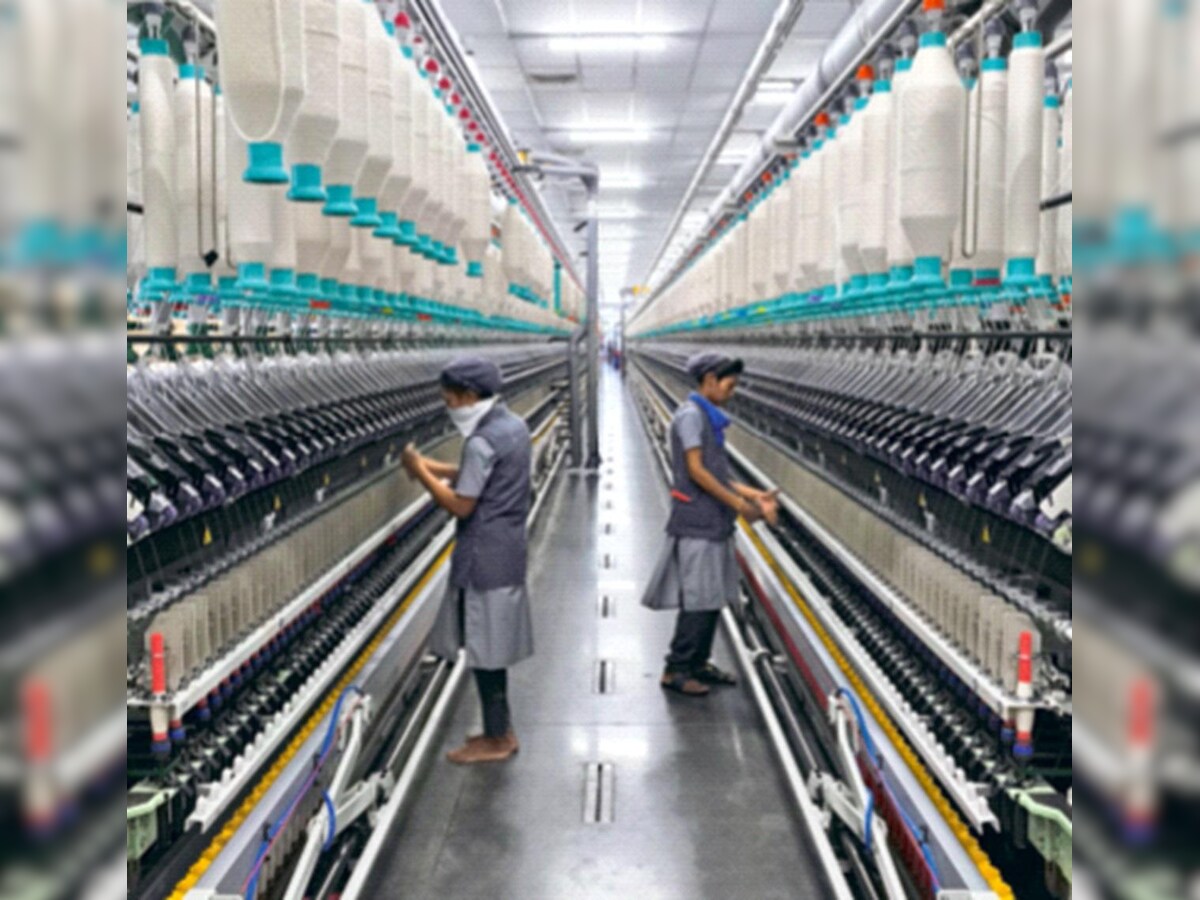
Grasim Industries (Grasim) has entered an agreement with Century Textiles (CTIL) to manage and operate the Viscose Filament Yarn (VFY) business of Century Textiles for 15 years. The agreement to be completed in two months, will give Grasim the right to use the relevant assets of Century Textiles, however, ownership of assets will remain with CTIL. As per the agreement, Grasim would pay Rs 600 crore royalty and a refundable security deposit of Rs 200 crore, through internal accruals. CTIL’s VFY plant is strategically located at Shahad, Thane, close to customers mainly in Surat and JNPT port for raw material import/export. CTIL’s plant capacity is 25,000 tonnes (19,000 tons in VFY and 6,000 tons in Rayon Tyre Yarn). CTILs revenue from VFY business is Rs 962 crores with EBITDA margin of 19.3 per cent. Post the transaction, the combined business would have a total capacity of 46,300 ton and revenue of Rs 1,701 crore with EBITDA margin of 23 per cent.
The transaction, which would give Grasim access to capex light capacity expansion, new product (Rayon tyre yarn) and a wider base of customer — is estimated to be value accretive, generating net profit right from start of the arrangement. The transaction would continue to result in value creation in long term given the synergies related to operations, brand name and supply chain. The estimated cost of Greenfield project of this size and infrastructure is Rs 2,000 crore and the gestation period is of three years. Segment wise, outlook remains bright for: VSF, given the higher realisations and strong customer connect through Liva fabric.
Cotton textile exporters have welcomed the government’s decision to raise the Merchandise Exports from India Scheme (MEIS) by 2 per cent on labour intensive sectors. Ujwal Lahoti, Chairman of The Cotton Textiles Export Promotion Council (Texprocil) says the midterm review of foreign trade is progressive, growth oriented. The government has recognised the urgent need to address the challenges being faced by the exporters on account of the roll out of the goods and services tax (GST) regime by focusing on reducing procedural burden.
Earlier the MEIS rates for garments and made ups were increased from 2 per cent to 4 per cent. With current increase, the MEIS has gone upto 6 per cent. However, cotton textile exporters urged the government to include cotton yarn under MEIS and extend 3 per cent Interest Equalisation Scheme to merchant exporters. Exporters have also urged the government to cover fabrics under rebate of state levies (RoSL) and increase MEIS rates for fabrics to allow domestic procurements against Export Promotion Capital Goods (EPCG) Authorizations and Advance Authorisations without payment of GST for export production.
Meanwhile, the policy has disappointed manmade fibre segment. Srinarain Aggarwal, Chairman of The Synthetic and Rayon Textiles Export Promotion Council (SRTEPC) stated although the mid-term review had addressed a host of the issues from GST to ‘Ease of Trading’ across borders, it has grossly overlooked the manmade fibre segment of the country that has been reeling under GST with asymmetrical input taxes and inverted duty structure, besides facing fierce competition in overseas markets.
SRTEPC had sent various representations to the Ministry of Textiles and Ministry of Commerce and Industry. Recently, it had sent a list of 167 MMF items in these categories to the Ministry of Commerce and Industry requesting to increase the MEIS rates.
The Clothing Manufacturers' Association of India (CMAI) has hailed the mid-term review of the Foreign Trade Policy announced by the government on the recently as a progressive package to address several issues relating to policy and procedures. In a statement Rahul Mehta, President, CMAI said garment exports from the country have been declining steeply for several months and there are no sign of an early revival of overseas demand. In such a situation, the measures included in the review for facilitating exports and improving ease of doing business will be of great help.
Referring to the extension of the period for using scrips from 18 months to 24 months, he stated coupled with zero rating of GST on the sale of scrips, exporters will now be able to effectively and completely use the scrips. He also welcomed the trade facilitating measures of doing away with testing of samples for drawback purpose and extending the 24x7 clearance to a large number of seaports and airports. Introduction of e-sealing of consignments for exports is another measure that will facilitate exports, he added.
Mehta pointed out that garment exporters often faced problems arising from lack of coordination between commerce and finance departments, especially between DGFT and customs. The National Trade Facilitation Committee headed by the cabinet secretary envisaged the review will go a long way in improving coordination among various government departments and addressing grievances of exporters more effectively and promptly.
The focus of the committee on improving transparency, simplifying procedures and augmenting infrastructure will be of great help to exporters. Mehta welcomed the focus on MSMEs and labour intensive sectors and pointed out the garment sector was highly labour intensive and substantially in the SME sector. While thanking the commerce and industry minister, Suresh Prabhu for the positive measures in the mid-term review, Mehta requested the government to ensure timely refund of GST and drawback to exporters, since delays in these areas have been locking up working capital of exporters.
The European Union ambassador to Cambodia assured union officials that no sanctions had been applied on the garment sector in Cambodia. Former opposition leader Sam Rainsy and several civil society groups have called for sanctions on the garment industry following the dissolution of the opposition CNRP last month. In a meeting with Som Aun, President of the National Union Alliance Chamber of Cambodia, EU ambassador George Edgar said no sanctions had been taken. Aun announced, it was our priority to tell Edgar that the garment and footwear industry were vital to a lot of workers and their families and helped improve working conditions across the country.
He requested Edgar to convince the EU not to involve the in the country’s political issues and asked garment workers to continue working as normal. Edgar told Aun he understood the situation and would bring the Unions’ requests and concerns to his colleagues in Brussels.
Earlier this month, the Garment Manufacturers Association in Cambodia (GMAC) called on international buyers to continue ordering clothes and textile products made in the country over worries that the US and the EU could delay preferential treatment for Cambodian exports, however, three Union leaders filed petitions to EU and US ambassadors requesting that orders should continue. Fears abound that the US may remove preferential treatment for Cambodian exports offered under its GSP, while the EU could do the same for privileges provided through its Everything But Arms initiative.
The Ethiopian Textile Industry Development Institute has said during the last three months, Ethiopia earned $31.2 million from the export of textiles and garments. The Institute also noted the foreign currency generated from the textile segment has been steadily growing. Institute Communication Directorate Director Bantihun Gessesse has reported textile products have been exported to Germany, Italy, China and United States through AGOA.
The growing might of textile industries is triggering expansion of cotton farming by public, private sector and small scale farmers. Currently, cotton is cultivated in 42,000 hectares. Gessesse informs the Institute is providing training to cotton growers to maintain the quality of cotton.
Prevailing peace and stability, availability of abundant cheap labour, plenty of cheap energy from hydro power and flourishing industrial parks all over the country is attracting foreign investment in the sector. In addition, the government is encouraging foreign investors through the provision of various incentives including tax holidays, tax free capital goods importation, custom services provision on the spot and easily access to financial credit. World’s leading US textile company, HDM located its factory in Hawassa Industrial Park and has so far created 10,000 jobs.
India’s forecast for 2017/18 ending cotton stocks have been lowered substantially in the December WASDE, from 13.2 million bales to 11.7 million. This change partly reflects a 5,00,000-bale cut in production, only partly offset by a 3,00,000-bale cut in exports, but is mainly driven by a revision to 2017/18 beginning stocks and consumption. India’s official estimates of cotton consumption were recently revised back to the 2015/16 marketing year, showing higher use than USDA’s data. These revisions were concentrated on “non-mill use,” indicating consumption outside the usual commercial and industrial channels.
Market analyst note for some time stocks were tighter in India than USDA reports indicated but uncertainty remained about which component of the balance sheet might be incorrect. The revised consumption data from India’s Cotton Advisory Board lowers stocks nearer trade-consensus levels via higher consumption.
From 2015/16 to 2017/18, the most recently revised data suggest an aggregate of about 1.2 million bales more consumption over the 3 years than indicated in the November WASDE. This has a significant impact on India’s stocks-to-use, with 2017/18 stocks-to-use falling from 45 per cent in the November WASDE to about 40 per cent this month. These changes are significantly large to impact international balance sheets, with revisions to India accounting for half of lower 2017/18 ending stocks. Most of the remainder is due to Pakistan, owing to its greatly reduced crop, or higher exports from Australia, Brazil and the US.
"Pitti Immagine Uomo, the premier international event for men’s fashion and lifestyle projects with a global reach, will be held in Florence from January 9 to 12, 2018. The global salon captures the most up-to-date fashion currents and projects with a broad appeal. This edition will have a special focus on athleisure and greater emphasis given to venues dedicated to the most contemporary and experimental menswear styles. It will showcase new generation of artisans from across the globe, cutting-edge designs and luxury underground brands."

Pitti Immagine Uomo, the premier international event for men’s fashion and lifestyle projects with a global reach, will be held in Florence from January 9 to 12, 2018. The global salon captures the most up-to-date fashion currents and projects with a broad appeal. This edition will have a special focus on athleisure and greater emphasis given to venues dedicated to the most contemporary and experimental menswear styles. It will showcase new generation of artisans from across the globe, cutting-edge designs and luxury underground brands. It will feature gender-neutral collections, a selection of the most forward-looking proposals and international talent who are hoping to be discovered. As always, at its core the fair offers quality fashion labels representing the new classic style and brands that promote modern sportswear. All of this together with the unique welcome provided by the Pitti Immagine fairs.

Pitti Immagine Uomo benefits from the extraordinary contribution of the Ministry for Economic Development and the Italian Trade Agency as part of an initiative organised to support Italian trade fairs and Made in Italy. This grant is dedicated to assist with hospitality, media relations and advertising activities.
Pitti Live Movie
Cinema is coming to Pitti Uomo this January. The fair will be transformed into a Film Festival where the styles of various venues will be interpreted as different genres: thrillers, adventure, action and sport movies, spy stories. Pavilions will become movie theaters where one can enjoy the entertainment. The main forecourt of the Fortezza da Basso will evoke a movie theatres district with billboards announcing the scheduled blockbusters, cult and indie movies.
The guest designers presenting their menswear collections at Pitti Uomo include Undercover by Jun Takahashi and TakahiromiyashitaTheSoloist. In a forward-thinking move for Pitti Uomo, Takahashi and Miyashita will present back-to-back menswear shows at the Stazione Leopolda on January 11, 2018 to symbolise and celebrate their personal friendship and deep mutual respect for each other’s work. Brooks Brothers has selected Pitti Uomo and Florence as the stage to kick-start their 200th anniversary -- a celebration of two centuries of style and innovation for this iconic American brand -- featuring a fashion show and a special exhibition in one of the city’s most fascinating locations, Palazzo Vecchio.
The International Woolmark Prize, one of the world’s most prestigious awards aimed at supporting upcoming talent, will be back in Florence where the winners in menswear and womenswear categories will be announced, a first for Pitti. Twelve finalists from around the world will present innovative collections to show the potential of Australian merino wool. The event at the Stazione Leopolda is a joint production in cooperation with Fondazione Pitti Immagine Discovery.
Guest Nation Finland
The most promising names on the Finnish fashion scene will be the stars of the special guest nation project sponsored by the Fondazione Pitti Immagine Discovery. Eight Finnish brand and designers have been selected to show their collections in a special area of the Spazio Carra (Padiglione Centrale – Lower Level). The participants are: Formal Friday, Ikla Wright x Turo, Mannisto, Maria Korkeila x R-Collection, Nomen Nescio, Rolf Ekroth, Saint Vacant, Vyner Articles. Thanks to a new collaboration with Korea Creative Content Agency (KOCCA), Fondazione Pitti Immagine Discovery will once again be turning the spotlights on the most exciting brands from South Korea with two catwalk shows dedicated to promoting the country’s talented young designers.
e-pitti.com
The digital version of Pitti Uomo 93 will be online at e-pitti.com for 9 weeks from January 22, exhibiting over 6,000 products and 920 brands. The platform will also offer an extensive fashion directory of seasonal trends and collection details. This constantly updated section will also hold a selection of street style photos captured by the sharp lenses of young photographers from Polimoda. e-pitti.com and innovation continue to walk hand in hand through ready-to-order, the B2B app to collect orders via iPad, offering both standardised and tailor-made solutions to facilitate sales activities.
The textile enzymes market is largely driven by speedy growth in the textile industry which in turn increases environmental issues mainly to large quantities of waste post desizing of fabrics, bleaching chemicals and dyes and a corresponding focus on cost reduction and resource optimisation. This has also led to significant adoption of textile enzymes in several applications. Given this backdrop, enzymes are used to enhance the development of environmentally-friendly technologies in fibre processing and methods to improve product quality.
Today, enzymes are increasingly being used in textile processing — mainly in the finishing of fabrics and garments — including desizing and finishing of jeans. The majority of enzymes used for cotton pre-treatment and finishing processes include hydrolase and oxidoreductase. The recently introduced technique of stonewashing jeans with enzymes, also called bio-stoning, is expected to drive the demand for industrial enzymes in the near future. For stonewashing jeans, enzymes usually used are acid cellulases and neutral cellulases.
Based on application, the textile enzymes market can be segmented into desizing, scouring, bleaching, bio-stoning, and bio-polishing. The advantages of using enzymes in the textile industry include lower discharge of chemicals and wastewater, improved fabric quality, longer garment life and eco-friendliness.
In terms of geography, the textile enzymes market can be divided into North America, Europe, Asia Pacific, Middle East and Africa and Latin America. The textile enzymes market in Asia Pacific is projected to grow at a rapid pace due to the increased demand for these enzymes in the textile industry. Economic and operational benefits of using enzymes in garment and fabric bleaching and desizing are also estimated to be key factors driving the textile enzymes market.
The use of textile enzymes is estimated to increase due to the technological developments in the fields of thermostable enzyme, protein engineering and enzymes obtained from genetically modified organisms. Prominent players operating in the textile enzymes market include Novozymes, Sigma Chemical Industries, Lumis Enzymes, AB Enzymes, and Refnol.
Japanese fast-fashion brand Uniqlo is considering enhancing sales of semi-made-to-order clothing globally to speed up growth in this segment. This brand currently offers made-to-measure clothing in Japan. The customer supplies measurements or has them taken in-store, places an order and receives delivery at home in a few days. A similar service was recently launched in the US, starting with men's shirts. Over 800 colour and various style combinations are offered online and delivered in three to seven working days. Selling at around $30, the clothing is as cheap as regular shirt selections. The brand is considering offering the service including in Southeast Asia and Europe.
Uniqlo has kept prices low through economies of scale by mass-producing clothing at Chinese facilities which will be manufacturing quality clothing of semi-custom apparel for Uniqlo. Fast Retailing Chairman and CEO Tadashi Yanai is pushing data-driven production and retailing them as a new business model. The company is starting out with semi-custom clothing to establish the production and sales infrastructure for tailor-made products later as business grows.
Uniqlo's online sales is valued at 100 billion yen ($881 million) globally. Fast Retailing targets worldwide sales of 3 trillion yen, including from other brands. Global online sales driven by semi-custom clothing, is expected to account for about 30 per cent, or 1 trillion yen, of overall sales. Such e-commerce giants such as Amazon.com are pushing up apparel sales and so too others are ready to jump the bespoke bandwagon.
Shopholix, India's first fashion and lifestyle couponing platform for brick and mortar stores has raised an impressive sum of Rs 1.5 crore in Pre-Series A round of funding led by veteran investor Munesh Khanna. Shopholix will utilise the funds to enhance the product, strengthen its partner network, and organise overall operations by March 2018.
Founded by Hemant Upadhyay, Abhinav Midha, and Chinmay Bhatt, Shopholix is a location based mobile app and web interface that enables shoppers to locate, explore and plan their shopping trips. The company offers offline retailers a unique opportunity to interact with digital shoppers, and leverage the incoming traffic of users on the platform through coupon redemptions, digital payments, and point of sale systems.
Moreover, the platform seamlessly integrates with any brand's retail CRM to help bring existing customers on board to the Shopholix platform, thus enabling them to experience the next level of retail shopping. Shopholix lets shoppers to discover deals and discounts from around 2,000 local stores, and redeem mCoupons at the retail outlets of popular fashion and lifestyle brands, all on the platform. It has also operations live in Mumbai. The company plans to bring on board 10 lakh total users, and achieve profitability with a valuation of Rs. 100 crores by 2022.
However, it plans to expand its presence across Indian metros and Tier-1 cities, along with major global shopping destinations such as Dubai, Bangkok, Abu Dhabi, Singapore, and Hong Kong.