FW

Maroc Sourcing took place in Morocco from October 26 and 27. This is Africa’s largest trade show for sourcing in the fast lane. The event served as a platform to present recent developments in the national fashion and textile sectors. It was divided into ecosystems in order to confirm the strategic choices of the sector and highlight its historical know-how and opportunities. The six ecosystems were fast fashion, denim, mesh, distribution of Moroccan brands, tailoring and leather and accessories. There were some 130 exhibitors from a dozen countries.
About 20 Portuguese exhibitors took part in the show. The Portuguese textile industry and the Spanish textile industry were target partners of this event. In 2016 the Moroccan textile and clothing sector realized the second best export performance on the European Union markets after Cambodia and had a growth of nine per cent. For 2017, forecasts expect a rise of four per cent.
The sector counts 1,600 companies, including 1,300 geared to the export market. The Moroccan textile and apparel industry ranks seventh among the most important sourcing countries and is determined to keep growing. Its advantages are obvious: quick deliveries via lorry, no customs duties to the EU and excellent price/performance ratio.
Japan is keen on reconstituting the Trans-Pacific Partnership without the US. Japan and 10 other nations hope to reach a broad agreement. But New Zealand, a leading proponent of the TPP 11 effort, suddenly seems to be wavering. New Zealand wants restrictions on foreign real estate investment.
The 11 nations have already agreed not to alter the original terms of the pact, and if exceptions are made for New Zealand alone, the whole thing can fall apart. Some advocate simply removing New Zealand from the group, a solution that would reduce the amount of milk Japan imports under the deal. But such a step would be difficult given that New Zealand is a founding member of the TPP.
Vietnam also could prove a source of discord. The Southeast Asian country has not relented on its request for changes to critical rules abolishing tariffs on textiles and banning restrictions on the international transfer of e-commerce data. Had TPP proceeded as planned, as a 12-nation trade agreement, including the US, Vietnam was expected to reap the biggest gains from being afforded greater access to the US market. The deal for Vietnam was essentially it would implement difficult reforms on state-owned enterprises and labor and other areas in exchange for greater access to the US market, particularly for textiles and footwear.
Invista is selling its apparel business to China’s Shandong Ruyi Investment Holding. The transaction includes Invista’s portfolio of apparel-focused fibers and brands including Lycra, Lycra HyFit, Coolmax, Thermolite, Elaspan, Supplex and Tactel.
Invista will retain ownership of its nylon, polyester, polyols and licensing businesses and related brands. This includes its nylon 6.6 intermediates business, its global nylon polymer and fiber portfolio, and widely recognized brands including Stainmaster and Antron carpet fibers and Cordura fabric. Invista will also retain its intellectual property rights for 1,4 butanediol, tetrahydrofuran and polytetramethylene ether glycol technologies and will continue to license these technologies on a global basis.
Shandong sees Invista’s world-class assets and consumer-recognised brands as a perfect fit for its growing portfolio of textile-related products. Shandong is committed to taking the business to the next level through continued investment in innovation and the portfolio of consumer-recognised brands. It also sees an opportunity to leverage its existing capabilities including its spandex manufacturing assets to further enhance its position in the global marketplace.
Shandong Ruyi is one of the largest textile manufacturers in China and ranks number one out of the top 500 textile and apparel companies in China. The group owns a fully-integrated value chain with operations spanning raw material cultivation, textile processing, and design and sale of brands and apparel.
Huntsman is planning to manufacture differentiated chemicals in India. These will be for the domestic as well as the export markets. The aim to manufacture here is to ensure the local industry does not have to wait for consignments to arrive from overseas. Huntsman is a subsidiary of the American multinational, one of the world’s largest petrochemical manufacturers. Huntsman caters to a broad and diverse range of consumer and industrial end markets.
The per capita use of the company’s products in India is low but the company sees significant headroom to grow. Huntsman is looking at manufacturing and exporting out of India to the Middle East, Africa and neighboring countries. Apart from India, it has a significant presence in Bangladesh as its textile effect products are exported in large volumes.
The company reported an Indian subcontinent turnover of Z$475 million, including $349 million from India, last year. Currently Huntsman operates three manufacturing facilities in western India and is evaluating expansion plans. Right now it is evaluating the required amount of investment to have in the near future. It is reaching full capacity utilisation at its plants and needs to expand capacity. It is looking at both brownfield and greenfield expansions.
Huntsman Textile Effects has introduced Stabilon NPY. This is a protective agent against phenolic yellowing. Pale and full white polyamide fabrics are prone to unsightly yellowing when they come into contact with phenolic antioxidants, which are frequently encountered during textile processing and commonly present in packaging materials. Stabilon protective agents prevent such yellowing by blocking the free amino end-groups of polyamide fibers.
Stabilon helps textile mills protect product quality and avoid costly recalls by ensuring that lingerie, swimwear, underwear and other polyamide garments in whites as well as pale shades will not yellow during storage or transit.
Designed to help mills enhance quality and profitability, Stabilon NPY is easy to use and highly effective at low concentrations. It will not foam and is suitable for all exhaustion machines and processes, withstanding severe, high temperature processing conditions such as molding. It delivers a silky-smooth handle and does not impair light fastness. Stabilon NPY protective agents comply with the requirements of bluesign, the zero discharge of hazardous chemicals roadmap and the restricted substances lists of the world’s most exacting global brands.
This new technology from Huntsman delivers superior protection at a previously unattainable cost-performance ratio, while also meeting stringent environmental standards.
Shanghai Tex will take place from November 27 to 30, 2017. This edition will display the latest and sustainable denim manufacturing technology and applications. A series of new and green innovation technologies including dyes, additives, textile chemicals; denim finishing equipment; and laser processing, tailoring equipment will be showcased.
The show will gather leading denim and jeans brands, industry players and organizations. Denim manufacturing enterprises can explore new business networks and opportunities. In addition to machinery display, a special display gallery, Denim Chic, will also be found at the show with the latest applications of new technologies from denim clothing enterprises.
The printing, dyeing and finishing machinery zone will focus on the characteristics of a short production cycle, low-volume and on-demand production of digital printing. In order to provide solutions on increasing design flexibility, inventory problems and lowering manpower and other costs, Shanghai Tex 2017 will help textile and apparel enterprises stand out from the traditional printing industry. With high energy efficiency, precision and flexibility, digital printing has developed rapidly and made up for the many shortcomings of traditional printing technology.
Asia is now the world's fastest growing region for automobiles. Textiles are widely used in automobile production such as seat covers, carpets, roofs, heat/sound absorption materials etc. So, automotive textiles have a huge market.
Customs duty on imports of synthetic woven fabrics of various qualities, other woven fabrics, synthetic filament fabrics, artificial filament fabrics and artificial woven fabrics has been increased from the existing ten per cent to 25 per cent.
Customs duty on imports of synthetic texturized yarn, artificial texturized yarn, synthetic yarn, PSF, VSF and artificial yarn has been increased from the existing ten per cent to 20 per cent. Similarly customs duty on imports of comber waste has been hiked from the existing 15 per cent to 25 per cent whereas that of cotton fiber has been revised to 25 per cent from the existing ten per cent.
It is still to be seen what impact the latest duty revision will have on the ailing textile industry as the finance ministry while increasing the import duties on fabrics has also increased the import duties on yarn. The industry however, is upbeat and hopes the revision will be a breather in the present scenario.
It is expected that the hike in the import duty of synthetic and cotton fabrics will protect the interests of weavers and help domestic textile manufacturers. Textile manufacturers have demanded anti-dumping duties on imports of fabrics from countries like China, Malaysia, Indonesia and SAARC.
The United Arab Emirates (UAE) has suddenly become the biggest destination for readymade garment exports from India. India’s readymade garment exports to the UAE shot up 17.8 per cent for the first four months of this financial year. Comparatively, top export destination till now, United States, saw only a 1.5 per cent growth in Indian shipments. In fact, none of the other top 27 large apparel exporting countries saw any significant jump in shipment.
The Apparel Export Promotion Council has launched a fact finding mission. In fact, over the same period, RMG exports from India to the UK, Germany and France too saw a fall. Exports to the UK fell 0.8 per cent from a year ago; Germany and France saw a larger fall of 2.6 per cent and 14 per cent. The trend of the UAE outperforming these destinations defies logic.
These figures apart, the Indian apparel industry has been under stress for varied reasons. Most neighboring countries have FTA with Europe and so, Indian exporters are outpriced. Second, the currency has strengthened, while competing currencies have weakened. In addition, the duty drawback and the rebate on state levies schemes have stopped since October.
Against this background there has been another puzzling trend. September’s readymade garment exports grew 25 per cent as against a declining trend in the previous months. Almost no large apparel exporter has seen any substantial rise in their exports.
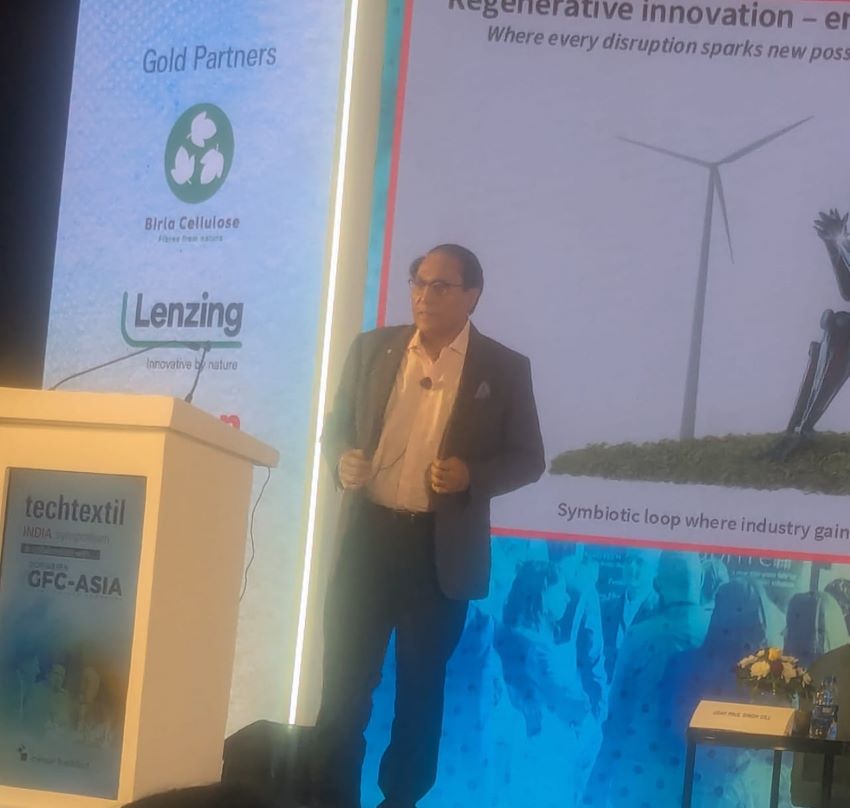
"The 26th edition of Milano Unica began with the presentation of the S/S 2019 trends at the Teatro Vetra in Milan. The three themes that inspire the international global trends focus on three elements that are essential to our life on the planet - Water, Air and Earth - and its payoff is projected towards the future: ‘Milano Unica: Save the Planet’. Myths, heroes, legends, novels, comics, movies, songs, opera, ballets, scientific studies, theories and calculations act as ‘testimonials’."

The 26th edition of Milano Unica began with the presentation of the S/S 2019 trends at the Teatro Vetra in Milan. The three themes that inspire the international global trends focus on three elements that are essential to our life on the planet - Water, Air and Earth - and its payoff is projected towards the future: ‘Milano Unica: Save the Planet’. Myths, heroes, legends, novels, comics, movies, songs, opera, ballets, scientific studies, theories and calculations act as ‘testimonials’. Identified by Stefano Fadda and a panel of Italian national and international industry specialists, they send out an important and incisive message, which Milano Unica, along with many other fashion players, embraces and intends to promote: love for life, nature and ourselves.

With a view to fulfilling this social need and in addition to the analysis of new technology and research, the dialogue among all the players of the supply chain will play a key role in the identification of new solutions to protect our unique, amazing but also fragile planet. The presentation, which has now become a ‘must’ event, will stimulate discussion about an increasingly sensitive and transparent fashion system, thanks to the reduced consumption of water and energy and fashion items increasingly devoid of harmful substances.
“The dialogue must extend more and more, and also include end users, as was the case with the recent ‘Apriti Moda’ initiative (in which Milano Unica participated as the partner depositary of the upstream art), an event that opened the doors of fashion houses that, till date, had always remained concealed inside their creative cocoons. All fashion players today agree on the fact that fashion must remain ‘exclusive’ but not be ‘excluding’, becoming a platform to share confrontation strategies. A shared industry vision is critical to boosting creativity based on exchange and unity of intents,” said Ercole Botto Poala, president, Milano Unica.
Students, an inclusive part
Exhibitors, fashion houses, designers, style offices and for the first time fashion students get a preview in the exhibition dedicated to the suggestions for materials and the inspiration behind the creative and productive path. Massimo Mosiello, General Director of Milano Unica, added, “We should not neglect the dialogue with fashion students, they are the craftspeople of the future. Talking with them, involving them in the creative process will give strength to the message that Milano Unica also intends to promote to start the engine at the system’s core. Textiles and fashion together represent a sounding board with immense potential for reaching out to everyone, even those holding the reins of international politics.”
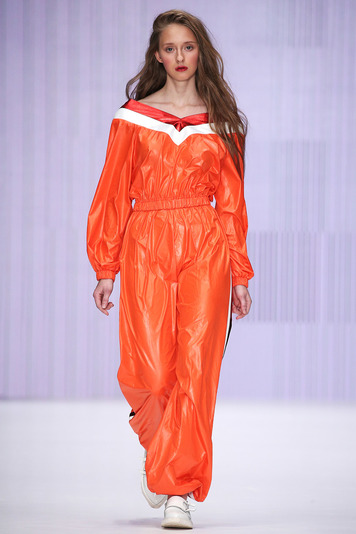
From October 21 to 26 Moscow hosted the Mercedes-Benz Fashion Week.
More than 80 designers from Russia, Georgia, Kazakhstan and other countries showcased their spring/summer 2018 collections.
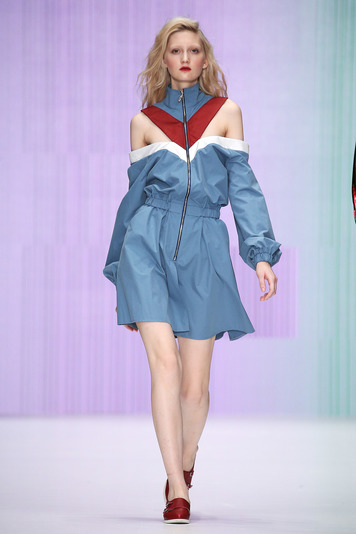
Ten established and emerging Russian designers united at Mercedes-Benz Fashion Week Russia for a mass media campaign against HIV/AIDS supported by the Ministry of Health of the Russian Federation. The involvement of popular fashion designers was expected to deliver the message about the risks of contracting HIV to various age groups.
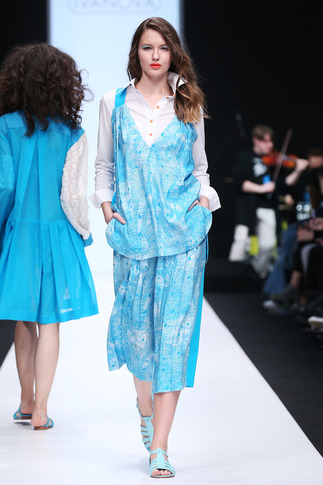
The population of Russia exceeds 146 million people. Nine lakhs are currently HIV-positive.
The Museum of Moscow and Moscow Museum of Fashion featured a display and presentation of 20 emerging Moscow designers and artists. The presentation of young designers at Mercedes-Benz Fashion Week has become the starting point in the long-term development program of the project.
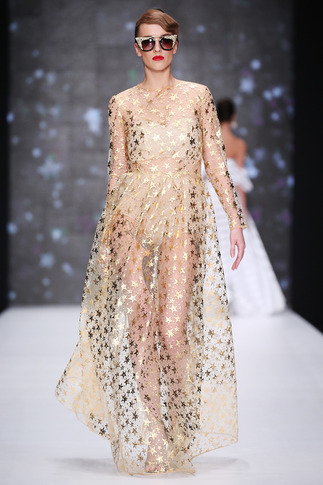
Mercedes-Benz Fashion Week Russia, the biggest and most widely media-covered fashion event in Russia and Eastern Europe, is run by the Russian Fashion Council. The fashion week takes place in Moscow twice a year, in March and October, since 2000, showcasing over 70 designers. Each season, MBFW Russia is attended by over 55,000 guests, including thousands of buyers, journalists, and industry experts. More than 1,000,000 viewers follow live streaming videos of fashion shows from Moscow on the internet through hundreds of web-sites and media channels.