FW

China has banned imports of textile scrap. The aim is to improve environmental protection and standards within China’s domestic recycling infrastructure. However, it’s doubtful if a ban on the import of specification-grade scrap materials will help with those efforts. For recycled commodities such as recovered paper and fiber, plastic scrap and copper scrap, China accounts for more than half of the world’s total imports. With more than $5.2 billion in scrap commodities exported from the US to China last year alone, the trade in specification-grade commodities between the US and China is of critical importance to the health and success of the US-based recycling industry and China’s manufacturing sector.
Scrap textiles are useful in bolstering circularity initiatives. A ban can impede progress on global textile recycling and prevent China’s manufacturing sector from accessing valuable recyclable materials and minimise other opportunities for recycling. It will result in the loss of tens of thousands of jobs and the closure of many recycling businesses throughout the US.
Textile recycling is the process by which old clothing and other textiles are recovered for reuse or material recovery. Steps in the textile recycling process involve the donation, collection, sorting and processing of textiles and then subsequent transportation to end users of used garments, rags or other recovered materials.
Orissa’s handlooms, textile and handicrafts will get a boost as the government plans to set up an apparel incubation center for promoting entrepreneurship in the apparel and garment sector. The three-seater 300 machine apparel incubation centre will provide employment opportunities for about 600 youths in the textile and garment sectors.
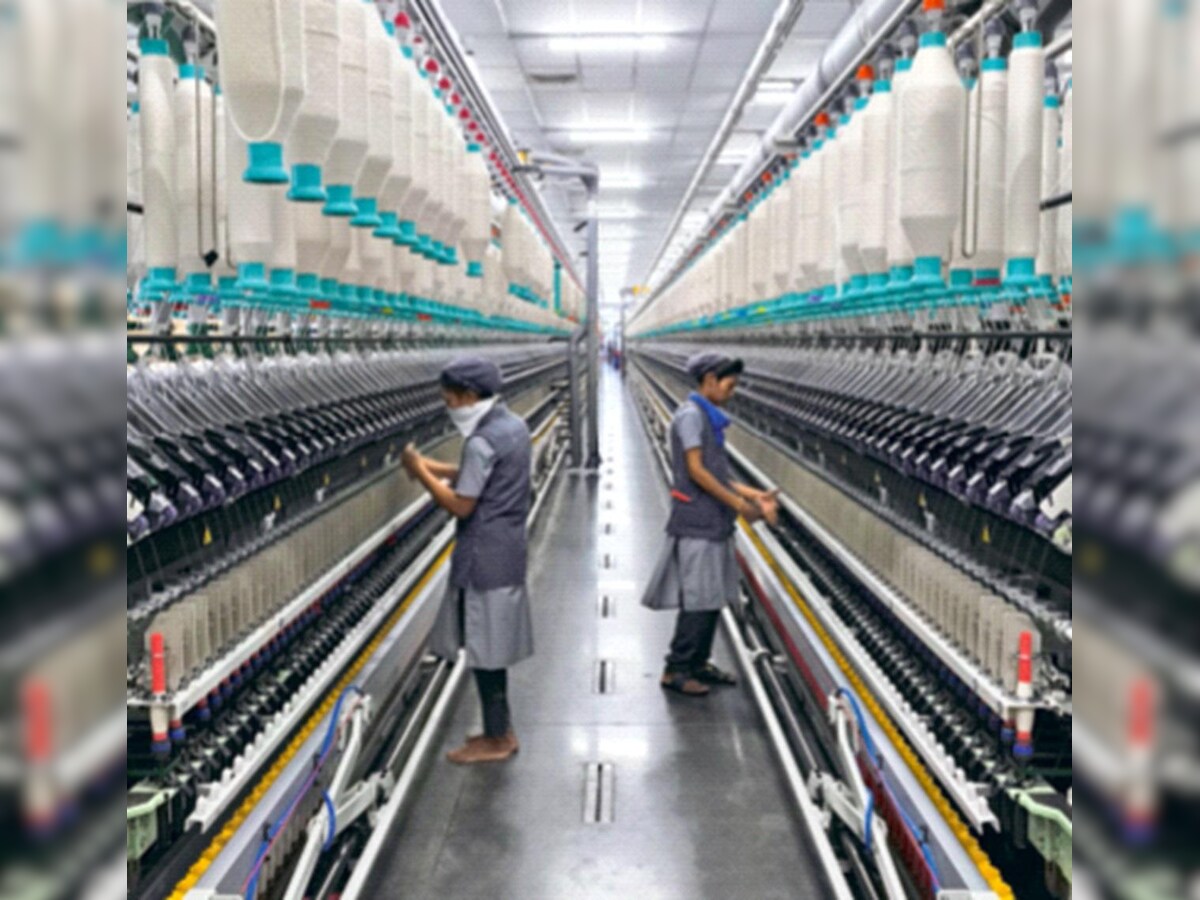
Meanwhile subsidy has been increased by 30 per cent for upgradation of the power loom sector and for the benefit of small weavers. The necessary financial support will be extended to power loom units struggling for survival. Orissa has some 1500 functional power looms. Most power looms are facing a raw material shortage and weavers are not able to afford the high cost of yarn in the market.
Yarn banks will be set up in all power loom centers and clusters so that weavers can get their raw materials in enough quantities and at reasonable prices. This will also help weavers plan their production program in advance. Market linkages will be developed for their products. A textile museum is being set up on 12 acres. It will showcase the traditional handlooms and handicrafts of the state. Orissa’s tradition of handicrafts is diverse. Inspired by Hindu myths, Mughal designs, tribal folktales, and nature, Orissa’s crafts are worked in metal, cloth, and stone.
Mimaki’s UCJV 300-160 and UCJV 150-160 roll-to-roll UV LED printing and cutting solutions add creativity to the production of signs and display graphics while maintaining Mimaki’s signature affordability and ease of use. Each of the two models of UCJV series can produce a wide variety of print-and-cut applications offered by many signage, commercial and packaging print service providers. UV-LED curing technology enables print service providers to utilise an expanded range of media including uncoated print media and many thin film substrates that may be too heat sensitive for latex or solvent high heat fixation systems.
Four-layer printing – for example, color, black, white, color – is available on the UCJV 300-160 and offers an enhanced print capability that allows designers to build layered, transformative graphics for backlit applications. This distinctive capability enables designers and print service providers to produce high impact, premium margin output while maintaining low operational costs and reducing production time.
The integrated cut functionality enables volume production of labels, decals, window clings, floor graphics, POP displays, vehicle markings, packaging, prototypes and more in a single unit. Mimaki is a manufacturer of wide-format inkjet printers and cutting systems.
Mimaki is also introducing a brand new environmentally friendly ink, LUS-170, guaranteed to ensure vibrant, eye-catching print results.
Jeanologia, the Spanish company best known for developing sustainable solutions for denim finishing, will participate in the first edition of Denimsandjeans to be held in Bangalore from September 25-26. Jeanologia will present its High Dynamic Range (HDR) system created, which reduces jeans production time by 30 per cent.
The new High Dynamic Range (HDR) simplifies designing, reduces laser marking times and guarantees “what you see is what you get” achieving more natural and three-dimensional designs. The Spanish company starts a new era in laser design processes, allowing greater creativity and saving time, while avoiding second-rate production and providing the sector with a common language.
With 6 per cent of the total jeans production in the country done using sustainable technologies, Jeanologia has been present in India since 2004. For the last 13 years, Jeanologia’s technologies have been used in India. The company has taken on the challenge of transforming denim production centers of the country, and currently acts as the expert technology partner for top brands and laundries, supporting them in their objective to improve competitiveness, increase production and eliminate all processes that are harmful for workers and the environment.
Manuj Kanchan, Asia Area Manager at Jeanologia says the transformation of India’s jean industry towards efficiency and sustainability has begun. The production centers are integrating laser, ozone and nano-bubble technologies allowing them to reduce water, chemical and energy consumption.
Japan is the fourth largest market for textile and apparel products. Apparel is the largest imported category by Japan, representing 76 per cent of total textile and apparel imports. This is followed by cotton textiles and manmade textiles. The top 10 suppliers account for 92 per cent of textile and apparel imports by Japan. China is the largest supplier, accounting for a 62 per cent share, followed by Vietnam and Indonesia, with a share of 11 per cent and four per cent respectively.
The Japanese textile industry started shifting to other countries in the 1980s due to increasing wage costs. This led to Japanese investments in countries like China, Vietnam, Cambodia, and Indonesia. India is the 10th largest supplier of textile and apparel products to Japan. Apparel has a 49 per cent share in India’s textile and apparel exports to Japan. This is followed by cotton textiles, manmade textiles and carpets having a share of 28 per cent, seven per cent and six per cent respectively.
India has a high potential to increase its market share in Japan. For that, Indian exporters need to focus on high quality Indian garments and work on faster delivery schedules. Further Japan’s sourcing model is based on using buying agents and trading firms and not direct orders. Indian exporters need to familiarize themselves with different models as well.

S Hari Shankar has been elected chairman, India International Textile Machinery Exhibitions (India ITME) society.
He is an alumnus of the Philadelphia College of Textiles & Sciences, US. Apart from being an enthusiastic athlete, he is also an avid and well-known wildlife photographer.
He is the joint managing director of Lakshmi Card Clothing, Coimbatore. LCC is a global leader in providing complete card room solutions.
He is active in many associations and is on the board of executive council of Textile Machinery Manufacturers’ Association (India) (TMMA) since 2001 and also held the position of chairman of TMMA from 2011 to 2013. He was part of India ITME society since 2001 and held the position of hon. treasurer from 2013 to 2017.
He is also on the board of directors of Prathishta Wvg. & Knitting, Coimbatore, and governing council member of the Indian Chamber of Commerce and Industry, Coimbatore.
Ketan Sanghvi (Laxmi Shuttleless Looms) has been elected as hon. treasurer.
The vice chairmen are Mehul Trivedi (The Indian Card Clothing), Kaizar Z. Mahuwala (Gurjar Gravures), Sanjay K. Jain (Confederation of Indian Textile Industry), Arvind Sinha (The Textile Association, India), Surina Rajan, IAS, Bureau of Indian Standards, Govt. of India.
The Shri Vallabh Pittie group will build a cotton yarn plant in Oman.
The project will manufacture a wide range of cotton yarn and is going to be the first major cotton yarn plant in the region. The facility will provide over 1,500 jobs and is expected to start commercial operations in late 2019. The facility will be the first step in establishing a fully-fledged textile cluster in Sohar free zone. Downstream investments in knitting, weaving, spinning and fabric manufacturing could create a thriving industrial cluster providing thousands of new jobs for local households.
SVP is one of the largest manufacturers of cotton yarn in India and a global leader in the sector.
The plant will import 1,00,000 metric tons of cotton fiber annually, with around 50 per cent coming from the United States and the remainder split between Australia and India. The plant will produce around 75,000 tons of finished yarn each year, which will be exported back to China and other global markets including Bangladesh, Pakistan, Vietnam, Portugal and Turkey.
With over two hundred years of experience in the textile business, SVP has a highly skilled and experienced management team with a strong focus on automation and technology. It sources best-in-class machinery from leading global companies to ensure the highest levels of productivity and efficiency.
One of Italy's oldest fashion houses Trussardi, unveiled that it had a plenty of abstract aeroplane motifs, clothes that billowed like parachutes and even a few re-imagined pilot jumpsuits.
In her notes on the Spring/Summer 2018 designs shown in Milan, creative lead Gaia Trussardi, says that the suits are inspired by the free and enterprising spirit of great female travelers like Amelia Earhart.
Trussardi's clothes had lots of silk, straps and belts. Abstract aeroplane silhouettes showed up on suits for men, who are increasingly common on what was once a fashion week reserved for women.
Some half-a-dozen houses will show co-ed collections over the six-day marathon on Milan. There were also flat platform sandals with straps and gold buckles as well as plenty of high heels with straps that wrap around the ankles.
The journey was a big inspiration for Trussardi, but so was the destination. Flower prints, like the flora of a tropical locale, made their way on to the clothes as did the perhaps less welcome fauna of what appeared to be snakeskin.
True to its roots the house started in 1911 as a glove manufacturer Trussardi showed off new accessories.
The Gita bag has leather trim, a compact shape and details that bring to mind the labels and tags that accumulate on a well-travelled bag.
The fashion circus in Milan continues later on Sunday with highly-anticipated collection from Dolce & Gabbana, which will be the last blockbuster name set to send a collection down the catwalk during this fashion week.
Zimbabwe’s cotton production has increased 150 per cent this year. Cotton output increased to 70,000 tons up from 28,000 tons produced during last season.
The Presidential Inputs Program, a free input support program, has managed to empower thousands of farmers who had abandoned the crop due to exploitative financing models by private contractors.
Private companies were giving farmers inputs at inflated prices and buying the commodity at very low prices. So at the end of the day farmers were essentially providing free labor because all the income would go toward debt repayment. In certain instances, some farmers ended up losing their property or livestock after failing to repay.
But the Presidential Inputs Program has come to their rescue. It has had a huge impact on the livelihoods of people. Farmers have managed to upgrade their homes, buy cattle, even cars, animal drawn ploughs. Parents are paying school fees. Service providers such as transporters are back and most grocery shops in villages have re-opened. Commercial activities have grown.
The program has helped boost cotton production, tame poverty among the rural people and created jobs. It has empowered disadvantaged women and would go a long way in reviving downstream industries such as textiles.
Wrangler in honor of its 70th anniversary is releasing new range in collaboration with psychedelic artist Peter Max. The collection is bright, colorful, and well, totally far out.
It is Wrangler’s second collaboration with Max, the first of which debuted in the 1970s. The Peter Max X Wrangler range is still very much retro inspired but reworked with modern fits, featuring pieces like two-tone jeans, cords, trucker jackets, and graphic tees. Just have a look at this Peter Max X Wrangler Women’s Pieced Denim retro straight fit. Jean that feels like a blast straight from the past.
Talking about the collection Peter Max X Wrangler women’s Pieced Corduroy retro straight fit pant that’s pretty much the essence of cool also the Peter Max X Wrangler women’s short sleeve graphic T-Shirt works just as well with the collection’s iconic denim as it does with any leather skirt or moto jacket in your closet.