FW

Haji Muhammad Akram Ansari, Minister of State for Commerce and Textile Industry, while addressing the 31st annual general meeting of Pakistan Textile Exporters Association recemt;ly stated that government is fully committed to expedite growth of commerce to maximum possible level by using all available means. Prime Minister's package has helped in attaining competitive edge in international market.
He has underlined the need for serious and well-planned efforts for increasing value-addition especially in textile sector for capturing more share in the regional and international markets. With support of the masses, we will overcome the challenges being faced by the country, the government is committed to imparting all possible facilities to the business community as it is playing a major role in bringing economic stability. No country could achieve economic targets without the due role of exporters therefore government is making all-out efforts to overcome export challenges. He also appreciated the successful efforts of outgoing team in resolving the issues confronting exports.
Pakistani exports are under pressure due to prevailing economic financial, industrial crisis in the country as well as persistently high cost of production, heavy burden of taxes and high energy cost which are badly affecting the industrial and trade activities and productivity output.
Outgoing Chairman Ajmal Farooq, presenting his annual report, stating that despite big challenges, it was wonderful experience representing as chairman of the country's premier association of textile manufacturers and exporters. During the year, utmost efforts were made to look after the trade related issues of members by advocating their voice at appropriate forums.
He termed the Prime Minister's package and payment of long outstanding refunds as positive which will definitely help to accelerated industrial pace in the country. He expressed the hope that new team will continue the efforts to strengthen the linkages with the local and international businesses to promote and protect the interests of textile industry.
Morajee Textiles Ltd. India, purchased a Brückner sanforizing range in 2015, the main components of which are the rubber belt compressive shrinking unit, a felt calander and the cooling cylinders. The company’s Managing Director, R K Rewari, confirms that this Brückner machine has been the right choice for their very light and thus particularly sensitive fabric made of 100 per cent cotton, viscose or crepe for woman’s dresses and men’s shirting fabric. The compressive shrinking line provides the fabric with a more stable structure, a silk-like shining surface and a smoother hand. In addition, it reduces residual shrinkage by up to 3 per cent.
The manufacturer discloses that their sanforizing range is easy to handle – the control of tension and the software ensures treatment of very light fabrics without any marks. The production speed is around 60 and 70m/min and the production team is very satisfied and they recommend the machine especially for difficult and sensitive fabrics.
Morajee Textiles Ltd. India, established in 1871 under the name Morarjee Goculdas Spinning and Weaving Co. Ltd., was one of the first five companies listed on the Indian stock exchange. After unparalleled growth and expansion Morarjee Textiles is now part of the Ashok Piramal Group, a diversified and leading business group in India.
With over 100 years of experience and modern integrated manufacturing facilities for 100 per cent cotton premium yarn, dyed shirting and printed fashion fabric, the company manufactures cutting edge fashion textiles and is today one of the biggest players in the Indian textile industry.
The company showcases all premium international and domestic brands as its customers and supplies its products internationally.
Denim and sportswear label, Liverpool, announced the launch of a new denim capsule collection as part of its upcoming Spring ’18 line.
The “LVPL” capsule combines the fit and performance that have made Liverpool’s jeans a retail hit in stores like Bloomingdale’s, Nordstrom, Von Maur and Dillard’s with more dramatic styling and trim, including Japanese-inspired vintage style floral embroidery and cropped wide leg cuts.
LVPL introduces a new, higher price-point option to the line as the first Liverpool styles to retail for over $100. Retailing from $119 to $149, the jeans in the capsule will feature more premium denim fabrics from Italy and Japan. Design elements will incorporate tonal indigo tonal embellishments going down the side seams of the jeans. Other styles will feature more contemporary graphic embroidery sewn into the fabric of the jeans.
LVPL makes cutting-edge style incredibly easy to wear, incorporating the fit and fabrication know-how to make statement pieces that flatter a range of body types, says Liverpool Design Director Jill Perilman. The company is excited to introduce the new capsule alongside the rest of the Spring 2018 line.
Other highlights in Liverpool’s Spring ’18 collection include the brand’s first denim skirts featuring frayed hems, double release hems and embroidery; new shapes for denim jackets; two new pull-on jeans and jeans made with cotton and tencel blends.
The brand is in growth mode, reportedly seeing triple digit growth in business over the past year. In July, Liverpool introduced its first collection of men’s denim.
Italy first addressed the issue of sustainable fashion a few years ago.
It started in 2012 by publishing the sustainable development manifesto of Italian fashion: ten commandments focusing on the principles that the entire industry needed to adopt.
In 2016, the first guidelines for eco-toxic standards to be complied with in manufacturing were issued.
Leading names in Italian fashion have long made sustainable development a rallying cry.
Italian fashion house Genny for example has unveiled several wholly ecological items. It uses silk that is certified 100 per cent sustainable. All collections are manufactured within a 100 km radius and the supply chain is monitored to make sure that working conditions are respected. Genny has also drawn up a charter of global values which is clearly spelled out on its garments' labels.
The fashion industry isn't very sustainable and companies have to start paying greater attention to the impact they have on the environment.
However sustainability comes at a cost. It is more expensive and the production process is longer and more complicated since the manufacturing and supply chain have to be fully adapted to these standards.
For Genny price rises may be about 30 per cent.
But the company is going ahead anyway, because it strongly believes in the approach.
Hyosung Creora has entered into a partnership with Sofileta.
The new product maximizes the deodorizing advantages provided by Creora Fresh.
Sofileta is a French global textile supplier, specializing in textile and dying.
Hyosung entered this partnership as a strategic move to get closer to customers in France and Europe. Hyosung has been in close co-operation with Sofileta from the birth of Creora and will continue this partnership in future to actively respond to the rapidly changing fashion industry.
Hyosung offers functional spandex products like Creora Fresh, Creora Highclo, Creora Eco-soft and Creora Color Plus. Creora Fresh chemically neutralizes substances generating sweat and foot odor and is applied to under wear and active wear.
Creora Highclo, mainly applied to swim wear, was developed to reduce damage to clothing induced by chloride.
Creora Color Plus and Creora Eco-soft are functional products enriching the clear color of the textile during dyeing and providing a softer touch of textiles respectively.
Hyosung is the largest producer of spandex in the world with the Creora brand. Hyosung’s textile business leads the world textile industry with its spandex, polyester and nylon yarns. The company produces various differentiated polyester and nylon yarns from regular yarns to high functional specialty yarns.
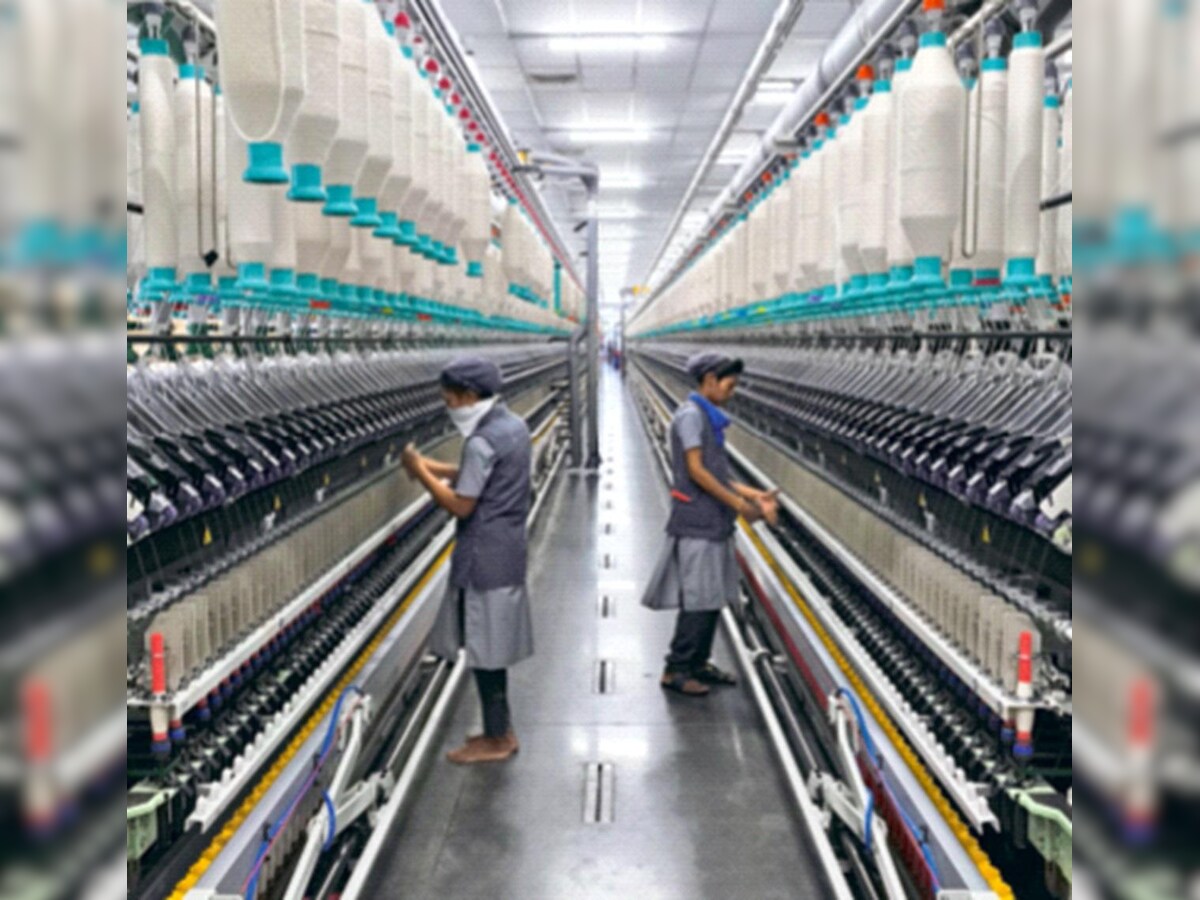
The garment making industry is labor intensive and associated with low productivity.
Things are set to change. Recently there has been much publicity about sewbots, considered as a major breakthrough in garment automation. Manufacturers fast enough to ride the digital wave will find new opportunities and gain an edge over their competitors.
Automation, especially in an integrated textile and garment manufacturing chain, will help address the fashion and clothing industry’s current concerns of short production cycles and sustainable business practices.
With greater automation on the cards, industry players are seeing the resurgence of garment manufacturing activities in Europe and other developed economies.
By incorporating technological and creative innovation to differentiate their products, manufacturers can expand their markets. As such, it is critical for them to continually evaluate and invest in new technologies.
Companies are starting to play around with the concept of connected garments. The smart clothes they are working on may be the future of wearable tech. Much more than strapping gadgets to our wrists, faces, ears and feet, smart clothing can constantly track our heart rate, monitor our emotions and even pay for our coffee. All without grabbing a phone or even tapping a screen.
ITMA, June 20 to 26, 2019, Spain, will spotlight smart garment technologies.
In India Amazon is using a strategy similar to the US, where a vast network of warehouses allowed it to offer quick, cheap delivery.
Fulfilment centers are extremely critical for the success of its Indian operations. The US-based retailer has doubled its storage capacity in the last one year to meet its rapid growth in India.
Within miles of the new Hyderabad storage hub is one of Amazon’s largest global customer service centers as well as one of its biggest software development facilities in the world. All of these are hidden from public view.
Amazon’s 41 warehouses in India are vital in a country where the largest online retailers are marketplaces without any inventory of their own in accordance with foreign investment rules for e-commerce. Their locations are crucial because the nation’s logistics networks can be unreliable. They have to be close to sellers and with easy access to a density of buyers.
In India, Amazon has adopted a hybrid model, a blend of people and conveyor. Fixed costs are high in the country while labor costs are low, the inverse of the West. So a vast number of workers toil in comparatively smaller warehouses.
In India, the company has grown revenue at about 124 per cent year-on-year, totting up 85 per cent growth in the first quarter and 88 per cent in the second quarter this year.

Sanjay K Jain is the ne chairman of Confederation of Indian Textile Industry (CITI). He is the managing director of New Delhi-based TT, a vertically integrated textile company. A cost accountant and company secretary, he is on the committees of Texprocil, SIMA, and various other bodies. He is young, dynamic and very articulate in dealing with the core issues of the textile industry. His priority would be to strongly pursue important issues so that the Indian textile industry becomes a significant global player.

T Rajkumar is the new deputy chairman. He is actively involved in various industrial bodies and educational institutions. He is chairman, Sri Mahasakthi Mills, Kerala, Sri Arumuga Enterprise and Foundation One Infrastructures, Tamil Nadu. He is the immediate past chairman of SIMA and chairman and managing trustee of Global Pathway School, Coimbatore, and secretary, Nachimuthu Gounder Rukmani Ammal Charitable Trust, Pollachi, Tamil Nadu.

DL Sharma is the vice chairman of CITI. He is director of the Vardhman Group and managing director of Vardhman Yarns and Threads. He has also served as chairman of Punjab State Council of Confederation of Indian Industry and president of Ludhiana Management Association.
The Confederation of Indian Textile Industry is the apex body representing the entire textile industry in the country.
"Australian fashion made a strong impact at the recent New York Fashion Week. For fashion, it’s the spirit of the designers that’s attracting clout of late. For instance, Zimmermann started with swimsuits and quickly became people’s favourite. The horizon for designers is going global with Colette in Paris and Fivestory in New York picking up the country’s coolest labels. In addition, the Australian Fashion Chamber (AFC) brought its official showroom of designers to New York City for the first time."

Australian fashion made a strong impact at the recent New York Fashion Week. For fashion, it’s the spirit of the designers that’s attracting clout of late. For instance, Zimmermann started with swimsuits and quickly became people’s favourite. The horizon for designers is going global with Colette in Paris and Fivestory in New York picking up the country’s coolest labels. In addition, the Australian Fashion Chamber (AFC) brought its official showroom of designers to New York City for the first time. Courtney Miller of the AFC, points out the biggest hurdle the AFC has internationally is to raise the profile of Australian fashion and change the perception of what Australian fashion can be. The association wants to help emerging brands build their businesses in a really challenging fashion world with fast fashion, technology changes and a pace that just gets faster and faster.

The Australian fashion industry employs approximately 220,000 people (across design, manufacturing, wholesale and retail) and adds $12 billion to Australia’s economy per annum. The global fashion market has been valued at $1.7 trillion and employs approximately 75 million people, according to a representative from the Australian Trade and Investment Commission.
Brewing success
Every leading Australian fashion house brings to the table something unique such as Romance Was Born that blends a hint of femininity with bohemian romanticism. Embroidered mini skirts, beaded frocks, long, silky dresses with intricate pleats are the norm and as such, the label’s pieces have even been showcased at The National Gallery of Victoria. Designer Anna Plunkett says a lot of their work and themes are inspired by the artists they admire and collaborate with. The brand is experiencing major international growth, so look out for the label next year, when it will be showing at Paris Fashion Week for the first time.
Founded by Brigitte MacGowan and Desley Maidment in 2014, State of Escape’s line of bags is centered around pieces that are strong, lightweight and big enough to carry along everything essentials. These bags come in various shades such as neutral greys, greens and tans. The materials—neoprene and a structured base of elegant sailing rope—cash in on fashion’s obsession with athleisure and are a tribute to the beachy aesthetic of Australia as a whole. MacGowan says, being a young country, they are not creatively confined by its heritage. Apart from having a waitlist for its bags in Australia, the brand is also sold in Japan, Hong Kong, Singapore, Norway, Spain and the UK, with plans to launch soon in the US.
As per Edwina Robinson, Founder, Aje, said that prior to the birth of social media and the rise and rise of online businesses, Australia was isolated from the rest of the world. Now it is very much playing on an international stage, but the designers have found confidence in what sets them apart. In fact, their adversity has become their strength— they are relaxed, unbridled and experimental in their designs. Additionally, the country’s climate has dictated a stronger focus on a summer offering and the global market is turning towards trans-seasonal collections, where layering and styling is paramount.
Intertextile Shanghai Apparel Fabrics will be held in China from October 11 to 13, 2017. This time it will debate the future of athleisure and sustainable fast fashion. While fast fashion implies unsustainable, low-cost, low-quality clothing that has been rapidly produced to replicate catwalk trends, can it transform into a sustainable option? This vital issue currently facing the industry will be debated.
On one side, there are those who believe it is not just a passing fad, but a fundamental shift in the way people dress. On the other are those who believe that wearing athletic clothes and shoes in formal contexts will become less common in the coming seasons.
Eight trend forums will illustrate autumn / winter 2018-19 trends in different markets. Beside the trend forums, the Beyond Denim display area will showcase newest range of denim products, trends and technology under three themes: Azure, New Age and Cultural.
There will be panel discussions on sustainable denim, organic textiles, linen for autumn and winter, innovative technology in the fashion industry and trends and new opportunities in Bangladesh’s textile industry.
As the industry’s most influential event, Intertextile Shanghai Apparel Fabrics not only provides the widest product sourcing platform but also a stage for the industry to debate the most pressing issues, as well as find products, technologies and solutions to address these.