


FW
US-China trade war to reduce ‘Made-in-China’ labels
"It all began a year ago with the US administration, under the leadership of President Donald Trump, imposing a 25 per cent tariff on 818 categories of goods imported from China. This move further escalated into a major bilateral trade war between these two economic superpowers. Since then, US-based brands relying on Chinese manufacturing have seen their products cost escalating and profit margins declining, making it difficult for them to survive in the competitive market. As the latest quarterly survey of more than 150 global businesses by the Hong Kong-based QIMA supply chain audit and inspection service reveals, over three quarters of US respondents say they have been seriously impacted by US-China tariffs."
 It all began a year ago with the US administration, under the leadership of President Donald Trump, imposing a 25 per cent tariff on 818 categories of goods imported from China. This move further escalated into a major bilateral trade war between these two economic superpowers. Since then, US-based brands relying on Chinese manufacturing have seen their products cost escalating and profit margins declining, making it difficult for them to survive in the competitive market. As the latest quarterly survey of more than 150 global businesses by the Hong Kong-based QIMA supply chain audit and inspection service reveals, over three quarters of US respondents say they have been seriously impacted by US-China tariffs.
There is no sign of this cycle of imposition and counter imposition of tariffs coming to an end. Last week President Trump announced his plans to impose 10 per cent tariff on another $300bn worth of Chinese imports from September 2019. China, in turn, responded by asking state-owned firms to halt their US agricultural purchases and by allowing its tightly controlled currency to slide to an 11-year low against the US dollar – a move that makes Chinese goods cheaper overseas and US exports to China more expensive.
Companies shift out of China
Alarmed by rising geopolitical and economic tensions between the US and China becoming a norm, a few US and other companies are shifting their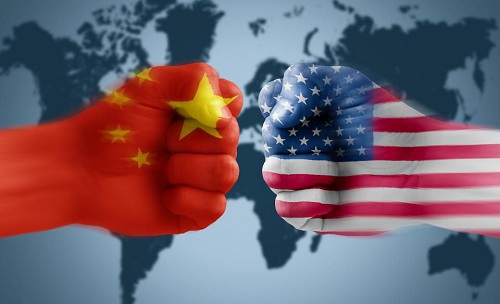 production facilities to other locations. A recent survey by the American Chamber of Commerce reveals around 40 per cent of the US companies that currently manufacture in China have either already shifting or are planning to shift their production facilities to other offshore locations.
Over 50 multinational companies including Apple, Nintendo and Dell are planning to shift at least some of their production to emerging alternative offshore manufacturing hubs including Vietnam, Malaysia and India. Electronics giant TCL is moving its TV production to Vietnam and Sailun Tire is shifting its tire manufacturing line to Thailand. Others are relocating manufacturing operations to more established, lower cost countries including Mexico.
Vietnam to emerge as beneficiary
Experts view these moves as a long-term structural change in the global trade flow, rather than a temporary response to the escalating US-China trade tensions. Most US-based manufacturers were already planning to move their operations out of China even before the US imposed its first round of tariffs on them. The US-imposed tariffs only accelerated this inevitable realignment.
This realignment will mainly benefit countries like Vietnam, whose foreign investment permit applications, have already risen by 26 percent to 1,720 in the first half of 2019. The shift will also benefit enterprise software and service providers – particularly those that enable companies to become Intelligent Enterprises and facilitate efficient, responsive and reliable supply chains.
According to business leaders including SAP’s Chief Executive, Bill McDermott, the recent disruption of trade patterns and supply chains could have profound long-term implications because once companies move their production out of China, they are not likely to return in the near future. This makes the realignment of global supply chains and uncertainty that accompanies such changes unlikely to end in the near future.
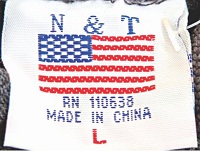
These changes impact the company’s ability to respond quickly to rapidly changing customer requirements and other external factors such as supply chain disruptions. For consumers, these moves will result in the reduction of ‘Made in China’ labels.
Textile Minister exhorts AEPC to spread the concept of Fabric of Unity
 Union Minister of Textiles, Smriti Zubin Irani, while unveiling the Fabric of Unity on the occasion of birth anniversary of Sardar Vallabhbhai Patel in Gurugram, exhorted AEPC to spread the concept in its offices. Minister urged the AEPC to put together the entire history and the textile designs of the then princely states which were united into the Indian Union by Sardar Patel.
The minister also flagged off Unity March. Smriti Zubin Irani administered the Unity Pledge to the office bearers, staff of Apparel Export Promotion Council (AEPC) and students of Apparel Training and Design Centre (ATDC).
Speaking on the occasion, she referred to Rs 6,000 crore package launched by the government in 2016 for the growth of apparel and garment sector to bring in more skilled labor in the organized sector.
Welspun Q2 net sales up, touches Rs 2440 cr
For the second quarter Welspun net sales were Rs 2440.03 crores as compared to Rs 2043.21 crores during the period ended September 30, 2017. Net profit was Rs 55.84 crores as against Rs 40.37 crores for the period ended September 30, 2017. For the six month period net sales were Rs 4525.54 crores as compared to Rs 3724.98 crores during the six month period ended September 30, 2017.
Net profit was Rs 99.49 crores as against Rs 91.55 crores for the six month period ended September 30, 2017.
The company has a guidance of eight to ten per cent in volumes for the current financial year. Hydro cotton has been commercially successful and continues to see good growth. Welspun sees a promising future for WEl-Trak after the success of hydro cotton.
The textile firm sees a positive growth momentum in volumes and is confident of achieving its annual guidance for revenues and profits. Welspun continues to pursue its differentiation strategy based on branding, innovation, sustainability and its patented traceability solution.
Versace winds up Versus
Versace will discontinue its long-established seconds line Versus Versace. This means the Italian label will focus on one contemporary range alone. In recent months, Versace examined several ways of streamlining its business model, to enable it to focus on its brand portfolio and ensure it remained innovative and relevant in everything it did.
Consolidation will allow the company to further develop the Versace Jeans collections and at the same time to preserve the DNA and design codes which made Versus so unique.
Fashion labels are increasingly streamlining their product range. The era of second and third lines seems to have come to an end. A similar approach has already been adopted by Giorgio Armani, who from spring/summer 2018 redesigned his corporate portfolio around three main labels: Giorgio Armani, Emporio Armani and A/X Armani Exchange.
Since 2009, accessible luxury label Versace Jeans has been produced by Swinger, the apparel company which owns the brand Genny and is also a licensee of Cavalli Class.
Versace was acquired last September by US group Michael Kors and is active in the luxury segment with ready-to-wear, accessories, jewelry, watches, eyewear, fragrance and home decoration lines. Versace products are distributed via 200 monobrand stores and over 1,500 multibrand retailers worldwide.
Vietnam and Malaysia may gain from trade war
Vietnam and Malaysia are among the Asian countries expected to benefit the most from the US-China trade war. New opportunities will open up for exporters in these countries as American and Chinese importers will look for alternative suppliers. Vietnam and Malaysia will benefit particularly in low-end manufacturing of information and communications technology products, such as intermediate components and manufacturing of consumer goods like mobile phones and laptops. Malaysia's ICT industry is well-poised to gain from the shift in trade, partly owing to its strong logistics network and a good business environment.
Both Malaysia and Vietnam have a strong road, rail and port infrastructure, which has in turn helped to develop strong local logistics and shipping networks to support merchandise trade. The positive business environment in Malaysia (an existing clear and stable system for corporate law) and Vietnam (strong investment promotion policies via new special economic zones) will make these two countries even more attractive for companies that are considering them as potential locations for investments.
Within Asia, apart from Malaysia and Vietnam, the likes of India, Indonesia and Thailand may also stand to gain. The ongoing tiff has seen the two economic superpowers so far imposing trade tariffs or taxes amounting to around 360 billion dollars on merchandise between them.
US retailers forge tie-ups to boost sales
Retailers in the US, like Macy’s and Kohl’s, have sought new partnerships and other tie-ups to appeal to shoppers. Last year, Kohl’s, for instance, has expanded to about 100 stores where Amazon customers can return their Amazon-bought items to Kohl’s to be packaged and shipped back for free.
Kohl’s is also looking at downsizing its store size of an average of about 90,000 sq ft to about 60,000 sq ft with the remaining space to be leased to fitness centers or other retailers. The point is to have a neighbor who will drive traffic for the retailer.
On its part, Macy’s will be much more aggressive in its lease models and feature restaurants and other categories that revolve around the way customers live and shop. Macy’s has also taken a stake in Silicon Valley start-up b8ta, which features different online upstart brands and major labels like Sony at its locations, including an in-store boutique at Macy's New York flagship. b8ta, which drives traffic and sales by regularly featuring new brands and by allowing customers to try and interact with products in out-of-box-setting, is also using its technology to expand The Market at Macy's pop-up shop concept.
Macy's this year also bought Story, famous for its New York shop that hosts different brands with unique themes.
Fast Retailing acquires 35 per cent stake in women’s fashion brand Elise
Uniqlo’s parent company, Fast Retailing, has acquired a 35 per cent stake in Hanoi-based women’s fashion brand Elise. Elise, which has over 100 stores across the country, has received millions of dollars from the deal – a figure much higher than its entire charter capital.
The store will be operated by a joint venture between Fast Retailing and Mitsubishi Corporation. Its arrival in Vietnam will intensify competition for foreign brands as Zara and H&M who have already successfully launched there.
Vietnam is one of the markets Uniqlo is counting on to double its store network in Southeast Asia and Oceania to around 400 by 2022.According to German firm Statistics Portal, Vietnam’s fashion revenue will annually grow 22.5 per cent from 2017 to 2022, and its clothing sales will surge to an estimated $245 million this year.
Sudden demand for Indian leather
US companies have turned to leather from India. They have been hit by tariffs on products imported from China. So there is an US company which is looking to buy 50 million pairs of footwear from India. The leather industry in India has prepared a roadmap to raise exports from $5.6 billion to $10 billion by 2021-22. And the US-China trade war has come in handy for meeting the target.
Footwear sub-sector accounts for half of India’s leather exports. The leather garment sub-sector produces 16 million pieces a year and accounts for one-tenth of exports. Other products such as articles (wallets, handbags), industrial gloves, harness and saddles account for a quarter of exports.
The industry employs 4.5 million people. India has come up with a Rs 2,600 crore special package for the industry— the funds would be spent over three years between 2017 and 2020. However, capacity is a constraint in the footwear sub-sector. Vietnam may have maxed out on its footwear capacity, and buyers would look toward India. The industry is seeking support to ramp up capacities.
The US has slapped tariffs on Chinese goods such as handbags and wallets. Leather footwear is not yet in the list, but this may be a matter of time.
PHMA urges govt to demand China for duty free market access
Pakistan Hosiery Manufacturers & Exporters Association’s (PHMA) has urged the government of Pakistan to demand duty free access to Chinese to allow imports of finished fabric under DTRE and stitching machinery and after conversion of this finished fabric into garments, Pakistan will export these value added garments to China with zero percent duty at par with ASEAN countries. Pakistan can achieve a milestone in value added textile exports in view of China’s import of value added textile Items to the tune of $7,000 million. However, Pakistan exports to China amounted to only $100 million.
India: Grasim Industries wins Golden Peacock for sustainability
Grasim Industries has won the Golden Peacock award for sustainability. The Harihar polyfibers unit of Grasim which has been accorded this distinction produces rayon grade pulp. The unit began operations with an initial capacity of 32 KTPA in 1972-73. The plant today produces 70 KTPA of pulp a year from eucalyptus wood. About 90 per cent of the energy used is derived from renewable resources and chemical recovery is around 98 per cent.
Grasim, a part of Aditya Birla, is the world’s fourth largest pulp producer. It is one of India’s largest viscose staple fiber producers and is expanding capacity by 2.4 times. Grasim has ensured control over 80 per cent of the costs through backward integration, giving it an important competitive advantage over nonintegrated players. Its manufacturing input of caustic soda, power and steam and carbon disulfide is fully captive and the company has control over 60 per cent of the pulp requirements.
Started in 1947 with textile manufacturing, Grasim is a leading global player in diverse segments. It is among the largest chemical players in the world, the world’s fourth largest cement producer and among the top diversified financial services companies in India. The company, after the successful introduction of its fabric brand Liva in 2015 in the Indian market, is planning to take the brand global.











