FW
US apparel industry opposes tariffs
The apparel industry in the US supports maintaining strong trading ties with China and voices opposition to the escalating tariffs by the US. For instance, China remains a top supplier to the US. More than 40 per cent of all apparel, 72 per cent of all footwear, and 84 per cent of all accessories imported to the US comes from China. This support for strong and uninterrupted US-China business and trade relationships is a result of the supply chains the US has built up with China. The feeling is that any disruption of this is not good for business -- not good for business in America, not good for business in China. The Asian giant is seen as having a positive impact on sustainability, quality control, workers’ rights and product safety.
The opinion is that tariffs are damaging the very industry they are meant to protect, causing trouble for the US economy and causing trouble globally. Retail in America is already reeling and the trade war may deliver the coup de grace. In 2017, the US had more bankruptcies than in the financial crisis of 2008. In 2018, 100 million square foot of retail space was lost, and in the first quarter of 2019, the US more announced store closings than in all of 2018.
Pakistan’s ban on imports may not hurt India
Pakistan’s move to stop import of products from India or of Indian origin is not expected to have much of an impact on the Indian textile industry. While direct exports to Pakistan of cotton have stopped, indirect exports might continue. India exported only four lakh bales of cotton to Pakistan this year as Indian cotton prices were relatively higher. Pakistan purchased mainly from the US this year.
Pakistan imports mainly yarn and cotton from India. However, in recent years, Indian exporters have slowed down their supply to Pakistan. The annual yarn exports to Pakistan are about $100 million and it is mostly the low count yarns.
India’s exports to Pakistan dropped 20.5 per cent in the first quarter of this fiscal. Exports to Pakistan were only 0.6 per cent of India’s outbound shipments during this period. Purchases from Pakistan, too, collapsed 93.3 per cent in the first quarter of this fiscal. This was due to India’s imposition of a 200 per cent duty on purchases from Pakistan. While India’s exports of cotton crashed 71.4 per cent in the April-June period of this fiscal, that of plastics dropped 24.6 per cent. India granted the MFN status to Pakistan in 1996. But Pakistan hasn’t granted the MFN status to India.
Uganda develops new strategy for the textile sector
Uganda has developed a new strategy for its cotton, textiles and apparels sectors that could generate 50,000 new jobs and $650 million in additional export revenues over the next eight years. The strategy, which is also supposed to feed into the third edition of the National Development Plan NDPIII, will increase fiber cotton production, scale up domestic value addition and also create new employment.
Besides addressing structural and policy bottlenecks that currently hamper development of the cotton value chain, the strategy will propose the establishment of five new vertically integrated textile mills. The strategy proposes to revive the cotton production value chain and investment in export-oriented apparel as well as garment production factories that would initially rely on imported fabric.
It also aims to attract targeted FDI into the sector while supporting existing industrial players to develop into integrated value chains that export full value apparel products. As per the strategy, the proportion of processed lint would be progressively raised to 75 per cent of production or 20,000 tonne annually based on current output.
Fashion patents gain in significance
Intellectual Property Rights are gaining importance in global fashion industry. Fashion designers frequently complain about their designs being pirated or copied. Plagiarism is a plague and needs to be curbed. Fashion patents provide the creators the sole legal right for their creation, be it a product, a design, or process related to the fashion business. Hence by obtaining a patent on a novel creation, a company/creator can protect its right to its own intellectual property.
Copyright is the protection for an original literary or artistic work. It includes the creative element of fashion design and cannot include the physical functionality. While the article of clothing itself cannot be copyrighted the design of the products can be copyrighted, such as print pattern. Trademarks cover signs, logos, quotes and symbols, and, in the fashion industry, brands. Brands are incredibly important in the field of fashion, and since fashion patents are harder to get fashion companies will go to great lengths to protect their unique brands. For this many fashion companies use trademark protection instead. Trademarks are cheaper and convenient to get as compared to patents and generally take less time to obtain. But unfortunately trademarks cannot protect the entire article/product and can only protect the logo or symbol on that product.
Germany introduces Grüner Knopt certification for textiles
The German government will launch the Grüner Knopt certification in September 2019 which would support all textile articles that follow certain social and environmental criteria. The certification will define the concept of eco-fashion. The Federal Ministry for Economic Cooperation and Development (BMZ) will be in charge of this certification and will evaluate companies and its products. For now, starting next month, a pilot test will be executed up until the end of 2020.
This certification counts with 26 requisites in terms of social and environmental responsibility. Companies that want to add this seal will have to prove its performance in terms of human rights like the ones established by the UN and the Ocde. One the criterion for example is the payment of a fair salary.
The certification will be applicable to all the companies that manufacture and commercialise any type of textile item, including suppliers and retailers.
Gap partners Enel Green Power for renewable energy
Gap has entered into an agreement with Enel Green Power. US-based Enel Green Power, is a leading owner and operator of renewable energy plants. This will allow the apparel retailer to meet its renewable energy goals by aggregating its distributed electricity load in the US and purchasing wind energy equivalent to the energy needs of over 1,500 retail stores in its global real estate portfolio. The agreement provides benefits both to the local grid by adding new clean generation, while also stabilizing operating costs for Gap in the face of fluctuating energy prices.
Gap is committed to renewable energy for 100 per cent of its stores, headquarters and distribution centers globally by 2030. Gap operates more than 3,300 stores worldwide. However, vast majority of its distributed store fleet are leased sites located in buildings and malls owned by landlords, limiting the company’s ability to implement onsite renewable energy assets.
Partnerships like these, which create immediate returns while furthering emission reduction strategies, once again reaffirm the strong bond between sustainability and value creation. By pursuing an offsite virtual power purchase agreement, Gap can address its unique real estate footprint, which lacks owned rooftop space, and achieve its carbon reduction targets while creating both business and environmental value.
Fall in Nahar Spinning Mills Q1 income
Nahar Spinning Mills’ total income was Rs 537.57 crores during the period ended June 30, 2019, as compared to Rs 614.38 crores during the period ended March 31, 2019. Net profit was Rs 3.17 crores for the period ended June 30, 2019, as against Rs 4.98 crores for the period ended March 31, 2019. EPS was Rs 0.88 for the period ended June 30, 2019, as compared to Rs 1.38 for the period ended March 31, 2019.
Total income was Rs 537.57 crores during the period ended June 30, 2019, as compared to Rs 586 crores during the period ended June 30, 2018. Net profit was Rs 3.17 crores for the period ended June 30, 2019, as against Rs 13.83 crores for the period ended June 30, 2018. EPS was Rs 0.88 for the period ended June 30, 2019, as compared to Rs 3.84 for the period ended June 30, 2018.
Ludhiana-based Nahar, incorporated in 1980, is a spinning major with five lakh spindles and 1080 rotors. The company manufactures cotton hosiery garments, woolen knitwear and textiles, and cotton and synthetic yarn. The company has seven plants and 60 per cent of the products are aimed at export markets.
India: Tripura Exporters Association seeks alternative for MEIS scheme
Tirupur Exporters’ Association (TEA) has urged the government to introduce an alternative scheme with the same benefits of the Merchandise Exports from India. MEIS, a lifeline support given to exports including readymade garments, was removed from August 1, 2019 due to increasing pressure from the WTO, further to a complaint lodged by the US with the WTO dispute settlement body. The scheme (MEIS) was introduced for offsetting the infrastructural inefficiencies faced by exports of specified goods including readymade garments to provide a level playing field.
Raja M Shanmugham, President, TEA says, removal of MEIS incentive at 4 per cent given to the RMG sector will reduce its competitiveness in the global market making it difficult for the exporting units to sustain in the challenging business environment. He believes that as TEA is moving steadily to increase its revenue from Rs 12,500 crore in FY2013 to Rs 45,000 crore in FY2019, its original target to achieve Rs 1 lakh crore business by FY2020 will be impacted due to the removal of MEIS and other glitches and they may have to revise it to FY2022.
4th Centrestage to be held in Hong Kong from September 4
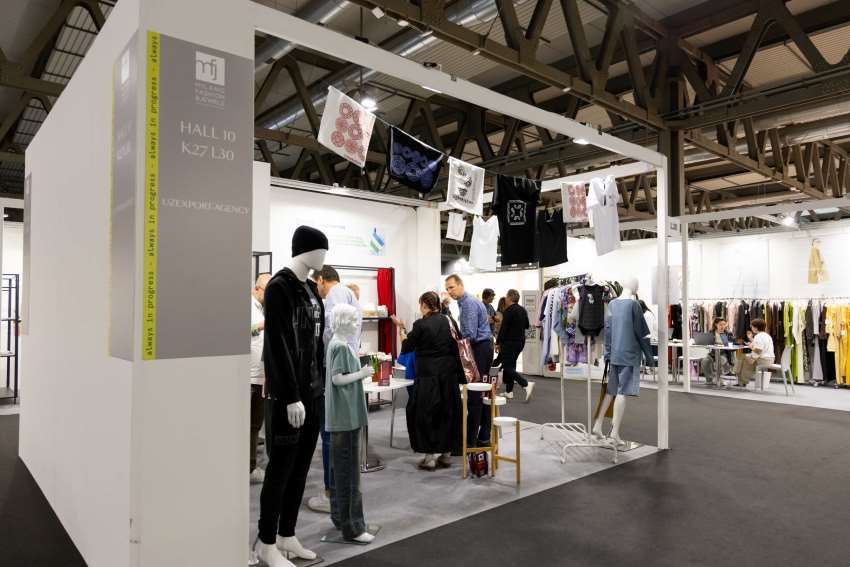
The fourth edition of Centrestage, Asia's premier fashion event will be held from September 04 to 07 at the Hong Kong Convention and Exhibition Centre (HKCEC). Organised by the Hong Kong Trade Development Council (HKTDC), and sponsored by Create Hong Kong (CreateHK) of the Government of the Hong Kong Special Administrative Region, the show will feature around 240 brands and over 40 fashion events, offering an ideal platform for fashion brands and designers to gain international exposure, and helping to reinforce Hong Kong's position as a leading fashion hub in the region.
With "Future Tribes" as its central theme, Centerstage will feature three thematic zones: Allure- representing craftsmanship, refinement and elegance; Iconic - displaying avant-garde designs; and Metro - showcasing contemporary, minimalistic expressions of urban life. The show will feature around 80 local brands along with international labels from Mainland China, France, Italy, Japan, Korea, Taiwan, the United States and more. Thirty-six buying missions comprising about 1,600 international fashion buyers have been organised to visit the event, providing opportunities for designers to interact with the industry and get useful market insights.
Chinese apparel makers riding on Bangladesh to enter India
Chinese garments are coming to India via Bangladesh. Cotton garments such as trousers, shorts and shirts and cotton T-shirts are among the top four imported items from Bangladesh. This surge is catching up in synthetic textile products as well, at a much faster rates. The high volume of imports from Bangladesh is one of the main factors that has caused stagnation in the textile business in India. Bangladesh holds the second largest share in readymade garments in the world, after China.
Textile companies from China provide fibers and fabrics to units in Bangladesh and get them exported as finished goods to India. Bangladesh can export over 60 products to India duty-free, including readymade garments. The value of garment imports from Bangladesh into India has risen 480 per cent in the last five years. China is seen as taking undue advantage of this trade leniency to Bangladesh.
India imposes GST on textile goods sold in the domestic market. But the same products from Bangladesh reach the domestic market without any duty. The cost difference works out to be ten per cent or 15 per cent. Even the transportation cost from Bangladesh is negligible compared to transporting from, say, West Bengal.