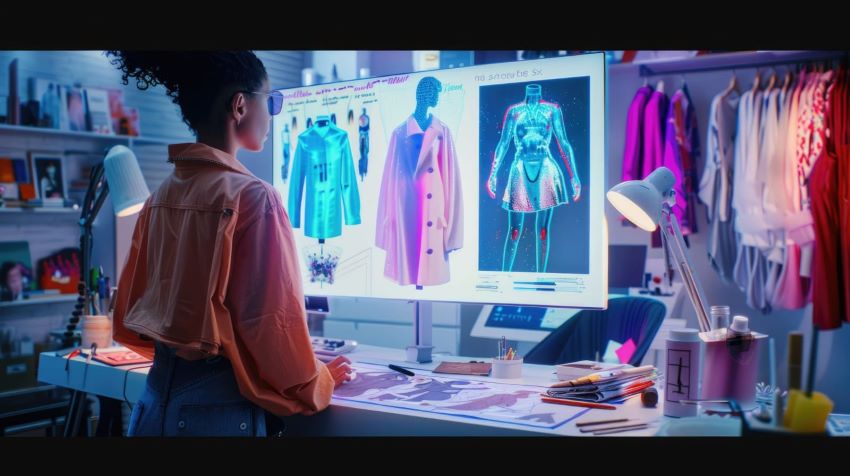
The boundary between physical clothing and digital apparel is rapidly eroding as gaming environments evolve into fully functioning consumer markets. What once existed as cosmetic customization inside video games is now entering the fashion economy, where virtual garments carry cultural, social, and commercial value. For a younger generation raised in immersive digital spaces, avatar identity is no longer secondary to real-world appearance, it is often more visible, more curated, and more socially consequential.
This shift is forcing a redefinition of the global apparel industry. Venture capital is flowing into early-stage digital fashion startups that design exclusively for platforms such as Roblox and Fortnite, signaling that virtual wardrobes are no longer experimental add-ons but emerging standalone markets.
Physical utility vs digital expression
The fashion industry is bifurcating into two parallel systems. The first remains rooted in traditional manufacturing logic, fabric durability, seasonal cycles, logistics, and physical wearability. The second is a rapidly growing digital layer defined by identity construction, social signaling, and real-time expression inside virtual ecosystems.
This difference presents a challenge for legacy apparel corporations. Their supply chains are optimized for long production timelines and physical inventory risks, while digital fashion operates on instant deployment, iterative design cycles, and near-zero marginal cost per item. In this environment, a virtual jacket can be designed, distributed, and monetized globally in hours rather than months.
The scale of adoption underscores the momentum behind this transition. On Roblox alone, users consumed over 1.6 billion digital fashion items within a nine-month period, marking strong year-on-year growth and reinforcing the platform’s role as a major distribution hub for virtual apparel.
Gen Z and Gen Alpha drive identity-led consumption
The growth of digital fashion is deeply rooted in behavioral shifts among Gen Z and Gen Alpha consumers. For these cohorts, clothing is no longer limited to physical utility or offline social signalling. Instead, fashion has entered a multi-layered identity system that operates across both real and virtual environments.
Research into avatar customization behavior highlights three dominant identity patterns. The ‘accurate double’ reflects users replicating their real-world appearance. The ‘improved alter ego’ represents an enhanced self-image optimized for social performance. The ‘perfect stranger’ enables entirely detached identities used for experimentation, anonymity, or creative expression. In virtual environments, traditional fashion drivers such as physical attractiveness decline in importance. Instead, attributes like coolness, originality, and subversion become dominant signals of value. This marks a departure from conventional retail psychology.
Industry projections suggest nearly 40 per cent of global fashion brands are now preparing to launch virtual collections alongside physical releases. Consumer data reinforces this shift, with 56 per cent of Gen Z users reporting that styling their avatar is more important than styling their real-world appearance in certain contexts. As a retail strategist notes, consumption is tied to experience rather than material ownership, with digital garments providing the same psychological reward as luxury physical goods once did.
Technical friction slows seamless expansion
Despite strong demand signals, the digital fashion remains constrained by structural and technical limitations. Unlike physical apparel, which operates on standardized sizing systems, digital clothing lacks universal interoperability. A garment designed for one gaming engine often cannot be transferred to another due to proprietary formats and platform-specific rendering systems.
Production complexity is another barrier. High-quality 3D fashion assets require computational resources, making them difficult to optimize for users on low- and mid-range mobile devices still the dominant access point in many markets. Intellectual property protection adds further complexity. Digital garments are highly susceptible to replication, unauthorized resale, and manipulation across fragmented online marketplaces, forcing brands to rethink enforcement strategies in a largely decentralized environment.
Platform partnerships replace independent digital infrastructure
In response to these challenges, major apparel brands are now bypassing standalone development in favor of deep integration with established gaming platforms. By embedding digital collections directly into ecosystems with existing user bases, brands can reduce technological friction while gaining immediate market access.
These partnerships also function as controlled testing environments. Brands can evaluate demand for digital designs without committing to physical production cycles, reducing waste and improving forecasting accuracy.
One example is Nike’s acquisition and deployment of RTFKT, a digital fashion studio specializing in virtual sneakers and avatar wearables. Rather than treating digital assets as marketing extensions, Nike integrated them into its broader commercial strategy, linking virtual drops with limited physical releases. This created a hybrid consumption model where digital ownership enhances physical product value.
3D commerce becomes a conversion engine
Beyond gaming ecosystems, 3D fashion assets are reshaping traditional e-commerce interfaces. Embedding interactive product models on retail pages significantly improves user engagement and purchase confidence. In some cases, conversion rates increase by as much as 94 per cent when consumers can rotate, inspect, and interact with garments virtually before purchasing.
Fast-fashion companies are adopting these tools to reduce return rates and shorten decision cycles. By simulating product fit and appearance digitally, brands are effectively shifting parts of the buying decision upstream before physical inventory even enters production. This integration is gradually transforming e-commerce into a predictive manufacturing system, where demand signals are validated through digital interaction before supply is created.
Economic advantage of digital fashion models
The operational differences between traditional and digital fashion models are becoming increasingly pronounced. Physical retail continues to carry high inventory risk, warehousing costs, and seasonal overproduction challenges. In contrast, digital fashion eliminates waste entirely, replacing physical sampling with virtual prototyping.
Table: Performance comparison: retail models in the digitized marketplace
|
Operational pattern |
Traditional fashion model (physical only) |
Integrated digital/metaverse model |
|
Inventory Waste & Overhead |
High (Unsold seasonal stock, physical warehousing) |
Zero for digital assets; highly minimized via digital prototyping |
|
Time-to-Market (Prototyping) |
3 to 6 months (Fabric sampling, physical shipping) |
Reduced by up to 70% using 3D rendering engines |
|
Primary Consumer Value |
Physical comfort, thermal utility, real-world utility |
Self-expression, avatar identity, fluid social experimentation |
|
E-Commerce Conversion Impact |
Baseline conversion metrics from flat photography |
Up to 94% conversion lift via interactive 3D elements |
|
Margin Structure |
Standard retail margins restricted by material costs |
Extremely high margins on digital goods; continuous secondary royalties |
Time-to-market is also significantly reduced. What once required months of fabric sourcing and manufacturing cycles can now be executed with up to 70 per cent faster turnaround using advanced 3D design systems. More importantly, digital fashion introduces a new margin structure. Virtual garments carry near-zero marginal production costs after initial design, while also enabling ongoing royalty streams through secondary usage and resale inside digital ecosystems.
Rise of style3D and digital apparel systems
As digital fashion expands, backend infrastructure providers are becoming critical enablers of this transformation. Companies such as Style3D, headquartered in Hangzhou with global offices in Paris, Milan, and London, are building the software architecture powering virtual apparel creation.
Specializing in AI-driven 3D modeling and collaborative design environments, Style3D enables global apparel manufacturers to significantly reduce prototyping cycles and minimize textile waste. Founded in 2015, the company represents a growing category of “digital-first” fashion infrastructure providers that sit between traditional manufacturing systems and emerging virtual retail ecosystems. These platforms are foundational to how brands transition into hybrid physical-digital operating models.
Next competitive frontier in fashion retail
The pattern of global apparel retail suggests that digital fashion is not a parallel experiment but an emerging core business vertical. As macroeconomic pressures slow traditional retail expansion, virtual fashion offers brands a high-margin, low-waste, and data-rich alternative growth channel. In this evolving landscape, consumer engagement begins long before physical purchase and increasingly persists after it. The avatar becomes the primary storefront, and identity becomes the most valuable retail currency. The companies that adapt early to this structural shift building infrastructure for both physical and virtual consumption are likely to define the next decade of global fashion commerce.