FW
Bangladesh: Labour unions still a distant dream in RMG units
It is extremely difficult for garment workers in Bangladesh to organise and form trade unions. When workers went on strike for higher wages in December, at least 11 union leaders and workers’ rights advocates were detained under a wartime emergency law which authorises detention without charge for up to six months.
Employers responded to the strike by closing 59 factories and filing charges against hundreds of workers. As many as 1,500 workers were dismissed, and many of them have been blacklisted from getting other jobs in the industry.
The RMG industry accounts for more than 80 per cent of Bangladesh’s exports. The minimum wage has not increased since 2013 and wages in the garment industry are among the lowest in the world. Meanwhile, the cost of housing, basic commodities and medical care is spiraling.
Even nearly four years after the April 2013 Rana Plaza tragedy, which killed more than a 1,000 garment workers and injured many more, little has been done to guarantee respect for the rule of law, including national labor laws and international labor standards.
Bangladesh is eligible for trade preferences under the EU’s GSP regime. But there is a feeling special trade privileges should be reserved for those countries that respect fundamental labor rights and that Bangladesh isn’t among these.
Red Heart remains US women’s favorite yarn brand
Women across the United States, for the third time, say Red Heart is their favorite yarn brand. It has won the 2017 Women’s Choice Award as America’s most recommended yarn brand. This award designation is based on a national survey distributed to tens of thousands of women across America who were asked to select the brands that they would highly recommend to their family and friends.
Red Heart is a brand used by knitters and crocheters. From basic to fashion, 100 per cent acrylic to wool blends, Red Heart has a broad range of yarns and free patterns for every level of knitter or crocheter.
Since word of mouth has been shown to improve marketing effectiveness by 54 per cent, the significance of being a highly recommended brand by women is enormous. Women have remarkable spending power and it’s continually growing. They currently control the majority of the purchasing decisions for consumer goods in America. Women are also likely to influence or manage big ticket purchases as well as everyday purchases.
Red Heart is part of the Coats group. The other craft brands are Anchor, Rowan, Schachenmayr, Regia, Coats zippers and Coats sewing threads. Red Heart yarns are available in North America and Europe. Red Heart Boutique is its newest yarn collection targeted at the fashionista knitter and crocheter who loves beautiful textures and colors but still wants affordable options.
Nepal wants India to remove service tax on ocean freight
The two countries have a bilateral transit treaty. India has imposed a 4.5 per cent service tax on ocean freight costs. Although the tax had been introduced for Indian importers, Nepali traders are having to pay it too as they fully rely on Indian clearing agents to handle shipments from third countries unloaded at Indian ports. These agents have been passing on the additional charge to Nepali importers, making third country imports shipped through Indian ports costlier.
Ocean freight costs vary depending on the distance of the port where the shipment originates. Ocean freight costs from China to Kolkata for a 20 ft. container range from $600 to 1,600. Charges range from $3,700 to 4,500 for a 20-ft. container originating in the US. Since taxes are imposed on freight costs, Nepal-bound goods unloaded at Indian ports have become costlier.
Nepal has also requested India to remove the anti-dumping duty imposed on Nepali jute and jute products. The anti-dumping is valid for five years and has been imposed on jute yarn and twine, hessian fabric and jute sacking bags in all forms and specifications.
Lectra upgrades Jerome Viala makes him VP
Lectra has appointed Jerome Viala as executive vice president. Earlier he was chief financial officer. Viala is now in charge of coordinating the industrial, customer care, consumables and parts, and international human resources activities. In parallel, over the last few years, he has become increasingly involved in developing Lectra’s international operations, including the opening of subsidiaries in South Korea and Vietnam. Viala a business school graduate began his career as a credit analyst. He’s known for his rigor, his ability to make decisions and stand by them, and his many human qualities.
Lectra will soon announce a new roadmap, revealing the group’s ambitions for the 2017-19 and beyond, and Viala is expected to contribute to the implementation of Lectra’s new strategic roadmap.
Lectra is the world leader in integrated technology solutions dedicated to industries using fabrics, leather, technical textiles and composite materials. It serves major markets like fashion and apparel, automotive, and furniture as well as a broad array of other industries. Lectra’s solutions, specific to each market, enable customers to automate and optimize product design, development, and manufacturing. With more than 1,500 employees, the group has customers in more than 100 countries.
Colombia, India looks for stronger ties in textiles, apparel sector
India is looking at developing trade relations with Colombia. The color of Colombian products is a potential exchange element. India has a wide range of natural dyes, which Colombia imports. Colombia uses indigo for denim and India is a leading producer of this product. So there is a possibility for collaboration in terms of design, color and fashion.
India also sees potential for increased trade in denim, specifically, by strengthening business relations with Colombian companies in dyeing and printing. Both countries make denim but that made in Colombia is much more sophisticated, particularly its design and good quality finish.
India needs technology and refinement for its clothing industry and both countries could learn from each other because they are not competitors and they make different products for different markets. India exports clothing and textiles to the United States, Europe and Asia, while Colombia sells its products on their domestic market and, on a larger scale, to South America. Colombia is one of the important countries of Latin America. In addition to cotton, synthetic fabrics and fibers, the industry also makes readymade garments.
In general India with an integrated value chain would like to develop trade relations with Latin America through cotton, silk, yarn or mats.
Vietnam’s cotton demand sees an upsurge for 6th consecutive year
"Vietnam’s demand for raw cotton has seen an upsurge for six consecutive years, with August-to-January (Marketing YTD) imports at their highest levels ever. This is a positive sign for US cotton exports, as American cotton has made up about 40 per cent of Vietnam’s cotton imports over the last three years. US exports of cotton have made up about 50 per cent of Vietnam’s imports to date, suggesting even greater market share than in the past."
Vietnam’s demand for raw cotton has seen an upsurge for six consecutive years, with August-to-January (Marketing YTD) imports at their highest levels ever. This is a positive sign for US cotton exports, as American cotton has made up about 40 per cent of Vietnam’s cotton imports over the last three years. US exports of cotton have made up about 50 per cent of Vietnam’s imports to date, suggesting even greater market share than in the past.
FDIs into Vietnam
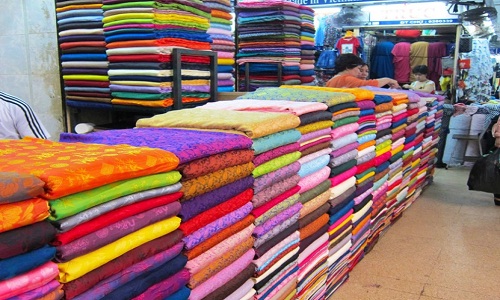
Much of Vietnam’s growth in recent years has been driven by a decline in cotton spinning in China. China’s now ended cotton price support program required that the state reserve purchase large amounts of cotton, which drove up cotton prices in China relative to global levels. Due to this uncompetitive pricing, a wave of FDI flowed into Vietnam’s spinning sector.
With ASEAN-China Free Trade Agreement, Vietnam-produced cotton yarn has duty free access to China, versus a 40 per cent above-quota duty on raw cotton imported into China. Many Chinese-owned mills relocated to Vietnam, spinning the same yarn using the same (mostly US) cotton, then shipping the yarn to China for the next stage in the value chain. About half to two-thirds of Vietnam’s cotton imports are spun in foreign-owned mills, with much of it exported to China.
Impact on the US
Given the United States’ pre-eminent position in Vietnamese cotton sector, any decline in Vietnam’s spinning would negatively impact US exports. Additionally, when US exporters were shut out of China by its initial policy moves, they were mostly able to shift to other markets, especially Vietnam, as spinning moved there. But if demand in Vietnam dried up as a result of reserve auction sales in China, there would be no new spinning transferred to markets where US cotton could compete for business. US exports would have been replaced by releases from China’s state reserves.
Factors driving Vietnam’s spinning
There are several reasons for Vietnam’s growth relative to India and Pakistan. Both India and Pakistan have faced crop shortfalls and tighter stocks in the last year, which led to comparatively high internal prices even as China’s domestic prices were becoming more competitive. Another key factor driving Vietnam’s growth may be the China-ASEAN Free Trade Agreement, which began to come into effect in 2010. With full implementation of provisions related to cotton and yarn implemented fairly rapidly, China’s customs duty on yarn imported from Vietnam, or from any ASEAN country, is zero.
Some other ASEAN countries such as Indonesia also recorded a rise in yarn exports to China, while yarn exports from major non-ASEAN countries such as Uzbekistan and South Korea saw a decline. If duty-free access for yarn is driving increased spinning in Vietnam, then the China-ASEAN Free Trade Agreement could be pushing US cotton exports higher. Yarn spinning being shifted from producer-countries like India, Pakistan, Uzbekistan, and to an extent China, into duty preferred importer countries like Vietnam bodes well for US exports. Because the China-ASEAN Free Trade Agreement does not require that raw cotton inputs be sourced within the area, US exporters are able to derive an indirect benefit from China’s duty-free ASEAN access.
Welspun net profit down 17 per cent
Welspun India has had a 17.27 per cent decline in consolidated net profit for the third quarter ended December 31, 2016. The home textiles company had posted a net profit of Rs 181.61 crores in the same period of last financial year. Income from operations in the quarter under review was up 3.85 per cent compared to the same period last year.
The company is in the process of establishing a new supply chain system in textiles which was never there before by introducing RFID. RFID will help it track the entire supply chain. Welspun has put up a team in Egypt to source cotton and thereafter all processes from spinning to weaving and processing will be in house.
Tilt, the smart textile launched in the US market, is the company’s patented product and will be a new way of looking at textiles. In the next three or five years futuristic textiles may be the next step. As the consumer moves in smart cars and gets into smart homes, Welspun plans to bring in smart textiles to them.
Welspun aims to expand focus on branded and innovative products to become a $2 billion company in four years, with 20 per cent revenue coming in from domestic sales.
Las Vegas ready to host Sourcing at Magic on Feb 20
Sourcing at Magic will take place at Las Vegas Convention Center in Las Vegas from February 20 to 23, 2017. This is the largest biannual US trade show for the global retail fashion industry and supply chain, especially apparel, footwear and accessories. It is known for staying ahead of trends, while continually revamping, expanding and refining its floor offerings. This edition will unveil a new African Pavilion and a refreshed women’s fashion showcase.
The African Pavilion will feature 11 countries including Kenya, Ethiopia, Madagascar, Mauritius, Nigeria, Rwanda, South Africa, Lesotho, Ghana, Cameroon and Uganda. Additional new features will include an African-inspired fashion gallery, an African designers’ showcase and special events inside the Africa Lounge.
Another show category, WWDMAGIC, will debut with new look and feel at the upcoming event. As the largest showcase of women’s apparel and accessories in the fashion industry, the category’s new, more streamlined aesthetic will feature modern, colorful and eclectic designs and initiatives, including 8 ft. walls, inspiring signage, redesigned lounges and sleek design finishes.
Along with the redesigned show floor, new features will include a modern trend presentation, a blogger social house and a DJ lounge. Sourcing at Magic is held every February and August. It attracts thousands of attendees from more than 80 countries.
Texworld USA draws record visitors
The winter 2017 edition of Texworld USA and Apparel Sourcing USA was a record-breaker, both in terms of exhibitors presented and visitor attendance. Texworld boasted over 225 exhibitors representing 12 countries, including Canada, US, Colombia, India, UK China, Hong Kong, Japan, Turkey, Korea and Taiwan. The Lenzing Pavilion had 17 exhibitors focused on integrating sustainable fibers into a wide range of product categories.
Apparel Sourcing presented 107 suppliers from nine countries including China, Hong Kong, India, Myanmar, Taiwan, USA, Sri Lanka, Mexico and Peru. The final attendance showed a 20 per cent increase over previously documented record for any winter edition in the show’s 10-year history.
Texworld USA’s educational sessions proved to be a big draw. The seminars focused on hot topics like TPP and duty-free trade, color and fabric trends, digital printing, and the impact of the buy-now-wear-now trend. The showcase placed a heavier emphasis on curating textiles across all 16 categories of products available and allowed visitors to get a wider view of exhibitor offerings for spring/summer 2018.
While buyers can visit other textile or apparel shows to network and get inspiration on trends, Texworld USA is the show to find in-demand, on-trend fabrics at realistic and affordable prices. It is an order writing show.
Denmark sees strong business potential in Pakistan’s textiles sector
Denmark sees a huge opportunity in investing in Pakistan’s textile sector. The country had helped Pakistan secure GSP Plus status. Pakistan’s access to GSP Plus has substantially increased the scope for EU textiles companies to import high quality products at competitive price while Pakistani exporters have been granted duty free access to EU. So both Denmark and Pakistani companies are looking to find partnership opportunities and avail of the benefits.
Denmark is keen to expand bilateral ties with Pakistan through enhanced trade, investment, and sharing expertise mainly in the energy and textile sectors. The current trade volume between Denmark and Pakistan is around $450 million. Among Pakistan’s advantage are an abundance of raw material, socially responsible business strategies, relatively inexpensive and well-qualified labor, state-of-the-art vertically integrated textile set-ups, and design expertise.
The two countries have been enjoying historical friendship and traditional cooperation in many fields for many years but now it’s felt more efforts are needed to further strengthen ties by holding business-to-business meetings and exchange of trade delegations. Presently many Danish companies are engaged in various sectors of the economy in Pakistan.
A delegation from Pakistan visited Denmark to assess existing and potential resources, technology, knowledge and market opportunities.