


FW
Major brands urged to sign the Bangladesh factory safety accord
Swedish furniture giant IKEA and American music mogul Sean Combs’ clothing have not yet signed the new accord for the safety of factory workers. The new pact is a three-year extension of the Bangladesh Accord, a legally-binding agreement between global brands and trade unions drawn up after the Rana Plaza collapse. It established a fire and safety program for the country’s $28 billion a year textile industry, which employs about 4 million people.
Till now, 175 of the 220 companies in the original accord have signed, but high-profile brands including Abercrombie & Fitch, Combs’ Sean John apparel and Britain’s Edinburgh Woollen Mill have not signed as yet. Campaigners have urged them to do so, arguing that other schemes such as IWAY lack transparency because they do not make inspection findings and reports public.
Bangladesh, which ranks behind only China as a supplier of clothes to Western countries, relies on the garment industry for more than 80 percent of its exports.
Ted Baker London launches a new bedding collection
Ted Baker London has launched a new bedding collection that consists of reversible duvet and comforter sets, quilted and scalloped coverlets and shams as well as an assortment of decorative pillows. The collections are adorned with birds, butterflies and blooms. The detailed Entangled Enchantment Collection mimics print Ted Baker’s womenswear collections.
The full home product line is available online and in select Bed Bath & Beyond stores nationwide. Its prices start at $49.99 for decorative pillows and $129.99 for bedding. The range offers bright whites, colorful pastels and bold floral designs that reflect the brand’s most popular styles and signature prints, in line with Baker’s seasonal collections.
The Flight of the Orient bed linens feature sparkle-adorned blossoms among bejeweled birds with a palette of soft grays and pale pinks alongside zesty yellow and vibrant fuchsia. It is inspired by the richness of flora and fauna found in the royal gardens, intricately decorated branches, florals and hummingbirds combine in the opulent Highgrove print.
Bangladeshi exports to Japan to cross $1-billion
Bangladeshi garment exports to Japan grew by 1.94 percent to $445.99 million in July-January in 2017-2018 fiscal year and is expected to cross $1-billion mark at the end of the year. The country exported around 40 items to Japan including T-shirts, jersey pullovers, shirts, baby garments etc. Currently, the country exports mostly basic items but there is a huge opportunity to export fancy, fashionable and high value added items.
The Bangladeshi exporters have benefitted by special incentives of the government as nontraditional market. Japanese buyers are very strict in terms of quality and production process. They insist on 100% quality inspection of the goods where rest of the buyers is following AQL for quality auditing. On the other hand, they are also very cooperative. If manufacturer faces any problem and can explain logically, they not only understand it but also try to support the factory to overcome the issue. They consider the supplier and business as their partners and believe in mutual growth and development.
Alcis Sports collaborates with Flipkart
Alcis Sports has partnered with Flipkart to manufacture, sell and distribute apparel merchandise in India for FIFA World Cup 2018. The retailer has lined up a comprehensive range of over 550 articles exclusively available on Flipkart. This merchandise will include t-shirts, polo t-shirts, shorts, track pants, and tracksuits.
Besides online, the products will also be available across all the brand’s five exclusive stores and large format retail outlets such as Lifestyle, Shoppers Stop, Central, Globus, Sports Station, etc.
The licensed apparel range incorporates country-specific merchandise for some of the fan favourites such as Brazil, Germany, England, Spain, Portugal, France, Uruguay, Belgium and Sweden. The licensed apparel merchandise for the World Cup starts at Rs. 399 and consists of over 550 unique articles. The athleisure brand has the rights to sell in Sri Lanka, Pakistan and Nepal as well apart from India.
TTT generates 70 per cent revenue from exports
Croatian Trgovišće Textile Factory (TTT), whose tablecloths and napkins decorate the tables and can be found on the bedding of some of the most expensive hotels in Europe, has posted a revenue growth of 9 to 36 million kuna in the last five years. Around 70 percent of this revenue is generated by exports alone.
The company supplies one-third of its products to the largest domestic (Croatian) hotel names like Plava Laguna (Blue Lagoon), Maistre, Blue Sun, etc. The rest of the company's promising revenue is earned across the rest of the world, mostly in other European countries in addition to the United Kingdom, such as Switzerland, Germany, Sweden, and Iceland.
The company, which currently employs 85 workers and still supports 30 jobs at its suppliers, almost went bankrupt owing to the collapse of its biggest Italian customer. It the decided to look for other foreign buyers and rely on the help of the Croatian Bank for Reconstruction and Development (HBOR), whose export finance and payment instruments have been used regularly.
Wool activewear a new global fashion fad
"Leading athleisure companies are experimenting with growing acceptance of wool activewear and the properties associated with it. Be it wool’s softness and odour-resisting properties, brands like Adidas and Lululemon are making sure the trend catches on. Added to this, wool’s inherent properties such as breathability and moisture-wicking capabilities are slated to drive the growth of the material. This trend was highlighted at the recent ISPO trade fair in Munich. Norwegian brand Devold won an ISPO Award 2018 for its Tuvegga Sport Air base layer. The reversible two-sided functional base layer is designed for high-performance activities and is made from 100 per cent Merino wool."
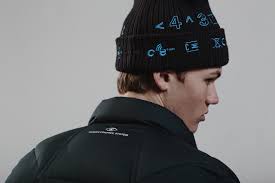 Leading athleisure companies are experimenting with growing acceptance of wool activewear and the properties associated with it. Be it wool’s softness and odour-resisting properties, brands like Adidas and Lululemon are making sure the trend catches on. Added to this, wool’s inherent properties such as breathability and moisture-wicking capabilities are slated to drive the growth of the material. This trend was highlighted at the recent ISPO trade fair in Munich. Norwegian brand Devold won an ISPO Award 2018 for its Tuvegga Sport Air base layer. The reversible two-sided functional base layer is designed for high-performance activities and is made from 100 per cent Merino wool.
The Woolmark Company displayed products like wool footwear, seamless apparel and wool filling. Lars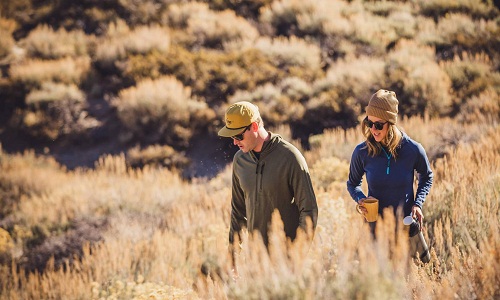 Ulvesund, sports and outdoor advisor, The Woolmark Company, stated while many outdoor brands already have wool in their collections, increasing number of brands are introducing wool into their high-intensity categories. Most of the team’s recent meetings were about new developments and taking wool in sports to the next level. A lot of wool innovations are in the making right now, both in current product areas but also in new segments where there is none, or very little, wool today. This will give wool a much bigger platform for the future, he added.
Here comes another sportwear frontrunner, Adidas. Craig Vanderoef, Senior Director of global running apparel and customisation, Adidas, says in developing wool activewear, his team wants a garment that will keep the wearer warm when cold, cool when hot, dry when raining, and windproof – and look great. During a recent Australian Wool Innovation (AWI) podcast, he said the company needed one thing to bring all those together and that was Merino wool.
Wool’s Inherent properties
Wool’s natural properties make it ideal for next-to-skin items such as underwear, base layers, socks or T-shirts. One of the most important is breathability. Wool can absorb large quantities of water vapour – twice as much as cotton and 30 times as much as polyester – and allow it to evaporate. When worn next to the skin, wool works as a dynamic buffer for the microclimate between the fabric and the skin, smoothing out the humidity and temperature. This makes wool garments less clingy and more comfortable than garments made from other fibres. Add to this the traditional wisdom that wool keeps you warm even when wet. The inherent natural 3D crimp of the wool fibre traps pockets of still air, insulating you from a cold environment. In the outdoors, this can be the difference between life and death.
Less dramatic but equally important is wool’s natural resistance to odour. Athletes such as mountaineers and hikers, who may wear clothing for long periods without bathing or laundering, report less odour build up with wool apparel than with synthetics. Wool’s ability to absorb and release the water vapour that builds up during physical activity also prevents the accumulation of sweat and bacteria that lead to unpleasant smells. The unique chemical structure of wool enables it to absorb and lock away odours, which may develop, and only release them on washing.
Greater Than A, the sportswear brand of Norwegian alpine ski racer Aksel Lund Svindal, an Olympic gold medallist, uses wool in his sportswear brand. The brand aims to make functional clothing that looks and feels fantastic and at the same time causes no harm to the planet. Svindal likes wool for its technical features, such as how it handles changes in temperatures, and the transport of humidity away from the skin. Aksel uses wool for training and has a race suit designed for aerodynamics. The trick is to get changed as soon as you can in the finish area. Put on some dry and warm wool.
Perf' launched with a combination of Italian design and cutting-edge technology
"The products offered by the brand are dedicated to all those heroes, who live with a "Never Give Up" attitude and extreme zeal. From runners who run for leisure, to fitness freaks who take their every single workout to a new level and to professional athletes who play the game at the highest level, Perf lets each of them find their true rhythm. Brand has the following product offerings both for Men & Women."
 Fashion in Italy, since its beginning, has been synonymous with masterful tailoring, rich history, impeccable style and grand tradition. Perf', the Italian Sportswear brand embodies this combination of Italian design and technology that denotes passion and performance.
The parent company of brand PERF Italia, Rahman Group is a world leader in the field of leather & footwear manufacturing. The group has a worldwide presence with manufacturing facilities in countries such as India, France, South Africa, UAE and Tunisia. Well equipped with the most modern machineries, the group also has a specialised workforce to produce all types of quality leather, footwear(especially in safety & army footwear) and leather goods.
Product basket
The products offered by the brand are dedicated to all those heroes, who live with a "Never Give Up" attitude and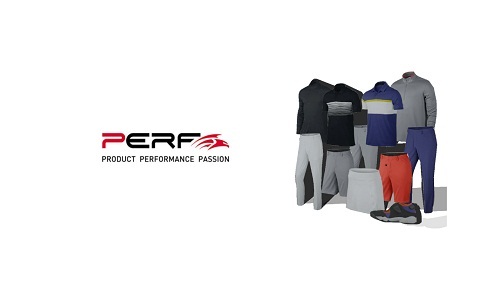 extreme zeal. From runners who run for leisure, to fitness freaks who take their every single workout to a new level and to professional athletes who play the game at the highest level, Perf lets each of them find their true rhythm. Brand has the following product offerings both for Men & Women:-
Dedicated to all sportslovers, the brand Perf offers products for everyone from runners running for leisure to fitness freaks to professional atheletes. These products are dedicated to all those heroes, who live with a "Never Give Up" attitude:
• Athleisure • Active wear • Performance garments viz.Yoga, Jogging, Sports Inspired • Winter Wear Adventure Jackets • Including sports bra etc for females
Quality driven
Deeply committed to quality, the Perf Italia is ISO 9001: 2008 certified and follows stringent EN ISO 20345 and DIN norms. The brand is equipped with requisite infrastructure with a perfect blend of highly technical, skilled and semi-skilled workforce and competent managers that have helped it to carve a niche for itself in theglobal market.
Rajiv Pande,President, Apparel Div believes that consumer insight drives its product development, functionalities, etc. as it is highly grounded effort to win the heart of the prospect because brand is not in a hurry to prove rather we want to win long term loyalties and this is the core DNA of our brand and the overall work ethos of this Indian translational group.
Hammad Rahman,CEO terms it as an aspirational product for the discernible millennials who have taste for quality and most contemporary product but may not have affordability to buy brands. Product has a differentiated approach with international connect but suited to taste and pockets of Indian customers.
Hong Kong grows by four per cent
In the first quarter of 2018, Hong Kong’s economy grew by 4.7 per cent year-on-year in real terms, up from 3.8 per cent growth in 2017.
The growth of private consumption expenditure quickened to 8.6 per cent in real terms in the first quarter over a year earlier, from 5.5 per cent in 2017.
Total exports of goods grew by 5.2 per cent year-on-year in real terms in the first quarter, after increasing by 5.9 per cent in 2017, while exports of services grew solidly by 7.5 per cent in real terms in the first quarter, up from 3.2 per cent growth for 2017.
The four pillar economic sectors of Hong Kong are trading and logistics, financial services, professional services and other producer services and tourism. The industries which Hong Kong has clear advantages in for further development are cultural and creative, medical services, education services, innovation and technology, testing and certification services and environmental industries, which together accounted for 8.9 per cent of GDP in terms of value-added in 2016.
Hong Kong is a highly attractive market for foreign direct investment. Global FDI inflows to Hong Kong in 2016 ranked fourth globally. In terms of outflows, Hong Kong ranked third, after the Chinese mainland and Japan.
Bling show at Tex World
Traditional trends, such as bold prints and metallic embellishments, jostled with high-tech textiles and augmented-reality apparel for the attention and spend of big buyers at the recent New York Tex World international sourcing expo.
Brr, an Atlanta-based start-up, was keen to showcase its innovative high-tech cooling fabric. At present, Brr's process has only been applied to synthetic fibers and cotton blends. Its success to date, however, has already been enough to secure orders from a number of leading US brands, including Gap and Joseph A Banks.
Customers wanted bling items – spangles and sequins—and metallic finishes. Bright prints, especially florals, were also showing well at the event. American customers seemed to prefer bright colors with splendid designs – big flowers. By contrast, Europeans prefer more solid colors.
While florals were still on trend, more and more ethnic designs were coming through.
Europe is far more of a fast-fashion market, while the US tends to be a little more stable and conservative, as well as being very price-oriented.
For Minerva, a South Korean fashion brand, foil is doing very well right now.
Brooklyn Fashion and Design Accelerator, a ethical style hub with a focus on high-tech textiles, introduced a jacket complete with traffic-signaling LED patches.
Wool needs proper assessment
While wool – natural, renewable, and biodegradable – has a positive environmental story, rating tools score it poorly due to flaws in the way certain impacts are assessed, or in some cases, not assessed.
For example, important impacts such as microplastics pollution are not considered in ratings that rely solely on life cycle assessment (LCA).
Additionally, LCA footprinting should cover a product from cradle to grave. But because it is easier, some ratings use only cradle to gate. As a result, the downsides to other fibers are left out, while what’s negative for wool is left in.
The issue is that of communicating wool’s environmental credentials. Natural, sustainable, and biodegradable, wool is as good as it gets.
Demand for finer wool in active wear and next-to-skin continues to grow, while a low price for broader wools, relative to other fibers, should contribute to an improvement.
Past supercycles, when they have turned down, have always been due to events external to the industry.
As wool prices continue to supercycle, sustainability takes centre stage.
There has been yet another rise in prices for Merino and fine Crossbred wool, in what is described as a supercycle. The last supercycle occurred in the late 1980s. This one has now gone on for more than 112 weeks, taking the wool industry into new territory.
Seasonal conditions in Australia and South Africa may see supply remain at current levels in the short term.











