FW
New Zealand trade shifts as fabric gains while apparel slumps
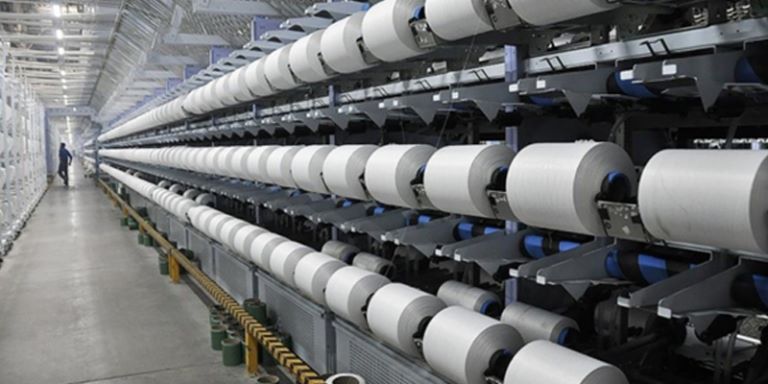
The New Zealand T&A sector is navigating a distinct divergence in trade patterns during the first five months of 2026. While domestic retailers have adopted a cautious procurement strategy, leading to a 4 per cent Y-o-Y decline in total apparel imports, the demand for intermediate textile fabrics has increased. This trend highlights a fundamental adjustment in the local supply chain, as manufacturers prioritize raw material replenishment and localized processing over the large-scale importation of finished garments.
Strategic shift to intermediate inputs
The contraction in apparel imports - affecting both knitted and non-knitted categories - reflects a broader effort among New Zealand retailers to maintain disciplined inventory cycles amid fluctuating consumer sentiment. However, the 10.5 per cent growth in textile fabric imports suggests that domestic production capacity is being utilized more aggressively. Industry analysts suggest that this shift indicates a potential move toward ‘near-shoring’ or value-added finishing within New Zealand. By importing raw fabrics rather than finished apparel, local brands are better positioned to respond to market volatility with shorter lead times and improved margin control, essentially insulating themselves from the inventory bloat that plagued the sector in previous cycles.
FTA implications and market Outlook
The recent signing of the India–New Zealand Free Trade Agreement (FTA) in April 2026 is poised to redefine these dynamics. Once ratified, the elimination of 10 per cent tariffs on apparel and textiles will likely alter the competitive landscape. With 100 per cent duty-free access for Indian exports, local retailers are expected to optimize their sourcing networks further. The current moderation in finished goods imports is a strategic consolidation, notes a local trade consultant. As the FTA lowers entry barriers, we expect a recovery in apparel flows, but the current strength in fabric imports confirms that local players are investing heavily in their own manufacturing agility, he adds
Sectoral dynamics
The New Zealand T&A market remains primarily import-driven, relying on global hubs for the bulk of its finished goods. Key categories include casual wear and sportswear, with a growing focus on high-value, sustainable apparel. Growth plans are currently centered on leveraging new trade agreements to diversify supply chains and improve cost-efficiency. Historically, the sector has maintained a high dependence on Asian manufacturing, though current trends favor a transition toward flexible, input-oriented sourcing to support local garment development and inventory resilience.
Chhattisgarh accelerates textile ambitions with Nava Raipur development
Chhattisgarh is aggressively diversifying its industrial landscape, transitioning from a traditional mineral-heavy economy toward value-added manufacturing. The recent groundbreaking of the first major garment production facility at the Nava Raipur Textile Park signals a strategic shift for the state. Tamil Nadu-based Swift Textiles has committed an investment of Rs 235 crore to establish a state-of-the-art facility focused on knitwear and children’s apparel. Designed primarily for export markets in Europe and North America, the unit is expected to serve as an anchor for the 81-acre industrial zone. This development follows a period of intense industrial interest, with the state attracting over Rs 8 lakh crore in investment proposals across various sectors over the past 18 months.
Scaling social and economic impact
The Nava Raipur project is being optimized to deliver both commercial scale and localized socio-economic benefits. Beyond Swift Textiles, the allocation of plots to companies such as Punit Creations and Drishti Designs LLP signifies the creation of a nascent textile cluster. Collectively, these initial projects are projected to command an investment of Rs 445 crore and generate upwards of 11,000 direct jobs. State officials emphasize that the development is central to the Chhattisgarh Industrial Development Policy 2024–30, which offers robust incentives—including employment-linked support - to lure labor-intensive units. By focusing on skill development for youth from tribal regions, the state government intends to integrate rural talent into modern, high-standard garment manufacturing chains, providing sustainable livelihoods while bolstering India’s competitive standing in the global apparel export market.
A dedicated Greenfield industrial hub
Nava Raipur Textile Park is a dedicated greenfield industrial hub in Chhattisgarh offering plug-and-play infrastructure for apparel manufacturers. The park focuses on knitwear, readymade garments, and related accessories for domestic and export markets. Its growth strategy leverages fiscal incentives and strategic connectivity to scale employment-intensive manufacturing and drive regional industrialization.
Gildan Activewear secures global ESG recognition amid market headwinds
Gildan Activewear Inc has maintained its position at the forefront of corporate social responsibility, securing a spot on the ‘Canada’s Best 50 Corporate Citizens’ list by Corporate Knights for the fifth consecutive year. Furthermore, the Montreal-based manufacturer has been included in the 2026 edition of TIME’s ‘World’s Most Sustainable Companies,’ standing as one of only two Canadian firms recognized within the apparel and footwear subcategory. These honors arrive as the company continues to advance its ‘Next Generation’ sustainability strategy, which recently achieved significant milestones, including sourcing 100 per cent sustainable cotton and hitting an approximate 25 per cent reduction in water intensity per kilogram of fabric produced since 2018.
Navigating market volatility and integration
While these sustainability rankings validate Gildan's long-term governance strategy, the company is currently managing a complex market environment. Following the release of a short-seller report on June 16, 2026, which alleged sales inflation, the company’s share price faced downward pressure. In response, leadership has formally reaffirmed its fiscal 2026 financial guidance, first communicated on April 30, 2026, alongside record-breaking first-quarter results of $1.17 billion in net sales. The company remains focused on its operational integration of HanesBrands, leveraging its vertically integrated manufacturing footprint across the Americas and Asia to maintain efficiency and margin stability despite recent share price volatility.
Gildan is a leading vertically integrated manufacturer of basic apparel, including activewear, underwear, and socks. Key markets span North America, Europe, and Asia-Pacific, featuring brands like Gildan, American Apparel, and GoldToe. Growth strategies focus on scaling sustainable manufacturing, international expansion, and category diversification, supported by robust, large-scale facilities.
Rick Owens and Adidas partner for new Thermal-Tech SS27 menswear collection
Reinstating their collaborative agreement, Rick Owens and Adidas have launched their technical Spring/Summer 2027 menswear line at Paris Fashion Week. The collection addresses extreme weather variables by integrating Adidas’ advanced Climacool technology - initially engineered to cool athletes during the 2026 World Cup - into luxury streetwear. The flagship garments comprise inflatable track jackets and vests equipped with built-in cooling fans and ice packs, operating as wearable air conditioning systems designed to mitigate high temperatures.
Commercial viability and market integration
While Owens stated the objective is ‘cooling a runner’s torso as much as possible before a race,’ the retail strategy targets the lucrative intersection of high fashion and functional activewear. The global performance apparel sector is increasingly prioritizing climate-resilient merchandise. Adidas previously validated this concept by supplying inflatable cooling gear for Mercedes Formula 1 personnel, an operational case study proving that industrial thermal mechanics can successfully transition into activewear. By embedding this utility into premium fashion, both entities secure distinct product differentiation. However, market analysts project the core retail revenue will stem from the conventional items in the collection, specifically the technical running boots featuring Megaride-style soles and track pants utilizing Owens’ elongated drawstrings, ensuring a precise balance between conceptual runway presence and commercial scalability.
Teaming up to capture the premium activewear segment
Founded in 1994, Owenscorp designs luxury avant-garde apparel for niche high-fashion markets, while Adidas operates as a global sportswear manufacturer. Their renewed alliance executes a strategic growth plan to capture the premium activewear segment. Adidas anticipates steady 2026 revenue expansion, utilizing high-margin designer collaborations to drive corporate profitability.
Intertextile Shenzhen 2026 witnesses record growth in global buyers participation
The Intertextile Shenzhen Apparel Fabrics 2026 exhibition concluded this June with a marked escalation in cross-border trade activity, attracting over 20,000 industry professionals from 74 markets. Held at the Shenzhen Convention & Exhibition Center, the event hosted nearly 620 exhibitors from 11 countries, reflecting a consolidated effort by international apparel brands to optimize their supply chains. VIP procurement teams from industry heavyweights—including Lululemon, Adidas, and American Eagle - capitalized on improved regional accessibility to secure high-quality textile solutions. Analysts note, this participation increase underscores the strategic commercial importance of the Greater Bay Area as a primary hub for advanced manufacturing and localized material sourcing.
Integrating AI and alternative fibers
Beyond traditional procurement, the 2026 iteration highlighted a rapid commercial transition toward digitalization and sustainable chemistry. The debut of the Future Horizons Forum showcased concrete applications of artificial intelligence in supply chain forecasting and digital manufacturing. Material innovation dominated the trading floor, with a pronounced shift toward alternative natural inputs. Exhibitors reported heightened commercial demand for kapok and hemp fibers, driven by their scalable applications in apparel production. Industry leaders at the event emphasized that textile enterprises will increasingly compete not only through manufacturing capacity but also through knowledge generation, particularly as buyers aggressively seek partners capable of meeting stringent global sustainability mandates.
Advancing global textile trade
Messe Frankfurt (HK) Ltd co-organizes Intertextile Shenzhen, a premier B2B platform connecting apparel fabric suppliers with global buyers. Operating primarily across the Asia-Pacific market, the firm facilitates large-scale trade exhibitions. Its commercial growth strategy prioritizes digital integration and sustainable textile portfolios to ensure long-term international market resilience.
Reformation makes public markets debut as revenue rises in Q1, FY26
Los Angeles-based womenswear retailer, Reformation has formally initiated its entry into the public markets by filing for an initial public offering (IPO) on the New York Stock Exchange under the ticker symbol ‘REF.; The filing reveals a robust financial trajectory, with net revenue reaching $507.1 million for the fiscal year ending December 27, 2025. This performance represents a 15.7 per cent increase from the previous year, further supported by a 30.4 per cent Y-o-Y revenue growth in Q1, FY260. By securing this public listing, the company aims to solidify its position as a scalable leader in the sustainable apparel sector.
Operational strategy and market positioning
The retailer attributes its continued commercial momentum to a high-velocity, data-centric merchandising engine that prioritizes small-batch production. This model facilitates rapid inventory replenishment and maintains an impressive full-price sell-through rate, which has averaged 80 per cent across its direct-to-consumer (DTC) channels between 2021 and 2025. Approximately 90 per cent of the brand's revenue is generated through its own e-commerce and retail footprints. Central to its in-store success is the proprietary ‘Retail X’ showroom technology, currently installed in 49 locations. This digital-first interface empowers shoppers to curate personalized dressing rooms, resulting in an average order value that significantly outperforms traditional retail formats.
Balancing scale with sustainable mandates
Despite competitive pressures and tariff-related impacts that tempered 2025 net income to $12.6 million, the company remains focused on long-term value creation. Proceeds from the offering are intended to facilitate debt reduction and share repurchases, providing the capital flexibility necessary to penetrate international markets and expand into new product categories, including intimates. The company aims to demonstrate that a global fashion enterprise can achieve both environmental integrity and robust financial performance, it stated in its prospectus. As the brand transitions to public status, it maintains a significant ownership stake held by the private equity firm Permira, signaling institutional confidence in the retailer's ability to maintain its growth streak of 20 consecutive quarters of double-digit revenue expansion.
Founded in 2009 as a vintage boutique, Reformation is a vertically integrated, sustainable womenswear brand offering apparel and accessories. It operates primarily through a DTC model in the US, Canada, the UK, and Europe. With growth plans focused on international expansion and category diversification, the brand maintains a strong financial outlook.
Stakeholders to transition from experimental recycling to commercial viability
The global textile and apparel industry has reached a critical inflection point as it grapples with the limitations of linear production models. With the global textile recycling market projected to expand to USD 8.5 billion by 2035, stakeholders are under intense pressure to transition from experimental recycling to large-scale, commercial viability. Addressing this, the Hong Kong Research Institute of Textiles and Apparel (HKRITA), industrial innovation leader Jeanologia, and B-Corp specialist Looptworks have entered a strategic alliance to launch the Green Machine Circular Textile Ecosystem. This initiative is designed to solve one of the industry's most persistent bottlenecks: the cost-effective, large-scale recycling of cotton-polyester blended textiles.
Bridging innovation with industrial deployment
At the center of this tripartite partnership is the deployment of HKRITA’s Green Machine 4.0, a hydrothermal technology capable of separating polyester from cotton-polyester blends at a purity level exceeding 98%. Unlike traditional mechanical recycling, which often results in shortened fibers and degraded material quality, this system facilitates a high-fidelity recovery process. Jeanologia, acting as the primary machinery partner, is integrating this proprietary tech into industry-ready systems that comply with rigorous European CE high-pressure standards. By leveraging Looptworks’ specialized logistics and operational expertise, the ecosystem transforms pre- and post-consumer textile waste into GRS-certified fibers, providing a reliable supply chain for brands seeking to integrate recycled content into their core collections.
Overcoming barriers to mass adoption
The challenge of blended materials - which constitute a significant portion of apparel waste - has historically stifled circularity. As regulations regarding waste disposal and producer responsibility tighten across Europe and North America, this collaborative framework provides a scalable blueprint. By moving beyond laboratory-scale pilots, the partners enable recyclers to convert previously ‘unrecyclable’ waste into profitable revenue streams. This industrial-grade integration represents a shift toward ‘pre-competitive’ cooperation, where technology providers and manufacturers co-develop the infrastructure necessary to reduce global reliance on virgin resources and meet 2030 circular fashion targets.
Driving circular transformation
The Hong Kong Research Institute of Textiles and Apparel (HKRITA) advances the industry through applied research and technology commercialization, specifically in fiber-to-fiber recycling. With a focus on sustainable apparel and home textiles, it targets the mitigation of environmental impacts. The institute is currently aggressively scaling its proprietary hydrothermal recycling technologies to achieve global commercial adoption and support supply chain resilience.
Global luxury market targets value-oriented expansion in 2026
The global personal luxury goods market is entering a transformative phase in 2026, characterized by a transition from the aggressive post-pandemic super-cycle to a more disciplined, value-oriented expansion. As per the latest report by Bain & Company, the sector is stabilizing with sales of personal luxury goods projected to grow by 2 per cent to 4 per cent this year, reaching an estimated valuation between €365 billion and €373 billion. This outlook reflects a moderated trajectory compared to earlier expectations, as brands grapple with the cooling of aspirational consumer spending and the lingering impacts of regional geopolitical tensions.
Divergent regional trajectories redefine retail strategies
Geographical performance remains highly polarized, forcing luxury houses to recalibrate their global footprints. The United States continues to serve as a primary growth engine, sustained by robust spending among high-net-worth individuals and a younger demographic that favors product-centric engagement. Conversely, European markets face headwinds from inconsistent tourist flows, while the Chinese market is exhibiting a gradual recovery characterized by a preference for ready-to-wear collections over traditional leather goods. As Francesca Levato, Partner, Bain & Co notes, the luxury market is stabilizing, but this is not a return to the old rhythm; it is the emergence of a new one. Brands must now prioritize local relevance to capture share in a fragmented landscape, she emphasizes.
Experiences and AI integration shaping consumer journeys
The industry is experiencing a structural shift where luxury experiences - such as hospitality, private travel, and fine dining - are outperforming tangible goods. This shift is compounded by the rapid integration of artificial intelligence across retail ecosystems, where AI serves not only as a back-office efficiency tool but as a sophisticated ‘co-shopper’ for Gen Z and Alpha consumers. To maintain margin resilience, leading maisons are increasingly adopting a performance-based discipline, favoring selective distribution in flagship ‘experience hubs’ while integrating resale and circularity programs to capture value throughout a product’s entire lifecycle.
A leading global management consulting firm, Bain & Company provides strategic guidance to the fashion and luxury sectors. Known for its annual ‘Luxury Goods Worldwide Market Study,’ the firm analyzes global consumer trends, market valuations, and profitability drivers to assist brands in navigating macroeconomic volatility and digital transformation.
Green Machine Circular Textile Ecosystem addresses waste processing challenges for blended materials
The global apparel industry is moving toward a decisive breakthrough in circularity with the establishment of the Green Machine Circular Textile Ecosystem. This tripartite collaboration between the Hong Kong Research Institute of Textiles and Apparel (HKRITA), Spanish engineering leader Jeanologia, and the U.S.-based recycler Looptworks marks a shift from experimental research to scalable industrial deployment. At the heart of this initiative is the Green Machine 4.0, a hydrothermal recycling technology engineered to recover polyester with over 98 percent purity from cotton-polyester blends. By integrating Jeanologia’s industrial machinery expertise with Looptworks’ operational recycling capabilities, the ecosystem addresses the longstanding challenge of processing mixed-material waste that previously rendered blended textiles unrecyclable.
Bridging the gap in supply chain sustainability
This partnership serves as a functional bridge for fashion brands seeking to integrate recycled content into their production volumes without compromising material quality. As global regulatory pressures and ESG mandates intensify, the ability to transform post-consumer textiles into GRS-certified fibers offers a tangible solution to the sector’s reliance on virgin resources. Enrique Silla, Founder and CEO, Jeanologia, underscored the collaborative necessity, noting that textile-to-textile recycling must function as a pre-competitive space where companies unite to solve systemic waste issues. By streamlining logistics and providing industry-ready infrastructure, the initiative enables manufacturers to convert textile waste into viable revenue streams, effectively closing the loop in one of the most resource-intensive segments of the global fashion market.
Headquartered in Spain, Jeanologia is a technology provider specializing in sustainable denim finishing and textile innovation. With over 30 years in the sector, the firm focuses on laser, ozone, and water-recycling systems. Currently expanding into large-scale fiber recycling, the company maintains a robust financial profile and global market leadership.
Alohas expands US presence with launch of new retail sites
The Spanish fashion label Alohas is accelerating its international trajectory, marking its second year in the United States with the inauguration of two high-profile retail sites. Building upon the successful performance of its inaugural Nolita location in New York, the brand has introduced a second NYC storefront on Bleecker Street, alongside a debut West Coast flagship on Los Angeles’ Abbot Kinney Boulevard. This physical expansion serves as a critical bridge between its digital-native origins and an increasingly sophisticated omnichannel strategy, designed to immerse American consumers in its distinct production philosophy.
Redefining inventory through on-demand logic
Central to these openings is the brand's signature on-demand model, which challenges traditional retail paradigms by prioritizing inventory efficiency over volume-heavy stocking. The new US boutiques function less as traditional points of sale and more as experiential try-on hubs. By maintaining limited floor inventory, Alohas enables customers to engage with materials and fit firsthand before finalizing orders for home delivery. This transition from e-commerce to physical retail is underpinned by a 32 per cent revenue growth in FY25, where the company invoiced €45 million, signaling robust market demand for its sustainable, tech-integrated manufacturing approach.
Diversification as a growth catalyst
Beyond its geographic footprint, the firm is aggressively diversifying its product ecosystem to maintain momentum through 2026. Following the expansion of its footwear collections, the brand has recently ventured into the handbag segment, a strategic shift to increase share of wallet among its established demographic. As the company continues to scale its international network - which now spans major hubs including London, Milan, and Copenhagen - these US flagships represent a cornerstone of a broader roadmap aimed at consolidating Alohas’ position as a leader in responsible, sustainable fashion retail.
Minimizing waste with on-demand production
Founded in 2014 by Alejandro Porras, Barcelona-based Alohas is an internet-first fashion brand specializing in footwear and accessories. Operating an innovative on-demand production system that minimizes waste, the company has achieved rapid growth without external venture funding. With a commitment to European-based local manufacturing, the brand maintains a premium market position.