FW
India needs the right approach to guarantee maximum benefits from RCEP
"Despite many rounds of negotiations, the suspense regarding India’s participation in the proposed 16-member mega-trade deal, Regional Comprehensive Economic Partnership (RCEP) continues. The Indian government has engaged three consultants: ICRIER, the Centre for Regional Trade housed in the Indian Institute of Foreign Trade (IIFT), Delhi, and the IIM, Bangalore — to hold stakeholder consultations on India’s strategy in goods, services and investment negotiations. The sentiments regarding the RCEP are quite divided. The first point of objection is that India’s trade deficits have always widened with nations after signing free-trade-agreements (FTAs) with them. This is evident from its FTAs with the ASEAN, Japan, Korea, and Singapore, most of which are RCEP nations."
 Despite many rounds of negotiations, the suspense regarding India’s participation in the proposed 16-member mega-trade deal, Regional Comprehensive Economic Partnership (RCEP) continues. The Indian government has engaged three consultants: ICRIER, the Centre for Regional Trade housed in the Indian Institute of Foreign Trade (IIFT), Delhi, and the IIM, Bangalore — to hold stakeholder consultations on India’s strategy in goods, services and investment negotiations.
Diverse opinions cause concerns
The sentiments regarding the RCEP are quite divided. The first point of objection is that India’s trade deficits have always widened with nations after signing free-trade-agreements (FTAs) with them. This is evident from its FTAs with the ASEAN, Japan, Korea, and Singapore, most of which are RCEP nations.
Some economists and free trade proponents believe RCEP to be beneficial for the Indian economy. In a very compelling argument, Geethanjali Nataraj and Garima Sahdev recently inferred the long-term benefits of joining the bloc far outweigh the short-run costs. The authors state that if India aims its ‘Make in India’ to become a global success, it needs to become a part of the Asian value and supply chain which either begins or ends in India.
While “Make in India” will attract foreign investment, this was never conceived of at the cost of domestic industry. Even after 25 years of economic reforms, Indian manufacturing is yet to be competitive enough to face the vagaries of competition brought about by international trade. This situation prevails also due to the unimplemented reforms in the markets besides multiple GST rates across India.
Agreement likely to derail growth plans
Despite low relative labor cost, manufacturing productivity is still one of the lowest in the world. Under such circumstances, the Indian industry is hardly in a position to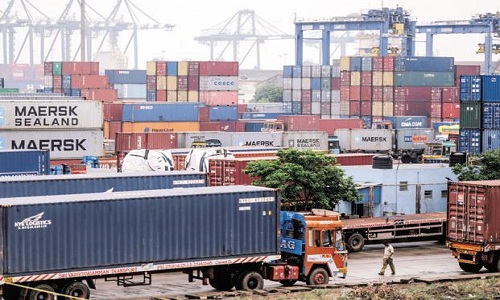 compete in a level playing ground in a free-trade region. “Make in India” is meant to create enabling conditions for both domestic and foreign businesses to thrive. If the domestic industry has to thrive, it needs to be protected. Mega-trade deals like the RCEP may derail the timing and coordination of such plans.
Whether this complementarily in FTAs really exists is a working hypothesis without any solid empirical analysis or evidence. Rather, things may simply work the other way round. It needs to be looked at whether the RCEP will really lead to cheaper intermediate goods, or cheaper final goods. So far, the rise in Indian trade deficit with its FTA partners has occurred due to cheap imports of final products that have led to an increase in consumer surplus (or consumer well-being), but adding to the angst of the domestic producers. Cheaper intermediate goods can rather help in making Indian exports competitive.
RCEP complicate skilled labor movement
In FTAs with East and Southeast Asian economies, India capitalises on its pool of ‘skilled’ labor force for improved access to employment opportunities in these economies. Although this can be achieved by easing the movement of professionals through the liberalisation of the Mode 4 in services trade, it raises a matter of concern in the context of the RCEP.
As this will be the first mega-trade deal of such comprehensive nature that India is engaged with, the ToR of the three consultants should not be confined to merely holding stakeholder consultations. They should place a more comprehensive report on the benefits and costs of India’s participation in the RCEP. Now that bilateral negotiations are being pursued, India needs to adopt the right approach to extract maximum benefits from this mega-trade deal.
Under Armour collaborates with Virgin Galactic for space suits
US-based sportswear brand Under Armour will make space suits for passengers and pilots of Virgin Atlantic. Virgin Galactic has been founded by entrepreneur Sir Richard Branson.
The collaboration will also see the US retailer design programs for astronaut physical preparation and recovery with a prior focus of enhancing mobility, strength, fitness, nutrition and sleep.
Under Armour, known for its hoodies, crewneck sweatshirts, jackets, and other items, wants to go from performance brand to lifestyle label. The company’s ambition is to get as big as rivals like Nike and Adidas, but it’s had a big obstacle in its way: Those brands may, like Under Armor, be rooted in sports, but they’re also lifestyle labels. Under Armour is trying to bust out of the gym and get people to wear its brand on the streets.
Under Armour’s Palm Angels collection has recovery technology. This is a patterned bioceramic lining. The pattern includes special bioceramic particles that absorb infrared wavelengths emitted by the body and reflect back infrared energy, helping the body recover faster while promoting better sleep.
The company expects weakness in its North American wholesale business to continue well into the current year.
Tunisia clothing exports up 18 per cent
Tunisia’s textile, clothing and leather exports rose 18.6 per cent in 2018. The plan is to raise textile and clothing exports to the European Union. The textile and clothing sector in Tunisia accounts for 35 per cent of the country’s GDP and offers 161,425 jobs.
Also 95 per cent of Tunisia’s textile and clothing exports are aimed at Europe. Similarly, 82.7 per cent of companies located in Tunisia are totally exporting. Tunisia was the first country along the southern coast of the Mediterranean to have achieved free trade with the European Union. In the 1990s, Tunisia signed a free trade agreement with the EU to facilitate economic exchanges between the two shores of the Mediterranean.
The textile and clothing industry in Tunisia plays a critical role in the socio-economic development of the country. Tunisia is among the top 15 garment suppliers in the world, and has the advantage of being close to the European market. It is the fifth largest supplier to the European Union as well as the leading trouser supplier to the EU. Other important products are work wear and lingerie. The main foreign investors in the apparel sector in Tunisia are France, Germany, Belgium and Italy.
Sourcing solutions at Premiere Vision
Premiere Vision will be held in France on February 12 to 14, 2019. This brings together the full scope of fashion manufacturing know-how required by fashion and accessory brands. Around 217 manufacturers from five continents will present their latest developments for the spring/summer ’20 season. Next to the material suppliers –yarns, fabrics, leathers, accessories and components, designs- the show proposes complementary and diversified manufacturing sourcing solutions.
To support the strategy begun in 2017 of enhancing this manufacturing-sourcing offer and better address the challenges of buyers seeking fashion manufacturing solutions, Première Vision is clarifying its manufacturing offering, with a dedicated itinerary grouping proximity sourcing, overseas sourcing, flatbed knit manufacturing, and leather fashion manufacturing.
The show will have a strong Indian presence offering mainly woven pieces, linen and cotton clothing and prints. Peru will also have a significant presence. Production in Peru is distinguished by its high technical quality and the nobility of its local raw materials, including alpaca. In the future, it will be a country to be reckoned with, as it turns toward Europe in search of new markets to compensate for the difficulties arising from the new customs barriers with the US. Colombia and Mexico will also have a stronger presence for the same reasons.
Moving out of China may not be easy
For decades, China dominated supply chains, with most manufacturing countries following a China Plus One strategy for sourcing or diversifying their operations by adding another location in Asia. But now China’s growth has weakened. China’s production numbers are dropping and factory activity is slower than expected. In September, US companies paid 54 per cent more in tariffs year over year, and many are now recognizing the importance of diversifying their supplier base to more than just plus one. In fact, more than 60 per cent of apparel companies are now sourcing from at least 20 countries.
Supplier diversity is a hallmark of business wisdom, but when companies add to their supplier base it introduces other variables that can offset the benefits of simply leaving China and its uncertainty behind. For instance, labor costs are by no means fixed, and in many countries that are popular substitutes for China sourcing–Bangladesh, Vietnam, Mexico–labor costs are expected to rise between five per cent and 16 per cent. In Bangladesh, labor costs are expected to increase by 51 per cent in the coming months.
Another key consideration for companies is that, even if they move production out of China, they’ll avoid potential tariff costs only if specific conditions apply.
Levi Strauss turns to block chain
US denim brand Levi Strauss will pilot the use of block chain technology to monitor factory safety in supply chains. A promising new solution could potentially augment and replace external factory health and safety auditors with a self-reporting infrastructure by factory workers.
Three Levi Strauss’ factories located in Mexico employing 5,000 workers will be the first to use the system this year, while another pilot is planned for next year. Block chain is the technology which underpins digital currency such as Bitcoin, Litecoin and Ethereum. The technology allows digital information to be distributed, but not copied, meaning that each individual piece of data can only have one owner.
This information is constantly reconciled into a database, which is stored in multiple locations and updated instantly. That means the records are public and verifiable and, since there’s no central location, it is harder to hack since the information exists simultaneously in millions of places.
One of block chain technology’s most promising applications is in supply chain and inventory management. Fashion supply chains are often opaque, involving the sourcing of raw fibers and materials from farmers, fabrics and leathers from textile mills and tanneries, and garments from cut and sew and finishing factories. Distribution networks are vast and complex.
Sri Lankan apparel sector grows at five per cent
Sri Lanka’s apparel sector is growing at 5.7 per cent while the textile sector is growing at 1.6 per cent. Sri Lanka earned more than $5 billion from apparel exports in 2018. The aim now is to enhance apparel exports especially to countries like India. Exporters feel bilateral FTAs are an ideal tool for market penetration to these countries.
The United Kingdom is positively considering the continuation of preferential treatment related to the EU GSP scheme for developing countries, including Sri Lanka, even after Brexit.
Sri Lanka hopes Brexit will not result in a disruption of trade with the UK. In addition, the industry in Sri Lanka looks forward to the right business environment, a decisive policy frame work with consistency and predictability on the fiscal regime, a proper trade policy and monetary policy, a shipping policy draft, a new procedure for monitoring of export proceeds, prompt export releases, all directed toward marketing the country’s products.
As of now the industry faces issues like ad hoc policies, a lack of consultative processes, no advance notice on cost increases, inability to adjust existing contractual obligations to new cost structures, and non-recognition of the importance of credit facilities given to buyers to sustain market access.
Ispo Munich will be held from February 2 to 9
More than 2,800 exhibitors have announced their participation, and around 80,000 trade visitors are expected to come to see the new collections and innovations in the industry for the 2019-20 season. The major trends in the industry are sustainability in the area of products, digitization in the area of processes and sport, and a stronger focus on consumers, which is also reflected in the development of new consumer events during the fair.
Brands will present their new, sustainable innovations at the fair. The North Face will launch the new Futurelight fabric technology. PrimaLoft will introduce the first biodegradable synthetic fiber, PrimaLoft Bio. Also 3M/Thinsulate will presents its new sustainability concept.
Esports will be part of the fair for the first time. A friendly match will take place between Bayern Ballers Gaming and the Ispo community. Experts will provide insights into the potential and growth market of this trend sport.
Since 2018, end consumers have also been able to take advantage of the trade fair: This edition will invite sports enthusiasts to take part in and try out numerous events. Enthusiasm for winter sports remains unbroken. In Germany, around 15 million people go skiing and snowboarding. But many are critical about the future of winter sports due to climate change.
Guess replaces chief executive
Carlos Alberini is the new chief executive of Guess. He replaces Victor Herrero. In fact, Alberini returns to Guess. He was president and chief operating officer at Guess from 2000 to 2010. He was instrumental in building the international business in Europe and Asia during his ten-year tenure with Guess.
Herrero, who had worked for a decade at the Spanish company Inditex, parent company of Zara, came on board in 2015 to turn things around at Guess. He launched an aggressive campaign to hire influencers and celebrities such as Jennifer Lopez to publicize the product. He also started shuttering US stores as sales in Europe and Asia grew and US sales languished.
Herrero will receive a $2.4 million separation agreement, which is equivalent to two years’ of his monthly salary and his bonus for fiscal 2019. He will also have his life insurance and health insurance costs covered for a two-year period and receive full vesting of his equity awards. Once Alberini steps in, his annual salary will be 1.2 million dollars and he will receive a million dollar signing bonus.
During the third quarter of fiscal 2019 Guess experienced a 13.4 million dollar loss on 605.4 million dollars in revenues.
Fall in Century Textiles Q3 net sales
For the third quarter Century Textiles’ net sales were Rs 957.22 crores as compared to Rs 1091.26 crores during the earlier quarter. Net profit for the quarter was Rs 134.27 crores as against Rs 156.52 crores for the period ended September 30, 2018. For the whole year net sales were Rs 957.22 crores as compared to Rs 1033.46 crores during the earlier year.
Net profit for the year was Rs 134.27 crores as against Rs 89.94 crores for the earlier year. EPS for the year was Rs 12.02 as compared to Rs 8.05 for the earlier year. For the nine month period net sales were Rs 3031.55 crores as compared to Rs 2999.30 crores during the earlier nine month period.
Net profit was Rs 453.45 crores for the nine month period as against Rs 262.96 crores for the earlier nine month period. EPS was Rs 40.60 for the nine month period as compared to Rs 23.54 for the earlier nine month period.
Mumbai-based Century Textiles and Industries is active in textiles, viscose filament yarns, cement, and pulp and paper. The cotton division of Century is one of the oldest players in India.